English
  Spanish
State Law Firm | Serving Santa Clarita, California
Santa Clarita Motorcycle Accident Lawyers
After a motorcycle collision on I-5, SR-14, or a Santa Clarita street, the details of the ride matter. State Law Firm helps injured riders and passengers review the evidence, insurance questions, and next steps from our Sherman Oaks office.

Free initial consultation
Rider and passenger inquiries
Motorcycle evidence review
Sherman Oaks office
Keep the collision date, road and direction, responding agency, and incident number if available. Preserve footage, bike and gear information, and insurer correspondence. You can request a consultation before the report is ready; flag any storage notice or legal deadline promptly.
A Motorcycle Claim Starts With the Rider’s Account
A motorcycle collision can leave you dealing with treatment, a damaged bike, and questions about what an insurer will accept. State Law Firm helps injured riders and passengers in Santa Clarita review the available evidence, identify potential responsibility, and understand the next steps. Start with what you remember; you do not need a completed collision report to request a consultation.
The review should address the motorcycle’s position and movement, the actions of other road users, and any relevant roadway conditions. Riding a motorcycle is not a substitute for a factual investigation. Neither the type of bike nor a general assumption about riders establishes how a particular collision happened. Our motorcycle accident practice page provides additional background.
Identify Where and How the Santa Clarita Collision Happened
A route name alone may leave important gaps. For an incident on I-5 or SR-14, record the direction, nearest exit, and whether you were on the main roadway or a connector. For a surface-street incident, identify the cross street or driveway and the direction each vehicle approached. The CHP Newhall Area includes the I-5/SR-14 interchange in its coverage. The Santa Clarita Valley Sheriff’s Station identifies local service areas including Valencia, Newhall, and Canyon Country.
A collision near a Newhall driveway may raise different evidence questions from a lane-change incident on SR-14 or a turn near Soledad Canyon Road. These are location examples, not a list of dangerous roads or findings about crash frequency. Note the actual road, nearby business, signs, and incident number instead of relying on a neighborhood label alone.
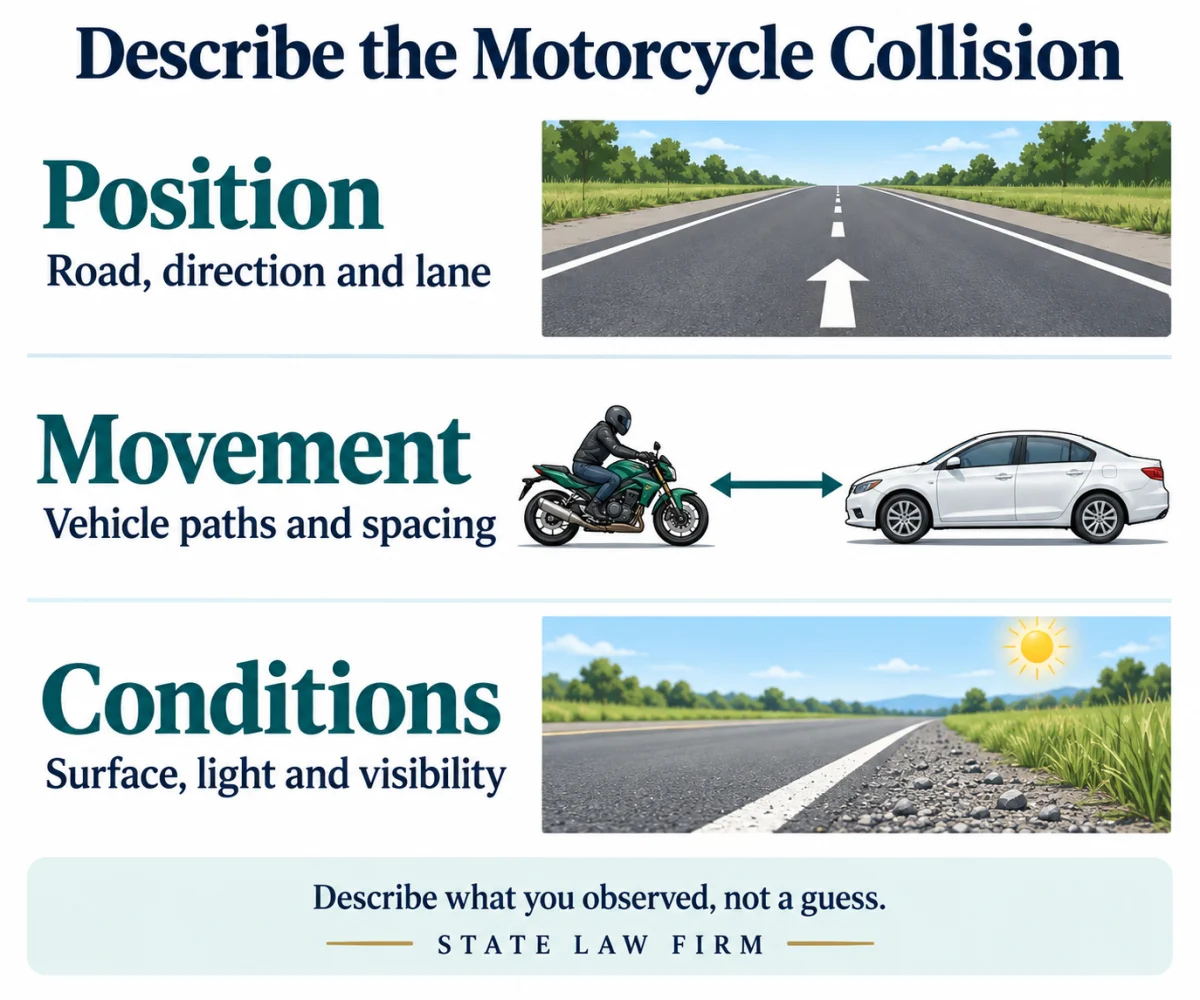
- Position: Which road, direction, and lane were you using? Where was the other vehicle? Distinguish what you saw before impact from where vehicles stopped afterward.
- Movement: Describe a turn, merge, stop, or change in spacing. Separate your observation from a later estimate of speed or distance, and identify any passenger or witness who saw the approach.
- Conditions: Note lighting, visibility, lane markings, road surface, and any obstruction. Photographs should come from a safe location; do not return to traffic to recreate the incident.
Lane Splitting Requires a Fact-Specific Review
California recognizes lane splitting. Vehicle Code section 21658.1 defines the practice and authorizes CHP educational guidelines. The CHP motorcycle-safety guidance explains that lane splitting is legal, while emphasizing speed, surrounding vehicles, road conditions, and visibility. Riding on the shoulder is not lane splitting.
If the collision occurred between rows of traffic, tell the attorney whether traffic was moving or stopped, where the motorcycle was positioned, and what the other vehicle did. Preserve footage showing the approach, not just the moment of contact. The fact that lane splitting is legal does not resolve responsibility for every collision; nor should an allegation of lane splitting end the inquiry. Review the circumstances and evidence rather than accepting a label as the answer. Our California lane-splitting resource offers further reading.
Preserve the Motorcycle, Gear, and Original Files
The bike and riding equipment may help document damage and contact points. Tell the attorney where the motorcycle is stored, who has access to it, and whether repairs, salvage, or an inspection have been proposed. Keep towing and storage paperwork, and raise accumulating charges promptly. Ask about a practical preservation plan before disposal or repair; preserving evidence should not mean leaving a vehicle in unsafe conditions or ignoring storage notices.
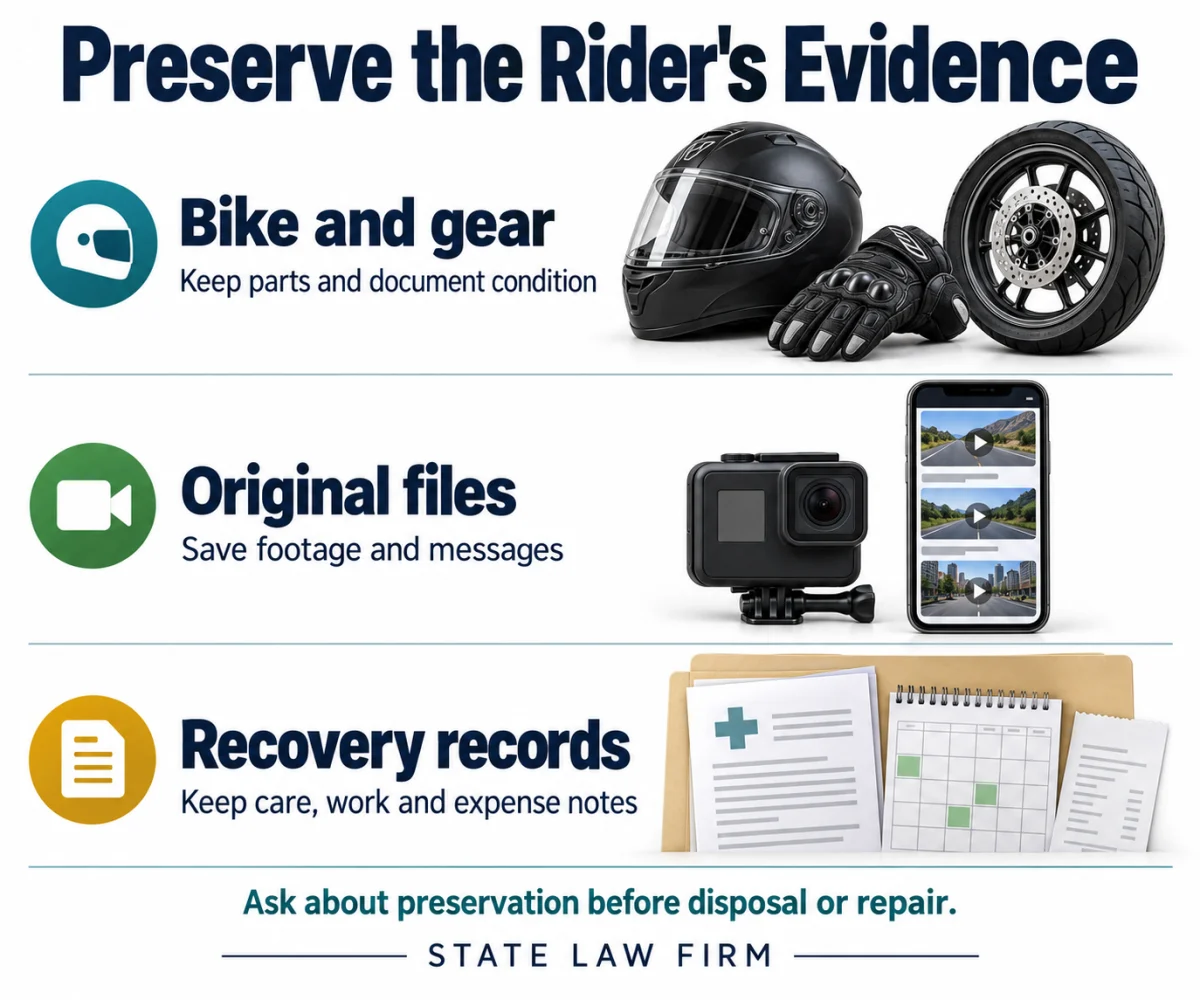
- Bike and gear: Retain available damaged parts, helmet, jacket, and gloves, and document their condition. Do not disassemble equipment to conduct your own reconstruction. Keeping damaged gear as evidence does not mean it is safe to use again.
- Original files: Save camera footage, photographs, messages, and relevant app records in their original form. Keep a backup and preserve the sequence before and after the incident. Identify nearby cameras for counsel; availability and retention vary, and access may require the owner’s cooperation or a legal process.
- Recovery records: Keep provider names, visit dates, treatment recommendations, work restrictions, missed shifts, and related receipts. Record daily limitations factually and follow your clinician’s guidance. An injury’s effect needs individual documentation, not a generic settlement estimate.
California’s Vehicle Code section 27803 generally requires drivers and passengers to wear a compliant, properly fitted and fastened safety helmet when riding on highways. Tell the attorney accurately what equipment you wore and any questions an insurer has raised. Equipment requirements, the cause of a collision, and the cause or extent of a particular injury require separate analysis. Read our evidence-preservation guide before changing or discarding potentially relevant material.
Keep Police, DMV, and Insurance Reporting Separate
Save the responding agency’s name, the exchange sheet, and the report or incident number. A Santa Clarita mailing address does not by itself identify which agency investigated. Request the record from the agency that actually handled the collision.
- CHP: The Newhall Area website links to CHP’s report-access service. The CHP 190 instructions also explain the request process for eligible parties, identification, and applicable fees. CHP cannot supply a report investigated by a different police agency.
- Sheriff’s Department: Check the LASD Records and Identification Bureau instructions for traffic-collision records and confirm the appropriate records or station process. Access requirements apply; check before mailing documents or traveling.
- DMV: Involved drivers must address the separate SR-1 reporting requirement. DMV requires an SR-1 within 10 days if someone is injured or killed, or property damage exceeds $1,000. Its instructions allow an agent, broker, or legal representative to handle the submission. A police, CHP, or insurance report does not replace it.
Keep insurer names, policy documents, claim numbers, coverage letters, and requests for information. Motorcycle damage and bodily-injury claims may involve different coverage questions. Discuss uninsured or underinsured motorist coverage, a hit-and-run allegation, a commercial vehicle, or an on-the-job collision promptly rather than assuming a particular policy applies. The attorney can review the relevant documents and explain what further information is needed.
Do Not Wait for the Report to Check Deadlines
California’s general personal-injury limitation period is two years under Code of Civil Procedure section 335.1. A public-entity matter may have an earlier claim-presentation requirement: Government Code section 911.2 generally requires an injury claim within six months after accrual. Separate lawsuit deadlines may follow.
Those are general rules, not a deadline calculation for your case. Accrual, exceptions, the identity of the parties, and later notices can affect the analysis. Mention an alleged roadway defect, a public vehicle, an injured minor, or any rejection notice at the first conversation. Waiting for a report, contacting an insurer, or sending this website’s form does not by itself extend a legal deadline or file a claim.
Meet the Attorneys
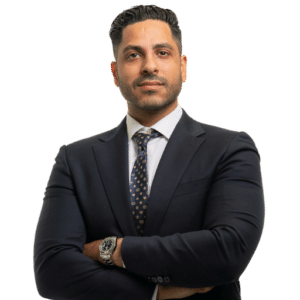
Eddie Tehrani
Eddie Tehrani founded State Law Firm after working in Los Angeles law offices handling personal injury and civil litigation. Review his background and discuss the firm’s approach to your motorcycle injury questions.
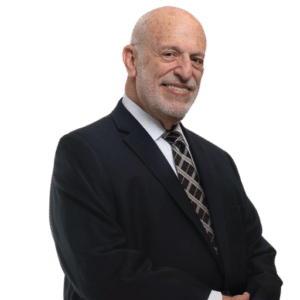
Arnold Gross
Arnold Gross’s firm biography describes personal injury trial work and mediation and arbitration experience. Review the team’s backgrounds and ask how your matter would be handled.
Serving Santa Clarita From Our Sherman Oaks Office
State Law Firm’s office is at 15490 Ventura Blvd #205, Sherman Oaks, CA 91403. This page serves Santa Clarita motorcycle-injury inquiries; it does not identify a separate Santa Clarita branch. Start by phone or online and confirm meeting arrangements before traveling. See Locations and Contact for office and consultation information.
The initial consultation is free. Ask about any proposed fee agreement, case costs, and the scope of representation before hiring the firm. For related local information, see our Santa Clarita car accident page or, when a commercial truck is involved, our Santa Clarita truck accident page.
Frequently Asked Questions
Can I contact you if the insurer says I was lane splitting?
Yes. Explain the motorcycle’s position, surrounding traffic, and the other vehicle’s movement. Keep footage and any written explanation from the insurer. Lane splitting is legal in California, but responsibility for the particular collision still requires a review of the facts.
Should I keep my damaged helmet and motorcycle?
Ask about preservation before repairs, disposal, or salvage. Tell the attorney where the bike and gear are stored and whether costs or deadlines are accumulating. Keep photographs and paperwork. Retaining a damaged helmet for evidence does not mean it is safe to wear.
Can a motorcycle passenger request a consultation?
Yes. Identify the motorcycle, rider, other vehicles, and what you personally observed. Passenger injuries and the conduct of each involved person need individual assessment. Do not assume the passenger’s claim depends only on the other driver’s actions.
What if no vehicle made contact with the motorcycle?
Describe what caused the evasive action or loss of control, including any vehicle movement or road condition. Save witness details and available recordings. A no-contact incident can raise difficult proof and coverage questions; neither liability nor insurance benefits should be assumed.
Do I need the completed CHP or Sheriff’s report first?
No. You can begin with the date, location, responding agency, and incident number if available. The team can discuss report requests while reviewing other evidence and deadlines. Pending records do not by themselves extend the time to bring a claim.
Is the consultation free, and where is your office?
The initial consultation is free. The office identified for this page is in Sherman Oaks, not Santa Clarita. Start by phone or online and ask about meeting arrangements, secure document sharing, and any proposed representation terms.
Request a Santa Clarita Motorcycle Accident Consultation
Tell us how to reach you about the motorcycle collision. Have the incident date, location, responding agency, and any time-sensitive correspondence ready for the follow-up conversation.
This page provides general information, not legal advice. Contacting the firm does not by itself create an attorney-client relationship. An individual review is needed to assess your rights and deadlines.
Related legal resources: Motorcycle accident practice, Pasadena motorcycle accident lawyers, Berkeley motorcycle accident lawyer, San Bernardino motorcycle accident lawyers, Corona motorcycle accident attorney, Free consultation.