English
  Spanish
State Law Firm | Serving Woodland Hills, California
Woodland Hills Pedestrian Accident Attorney
Hit while walking at a crossing, driveway, or parking area? State Law Firm helps injured pedestrians in Woodland Hills review the evidence, understand claim questions, and discuss next steps from our Sherman Oaks office.
Free initial consultation
Pedestrian injury matters
Crossing and evidence review
Sherman Oaks office
Start with the collision date, exact corner or driveway, and the direction each person was traveling. Keep original photos, witness details, and the incident number if available. You can request a consultation before the report is complete; mention any public entity or deadline immediately.
Legal Help After a Woodland Hills Pedestrian Collision
After being hit while walking, the next steps may be difficult to organize around treatment, work, and getting home safely. You may know where the collision happened but not which insurer to contact, whether anyone kept video, or how to obtain a report. State Law Firm helps injured pedestrians in Woodland Hills review those questions and the evidence needed to evaluate a claim.
You can begin with a short account of the incident and the records you already have. Call (877) 659-9223 or request a free consultation. Our office is in Sherman Oaks; we serve Woodland Hills without representing that we have a separate office there. See our pedestrian accident practice for broader information.
Pinpoint the Crossing, Not Just the Neighborhood
A location described as “Ventura and Topanga” leaves important questions unanswered. Which corner were you on? Were you crossing the road, walking across a business driveway, or moving through a parking area? Identify the street names, nearest address, and direction of travel. For an incident near Warner Center Park, distinguish the park entrance from the adjacent sidewalk and street crossing.
The City identifies Warner Center Park at 5800 Topanga Canyon Boulevard in Woodland Hills. The City’s Ventura-Cahuenga Boulevard Corridor planning resource also covers the Woodland Hills portion of Ventura Boulevard. These are location references, not evidence of dangerous conditions, current accident rates, or responsibility for a particular collision.
On a route through Warner Center, keep the exact business entrance, driveway, or crossing with your notes instead of relying on a large shopping or office destination’s name. Different parts of one trip can involve different drivers, property operators, and public entities. The incident address alone does not establish who controlled the location or caused the injury.
Reconstruct the Pedestrian and Vehicle Paths
Medical needs and safety come first. Do not stand in traffic, pursue a driver, or return to an unsafe location to collect evidence. When you can make notes safely, separate what you personally remember from information someone else supplied. An incomplete but accurate account is more useful than a confident guess.
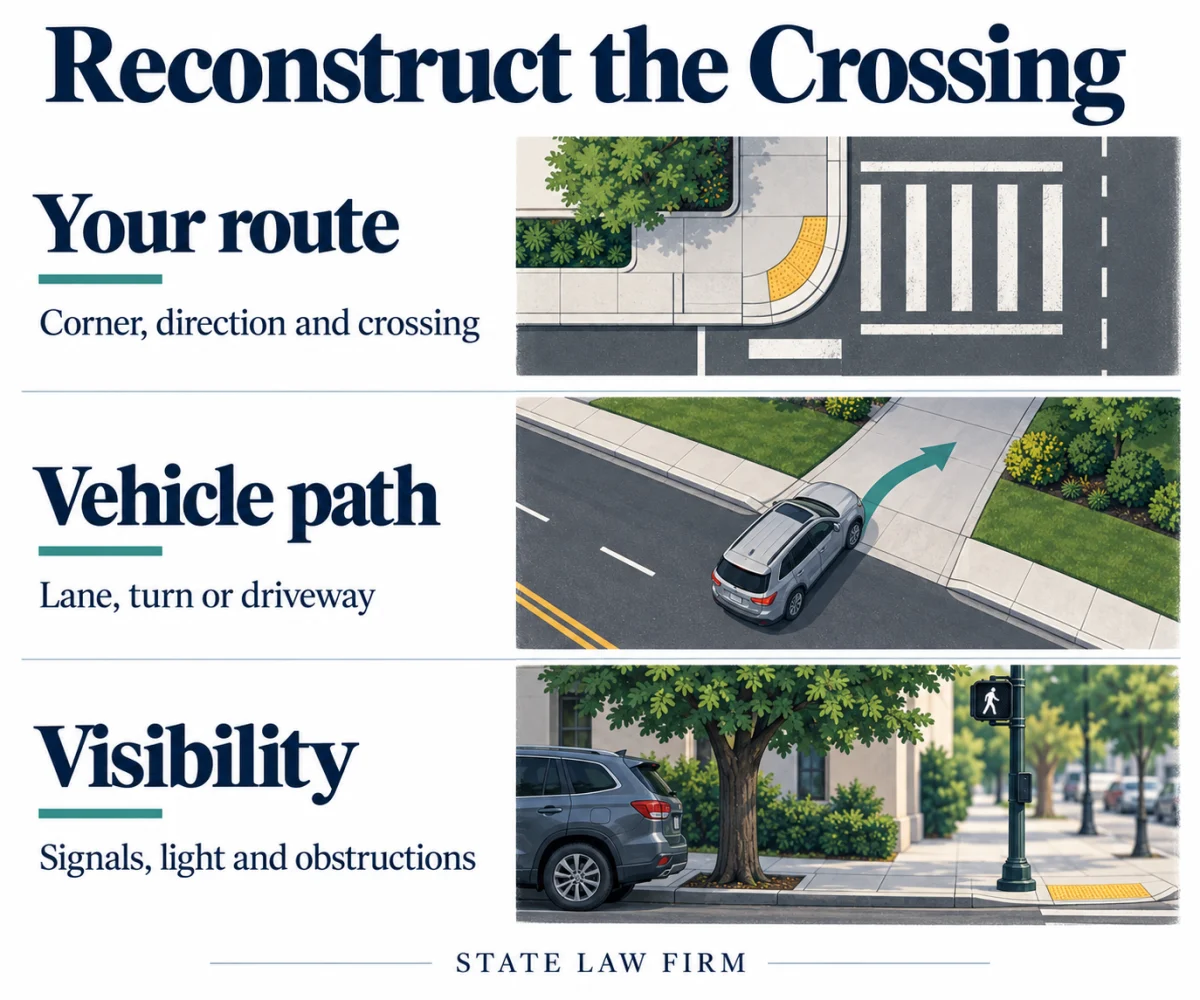
- Your route: Note the starting corner, direction you were walking, curb ramp, crossing markings, and where contact occurred. Describe whether you had begun crossing or were still on the sidewalk.
- Vehicle path: Record the lane and direction, if known, and whether the vehicle turned, continued straight, backed out, or crossed a driveway. Preserve any plate details or vehicle description already available.
- Visibility: Describe the signal you actually saw, lighting, parked vehicles, landscaping, construction, and other possible obstructions. Keep the time and date of photographs taken later so they are not mistaken for collision-time conditions.
If one vehicle stopped but another continued through an adjacent lane, describe both vehicles and their positions. A simple sketch may help explain your recollection, but should not present estimated measurements as confirmed facts. Our crosswalk liability resource discusses how crossing details fit into a claim review.
Crosswalk Duties and Disputed Responsibility
California Vehicle Code section 21950 generally requires drivers to yield to pedestrians in marked crosswalks and unmarked crosswalks at intersections, subject to applicable exceptions. Pedestrians must also use care and must not suddenly enter the path of a vehicle so close that it creates an immediate hazard. The driver’s separate duty of care remains important.
A separate rule, Vehicle Code section 21951, prohibits a driver approaching from behind from passing a vehicle stopped at a qualifying crosswalk to allow a pedestrian to cross. That makes the position and purpose of a stopped vehicle relevant evidence; it does not let an illustration or a general rule decide a specific case.
Signals, timing, the location of the crossing, and each person’s actions still require review. Lack of painted stripes does not alone establish that there was no crosswalk. An insurer’s statement that you were responsible is a position to investigate, not a substitute for the underlying evidence. Keep letters and explanations of any disputed facts.
Preserve Evidence Without Delaying Care
Keep original photographs, recordings, witness contact details, and messages. Tell the attorney promptly about businesses, residences, buses, or vehicles that may have relevant cameras. A visible camera does not establish that it recorded the event or that footage remains available. Preserve files you already have and discuss appropriate requests rather than editing, deleting, or circulating sensitive material.
- Collision records: Date, time, precise location, responding agency, incident number, photos, and driver or witness information.
- Care records: Provider names, appointment dates, treatment instructions, bills, and follow-up recommendations. Follow your clinician’s advice and keep a factual record of symptoms and limitations.
- Work and daily life: Missed shifts, employer records, transportation expenses, and help needed with ordinary activities. Separate paid expenses from estimates.
- Insurance communications: Claim numbers, adjuster details, letters, requested statements, releases, and policy information you possess. Ask what a document authorizes before signing it.
Our evidence-preservation guide explains why original records matter. For questions about potential video, see the camera-evidence resource. You do not need to upload a complete medical file through the first contact form; ask about a secure way to share records.
Police Reports, Injury Claims, and Hazard Reports Are Different
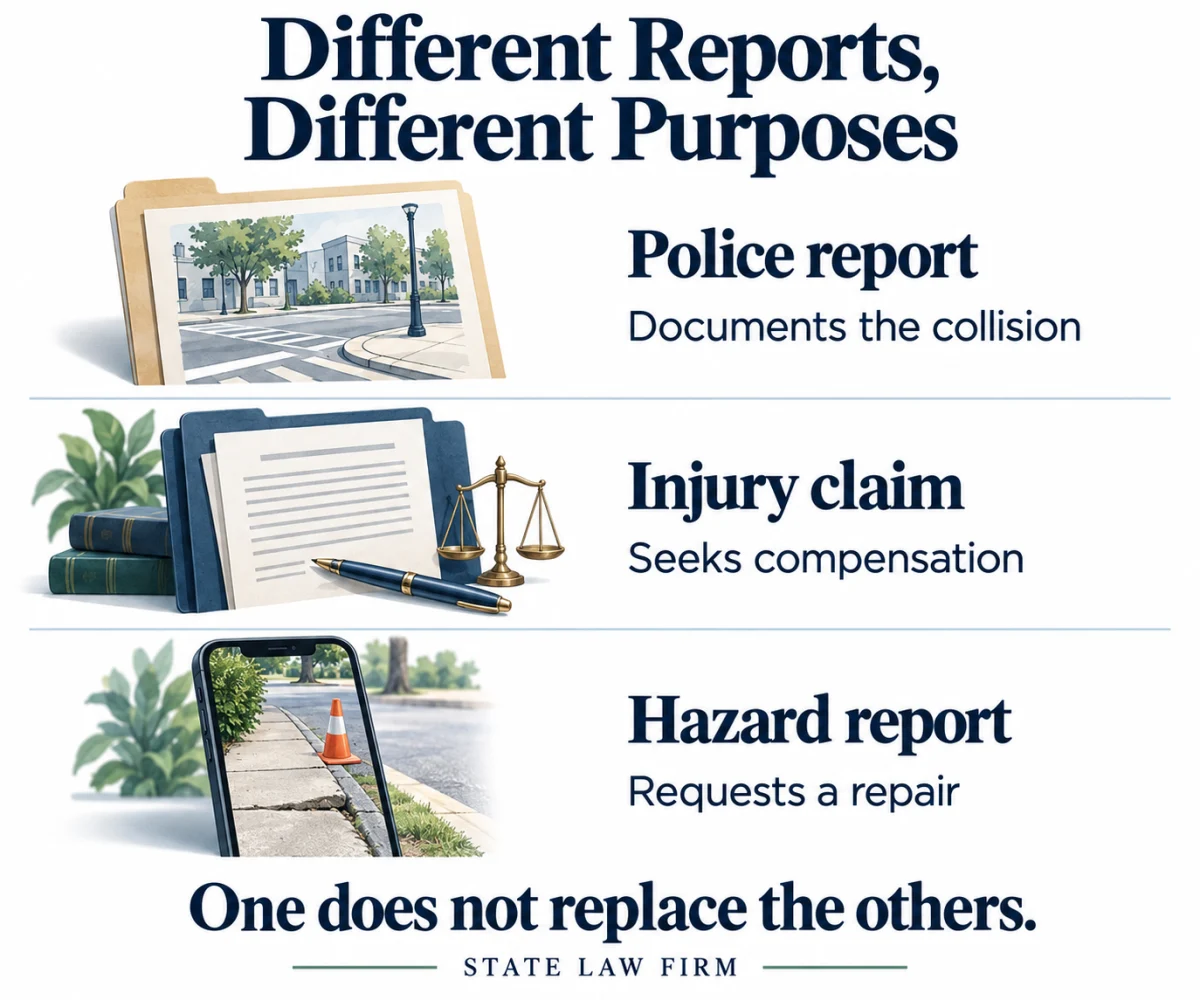
Several records can concern the same event while serving different purposes. Requesting a police report does not itself present an injury claim to a public entity. Reporting a damaged sidewalk for repair likewise does not replace a claim for compensation.
- Police report: If LAPD investigated, use its traffic-report request instructions. Keep the incident number, date, location, and responding agency. Authorized people may request records, and online access is restricted for some report categories. If another agency investigated, confirm its process instead.
- Injury claim: A claim seeks compensation and has its own requirements. If a City of Los Angeles entity may be involved, review the City’s claims instructions with the attorney. Those instructions identify filing through the City Clerk; do not assume a police report or an email to any city office completes that step.
- Hazard report: The City’s sidewalk problem resource concerns repair requests. Keep any confirmation number, but separately address injury-claim requirements. A repair request is not an admission of responsibility.
The correct public entity must be identified; not every roadway, signal, or property in the neighborhood is necessarily controlled by the same agency. Tell the attorney about any suspected public vehicle or property issue at the start. Do not wait for a completed report or repair response to ask about deadlines.
Discuss Filing Deadlines Early
Code of Civil Procedure section 335.1 generally provides a two-year limitation period for personal injury actions. Claims involving a public entity can require an earlier claim-presentation step: Government Code section 911.2 generally requires presentation of an injury claim within six months after accrual. These are different requirements, not interchangeable deadlines.
Exceptions, the date a claim accrues, the parties involved, and later procedural deadlines can change the analysis. Mention the collision date, an injured child’s age if relevant, and any agency or insurer correspondence. A consultation request does not itself file a lawsuit, present a government claim, or extend a deadline.
Working With State Law Firm
An initial review can identify missing records, disputed facts, potential insurance questions, and immediate timing concerns. If representation is agreed upon, the work may include investigating the collision, reviewing available coverage, documenting supported losses, communicating with insurers, and evaluating settlement or litigation options. The course of a case depends on the evidence and applicable law; no payment amount or timetable can be promised.
Review our attorney backgrounds and office information. The firm’s office is at 15490 Ventura Blvd #205, Sherman Oaks, CA 91403. Ask the team about appointment arrangements and document sharing before traveling. The initial consultation is free; discuss proposed attorney fees, case costs, and representation terms before signing an agreement.
Meet the Attorneys

Eddie Tehrani
Eddie Tehrani founded State Law Firm after working in Los Angeles law offices handling personal injury and civil litigation. His background is available on the firm’s attorney page.
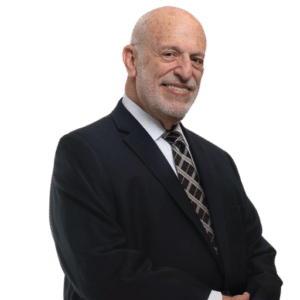
Arnold Gross
Arnold Gross’s firm biography describes personal injury trial work and mediation and arbitration experience. Review the team’s backgrounds and ask how your matter would be handled.
Frequently Asked Questions
What if I was hit while crossing a business driveway?
Record the business address, driveway location, your direction of travel, and whether the vehicle was entering or leaving. Driver conduct, visibility, and any relevant property conditions need review. A business is not automatically responsible merely because the collision happened near its entrance.
Does an unmarked crossing mean I cannot bring a claim?
No. Some intersection crosswalks are unmarked. The exact crossing, applicable rules, signals, and conduct of the people involved need to be assessed. Missing stripes alone do not answer whether someone was negligent.
What if a stopped vehicle blocked my view of another lane?
Tell the attorney where each vehicle was and whether you know why the first one stopped. Keep witness and video information. The rule against passing a vehicle stopped to permit a pedestrian to cross may be relevant, but the sequence and circumstances must be established.
What if the driver left or there is no completed police report?
You can still request an initial review. Start with the date, location, responding agency if any, vehicle description, and records you have. Do not pursue the vehicle. Identification efforts and any possible insurance coverage need a case-specific review; neither can be guaranteed.
Does reporting a sidewalk problem preserve my injury claim?
A repair request does not replace the separate injury-claim process. Keep the report confirmation and promptly discuss the responsible entity and claim-presentation requirements with an attorney. Do not wait for repairs before checking the applicable deadlines.
Do I need to visit a Woodland Hills office to start?
No. State Law Firm’s office is in Sherman Oaks, and you can start by phone or online. Ask about meeting arrangements and how to share documents securely. The initial consultation is free, with any representation terms discussed separately.
Request a Woodland Hills Pedestrian Accident Consultation
Tell us how to reach you about the collision. Have the date, exact crossing or driveway, responding agency, and any time-sensitive correspondence available for the follow-up conversation.
This page provides general information, not legal advice. Contacting the firm does not by itself create an attorney-client relationship. An individual review is needed to assess your rights and deadlines.
Related legal resources: Pedestrian accident resources, Santa Ana Pedestrian Accident Attorneys, Pedestrian Accident Attorneys – San Bernardino, CA, Free consultation.