English
  Spanish
State Law Firm | Torrance, California
Torrance Truck Accident Lawyer
A commercial truck crash can involve several companies and time-sensitive records. State Law Firm helps injured people in Torrance review the evidence, identify the relevant parties, and understand their options.
Free initial consultation
Commercial-vehicle injury claims
Evidence and insurance review
Serving Torrance from Sherman Oaks
Start with the crash date, exact location, incident number, and any photographs of the truck or company markings. You do not need to identify every business or obtain trucking records before requesting a consultation. Ask promptly about vehicle inspections, evidence preservation, and filing deadlines.
Help After a Commercial Truck Crash in Torrance
A collision with a tractor-trailer, delivery truck, or other commercial vehicle can leave you facing medical treatment while several insurers and businesses ask for information. State Law Firm helps people injured in Torrance truck accidents investigate the collision, identify the relevant companies, and organize the evidence needed to evaluate an injury claim.
Truck claims can involve records beyond the police report: vehicle electronics, driver activity, maintenance, loading, and dispatch information. The records that exist depend on the vehicle and operation. You do not need to identify every company or obtain those records yourself before requesting a free consultation.
Torrance Streets, Driveways, and Truck Movements
For a collision around Hawthorne Boulevard, Del Amo Boulevard, or Western Avenue, record the closest cross street, direction of travel, lane position, and whether the truck was turning into or leaving a driveway. If the incident involved an I-405 connection, distinguish the freeway lane, ramp, and adjoining street. Exact location helps identify the investigating agency and the records to request.
The City’s circulation planning materials provide context for local streets and freight movement. They are not proof of fault, a current routing instruction for a particular truck, or evidence that a street has a particular crash rate. An investigation should evaluate the actual signs, markings, visibility, and vehicle movements at the time of the collision.
Wide turns and driveway access
Preserve the truck’s starting lane, turn signal, trailer path, and nearby vehicle positions. A dispute about a turn requires more than an assumption that either the truck or the smaller vehicle had room.
Braking and chain-reaction impacts
Identify the order of impacts, traffic conditions, and every vehicle involved. Available recordings, damage patterns, and inspection records may help distinguish the initial impact from later collisions.
Lane changes and merging
Document which lane each vehicle occupied and when the movement began. Witness accounts and available video can help assess conflicting descriptions of the truck’s position and surrounding traffic.
Trailers, cargo, and equipment
For a load shift, separation, or suspected mechanical issue, preserve scene photographs and the identities of the truck and trailer. Inspection and loading records may be relevant, but a defect should not be assumed.
For more detail, see our resources on wide-turn truck collisions, jackknife incidents, and truck underride accidents. Each collision pattern calls for its own factual review.
Truck Records That May Need Early Preservation
Prioritize emergency assistance and medical care. Do not approach a damaged truck, unstable cargo, or moving traffic to collect evidence. Once safe, keep the crash date, report number, photographs, witness details, insurance correspondence, and your treatment and expense records. Tell your attorney where damaged vehicles are stored and whether repair, salvage, or disposal has been proposed.
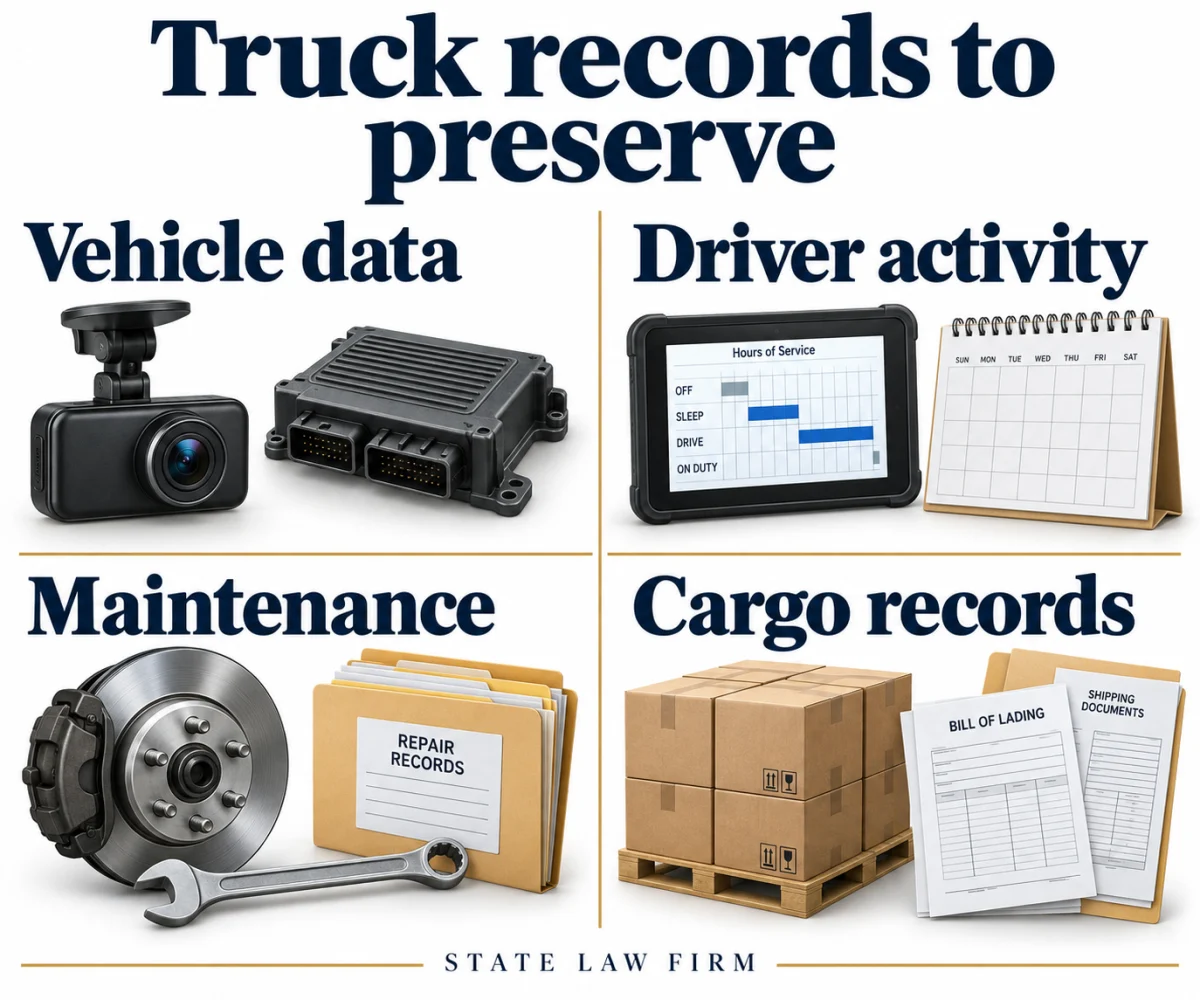
- Vehicle data: available dashcam recordings, electronic control-module data, and other vehicle-system records may help explain movement or braking. Not every truck records the same information, and access may require preservation requests and an appropriate inspection.
- Driver activity: applicable duty-status records, dispatch messages, trip documents, and electronic logging device data can help establish a timeline. An ELD is not a universal crash recorder, and some operations have different requirements or exemptions.
- Maintenance: inspection, repair, and service records may matter when brakes, tires, steering, or another component is disputed. Records should be connected to the specific truck or trailer involved.
- Cargo records: shipping documents, loading instructions, weight information, and securement records may identify who handled the load and what was transported. Their relevance depends on how the collision happened.
FMCSA guidance describes a six-month retention requirement for covered ELD duty-status data and supporting documents. Its maintenance-record guidance describes separate record categories and retention rules. These requirements do not guarantee that every relevant record exists or will remain accessible. Ask about preservation promptly rather than treating a retention period as permission to wait.
Identify the Driver, Carrier, Vehicle Owner, and Cargo Handler
The business name on a trailer may not identify everyone involved in operating the truck. A useful investigation separates who drove, who arranged the truck’s operation, who owned or leased the equipment, and who handled the load. One business may fill several roles, or the roles may be divided among different people and companies.
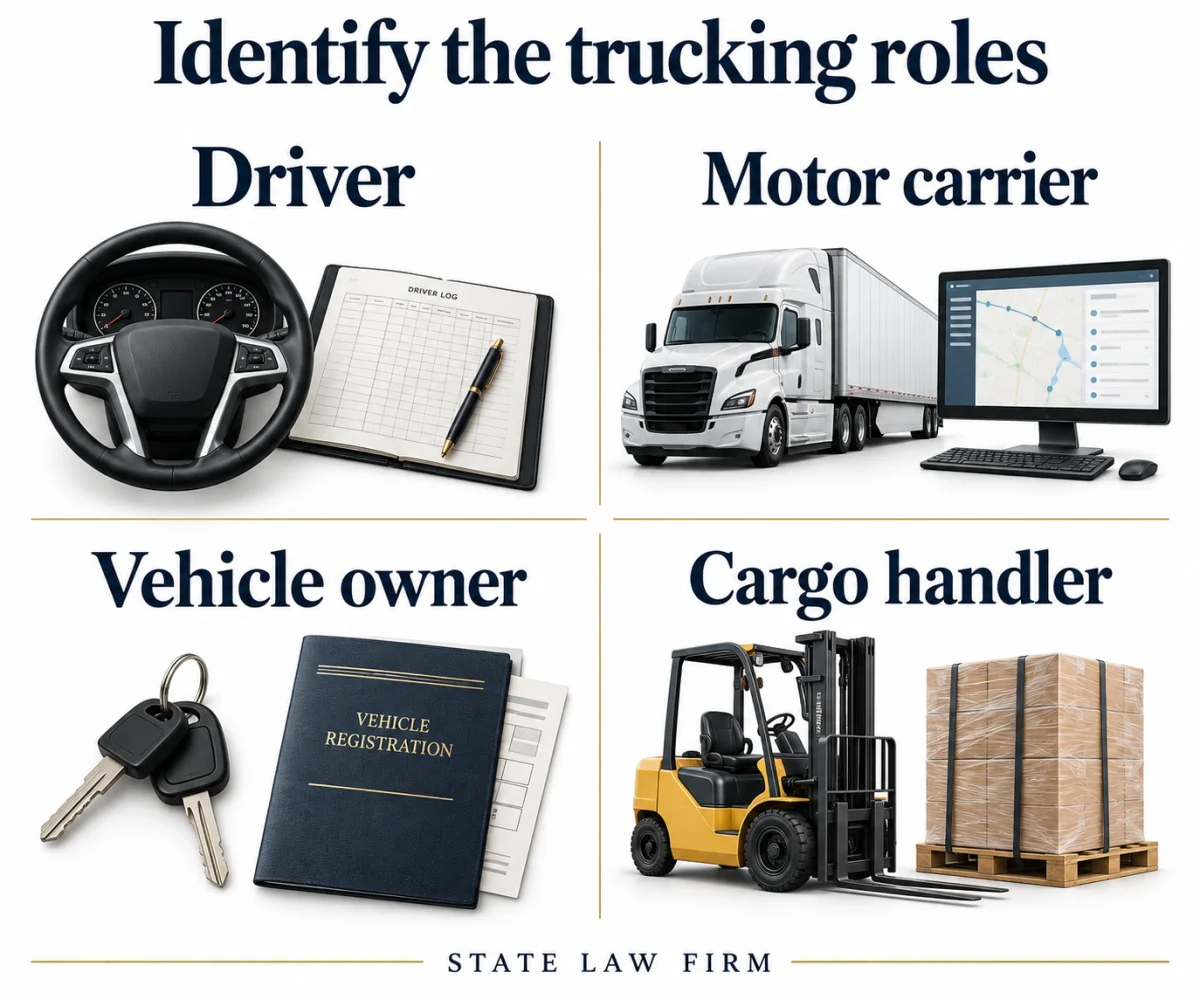
Driver: identify the person operating the vehicle and their account of the collision. Motor carrier: determine which company operated the truck and what trip or dispatch records apply. Vehicle owner: distinguish tractor and trailer ownership, lease arrangements, and equipment records. Cargo handler: identify loading or securement participants when the load may be relevant.
If safely available, preserve photographs of company markings, USDOT numbers, license plates, and separate tractor or trailer unit numbers. The FMCSA company-record resources can help match a company name or USDOT number to public carrier information. A public record, company logo, or ownership document does not by itself establish legal responsibility for your injuries.
Torrance Police Reports and DMV Reporting
If Torrance Police investigated, use the department’s official Traffic Collision Reports page. It explains eligible requesters, online access through its partner portal, and mail or in-person options. Keep the incident number, date, and identification available, and check current availability and fees. Some investigations may not be available online. If CHP or another agency responded, request its report instead.
The DMV’s SR-1 accident report is separate from a police report or insurance claim. The DMV requires it within 10 days when anyone is injured or killed, or property damage exceeds $1,000. Review the official instructions and our California SR-1 guide. Do not assume that reporting the crash to an insurer or police completed the DMV requirement.
Evaluating Fault, Injuries, and Available Coverage
A claim assessment connects the collision evidence to documented injuries and losses. Relevant information may include medical bills, treatment recommendations, missed earnings, vehicle damage, and limitations on daily activities. Future care or earnings losses require support. A truck’s size or a company’s insurance policy does not establish what an individual claim is worth.
Responsibility can be disputed among several parties. California’s comparative-fault rules can reduce damages by the injured person’s share of responsibility; being accused of fault does not settle the issue. The California civil jury instructions, including CACI 405, explain the comparative-fault framework. The applicable legal duties and the evidence must be assessed together.
When retained, State Law Firm can review available coverage, organize supporting records, communicate with insurers, and assess negotiation or litigation. Keep any proposed release, settlement offer, or request for a recorded statement. No settlement amount, coverage outcome, or resolution date is guaranteed.
Check Claim and Lawsuit Deadlines Early
California generally allows two years for an injury lawsuit under Code of Civil Procedure section 335.1. Exceptions and other claims can have different deadlines. An ongoing insurance discussion does not mean a filing deadline can be ignored.
If a public entity may be involved, an administrative injury claim generally must be presented within six months, with separate lawsuit deadlines afterward. See the California Courts government-claim guidance. Ask for a case-specific deadline review; these general periods are not a calculation for your situation.
Meet the Attorneys

Eddie Tehrani
Eddie Tehrani founded State Law Firm after working in Los Angeles law offices handling personal injury and civil litigation. Review his background and discuss the firm’s approach to investigating your truck injury matter.

Arnold Gross
Arnold Gross’s firm biography describes personal injury and wrongful death trial work, along with mediation and arbitration experience. Read his professional background on the firm’s attorney page.
Serving Torrance From Our Sherman Oaks Office
State Law Firm’s main office is at 15490 Ventura Blvd #205, Sherman Oaks, CA 91403. Torrance clients can start by phone or online and ask the team about meeting arrangements before traveling. Visit Locations for office details or contact the team at (877) 659-9223.
For other local collision information, see our Torrance car accident and Torrance pedestrian accident pages. A commercial-truck investigation may require additional records even when the injured person was in a passenger vehicle or on foot.
Frequently Asked Questions
Can I request a consultation before the truck company is identified?
Yes. Start with the incident number, photographs, plate or unit numbers, insurance letters, and any company markings you recorded. The firm can discuss what information is missing and how to investigate it.
Does every commercial truck have a black box or an ELD?
No single type of recording device can be assumed. Vehicle electronics, cameras, and duty-status systems serve different purposes, and requirements or exemptions depend on the operation. A review should identify what equipment and records actually exist.
Is the company named on the trailer automatically responsible?
No. Branding alone does not resolve responsibility. The driver, carrier, equipment owner, and cargo participants may have different roles. Contracts, operating records, and evidence of what caused the collision need to be reviewed.
What if the truck or my vehicle is scheduled for repair or salvage?
Tell the attorney promptly where the vehicle is stored and what has been proposed. Ask whether an inspection or preservation request is needed before evidence changes. Keep estimates and photographs, and discuss towing or storage charges rather than leaving them unaddressed.
How much is a Torrance truck accident claim worth?
There is no preset amount. Injury evidence, treatment needs, financial losses, disputed responsibility, and available coverage affect an assessment. Another case’s result or a policy limit does not establish the value of your claim.
Is the initial truck accident consultation free?
Yes. Request a free initial consultation by phone or through the form below. Ask the team to explain any proposed attorney fees, case costs, and representation terms before signing an agreement.
Request a Torrance Truck Accident Consultation
Tell us how to reach you about the collision. Have the date, location, incident number, and any available truck or company information ready for the follow-up conversation.
This page provides general information, not legal advice. Contacting the firm does not by itself establish an attorney-client relationship. A case-specific review is needed to assess your rights and deadlines.