English
  Spanish
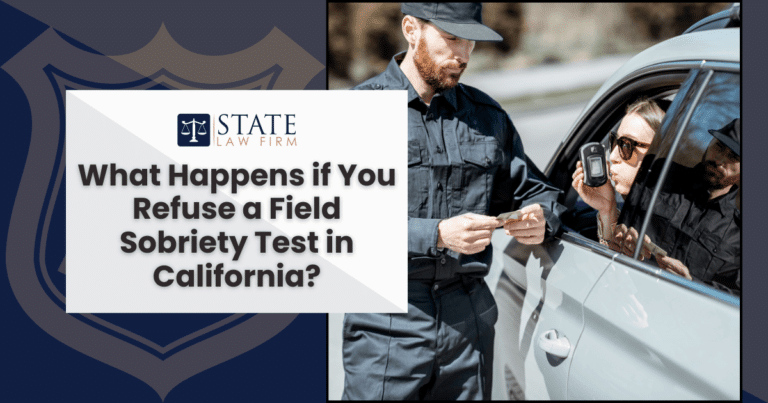
When faced with a DUI stop in California, the decision to comply with or refuse a field sobriety test can be a daunting one. These tests, often conducted roadside, are designed to assess a driver’s coordination and mental clarity, but they are not without their controversies. In California, field sobriety tests are voluntary, and refusing them can have both advantages and drawbacks. This article will guide you through the legal consequences and options available if you choose to refuse a field sobriety test.
Understanding your rights is crucial, especially when you consider that according to the U.S. Department of Transportation, field sobriety tests only successfully identify impaired drivers in about two-thirds to three-fourths of cases, leaving a significant margin for error due to factors like nervousness or medical conditions.
At State Law Firm, our team of young, passionate attorneys is dedicated to helping you navigate these complex legal waters. Whether you’re concerned about the implications of refusing a field sobriety test or need guidance through the aftermath of a DUI charge, we’re here to ensure that your rights are protected every step of the way.
Understanding Field Sobriety Tests in California
Field sobriety tests (FSTs) are commonly used by law enforcement officers in California during DUI stops to assess whether a driver is under the influence of alcohol or drugs. These tests are a critical component of DUI investigations, but it’s important to understand their nature, the legal context, and how they are applied in practice.
What are Field Sobriety Tests?
Field sobriety tests are a series of physical and cognitive tasks designed to evaluate a driver’s balance, coordination, and mental acuity. These tests are typically administered at the roadside when an officer suspects a driver may be impaired.
- Horizontal Gaze Nystagmus (HGN) Test: The officer will ask the driver to follow an object, such as a pen or flashlight, with their eyes. The officer looks for involuntary jerking of the eyes, which can indicate intoxication.
- Walk-and-Turn (WAT) Test: The driver is asked to take nine steps along a straight line, turn on one foot, and return in the same manner. The officer observes the driver’s ability to follow directions and maintain balance.
- One-Leg Stand (OLS) Test: The driver must stand on one leg while counting aloud until instructed to stop. The officer notes any swaying, hopping, or using arms for balance.
The Role of Field Sobriety Tests in DUI Investigations
Field sobriety tests play a significant role in DUI investigations in California. They are often used by officers to establish probable cause for an arrest, especially at sobriety checkpoints or during a routine DUI stop. However, the reliability and validity of these tests are often questioned due to their subjective nature.
- DUI Investigation Process: During a DUI stop, an officer will observe the driver’s behavior, ask questions, and may request that the driver perform field sobriety tests. These observations, combined with the results of the FSTs, help the officer decide whether to make an arrest.
- Sobriety Checkpoints: These are pre-planned locations where law enforcement checks drivers for signs of impairment. Field sobriety tests are often conducted at these checkpoints when an officer suspects impairment.
Legal Context of Field Sobriety Tests in California
Understanding the legal framework surrounding field sobriety tests is crucial for drivers in California. The state’s DUI laws do not require drivers to submit to these tests, and refusal to participate in FSTs is not, by itself, an admission of guilt.
- Voluntary Nature of FSTs: In California, drivers are not legally obligated to take field sobriety tests. Refusing these tests does not carry legal penalties, unlike chemical tests (such as breath, blood, or urine tests) that fall under the state’s implied consent law
- Implied Consent Law: While you can refuse FSTs without immediate legal consequences, California’s implied consent law requires drivers to submit to chemical testing if they are lawfully arrested for DUI. Refusing chemical tests can result in a one-year license suspension and other penalties.
By understanding these key aspects of field sobriety tests, drivers in California can make more informed decisions during a DUI stop. While these tests are a common tool in DUI investigations, knowing your rights and the potential implications of participating in or refusing these tests is essential.
The Legal Consequences of Refusing a Field Sobriety Test
Refusing to take a field sobriety test during a DUI stop in California can have a range of legal consequences. While the decision to refuse may seem like a way to avoid incriminating yourself, it’s important to understand the potential penalties and legal implications that follow.
DUI Refusal Penalties
Refusing a field sobriety test (FST) during a DUI stop does not carry direct legal penalties, unlike refusing a chemical test, such as a breathalyzer or blood test, which can lead to more severe consequences. However, the refusal can still have significant indirect effects:
- Officer’s Discretion: If you refuse to take a field sobriety test, the officer may still arrest you based on other signs of impairment, such as erratic driving, slurred speech, or the smell of alcohol. Your refusal does not prevent an arrest if the officer believes there is sufficient evidence of DUI.
- Use in Court: While the refusal to take an FST cannot be directly used against you in court, it may be presented as part of the overall evidence to suggest non-cooperation or imply guilt. Prosecutors might argue that your refusal was an attempt to hide impairment.
Implied Consent Law
In California, the implied consent law is a key factor in DUI cases. By driving on California roads, you automatically consent to submit to chemical testing (breath, blood, or urine) if lawfully arrested for DUI. However, this implied consent does not extend to field sobriety tests:
- No Legal Requirement: Unlike chemical tests, you are not legally required to take a field sobriety test. The officer may not inform you of this, but you have the right to refuse without immediate legal penalties.
- Chemical Test Consequences: If you refuse to take a chemical test after a lawful DUI arrest, you face much stiffer penalties. These include a mandatory one-year suspension of your driver’s license for the first offense, longer suspensions for subsequent offenses, and possible jail time.
Driver’s License Suspension
While refusing a field sobriety test does not result in an automatic license suspension, it can contribute to the circumstances leading to your arrest and subsequent chemical test refusal, which carries severe penalties:
- License Suspension for Chemical Test Refusal: If you are arrested for DUI and refuse to take a chemical test, the Department of Motor Vehicles (DMV) will automatically suspend your driver’s license for at least one year, with no possibility of a restricted license during this period.
- Administrative Hearing: You have the right to request a DMV administrative hearing to challenge the suspension, but success in these hearings can be difficult without strong legal representation.
DUI Arrest
Refusing a field sobriety test does not protect you from a DUI arrest. In many cases, officers will proceed with the arrest based on their observations and other evidence:
- Probable Cause for Arrest: Even without the results of an FST, an officer can establish probable cause for a DUI arrest through other observations, such as erratic driving, visible signs of intoxication, or the presence of alcohol in the vehicle.
- Post-Arrest Chemical Testing: Following your arrest, you will be required to submit to chemical testing. Refusal at this stage can lead to more severe legal consequences, including increased penalties and complications in your defense strategy.
Understanding these legal consequences is crucial when making decisions during a DUI stop. While refusing a field sobriety test may seem like a viable option, the broader legal implications—especially those related to the implied consent law and subsequent chemical test refusals—can have lasting effects on your driving privileges and legal standing.
Potential Advantages and Disadvantages of Refusing a Field Sobriety Test
When stopped for suspected DUI in California, deciding whether to refuse a field sobriety test (FST) can be challenging. While refusal might seem like a protective measure, it carries both advantages and disadvantages that could significantly impact the outcome of your case. Below, we explore the potential benefits and risks associated with refusing an FST, as well as your legal options afterward.
Should I Refuse a Field Sobriety Test?
Refusing a field sobriety test is a personal decision that should be made with a clear understanding of both the potential benefits and the risks. Here are some factors to consider:
- Voluntary Nature: In California, FSTs are voluntary, meaning you have the right to refuse them without immediate legal penalties.
- Subjectivity of Tests: FSTs are often criticized for their subjective nature. Even a sober individual may fail these tests due to factors such as nervousness, medical conditions, or poor physical coordination. Refusing the test prevents potentially unreliable evidence from being used against you in court.
- Implied Consequences: While refusal itself isn’t grounds for penalties, it might lead to the officer relying on other evidence to establish probable cause for arrest. This could still result in a DUI arrest, followed by mandatory chemical testing.
Benefits of Refusing a Field Sobriety Test
There are several potential advantages to refusing an FST, especially if you believe the test results could be used unfairly against you:
- Avoiding Incriminating Evidence: By refusing an FST, you deny law enforcement potential evidence that could be used to establish impairment. Without test results, the prosecution may have a harder time proving their case beyond reasonable doubt.
- Reducing Subjective Interpretation: FSTs rely heavily on the officer’s subjective interpretation. Refusal eliminates this potential bias from the evidence presented against you.
- Maintaining Legal Standing: Since refusal of an FST is not considered an admission of guilt, your legal standing remains intact, allowing you to potentially argue that the officer had insufficient evidence for the arrest.
Risks of Refusing a Field Sobriety Test
On the other hand, refusing an FST is not without its drawbacks, which could complicate your legal situation:
- Increased Suspicion: Refusing an FST might increase the officer’s suspicion, potentially leading to a DUI arrest based on other factors such as your driving behavior or physical appearance.
- Impact on Jury Perception: If your case goes to trial, the prosecution might argue that your refusal was an attempt to hide impairment. This could influence the jury’s perception and work against you, even though refusal isn’t legally considered an admission of guilt.
- Post-Arrest Chemical Testing: After refusing an FST, you are still subject to chemical testing if arrested. Refusal to comply with chemical tests carries severe consequences, including mandatory license suspension and increased penalties.
Legal Options After Refusing a Test
If you choose to refuse an FST, it’s crucial to understand your legal options moving forward:
- Consulting a DUI Attorney: Hiring an experienced DUI attorney is essential. They can help challenge the grounds for your arrest, question the reliability of the officer’s observations, and navigate the complex legal process that follows.
- Requesting an Administrative Hearing: If your license is suspended due to a chemical test refusal, you can request a DMV administrative hearing to challenge the suspension. Success in these hearings often depends on the specific details of your case and the strength of your legal representation.
- Building a Strong Defense: Your attorney can help build a defense strategy that highlights the subjectivity of FSTs, the lack of concrete evidence, and any procedural errors that may have occurred during your arrest.
Understanding both the advantages and disadvantages of refusing a field sobriety test can help you make an informed decision if you ever find yourself in this situation. While refusal may offer some protection against subjective testing, it’s important to weigh the potential risks and have a clear legal strategy in place.
Alternative Options and Strategies if You Refuse a Field Sobriety Test
When you refuse a field sobriety test during a DUI stop, you may feel uncertain about what happens next. As your attorney, my primary goal is to ensure that you are fully informed about your rights and the legal avenues available to you. Even though refusing a field sobriety test can complicate matters, there are still several strategic options we can explore to protect your rights and achieve the best possible outcome for your case.
1. Challenge the Legality of the Traffic Stop
One of the first questions we’ll ask is whether the traffic stop itself was lawful. Law enforcement must have a valid reason—known as “reasonable suspicion”—to pull you over. If we find that the officer lacked this reasonable suspicion, we can argue that any evidence gathered during the stop, including your refusal to take a field sobriety test, should be excluded from court. This could potentially lead to a dismissal of your case.
2. Examine the Officer’s Conduct
Every step of your interaction with law enforcement will be carefully reviewed. The officer must follow strict procedures during a DUI stop, including how they communicate with you and administer any tests. If the officer did not follow proper procedures or if there was any misconduct, we can use this to weaken the prosecution’s case. My job is to protect your rights and to ensure that any errors made by the officer are brought to light.
3. Suppressing Evidence
In many cases, we can file motions to suppress certain evidence, which means that this evidence would not be allowed in court. This could include anything from the officer’s observations after you refused the test to results from any subsequent chemical testing if we believe your rights were violated. Suppressing critical evidence can significantly impact the prosecution’s ability to prove their case against you.
4. Argue Against Implied Consent Violations
California’s implied consent law requires you to submit to chemical testing (like a breathalyzer or blood test) after a lawful DUI arrest, but it does not apply to field sobriety tests. If you refused chemical testing after your arrest, we can challenge the validity of the penalties if the officer did not properly inform you of your rights and the consequences of refusal. This can include challenging any subsequent license suspension or other penalties.
5. Negotiate a Plea Bargain
Depending on the specifics of your case, negotiating a plea bargain might be in your best interest. A plea bargain could involve pleading to a lesser offense in exchange for reduced penalties. While a plea is not always the right choice, it can sometimes offer a way to minimize the impact on your life, such as avoiding a DUI conviction or reducing the duration of a license suspension. We will carefully weigh the pros and cons together.
6. Request a Jury Trial
If we believe that the evidence against you is weak or that the officer’s conduct was questionable, requesting a jury trial might be the best approach. At trial, we can present a strong defense by questioning the validity of the officer’s observations, the subjectivity of field sobriety tests, and any other evidence brought forward. My goal is to create reasonable doubt and work towards an acquittal.
7. Leverage Expert Testimony
In cases where the evidence is complex or where your medical or physical condition might have affected your performance during the stop, bringing in expert witnesses can be a powerful strategy. Experts, such as medical professionals or toxicologists, can help explain to the jury how certain conditions or factors might have led to a misunderstanding of your sobriety. This testimony can be crucial in discrediting the prosecution’s case.
8. Appeal a Conviction
If you are convicted despite our best efforts, there’s still the option to appeal the decision. An appeal allows us to challenge legal errors that may have occurred during your trial, such as improper admission of evidence or incorrect jury instructions. While the appeal process can be complex, it is a vital option for ensuring that your case was handled fairly and justly.
9. Seek Post-Conviction Relief
Even after a conviction, there are steps we can take to mitigate the long-term consequences. For example, seeking an expungement of your DUI conviction could help clear your record, making it easier to move forward with your life. This is particularly important if you’re concerned about the impact a DUI might have on your employment or other aspects of your future.
As your attorney, my commitment is to guide you through each of these options with care and expertise. Refusing a field sobriety test doesn’t mean the end of the road—it’s just the beginning of a legal process where we will explore every opportunity to protect your rights and secure the best possible outcome for you.
Navigating the Legal Process After Refusing a Field Sobriety Test
Refusing a field sobriety test during a DUI stop in California sets off a series of legal events that require careful navigation. From the initial court process to DMV hearings and the construction of a robust defense, each step is critical to protecting your rights and minimizing the impact of the charges against you. Here’s a breakdown of what to expect and how we can work together to achieve the best possible outcome.
DUI Refusal Court Process
Once you refuse a field sobriety test, the legal process typically begins with your arrest, followed by the scheduling of court dates. Here’s what you need to know:
- Arraignment: This is your first court appearance, where you will be formally charged with DUI. You’ll be asked to enter a plea of guilty, not guilty, or no contest. As your attorney, I will advise you on the best course of action based on the specifics of your case.
- Pre-Trial Motions: Before the trial, we may file several motions to strengthen your defense. This could include motions to suppress evidence (such as observations made after your refusal) or to dismiss the case if we believe your rights were violated during the stop or arrest.
- Trial: If your case proceeds to trial, we’ll present a strong defense aimed at creating reasonable doubt about the prosecution’s evidence. This includes questioning the validity of the officer’s observations, the lack of a field sobriety test, and any other evidence that might be used against you.
DMV Hearing
Parallel to the criminal court process, the DMV will conduct a separate administrative hearing regarding your driving privileges. This hearing is crucial, as it determines whether your driver’s license will be suspended.
- Scheduling the Hearing: After your arrest, you have a limited time (typically 10 days) to request a DMV hearing. Failure to do so will result in an automatic suspension of your license. As your attorney, I will ensure that this hearing is scheduled and that all necessary preparations are made.
- Hearing Process: The DMV hearing is less formal than a court trial but equally important. We’ll present evidence and arguments to challenge the grounds for suspension, such as questioning the legality of the traffic stop or the procedures followed by the officer.
- Outcome and Appeal: If the DMV rules against you, resulting in a suspension, we can appeal the decision. This involves filing a petition with the court to review the DMV’s decision, which can be a complex process but offers a chance to restore your driving privileges.
License Suspension Appeal
If your license is suspended, whether by the DMV or as a result of a DUI conviction, there are options to appeal or mitigate the suspension:
- Administrative Appeal: If the DMV upholds the suspension, we can file an administrative appeal in the superior court. This appeal is based on the argument that the DMV made an error in its decision.
- Restricted License: In some cases, you may be eligible for a restricted license, which allows you to drive to work, school, or court-mandated programs during the suspension period. We’ll explore all avenues to secure a restricted license if necessary.
- Reinstatement of License: After serving the suspension period, you can apply to have your license reinstated. This usually involves paying fees, completing a DUI program, and providing proof of insurance (SR-22). I’ll guide you through this process to ensure your driving privileges are restored as quickly as possible.
Building a DUI Defense
Constructing a solid defense is essential in fighting DUI charges, especially when refusal of a field sobriety test is involved. Our defense strategy will be tailored to the unique circumstances of your case and may include the following:
- Challenging the Arrest: We’ll examine whether the arresting officer had probable cause to stop you and whether all procedures were correctly followed. If any violations of your rights occurred, this could lead to the dismissal of the charges.
- Questioning Evidence: Without the results of a field sobriety test, the prosecution may rely heavily on the officer’s subjective observations. We’ll challenge the credibility and reliability of this evidence, potentially weakening the prosecution’s case.
- Expert Testimony: We may bring in experts, such as toxicologists or medical professionals, to testify on your behalf. Their insights can be critical in disputing the prosecution’s claims, particularly regarding the reliability of chemical tests or the officer’s observations.
Working Together
Throughout this process, my role is to advocate for your rights and ensure you are fully informed at every step. We will work together to navigate the complexities of the legal system, challenge the charges against you, and strive for the best possible outcome—whether that’s a dismissal of the charges, a reduction in penalties, or a favorable plea deal.
Refusing a field sobriety test is just the beginning of the legal journey, but with a comprehensive defense strategy and diligent legal representation, you can confidently face the challenges ahead.