English
  Spanish
Understanding nursing home abuse and neglect in Los Angeles
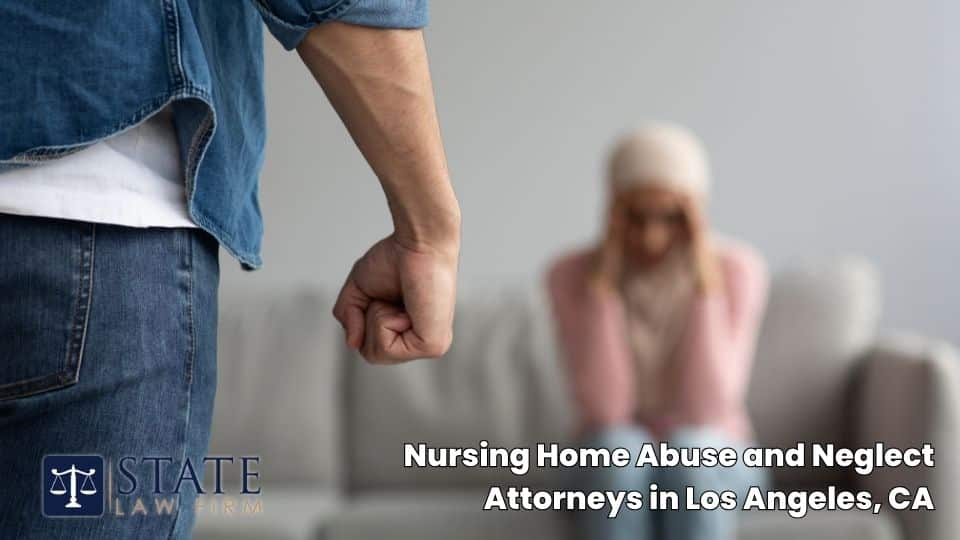
When families place an older adult into a nursing home or skilled nursing facility, they are trusting the facility with daily essentials: safety, hygiene, nutrition, medication routines, mobility support, and dignity. When that trust breaks, the harm tends to show up fast, and it can spiral if nobody steps in quickly. Federal rules require nursing facilities to protect resident rights and maintain an environment that supports quality of life, not just basic survival.
Abuse can be an intentional act, while neglect is often a harmful failure to act. Public health authorities describe abuse of older adults as an intentional act or a failure to act that causes harm or creates a serious risk of harm, usually by someone in a trusted role. That matters in real cases because “what happened” may look like a single incident — a bruising injury, a sudden fear of a staff member — or it may look like a pattern: missed turning schedules, recurring dehydration, repeated falls, worsening bedsores.
A big reason nursing home abuse and neglect can be difficult to catch is that vulnerability is often built into the situation. Isolation, cognitive impairment, and dependency on caregivers can increase risk and reduce reporting. Even in settings that look clean and professional on the surface, families may be dealing with underlying issues like inadequate oversight, poor compliance systems, or chronic staffing gaps — all of which can raise the chance of unsafe care.
For a broader overview of how these claims work, visit our nursing home abuse and injury claims page.
What the law treats as abuse, neglect, and elder exploitation
California law is very specific about who qualifies as an “elder,” what counts as abuse, and what qualifies as neglect.
In California, an “elder” is defined as a person who lives in the state and is age 65 or older. This differs from some public health definitions that use age 60 or older, so it is worth being clear when talking about a California civil claim.
California defines “abuse of an elder or dependent adult” to include physical abuse, neglect, abandonment, isolation, abduction, deprivation of necessary goods or services, and financial abuse. The key takeaway for families is that abuse is not limited to hitting — it also includes harmful deprivation and exploitation.
California’s statutory definition of “neglect” focuses on negligent failure by a caregiver or custodian to use reasonable care, and it specifically includes failures tied to basics like hygiene, food, shelter, medical care, protection from hazards, and preventing malnutrition or dehydration. That definition lines up with what families see in the real world: avoidable bedsores, a resident who is not being helped to the bathroom, missed medications, unsafe transfers, or a loved one quietly losing weight.
Federal regulations also matter in nursing home cases because they set standards facilities must follow to participate in Medicare or Medicaid. Examples that show up constantly in abuse and neglect claims include:
- Resident rights and dignity requirements
- Freedom from abuse, neglect, exploitation, and misappropriation — along with reporting obligations when allegations arise
- Quality of care rules that speak directly to preventable harms, including pressure ulcer prevention
- Nutrition and hydration requirements calling for a nourishing, well-balanced diet appropriate to the resident’s needs
If your family is dealing with a situation involving elder sexual assault, our guide on navigating elder sexual abuse cases covers the investigation steps and legal options in more detail.
Red flags your family should not ignore

Families in Los Angeles usually reach out after a moment that feels “off,” not after a perfectly documented chain of events. That is normal. The practical goal is to identify warning signs early, then document what you can while your loved one is still in the facility.
Physical and medical warning signs:
- Unexplained bruises, fractures, or repeated injuries that are dismissed as “clumsy” without a clear explanation
- Pressure injuries or worsening skin breakdown, especially if the care plan is vague or not followed
- Sudden weight loss, recurring dehydration, or chronic malnutrition indicators
- Medication issues: oversedation, missed doses, or inconsistent administration patterns
Behavioral and emotional warning signs:
- New fearfulness, withdrawal, agitation, or flinching around specific staff
- Unusual isolation from family, blocked visits, or pressure not to ask questions — California’s abuse framework explicitly includes “isolation” in the abuse definition
Facility and documentation warning signs:
- “Injuries of unknown source,” vague incident notes, or delayed notification after a serious event — federal rules specifically treat unknown-source injuries and alleged violations as reportable issues
- Staff reluctance to provide charts, care plans, or coherent explanations of what changed and why
One scenario that shows up constantly is a fall with unclear circumstances, delayed assessment, or inconsistent stories. For more on how to handle that situation, see our article on how to handle an unwitnessed fall in a nursing home.
What to do right away if you suspect abuse or neglect
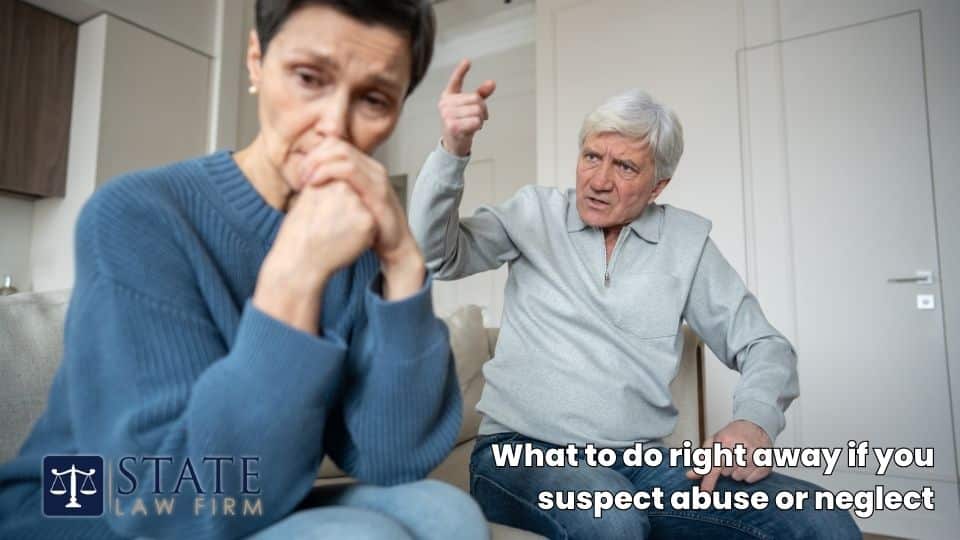
If you suspect nursing home abuse or neglect, speed matters — but so does structure. The goal is to protect the resident first, then preserve proof in a way that holds up later.
Get medical attention and insist on proper evaluation. If there is any sign of serious injury, infection, dehydration, head trauma, or sudden decline, push for immediate evaluation. Medical documentation is often the clearest timeline you will ever get.
Document what you can without escalating conflict. Take date-stamped photos if appropriate, keep a visit log, and write down staff names and exact explanations. If a facility later claims an event was unavoidable, contemporaneous notes can become the difference between a weak file and a strong one. Federal guidance treats allegations, unknown-source injuries, and misappropriation as events facilities must respond to and report, which makes your documentation leverage.
Report to the right agency based on the facility type. A major point of confusion is that “senior care” is not regulated by one single office.
For skilled nursing facilities and many nursing homes, California routes complaints through the California Department of Public Health. The state provides ways to file complaints, including online systems that route complaints to the correct district office.
For assisted living and many residential care settings, complaints may route differently. California’s mandated reporting framework distinguishes between long-term health care facilities and residential care facilities for the elderly, and licensing guidance notes that complaints for health care facilities should be directed to the California Department of Public Health licensing and certification division.
Use the Long-Term Care Ombudsman to advocate for the resident. California runs the Long-Term Care Ombudsman structure through the California Department of Aging, including a statewide crisis line that can take calls at any time. In Los Angeles County, ombudsman support is commonly associated with WISE & Healthy Aging, which lists a hotline and process options for complaints.
Understand required reporting timelines for facilities and staff. Families are not responsible for knowing every reporting rule, but it helps to recognize when a facility is not doing what it should. California law requires long-term health care facilities to report alleged or suspected resident abuse to the state department immediately or within 24 hours. Federal rules also require nursing facilities to report alleged violations involving abuse, neglect, exploitation, mistreatment, injuries of unknown source, and misappropriation, with very short timelines depending on severity.
If you believe your loved one is at risk, talk with a Los Angeles nursing home abuse lawyer about your options.
How a Los Angeles nursing home abuse case is built
The difference between a complaint and a successful civil case is proof. Complaints can trigger investigations; civil claims aim to recover compensation and force accountability. The best cases often do both.
How liability is established. Most nursing home abuse and neglect matters are built around some combination of statutory abuse or neglect definitions under California elder protections, federal resident rights and care standards, and facility reporting and compliance obligations. That combination is powerful because it creates multiple angles to show that the harm was preventable and tied to systemic failures — not just “an unfortunate outcome.”
Evidence that tends to move the needle. In long-term care cases, key records often include care plans, charting, medication administration records, wound care notes, hydration and nutrition logs, staffing documentation, incident reports, and internal investigation material. That is especially true for issues regulators focus on, like pressure ulcer prevention, nutrition services, and response to alleged abuse or unknown-source injuries.
Why facility quality data can matter. The Centers for Medicare & Medicaid Services created the Five-Star Quality Rating System to help consumers compare nursing homes, including component ratings for inspections, staffing, and quality measures. While star ratings do not prove a particular incident, they can help identify patterns worth investigating further.
Deadlines and timing. In California, many injury and wrongful death civil actions must be filed within two years. But nursing home cases can involve exceptions, including shorter timelines if a government entity is involved — for example, California requires claims involving death or injury against a public entity to be presented within six months. The practical takeaway is simple: do not wait to get legal advice if the resident is actively at risk or if the facility is already shaping the narrative.
For more on how cases are resolved, see our article on the difference between filing a lawsuit and settling out of court.
Damages and potential enhanced remedies. Depending on the facts, California elder abuse law can allow enhanced remedies. If required standards are met and the defendant is found liable under specific elder abuse or neglect frameworks with the proper proof standards, California law can require an award of reasonable attorney’s fees and costs. Those details are case-specific, but they matter because they can change leverage in negotiation and trial planning.
For more on how legal representation affects the process and outcome, see our articles on the benefits of hiring a personal injury attorney and how insurance companies influence injury claims.
If a case involves a death that may have been preventable, our Los Angeles wrongful death lawyers can help evaluate the situation. You can also read our guide on wrongful death claims in California for background on how these cases work.
Talk with State Law Firm about nursing home abuse claims
When you are dealing with possible neglect or mistreatment in a facility, it is hard to know whether you are overreacting or missing something critical. The reality is that both state and federal rules treat abuse, neglect, unknown-source injuries, and exploitation as serious compliance issues, and facilities have specific duties to address and report them. A consultation is often the fastest way to translate confusing facts into a concrete plan.
With over 40 years of legal expertise, our team has the experience to evaluate nursing home abuse and neglect claims and guide families through the process. You can learn more about our attorneys, read what past clients have said on our testimonials page, or browse our frequently asked questions.
If you are ready to discuss your situation, request a free consultation or visit our Los Angeles nursing home abuse lawyer page to learn more about how we handle these cases.
This article is general information and not legal advice. Reading this does not create an attorney-client relationship. For guidance specific to your situation, schedule a free consultation.
Related legal resources: Nursing home abuse resources, San Mateo Nursing Home Abuse Lawyer: Protecting Vulnerable Seniors and Their Families, Alhambra Nursing Home Abuse Lawyer, Torrance Nursing Home Abuse Lawyer, Antelope Valley Nursing Home Abuse Lawyer, Free consultation.