English
  Spanish
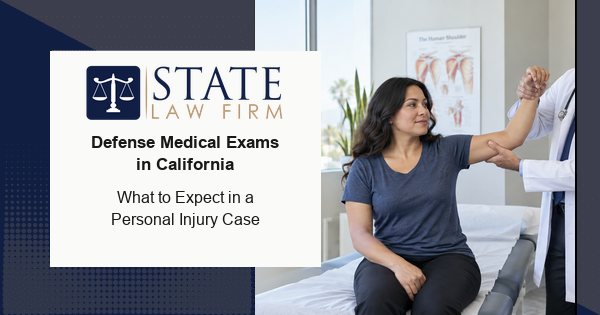
A defense medical examination is an examination requested by the opposing side after a California personal injury lawsuit places a person’s physical or mental condition in dispute. It is sometimes called an “independent medical examination,” or IME, but the examiner is ordinarily selected and paid by the defense. The examination can affect how the insurer, lawyers, experts, and ultimately a jury evaluate the nature, cause, and extent of the claimed injuries.
Receiving an examination demand does not mean the defense has disproved an injury. It does mean the notice, proposed scope, examiner, timing, and response should be reviewed carefully. California law sets different rules for ordinary physical examinations, additional examinations, and mental examinations.
What Is a Defense Medical Examination?
A defense medical examination, often shortened to DME, is part of the civil discovery process. It gives a defendant an opportunity to have a qualified physician evaluate an injury that the plaintiff has placed at issue in a lawsuit.
The physician is not the injured person’s treating doctor. The examination is performed for litigation, and the examiner may prepare a report, offer opinions, or testify about matters such as diagnosis, causation, impairment, prognosis, treatment, or claimed limitations. The examiner’s role and permitted scope depend on the demand, any agreement between the parties, and any applicable court order.
A DME should also be distinguished from a workers’ compensation qualified medical evaluation, an insurance-policy examination, or a routine appointment with a treating provider. Those processes follow different rules and serve different purposes.
When Can the Defense Require a Physical Examination?
Under California Code of Civil Procedure section 2032.220, a defendant may demand one physical examination in a case where the plaintiff seeks recovery for personal injuries, without first obtaining court permission, when two conditions are met:
- The examination does not include a painful, protracted, or intrusive diagnostic test or procedure.
- The examination takes place within 75 miles of the examinee’s residence.
The statute requires the demand to identify the examination’s time, place, manner, conditions, scope, and nature, along with the examining physician and the physician’s specialty, if any. The examination must generally be scheduled at least 30 days after service of the demand, although a court may shorten that period.
Those rules do not give either side permission to improvise. A proposed test, interview, or procedure outside the stated scope may require an agreement, a modified demand, or court review.
Additional physical examinations
A defendant seeking an additional physical examination generally must obtain leave of court. The motion must describe the proposed examination, and the court may grant it only on a showing of good cause. Whether another examination is justified can depend on the injuries at issue, medical developments, specialties involved, earlier examinations, and the proportional needs of the case.
Mental examinations
A mental examination is not governed in the same way as the ordinary first physical examination. It generally requires a court order and good cause. The condition must be genuinely in controversy, and any order should define the examiner, timing, procedures, conditions, scope, and nature of the examination. Merely seeking ordinary pain-and-suffering damages does not necessarily answer every question about whether a mental examination is justified.
What Should the Examination Demand Include?
A person who receives a DME demand should not evaluate it based only on the appointment date. The complete notice matters. Counsel may review:
- the examiner’s name, specialty, and qualifications;
- the date, time, location, and expected duration;
- the body areas and conditions to be examined;
- each proposed test or diagnostic procedure;
- questionnaires, medical-history forms, or releases;
- requests to bring records, imaging, medication, or assistive devices;
- restrictions concerning an attorney, representative, interpreter, or recording;
- whether the demand appears to exceed the injuries actually placed in controversy; and
- whether the notice complies with the applicable deadlines and distance requirements.
Code of Civil Procedure section 2032.230 generally requires a written response within 20 days after service of a physical-examination demand. The response may agree, agree with specified modifications, or refuse for stated reasons. A court may shorten or extend that period on motion. Because objections and modifications are procedural decisions, an injured person represented by counsel should send the demand to the lawyer promptly rather than responding personally.
What Happens During a Defense Medical Examination?
The details vary by specialty and injury. An orthopedic examination may look different from a neurological, dental, ophthalmological, or psychiatric evaluation. A physical DME may include:
- questions about the accident and symptom history;
- discussion of earlier injuries, illnesses, treatment, or surgeries;
- observation of movement, posture, gait, or use of an assistive device;
- range-of-motion, strength, reflex, sensation, or other clinical testing;
- review of imaging or medical records made available to the examiner; and
- questions about work, recreation, household activity, and daily limitations.
The examinee should give accurate, concise answers and make a genuine effort during appropriate testing. Guessing, exaggerating, minimizing, or turning the visit into an argument can create an unreliable record. It is equally important not to agree casually to paperwork, testing, imaging, or interviews outside the reviewed scope.
The examination is not treatment. The examiner may not provide ongoing care, and an ordinary physician-patient relationship may not arise from the litigation examination. Medical emergencies and treatment decisions should continue to be addressed with the person’s own qualified providers.
Can an Attorney or Representative Attend or Record the Exam?
California distinguishes physical examinations from mental examinations. Under Code of Civil Procedure section 2032.510, an examinee’s attorney or the attorney’s representative generally may attend and observe a physical examination, but may not participate in or disrupt it. Disputes about attendance, conduct, recording, or conditions may require an agreement or protective order.
For mental examinations, section 2032.530 gives both the examiner and examinee the right to record the examination using audio technology. Attendance by counsel or another person during a mental examination may depend on agreement, applicable case law, or a court order.
Recording rules should not be assumed from ordinary consumer-recording laws or from advice written for another state. The examination type, controlling order, and current California authority must be reviewed before anyone records or brings an observer.
How Can a DME Affect a Personal Injury Claim?
The defense may use the examination to test whether the claimed condition matches the medical records, accident mechanism, treatment history, reported symptoms, and observed function. The resulting opinions may influence settlement discussions, expert discovery, motions, mediation, or trial.
Common disputed issues include:
- whether the collision or incident caused the diagnosed condition;
- whether a prior condition explains some or all of the symptoms;
- whether treatment was reasonable and related to the injury;
- whether the person has lasting impairment or restrictions;
- whether future care is reasonably necessary; and
- whether reported limitations are consistent with clinical findings and other evidence.
A defense opinion is evidence, not an automatic final answer. Treating records, diagnostic studies, prior and subsequent medical history, testimony, work documentation, photographs, video, and other expert analysis may support, qualify, or contradict it. SLF’s guide to MRI evidence after a California car accident explains why imaging must be considered together with the clinical record rather than treated as proof by itself.
How Should an Injured Person Prepare?
- Send the complete demand to counsel immediately. The response period may begin when the demand is served, not when the appointment occurs.
- Confirm the approved scope. Know the examiner, specialty, conditions at issue, permitted tests, location, and any attendance or recording arrangements.
- Review the medical timeline for accuracy. Refreshing dates and providers can reduce innocent mistakes, but answers should not be scripted.
- Follow ordinary medical restrictions. Do not stop medication, abandon an assistive device, or exceed physician-imposed restrictions merely for the examination.
- Arrive on time and remain professional. Conduct before, during, and immediately after the appointment may become part of the dispute.
- Answer what is asked truthfully. If a person does not know or remember, saying so is more accurate than guessing.
- Report any significant problem promptly. Unexpected tests, abusive conduct, excessive duration, new symptoms, or departures from the agreed scope should be documented and discussed with counsel.
Preparation is about accuracy, not performance. The objective is to ensure the examination reflects the person’s actual medical condition and complies with the governing demand or order.
Can You Obtain the Examiner’s Report?
California Code of Civil Procedure section 2032.610 provides a procedure for a party who submits to an examination to demand a detailed written report. The requested material can include the examiner’s history, examinations, findings, test results, diagnoses, prognoses, conclusions, and reports of earlier examinations of the same condition by that examiner or another examiner.
The statute also contains reciprocal consequences and work-product provisions that should be evaluated before making the demand. Counsel may compare the report with the examination conditions, underlying records, diagnostic evidence, treating-provider opinions, deposition testimony, and the examiner’s prior statements.
What If the Demand Seems Improper?
Potential disputes may involve insufficient notice, excessive travel, an unrelated specialty, vague or overly broad testing, repeated examinations, intrusive procedures, mental testing without the required showing, or restrictions that conflict with governing law. Depending on the problem, the parties may agree to modifications, meet and confer, or seek a protective order or other court ruling.
Ignoring a valid demand is risky. California law permits courts to impose monetary, evidence, issue, or even terminating sanctions in some circumstances when a required examination is not completed. The safer approach is timely review and a written response through counsel.
When Legal Review May Be Useful
A DME request ordinarily arrives after litigation has begun, when the medical issues and claimed damages may already be contested. Legal review is especially important when the proposed examination involves multiple specialties, psychological testing, invasive procedures, a prior condition, permanent impairment, future care, disputed causation, or an examiner expected to testify at trial.
State Law Firm represents injured people in California personal injury matters and can evaluate the examination demand within the larger evidence and litigation strategy. Readers injured in a collision can also learn about the firm’s approach through its Sherman Oaks car accident practice. Every case, demand, and court order is different, so this general information is not a substitute for advice about a particular lawsuit.
Frequently Asked Questions
Is a defense medical examination actually independent?
The examiner is generally selected and compensated by the defense, even though the process is frequently called an independent medical examination. The examiner’s opinions must still be evaluated alongside the complete medical and factual record.
Does every California injury claimant have to attend a DME?
No. The civil-discovery procedure generally applies after a lawsuit and depends on the condition placed in controversy, the type of examination, and compliance with statutory or court-ordered requirements.
Can the defense conduct more than one examination?
Additional examinations may be permitted, but the defense generally needs a court order and must show good cause when seeking an examination beyond the ordinary first physical examination allowed by statute.
Can a DME doctor require painful or intrusive testing?
The first physical examination available without a court order may not include a painful, protracted, or intrusive diagnostic test or procedure. Other proposed procedures should be evaluated under the demand, any agreement, and any court order.
Should I discuss the accident with the examiner?
The examination may include relevant history questions. Responses should be truthful and concise. Counsel can explain the approved scope and help distinguish legitimate medical history from questioning that may exceed it.
Can refusing an examination hurt the case?
Refusing or failing to attend a properly required examination can lead to a motion and possible sanctions. A person who believes the demand is improper should obtain prompt legal review and use the available objection or protective-order procedures rather than simply ignoring it.