English
  Spanish
State Law Firm | Glendale, California
Glendale Motorcycle Accident Lawyer
A motorcycle injury claim starts with what happened, not assumptions about riders. State Law Firm helps injured Glendale riders and passengers review collision evidence, disputed fault, and insurance options.
Free initial consultation
Rider and passenger injury claims
Evidence and insurance review
Serving Glendale from Sherman Oaks
Keep the crash date, exact location, incident number, and information about where the motorcycle is stored. Preserve original footage and damaged gear when possible. A consultation can begin before every record is available, and time-sensitive evidence or deadlines may need prompt attention.
Legal Help for Injured Glendale Riders and Passengers
After a motorcycle collision, the bike may be towed away before you can photograph it, witnesses may leave, and an insurer may question your lane position or speed. State Law Firm helps injured riders and motorcycle passengers in Glendale examine what happened and identify the evidence needed for an injury claim.
Our review considers the movements of every vehicle, roadway conditions, available recordings, injury documentation, and applicable insurance. Riding a motorcycle does not explain who caused a collision. The claim needs an investigation of the actual events, not assumptions about riders. Start with a free consultation even if you are still waiting for the police report.
Reconstructing a Motorcycle Crash in Glendale
On Brand Boulevard, Central Avenue, or San Fernando Road, details such as the intersection, turn movement, lane markings, and sightlines can matter more than the street name alone. For an incident on I-5, SR-134, or SR-2, record the direction, nearest exit, and whether the impact occurred on a freeway lane, ramp, or connecting street. This helps locate witnesses, records, and the investigating agency.
Glendale’s Vision Zero Action Plan provides roadway-safety context. A corridor’s inclusion in a city plan does not establish fault in a particular crash. The condition of the road and the conduct of the people involved must be evaluated for the date and location of your incident.
Left turns across a rider’s path
Signal timing, approach direction, sightlines, and the point of impact can help explain a disputed turn. Identify independent witnesses and preserve original camera recordings when available.
Lane changes and lane splitting
Record each vehicle’s lane, traffic speed, spacing, and movement before contact. Damage patterns and footage may help distinguish a lane change into a rider from a different collision sequence.
Pavement, debris, and work zones
Photographs of a defect or obstruction should show its exact location and surrounding markings, if safely available. Identifying who controlled the area and whether notice existed may require a separate investigation.
Rear impacts and secondary collisions
Note whether the motorcycle was stopped, slowing, or already involved in an impact. Preserve information about every vehicle and the order of events, including a passenger’s account.
Lane Splitting and Disputed Fault
Lane splitting is legal in California, but that does not resolve responsibility for every collision. The CHP advises riders to consider traffic speed, the speed difference between vehicles, lane width, surrounding vehicles, lighting, weather, and road conditions. Its California Motorcyclist Safety guidance also distinguishes lane splitting from riding on the shoulder. Do not treat a single speed or speed difference as a guarantee of safety or freedom from fault.
If an adjuster says lane splitting caused your injuries, preserve the explanation and the supporting evidence they identify. California’s comparative-fault rules can reduce damages by the injured person’s share of responsibility. A disputed allegation is not a substitute for examining the facts. See California civil jury instruction CACI 405 and our California lane-splitting guide for additional background.
Preserve the Motorcycle, Gear, and Original Records
Call 911 for an emergency and prioritize medical care. Do not return to a dangerous roadway to gather evidence. Once it is safe, organize the records you already have and tell your attorney where the motorcycle and damaged equipment are being stored.
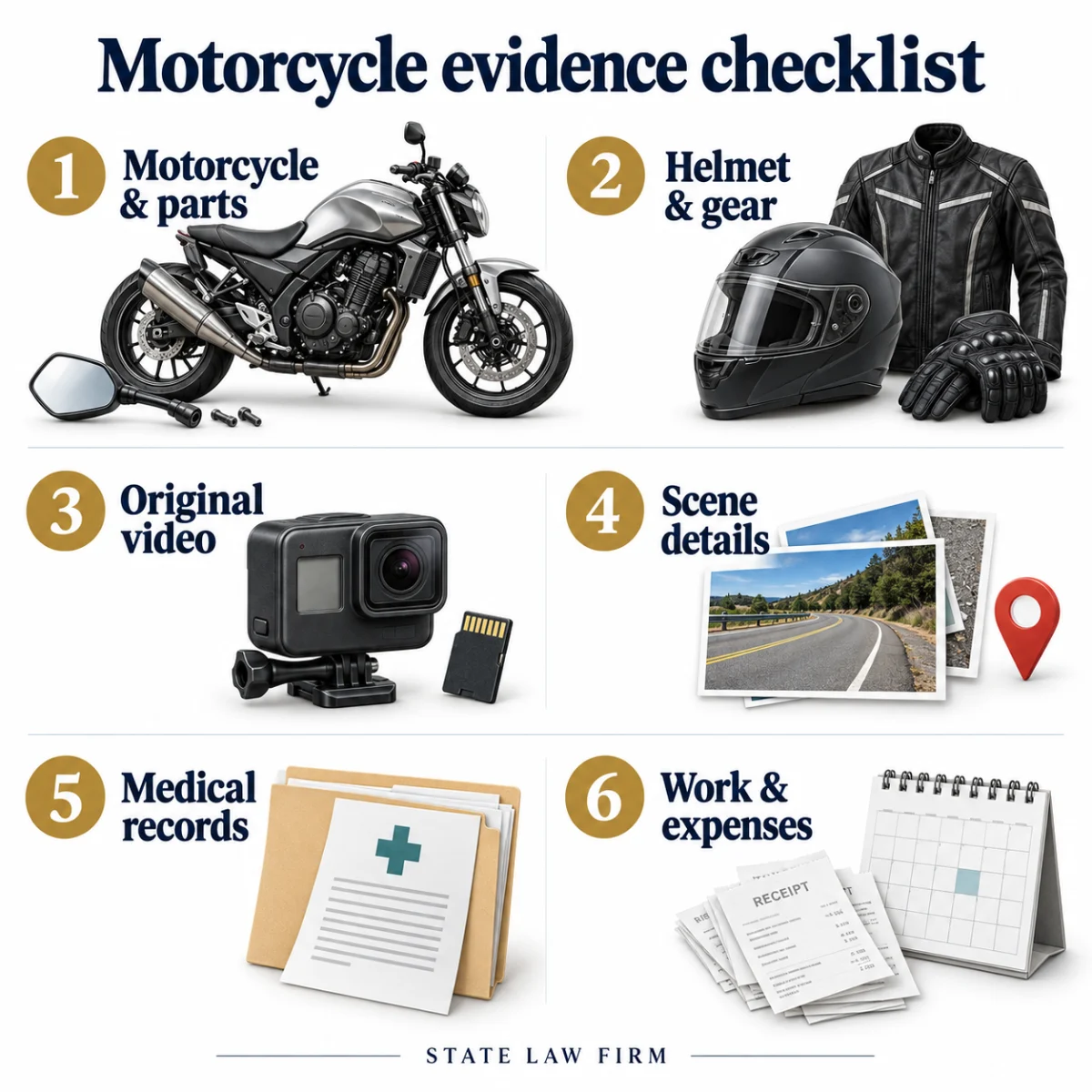
- Motorcycle and parts: keep photographs of all sides, repair estimates, towing details, and the storage location. Before repair, sale, or disposal, ask whether an inspection or preservation request is needed; discuss accumulating storage charges promptly.
- Helmet and riding gear: retain damaged gear and photographs when possible. Preserving an item as evidence is not a recommendation to use it again.
- Video and scene details: keep unedited helmet-camera or dashcam files, timestamps, photographs, witness contacts, and the incident number. Note nearby cameras without assuming footage exists or remains available.
- Injury and treatment records: keep visit dates, discharge instructions, bills, and photographs documenting visible injuries over time. Discuss symptoms and treatment decisions with your healthcare providers.
- Work and insurance records: preserve missed-work dates, earnings records, policy documents, claim correspondence, settlement offers, and proposed releases.
Our resources on road-rash injuries and camera evidence explain additional documentation issues. Treatment needs and access to evidence differ from case to case.
Glendale Collision Reports and the Separate DMV Report
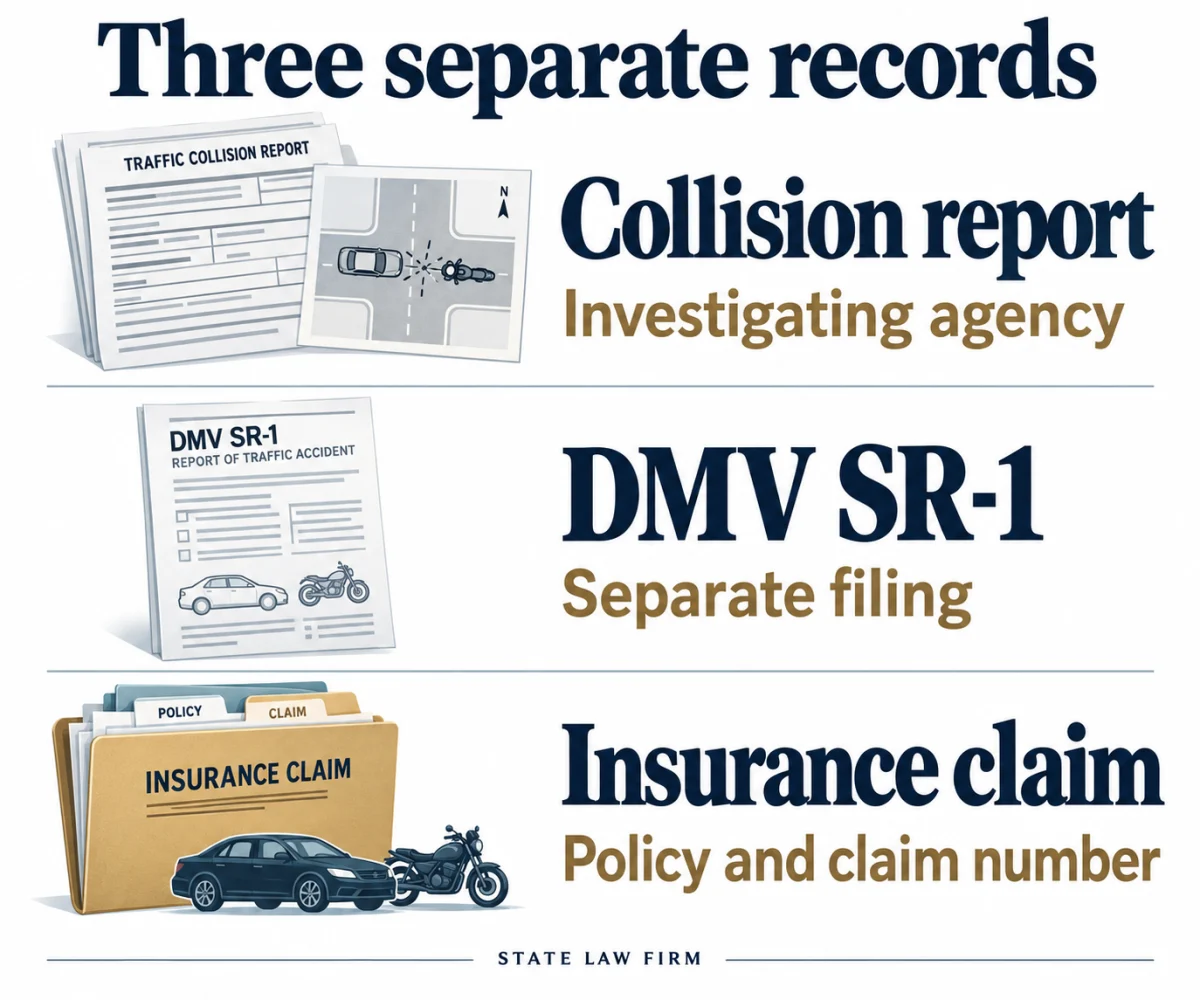
If Glendale Police investigated, start with the department’s official Traffic and Parking report information. Have the crash date and incident number ready, and check current eligibility, identification, availability, and fee requirements. If CHP or another agency handled the incident, request the report from that agency instead.
A police report does not replace the DMV’s SR-1 accident report. The DMV requires an SR-1 within 10 days if anyone is injured or killed, or property damage exceeds $1,000. An insurance report is also separate. Review the official instructions and our California SR-1 guide rather than assuming another report satisfied this requirement.
Evaluating Injuries, Losses, and Insurance
A motorcycle injury claim may involve medical bills, lost earnings, property damage, and the effect of injuries on daily activities. Ongoing treatment, work restrictions, scarring, or future care may require additional documentation. The evidence must connect the claimed losses to the collision; the appearance of the damaged bike alone cannot establish the value of an injury claim.
When retained, State Law Firm can help organize records, review available insurance, communicate with adjusters, and evaluate negotiation or litigation. Liability disputes, policy terms, available coverage, and the medical evidence can affect the options. We do not promise a settlement amount or a faster resolution. For an incident involving a rideshare vehicle, also see our Glendale Uber and Lyft accident page.
Review Filing Deadlines Promptly
California generally provides two years to file an injury lawsuit under Code of Civil Procedure section 335.1, but exceptions and different claims can change that period. Do not calculate your deadline from a general website statement.
A potential claim involving a public entity, such as an alleged dangerous roadway condition, may require an administrative injury claim within six months, followed by separate lawsuit deadlines. The California Courts government-claim guidance explains that process. Ask for a case-specific review early, even while treatment or insurance discussions continue.
Meet the Attorneys

Eddie Tehrani
Eddie Tehrani founded State Law Firm after working in Los Angeles law offices handling personal injury and civil litigation. Read his background and discuss the firm’s approach to your motorcycle injury matter.
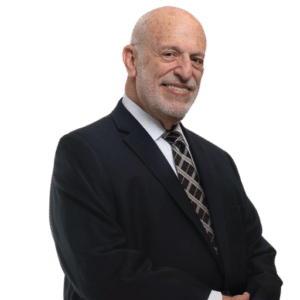
Arnold Gross
Arnold Gross’s firm biography describes personal injury and wrongful death trial work, as well as mediation and arbitration experience. Learn more about his professional background on the attorney page.
Serving Glendale From Our Sherman Oaks Office
Consultations for Glendale riders and passengers are coordinated through State Law Firm’s main office at 15490 Ventura Blvd #205, Sherman Oaks, CA 91403. Start by phone or online and ask about meeting arrangements before traveling. Visit Locations for office information, or contact the team at (877) 659-9223.
Frequently Asked Questions
Does lane splitting automatically make me at fault?
No. Lane splitting is legal in California, but the circumstances still matter. Speed, spacing, visibility, and the movements of other vehicles should be assessed. Any share of responsibility attributed to you can affect damages under comparative-fault rules.
What if a driver caused me to crash without touching my motorcycle?
A no-contact incident requires careful review of how the other vehicle’s movement contributed to the crash. Witnesses and original recordings may be especially useful. Identifying the driver and reviewing policy terms are important; available insurance coverage should not be assumed.
Should I repair the motorcycle before speaking with a lawyer?
Ask promptly whether an inspection is needed before repairs, sale, or disposal. Preserve photographs, estimates, and storage information. Discuss towing and storage costs at the same time so that preserving evidence does not leave those practical issues unaddressed.
Can I start before the Glendale police report is available?
Yes. Bring the incident number, crash date, photographs, insurance letters, and treatment records you have. A consultation can identify missing records and urgent preservation or deadline questions without waiting for a complete report.
How much is a Glendale motorcycle injury claim worth?
No preset amount applies to every rider. Injury documentation, treatment needs, financial losses, responsibility, and available insurance all affect an assessment. Online averages and another person’s result do not establish the value of your claim.
Is a phone consultation free?
Yes. You can request a free initial consultation by phone or through the form below. Ask the team about any proposed attorney fees, case costs, and representation agreement before deciding whether to hire the firm.
Request a Glendale Motorcycle Accident Consultation
Tell us how to reach you about the motorcycle collision. Have the date, location, and any incident or insurance claim number available for the follow-up conversation.
This page provides general information, not legal advice. Contacting the firm does not by itself establish an attorney-client relationship. A case-specific review is needed to assess your rights and deadlines.