English
  Spanish
State Law Firm | Serving Oxnard, California
Oxnard Uber and Lyft Accident Lawyers
An Uber or Lyft collision can raise questions about the pickup, trip status, and more than one insurer. State Law Firm helps injured people in Oxnard review the records and discuss their options from our Sherman Oaks office.

Free initial consultation
Passenger and driver inquiries
Trip-record and insurance review
Sherman Oaks office
Keep the crash date, actual location, trip receipt, app messages, and responding agency information. Identify whose account booked the ride and preserve original files. You can ask for a consultation before the police report is ready; flag urgent notices and deadlines promptly.
An Uber or Lyft collision in Oxnard can involve a passenger’s trip receipt, a driver’s app activity, another vehicle, and several insurance contacts. Those records may describe different parts of the same event. State Law Firm’s Oxnard Uber and Lyft accident lawyers help injured passengers, drivers, pedestrians, and other road users organize the facts and discuss possible claims. A platform name on a receipt does not, by itself, establish who is responsible or what coverage applies.
Oxnard Pickup Locations Need More Than an App Pin
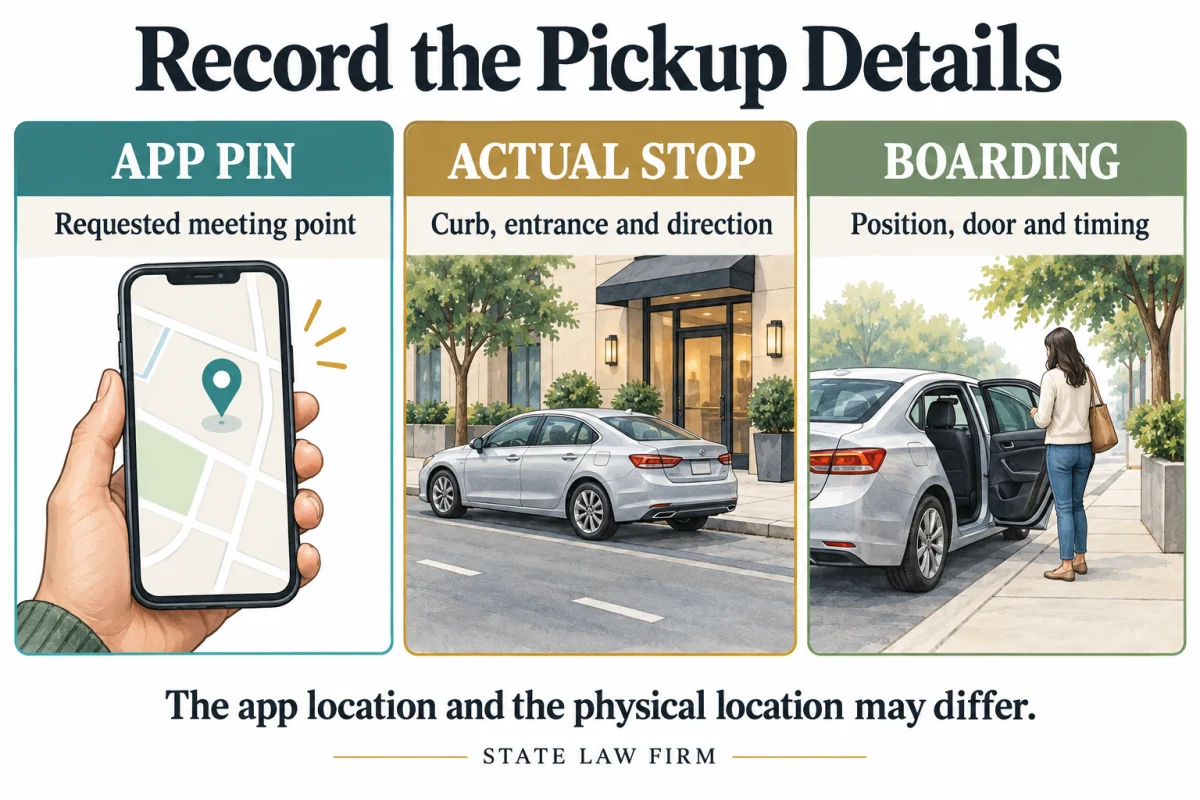
A trip connected to downtown Oxnard or the John C. Zaragoza Oxnard Transit Center at 201 East Fourth Street may involve a walk from the requested pickup point to the car. Record the actual curb, entrance, and direction of travel, not only the destination shown in the app. This location reference does not identify an official rideshare loading zone or suggest that a crash happened there.
If an injury happened while approaching, entering, or leaving the vehicle, explain where you were, which door was involved, and whether the car was stopped or moving. For a collision during the ride, note the street or freeway, direction, and nearest intersection or exit. Distinguish what you personally observed from what someone later told you.
- App pin: Preserve the requested meeting point and any messages changing it.
- Actual stop: Identify the curb, driveway, parking area, or entrance where the car stopped. Keep original scene photographs if they can be taken safely.
- Boarding or exit: Describe your position, the door, and the timing. An app’s trip-start or trip-end timestamp may not explain every physical movement.
Build the Trip Timeline From the Records
A useful timeline connects the ride request, pickup, incident, and end of the trip without guessing missing details. The collision might occur before pickup, during travel, or near drop-off. Keep the original records even when two timestamps do not agree; differences can be investigated rather than edited away.
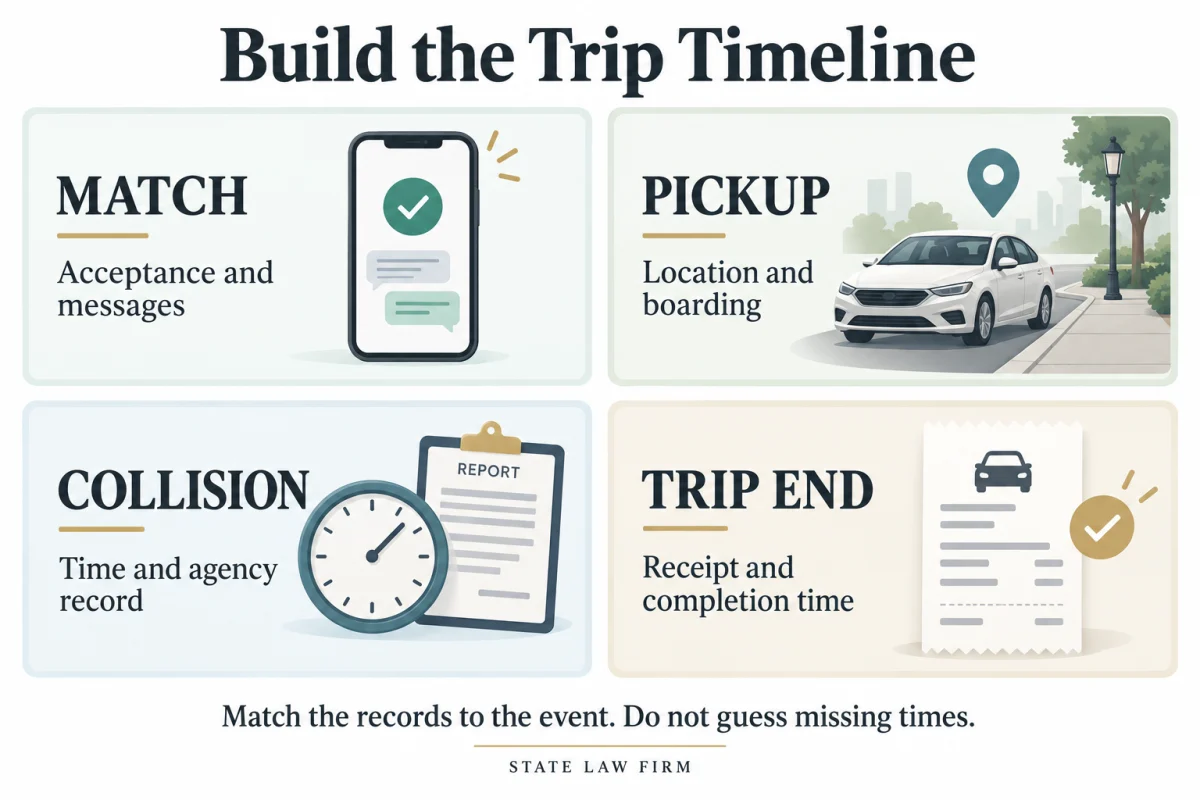
- Match: Save the accepted request, driver and vehicle information, and app messages available to you. A cancellation or change to another driver may also matter.
- Pickup: Keep the requested and actual locations, boarding details, and relevant messages. Identify who booked the ride if it was arranged by someone else.
- Collision: Record the approximate time, responding agency, report number, and witness information. Label a time as approximate when it is based on memory.
- Trip end: Preserve the receipt, completion or cancellation notice, and support correspondence. Keep later corrections as separate records instead of replacing the original.
Do not share your account password to provide evidence. Ask how to deliver sensitive trip or medical records securely. If the ride was booked through a family member, employer, or another person’s account, identify that person and the records they hold without accessing an account without permission.
App Status Is an Insurance Question, Not a Settlement Promise
Separate the factual situations: the app was offline; the driver was online waiting for a request; a request had been accepted; or a passenger was in the vehicle. Also preserve when the trip and app transaction ended. Do not infer the driver’s status solely from a decal or an open passenger app.
Public Utilities Code section 5433 sets different insurance requirements for specified operating stages. Its current text reflects amendments effective January 1, 2026. Review the law and actual policies applicable to the collision date; an older insurance chart may be misleading. Liability coverage, uninsured/underinsured motorist coverage, and damage to the driver’s own vehicle are different questions. A policy limit is not a promised payment.
Bring every claim number, policy document, coverage letter, and insurer contact you have. Tell counsel if the driver used more than one app or was making a delivery instead of transporting a passenger. Those facts need separate review. Do not assume one insurer’s response resolves every possible claim, or that a support representative’s message is the complete policy.
Different People May Need Different Claim Reviews
- Passengers: Keep your trip receipt and describe your seat, observations, and injuries. You may not know which driver caused the collision; that uncertainty is a reason to review the evidence, not to guess.
- Rideshare drivers: Preserve the relevant app activity, vehicle records, personal and rideshare insurance documents, and communications. Distinguish an injury inquiry from vehicle damage, lost driving income, or account-access concerns.
- People in another vehicle: Record the other car and driver’s identifying information. Ask how app status can be investigated if you do not have access to the trip record.
- Pedestrians and cyclists: Describe the crossing, vehicle movement, stopping position, and any door opening. You do not need to have booked a ride to ask about an injury involving a rideshare vehicle.
For an Oxnard collision without a rideshare issue, see the separate Oxnard car accident page. Our rideshare accident practice page provides broader Uber and Lyft resources.
Request the Right Report and Check Whether Footage Exists
Oxnard Police: The city’s police-records guidance directs traffic collision report requests to CrashDocs, with the Police Records Unit handling questions and missing report numbers. Do not use the general public-records portal as a substitute. Check current access requirements with the department.
CHP: If CHP investigated, follow its CHP 190 instructions for eligible requesters, identification, and fees. CHP cannot supply a report investigated by a different police department. Start with the agency identified on the incident card.
Video: Oxnard states that its intersection cameras provide live monitoring and do not retain recordings. Do not assume a visible city camera captured the event. Private business cameras, dashcams, or witness recordings are separate possibilities; availability and retention vary. Preserve your own original files and identify other possible sources promptly. See our evidence-preservation resource.
DMV and platform reports: The DMV’s SR-1 instructions require reporting within 10 days when someone is injured or killed, or property damage exceeds $1,000. A driver or authorized insurance or legal representative can complete it. This is separate from a police or insurance report. Reporting through Uber or Lyft support also does not replace required government reporting or a legal filing.
Document the Injury and Review Requests Before Responding
Medical records, bills, work restrictions, missed-shift information, and receipts can help explain how the injury affected you. Keep a factual record of activity limitations and assistance you needed. Where treatment is continuing, distinguish current expenses from documented recommendations for future care. Seek appropriate medical care; gathering evidence should not delay treatment.
Ask who an insurance caller represents and keep copies of requested statements, authorizations, and releases. A property-damage payment and an injury settlement may address different issues, so read the actual documents before agreeing. The available claims and losses depend on the evidence, responsibility, and coverage; no standard online amount establishes the value of your case.
Identify Deadlines Before Waiting for a Report
Code of Civil Procedure section 335.1 generally provides two years for a personal injury lawsuit, subject to exceptions and other applicable rules. If a public entity may be involved, an injury claim generally requires presentation within six months after accrual under Government Code section 911.2, with separate lawsuit requirements afterward. Ask for review of the facts and dates rather than relying on a general summary.
A pending police report, platform support ticket, insurer conversation, or consultation request does not itself preserve a lawsuit deadline or present a required government claim. Mention any cancellation notice, release request, evidence-loss risk, or approaching deadline when contacting the firm.
Meet the Attorneys at State Law Firm

Eddie Tehrani
Eddie Tehrani founded State Law Firm after working in Los Angeles law offices handling personal injury and civil litigation. Review his background and discuss how the firm would approach your rideshare injury questions.
Arnold Gross
Arnold Gross’s firm biography describes personal injury trial work and mediation and arbitration experience. Review the team’s backgrounds and ask who would handle your matter.
State Law Firm serves Oxnard clients from its Sherman Oaks office at 15490 Ventura Blvd #205, Sherman Oaks, CA 91403. This page does not identify an Oxnard office or an affiliation with Uber or Lyft. Confirm meeting arrangements through our Locations page or call (877) 659-9223.
Frequently Asked Questions
Can I ask for a consultation if I did not book the ride?
Yes. Passengers whose ride was booked by someone else, people in another vehicle, pedestrians, and cyclists can ask about their circumstances. Bring the information available to you and identify any account holder or witness who may have relevant records.
What if the driver says the app was offline?
Preserve the statement and the trip or vehicle information you have. The driver’s account, app activity, and other records may need to be compared. Do not assume a decal proves online status or that you must obtain private app records before contacting an attorney.
What if I was injured while entering or leaving the car?
Describe the actual stopping place, door, vehicle movement, and your position. Save pickup messages and trip timestamps. The physical events and app records need to be considered together; a receipt alone does not settle responsibility or coverage.
Does reporting the crash in the app open every claim I need?
No. Keep the support confirmation, but separately address police, DMV, insurance, and legal requirements that apply to your situation. Ask what has actually been filed, with whom, and under which claim number.
Should I wait until the collision report is available?
You can request an initial consultation before it is ready. The crash date, location, agency, trip details, and urgent notices provide a starting point. Waiting for a report should not delay addressing a deadline or preserving evidence.
Where is the office and what does the consultation cost?
The office is in Sherman Oaks, not Oxnard. The initial consultation is free. Call (877) 659-9223 or use the consultation form to discuss arrangements, representation, fees, and costs before entering an agreement.
Discuss Your Oxnard Uber or Lyft Accident
Have the collision date, actual location, trip information, and any urgent notices available if possible. You do not need a complete claim file to ask an initial question. Request a free consultation or call (877) 659-9223 to discuss your next steps with State Law Firm.
Related legal resources: Rideshare accident practice, San Luis Obispo Uber and Lyft accident lawyers, Santa Monica Uber and Lyft accident lawyers, Fairfield Uber and Lyft accident lawyers, Sherman Oaks Lyft accident lawyer, Free consultation.