English
  Spanish
Why rideshare crashes in Oakland become complicated quickly
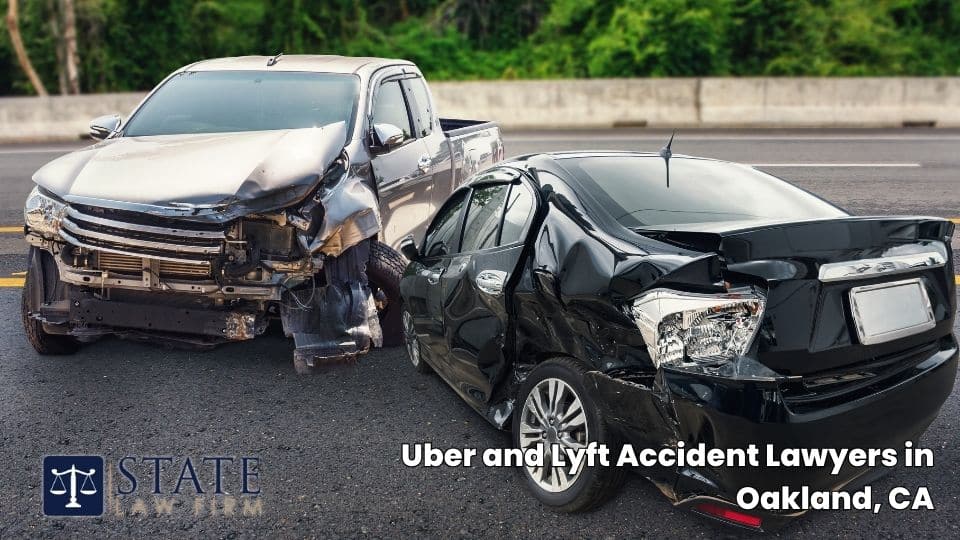
A rideshare collision in Oakland rarely follows the “standard” car-accident script. The biggest reason is that your claim can involve multiple layers of coverage and multiple decision-makers. In California, a rideshare claim can turn on what the driver was doing in the app at the exact time of impact — waiting for a request, on the way to pick someone up, or actively transporting a passenger. The insurance requirements change depending on that status, and so does the strategy for proving fault and maximizing recovery.
The legal and insurance rules you are dealing with are California-wide rules, not city-specific quirks. A well-built rideshare case usually comes down to three things: proving liability cleanly, documenting injuries thoroughly, and identifying every applicable policy early while time-sensitive evidence is still available.
For a broader overview of how we approach these cases, visit our rideshare accident lawyers page or browse our rideshare accident resources.
What to do right after an Uber or Lyft accident in Oakland
What you do in the first hour can shape the entire claim, because rideshare cases live and die on documentation.
Get safety handled first, then get the facts locked in. Call law enforcement, request medical help if needed, and make sure the incident is officially documented. Our guide on what to do after an Uber or Lyft car accident walks through the core sequence: contact police, document the scene, get medical evaluation, and speak with counsel before getting pulled into insurance conversations.
Treat the rideshare app like evidence. Screenshot anything that shows the ride status and trip details — driver name, trip time, route, receipts, messages. Those details help confirm the app “period,” which can affect insurance and liability analysis.
Focus on proof that does not change later. Photos from multiple angles, witness information, and any video sources nearby can protect you when stories start shifting. Our guide on filing a police report after an accident in California explains why the report is often the foundation for insurance and any future legal action.
Get the report. If a report was made, do not assume it will find its way to you. Our guide on how to obtain a California accident report covers the step-by-step process.
How insurance works for rideshare accidents in California
Rideshare insurance is not one-size-fits-all. California law structures coverage around what the driver is doing in the app, and the limits can be dramatically different depending on timing. The state’s framework is commonly described in “periods,” and California has long treated rideshare activity as distinct from ordinary personal driving.
Here is the practical high-level breakdown, based on California’s Public Utilities Code requirements including the SB 371 update:
Driver has accepted a ride and is in the active trip window: The required primary liability coverage is $1,000,000 for death, personal injury, and property damage.
Driver is logged into the app and available but has not accepted a ride: The required primary coverage includes at least $50,000 per person, $100,000 per incident, and $30,000 for property damage, plus an additional requirement for at least $200,000 in excess coverage.
Uninsured and underinsured motorist coverage (UM/UIM) for passengers: Under SB 371, the required UM/UIM coverage during the passenger window is $60,000 per person and $300,000 per incident, and the statute specifies it is primary and the transportation network company’s obligation.
A lot of people have heard “there is a million-dollar policy” and assume they are fully protected. That is not always the right conclusion. The $1,000,000 figure often applies to liability for a covered rideshare trip when the rideshare driver is at fault. UM/UIM is a different coverage bucket, and as of January 1, 2026, the minimum required UM/UIM limits are lower than they used to be.
Personal auto insurance has historically excluded “livery” (transporting passengers for hire), which is one reason these rideshare-specific insurance rules exist in the first place.
For background on how liability can shift among multiple parties, see our article on third-party liability in car crashes.
Building a strong Oakland rideshare injury case
In rideshare claims, “proof” is usually a stack of small things that add up: police documentation, medical records, timestamps, app status evidence, and objective video. The goal is to make liability and damages hard to argue with.
Start with items that disappear fast. Traffic and security video is often overwritten within days. Our guide on how to get traffic camera footage after an accident explains how to preserve time-stamped, neutral evidence that clarifies how the collision happened.
Do not treat a citation as the end of the story. A citation is not the same thing as civil liability, and California cases often come down to a fuller evaluation of evidence. Our article on how traffic citations affect a California personal injury case explains why objective evidence like cameras and telematics can outweigh a bare citation, and why moving quickly to preserve recordings matters.
The police report is often the backbone of the claim because it documents basic facts that insurers rely on early. Make sure you obtain your California accident report as soon as it is available.
If the adjuster pushes shared fault, treat it like a strategy problem. Our article on how to fight a 50/50 insurance claim covers building a counter-narrative through witness statements, scene photos, and documentation.
California applies pure comparative negligence, meaning fault can be split and recovery is reduced by your share rather than automatically barred at a 50% threshold. Even if you bear some responsibility, you can still recover for the portion that was not your fault.
How compensation and timelines work in California rideshare injury claims
If you are building an Oakland rideshare case, you are typically pursuing damages that fit into two categories: economic losses and non-economic harm.
Economic damages cover things like medical bills and lost income. Non-economic damages cover pain, suffering, and quality-of-life losses. Our article on special damages vs. general damages explains how these categories work in practice.
Many claims are resolved before trial, and demand packages are one of the main tools that drive settlement discussions. Our guide on what a demand letter is and how it impacts settlement explains how evidence is organized into a negotiation framework.
Timing is where many valid claims get damaged. For most California personal injury cases, the general statute of limitations is two years from the injury. Our explainer on the statute of limitations for personal injury claims in California also covers tolling concepts like minors and discovery issues, which can matter in less straightforward situations.
If a government entity is involved — for example, a public agency vehicle or a dangerous road condition maintained by a public entity — the deadlines can be much shorter and may involve a government claim process before a lawsuit can be filed.
For context on how evidence and liability arguments may evolve with changing enforcement tools, see our overview of new California traffic laws in 2026.
When to talk with a rideshare accident lawyer
Not every Oakland rideshare crash requires a lawyer. But certain fact patterns almost always benefit from legal help early, because evidence dries up quickly and insurers start shaping the narrative immediately.
A rideshare case is usually a strong candidate for attorney involvement when injuries are serious, liability is disputed, multiple vehicles are involved, or coverage becomes a puzzle across personal policies, rideshare policies, and UM/UIM layers. This is also true when the insurer starts floating “shared fault” arguments.
We handle rideshare accident claims across California, including specific experience with Uber accidents and Lyft accidents. If your crash happened in the East Bay, our nearby teams in Hayward and San Francisco also support the region.
If the crash happened during work activity — such as a work trip, a work errand, or driving as part of job duties — it can also raise workers’ compensation questions. Our article on workers’ compensation vs. personal injury after a work-related crash explains how both tracks can apply, and our California workers’ compensation lawyers can help evaluate your options.
With over 40 years of legal expertise, our team has the experience to navigate complex rideshare insurance disputes and build strong cases for injured passengers and other drivers. You can learn more about our attorneys, read client testimonials, or review case studies.
Ready to discuss your case? Schedule a free consultation.
This article is general information and not legal advice. Reading this does not create an attorney-client relationship. For guidance specific to your situation, schedule a free consultation.
Related legal resources: Uber and Lyft accident resources, Uber Crash Lawyer Sherman Oaks, Uber & Lyft Accident Lawyers – Chico, CA, Lyft Accident Lawyer Sherman Oaks, Uber & Lyft Accident Lawyers – Fairfield, CA, Free consultation.