English
  Spanish
When a commercial truck crashes into a passenger vehicle, the consequences are rarely minor. These cases are different from ordinary traffic collisions because the injuries are often more severe, the evidence is more technical, and the insurance fight is usually much harder than people expect. A serious truck wreck in San Jose can leave a person facing emergency treatment, missed work, long-term rehabilitation, and enormous uncertainty about what comes next. If you were hurt in a commercial vehicle collision, State Law Firm offers resources that can help you understand your rights, including guidance from our San Jose car accident lawyer page and our broader libraries on auto accidents and personal injury.
Truck accident claims demand fast action. The trucking company may already be gathering statements, downloading onboard data, reviewing camera footage, and preparing its defense within hours of the collision. Meanwhile, the injured person is left trying to get medical care and figure out how to protect a claim before critical proof disappears. That is why early legal guidance matters. Building a strong case means identifying every responsible party, preserving company records, proving the full extent of your injuries, and pushing back when insurers try to minimize what happened.
Why truck accident cases in San Jose are different
Truck crashes are not just bigger car accidents. They involve a commercial driver, an employer or motor carrier, company safety policies, licensing rules, driver qualification standards, inspection duties, maintenance records, and sometimes multiple insurance carriers. In many cases, there are also third parties involved, such as a freight broker, shipping company, maintenance contractor, or parts manufacturer. That extra complexity is one reason victims often benefit from the kind of truck-specific preparation discussed in our truck accident case guidance.
Commercial vehicles are subject to stricter rules than ordinary passenger cars. Licensing alone can become a major issue when a case involves a tractor trailer, heavy combination vehicle, tanker, or other large rig. Questions about driver qualifications, training, endorsements, and compliance can all affect liability. Our article on Class A license rules in California truck accident cases helps explain why licensing details matter so much when a serious crash is under review.
There is another major difference between a passenger vehicle claim and a truck claim: company control. In a two-car collision, the legal dispute often centers on what each driver did in the seconds before impact. In a commercial truck case, investigators also look at the bigger picture. Was the driver pressured to meet an impossible schedule? Was the truck properly inspected before the trip? Were brakes, tires, lights, or coupling systems maintained? Was the trailer overloaded or poorly balanced? Was the company ignoring safety complaints? These are the kinds of issues that separate a typical traffic claim from a commercial vehicle lawsuit, which is why our discussion of commercial vs. noncommercial vehicle accidents is so important for injured victims.
What commonly causes serious truck crashes
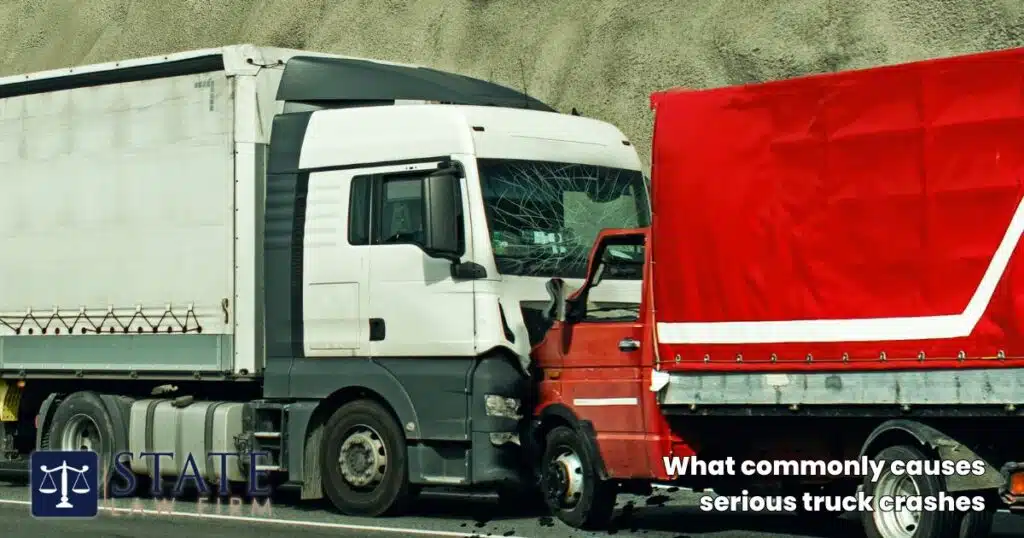
Truck accidents in San Jose can happen on freeways, major commuter routes, industrial streets, construction corridors, warehouse access roads, and crowded city intersections. The cause is not always a single mistake. In many cases, several failures stack on top of each other. A fatigued driver may already be behind schedule. A company may have skipped maintenance. Cargo may be loaded poorly. Weather or traffic may make stopping harder. Then one bad decision turns a dangerous situation into a catastrophic collision.
Fatigue is a recurring issue in commercial crash litigation because large trucks demand constant attention, longer stopping distances, and careful lane control. A tired driver can drift, miss traffic slowdowns, or react too late to a hazard. Licensing and compliance questions often overlap with fatigue cases, which is another reason to understand commercial licensing requirements and the broader differences between commercial and noncommercial vehicle claims.
Impairment can be another major factor. Commercial drivers are held to strict alcohol rules, and any evidence of drinking, substance use, or post-crash testing irregularities can change the direction of a case quickly. If impairment is suspected, our resource on truck driver alcohol rules and legal consequences gives useful context for how those violations can affect liability.
Other common causes of truck collisions include unsafe lane changes, blind-spot merges, speed too fast for traffic conditions, rear-end impacts in stop and go congestion, jackknife events, wide-turn collisions, underride crashes, overloaded trailers, brake failures, tire blowouts, distracted driving, and poor road conditions. When a road defect, dangerous shoulder, missing warning, pothole, or poorly maintained surface contributes to the wreck, our article on poor road maintenance injury claims in California can help explain how dangerous roadway conditions may become part of the legal analysis.
The injuries that make truck accident claims so serious
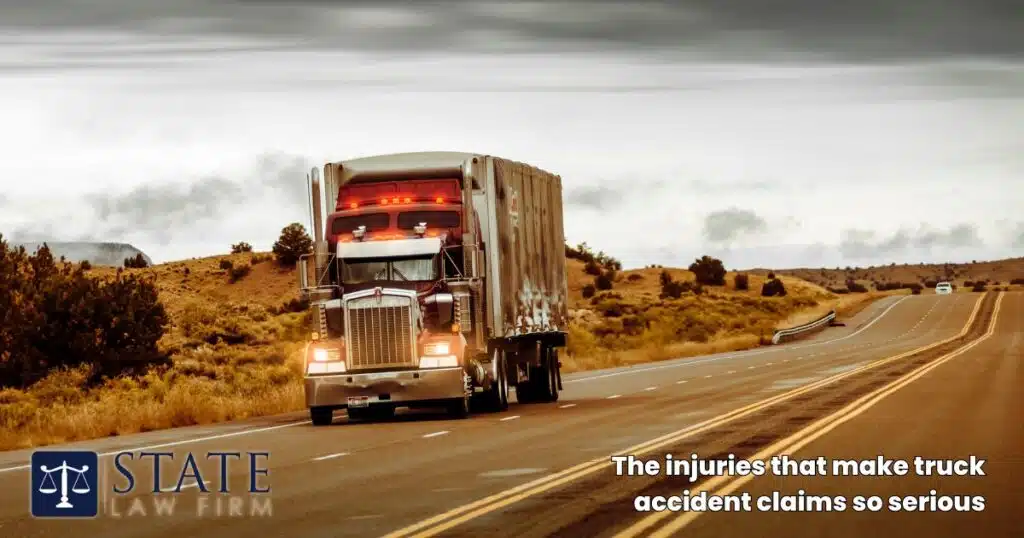
The human damage from a truck collision can be enormous. Even at relatively modest speeds, a large commercial vehicle can generate enough force to cause life-changing trauma. Victims often suffer multiple injuries at once, such as fractures, spinal trauma, crushed limbs, organ damage, severe lacerations, burns, neurological harm, or lasting pain that interferes with work and daily living. That is why many truck cases fall into the category of catastrophic injury, where the impact of the crash goes far beyond a short-term recovery period.
Brain injuries are especially important in truck accident litigation because they can be easy to underestimate in the early days after a crash. A person may seem alert at the scene and still develop headaches, memory loss, concentration problems, mood changes, dizziness, sleep disruption, or cognitive decline over time. For anyone dealing with head trauma, our resources on traumatic brain injury after an accident, what a traumatic brain injury is, and the long-term effects of a TBI are especially relevant.
Some victims face permanent disability after a truck crash. Others lose the ability to return to the same type of work they did before. Parents may no longer be able to care for children the same way. Spouses may take on the role of caregiver. Daily routines, relationships, mobility, sleep, and mental health can all change. These losses matter just as much as the ambulance bill or the repair estimate. A serious truck accident claim should reflect the full picture, not just the most obvious line items.
In the worst cases, commercial truck collisions result in fatalities. A surviving family may be left with funeral expenses, lost household income, and the emotional devastation of losing someone who should still be here. If a truck crash caused a loved one’s death, our guide to wrongful death claims in California can help explain the legal path forward for families seeking accountability.
What to do after a truck accident in San Jose
The first priority after any truck crash is medical care. Get evaluated right away, even if you think your injuries are minor. Truck accident injuries often worsen over time, and early documentation can become a critical part of proving causation. Once immediate safety concerns are addressed, the next priority is preserving proof.
Try to report the collision promptly and create a record of what happened. If law enforcement responds, ask how to obtain the report and whether the responding agency was local police or the California Highway Patrol. Our resources on filing a police report after an accident in California, how to obtain a California accident report, and the CHP 190 form can help you understand how report retrieval works.
Many injury crashes also trigger a separate DMV reporting requirement. If your collision qualifies as a reportable event, the deadline can arrive faster than people expect. Our page on the SR-1 traffic accident report explains why that form matters and why waiting too long can create unnecessary problems.
Evidence in truck cases disappears quickly. If you can do so safely, capture photos of vehicle damage, debris, skid marks, road conditions, traffic controls, nearby businesses, and any visible company markings on the truck or trailer. Get the driver’s name, employer, plate number, and insurance information if possible. If there are witnesses, collect contact details. Video can be especially powerful in a truck case, so it is often worth looking into nearby intersection footage or business surveillance right away. Our guide on how to get traffic camera footage after an accident is a useful starting point.
In a commercial vehicle claim, preservation matters even more because the key evidence is often in the company’s hands. Driver logs, dispatch messages, inspection records, maintenance files, onboard computer data, dash cameras, route assignments, cargo paperwork, and post-crash testing records may all become relevant. If the carrier, insurer, or another party loses or destroys that evidence, it can significantly affect the case. Our article on spoliation of evidence in personal injury claims explains why sending a preservation demand early can make a real difference.
Who may be legally responsible for a truck accident
One of the most important parts of any truck accident case is identifying every party that may share responsibility. The obvious defendant is often the truck driver, but many commercial crashes do not stop there. The motor carrier may be liable for hiring, supervision, training, scheduling, inspections, and vehicle maintenance. An employer may be responsible when the driver was acting within the scope of the job. A shipping or loading company may have contributed by creating an unsafe load. A maintenance vendor may have missed a dangerous condition. A parts manufacturer may be involved if a brake, tire, steering component, or another product failed.
Employer responsibility is especially important because many truck wrecks happen while the driver is actively performing company business. That is where legal doctrines like vicarious liability can become central to the case. If the company benefited from the trip, controlled the work, or put the driver on the road under unsafe conditions, liability may extend well beyond the individual behind the wheel.
Defect cases can also become part of the investigation. If a tire blows, a coupling fails, a steering part breaks, or a brake system does not perform as it should, the case may involve more than driver negligence. For that reason, truck crash victims sometimes need to consider issues tied to product liability deadlines and defenses in California, especially when a dangerous vehicle component may have contributed to the wreck.
There are situations where the roadway itself becomes part of the case. A missing guardrail, malfunctioning signal, obscured signage, dangerous road design, or poorly maintained surface can raise public entity issues. Those claims can involve special procedural rules and shorter deadlines, which is why our article on suing a government entity in California is worth reviewing if dangerous public property played a role.
Truck accidents can also overlap with employment claims. If you were driving for work, riding in a company vehicle, making deliveries, or otherwise on the job when the crash happened, you may have both a third-party injury case and a workers compensation claim. In those situations, our resources on California workers compensation lawyers, how to file a workers comp claim in California, car accidents on the job, and a denied workers compensation claim can help clarify how those paths may work together.
What compensation may be available after a truck crash
A truck accident claim should account for both the obvious financial losses and the deeper human damage the collision caused. Medical expenses, lost income, future treatment, rehabilitation costs, prescription expenses, and property damage are only the beginning. A strong claim also looks at the pain you have endured, the disruption to your daily life, the strain on your relationships, the emotional trauma of the event, and any loss of earning capacity if your injuries affect your long-term ability to work.
That is why it helps to understand the difference between special damages and general damages. In plain terms, some losses come with bills, receipts, and wage records. Other losses do not. Pain, anxiety, sleeplessness, disability, loss of independence, and loss of enjoyment of life are all real harms even though they are harder to measure on paper.
Medical billing issues are often a major source of stress after a truck collision. Many victims assume the trucking company’s insurer will simply begin paying treatment right away, but that is not how most cases work. Bills may pass through health insurance, medical payments coverage, liens, or other temporary payment sources before the case resolves. If you are trying to understand that piece of the process, our article on who pays medical bills after a car accident in California is highly relevant.
Non-economic losses matter too. Insurance companies often try to minimize pain, emotional fallout, and the daily burden of a serious injury, especially when the person still looks functional from the outside. Our guide on how pain and suffering is estimated in California helps explain why a claim’s value is often much broader than initial medical charges alone.
In some truck accident cases, punitive damages may also become an issue. They are not available in every case, but they can matter when the evidence suggests more than ordinary negligence, such as conscious disregard for safety, intoxication, or extreme misconduct. Our resource on punitive damages in California explains when that kind of recovery may be worth exploring.
Even after a settlement is reached, financial issues can continue. Liens, reimbursement claims, and health insurance repayment disputes can affect what the injured person actually takes home. That is why truck accident victims should understand personal injury liens in California and subrogation in personal injury cases before accepting a resolution that looks larger on paper than it may feel in real life.
How insurance companies defend truck accident claims
Insurance companies do not approach truck accident claims casually. Commercial wrecks carry significant exposure, so adjusters and defense teams usually begin looking for ways to reduce the value of the case right away. They may argue that your treatment was excessive, your symptoms were preexisting, your conduct contributed to the crash, or your losses are smaller than you claim. They may push for a quick recorded statement before the full scope of your injuries is clear. They may question which policy applies, whether the driver was working, or whether another party should carry the blame.
That is why understanding insurer strategy is so important. Our articles on the role of insurance companies in personal injury cases, dealing with claims adjusters, and insurance bad faith in California show how quickly a routine claims process can turn adversarial when a serious injury is involved.
Fault disputes are especially common in truck accidents. The defense may argue that you stopped suddenly, merged unsafely, drove too fast for conditions, or otherwise contributed to the collision. When an insurer tries to frame the case as evenly shared or partly your fault, the response must be evidence-based. Our piece on challenging a 50/50 liability insurance claim is a useful resource for understanding how that fight usually plays out.
Settlement strategy matters as much as liability strategy. A demand package is often the first real chance to define the claim on your terms, organize the evidence, and make the insurer take the injuries seriously. Our article on a personal injury demand letter explains why the opening presentation of the case can affect every negotiation that follows.
Victims should also know that not every truck case resolves the same way. Some claims settle early. Others require formal litigation, discovery, expert analysis, and trial preparation before the defense changes position. If you are trying to understand timing, review our resources on settling out of court versus filing a lawsuit, the litigation timeline, and how long an insurance settlement can take.
Deadlines matter throughout this process. Waiting too long can make proving the case harder, separate from whether the claim is still technically allowed. Records get lost, footage gets erased, witnesses forget details, and repair or salvage decisions can destroy valuable physical evidence. Our guide to the statute of limitations for personal injury claims in California is an important reminder that truck accident victims should move with urgency, not hesitation.
Why many injured victims choose legal representation after a truck crash
After a serious commercial vehicle collision, most people are not in a position to investigate a trucking company, preserve black box data, interview witnesses, manage liens, value future care, and negotiate with layered insurance carriers on their own. They are trying to heal. They are dealing with work disruption, pain, financial pressure, and the emotional shock of what happened. That is one reason people often seek legal help after a truck wreck, especially when injuries are significant or fault is disputed.
A well-built truck accident case is about structure. It starts with fast evidence preservation. It moves into liability analysis, medical documentation, and damage development. It tracks every category of harm, from wage loss to future treatment to daily limitations. It prepares for settlement, but it does not depend on the insurer’s goodwill. It is built in a way that can withstand scrutiny if the case has to go further.
At State Law Firm, injured victims can learn more about the firm, meet the attorneys, review case studies, read client testimonials, browse helpful FAQs, or request a free consultation. If you are dealing with a truck accident in San Jose, those resources can be a strong place to begin.
Talk to a firm that understands the stakes of a truck accident case
A truck accident is not just another insurance claim. It can alter health, income, family life, mobility, and peace of mind for years. The right response is not to wait and hope the trucking company or insurer will do the fair thing. The right response is to gather evidence, protect your timeline, understand every available claim, and push for the full value of what was taken from you.
If you were injured in a truck crash in San Jose, start by exploring the resources available through State Law Firm. Visit our San Jose car accident lawyer page for local guidance, review our truck accident case guidance for commercial vehicle strategy, and reach out through our free consultation page when you are ready to talk about what happened and what recovery may look like from here.