English
  Spanish
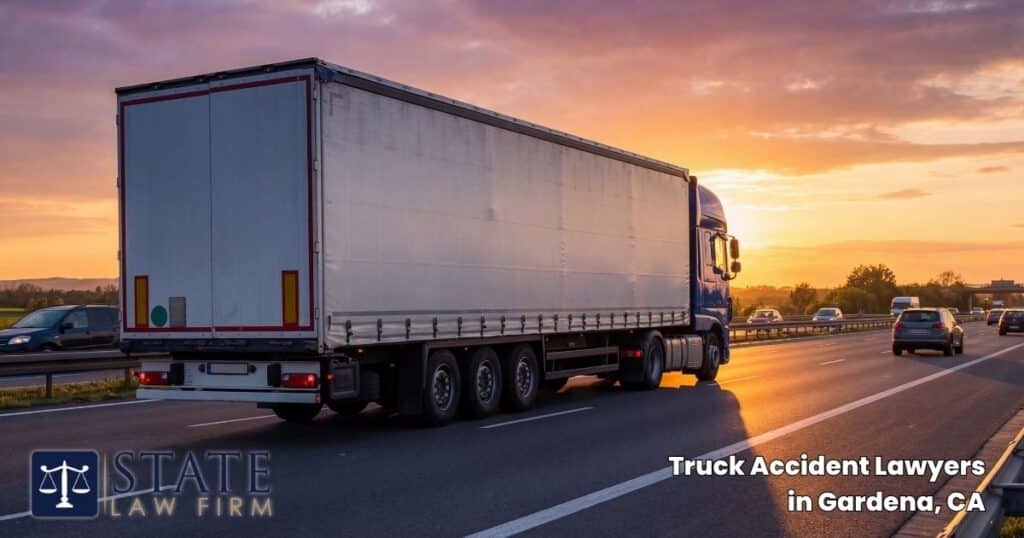
If you were injured in a collision involving a semi truck, delivery truck, dump truck, or other commercial vehicle in Gardena, the path to full compensation usually depends on how fast the right evidence gets preserved and how clearly fault is proven across every responsible party. A truck crash is rarely a simple two driver disagreement. It often involves a professional driver, a motor carrier, layered insurance, strict safety rules, and documentation that can disappear if nobody acts quickly.
Gardena sits on a busy transportation grid that includes freight and commuter traffic. The western end of State Route 91 begins in Gardena and connects into adjacent major corridors, which matters because congestion, merging patterns, and commercial traffic frequency tend to raise the odds of chain reaction impacts and sideswipes. The region’s role in the broader Los Angeles area goods movement network is also influenced by the nearby San Pedro Bay port complex, a major national gateway for containerized trade, which tends to intensify commercial vehicle activity in the broader South Bay and nearby routes.
Statewide, large truck crash impacts are not rare. National Safety Council Injury Facts data shows California among the states with the highest counts of deaths in large truck crashes in recent years. That bigger picture is exactly why a focused, trucking specific investigation matters when a serious crash happens locally.
For background on how these cases are built and what a truck injury claim typically involves, start with truck accident case guidance and browse broader knowledge in the auto accidents resource library.
Why truck crashes in Gardena can become high-stakes cases
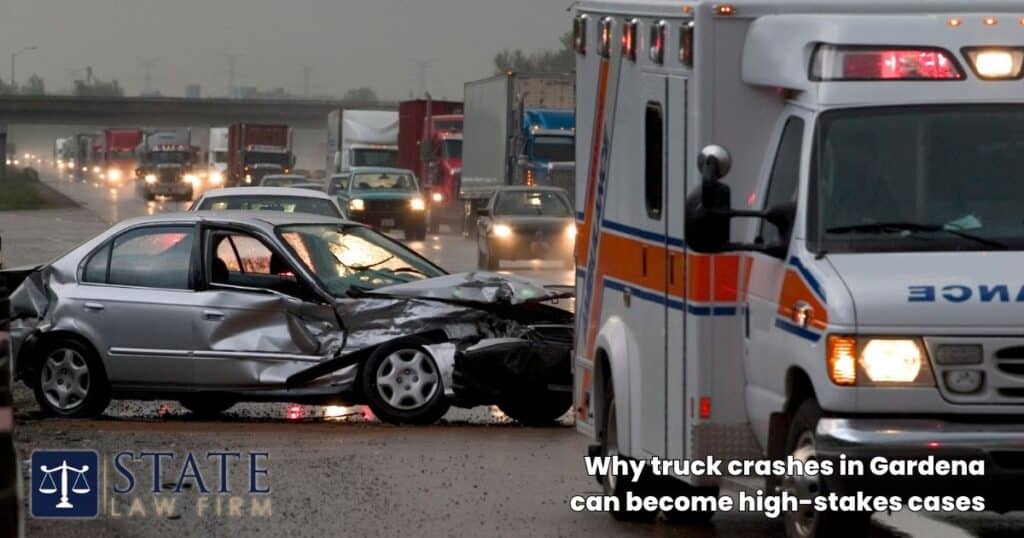
Truck collisions tend to cause more severe harm because of vehicle size, stopping distance, visibility limitations, and the unpredictable behavior of a loaded trailer during emergency maneuvers. When injuries rise beyond minor soft tissue complaints, the case usually becomes documentation heavy, medically complex, and insurance intensive, which is where a strategic approach matters.
Beyond injuries, a trucking claim is often high-stakes because multiple policies may apply, and each insurer has a financial incentive to push blame elsewhere. Understanding how insurers evaluate, negotiate, and attempt to minimize claims is essential from day one. Read how insurance companies approach injury claims and how to handle a major carrier adjuster so you know what to expect before recorded statements and quick settlement offers shape your file.
In the trucking context, “who is at fault” can include more than the person behind the wheel. Depending on the facts, legal responsibility can attach to an employer, a company that owned the trailer, maintenance providers, cargo loaders, or other entities whose choices created unsafe conditions. This is one of the biggest differences between a commercial crash and a typical passenger vehicle wreck, and it is why commercial investigations tend to pull more documents, more witnesses, and more expert analysis.
If your collision happened near Gardena but you need nearby local car crash context, review car accident support in Torrance and car accident support in Los Angeles. These pages help set expectations for investigation basics, insurance communication, and common injury documentation, which still apply in truck cases.
What makes trucking collisions different from typical auto crashes
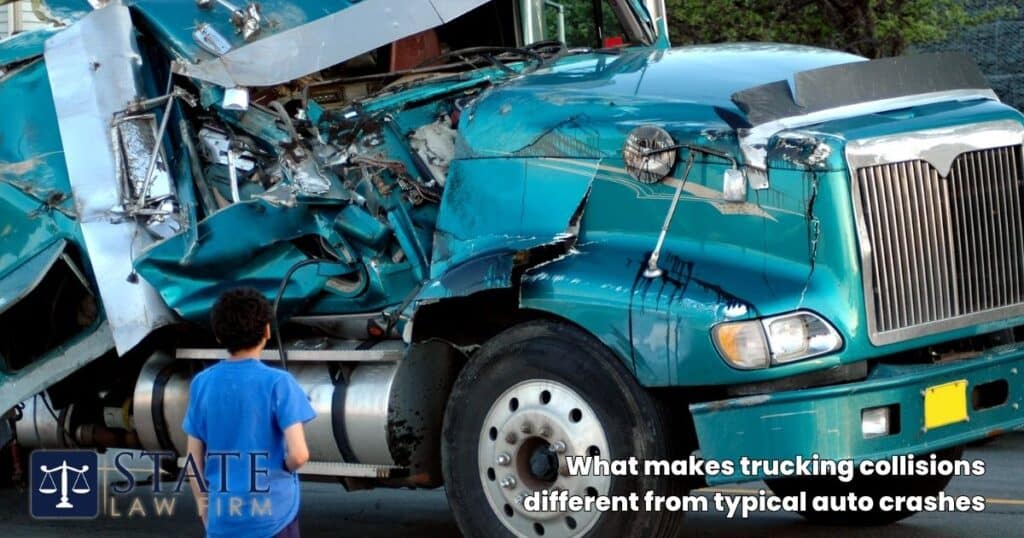
Commercial vehicle claims commonly turn on professional driving standards and safety regulations. That includes issues like driver qualification, licensing, training, hours of service rules aimed at fatigue prevention, and strict alcohol related prohibitions for drivers operating commercial motor vehicles. If those requirements were violated, they can become powerful liability evidence.
Driver licensing can matter in surprising ways. California Class A licensing topics intersect with tractor trailer operation, endorsements, and what a driver is permitted to operate. If the crash involves a tractor trailer configuration or equipment requiring specific credentials, licensing and qualification become part of the investigation record. A helpful primer is how a Class A license can affect a truck accident case.
Commercial versus noncommercial status also changes how the claim is framed. A collision involving a commercial vehicle can expand the set of responsible parties and increase the volume of discoverable records, which impacts both strategy and timeline. For a clear breakdown, see commercial versus noncommercial vehicle accident differences.
Fatigue is a recurring factor in long haul and regional trucking. Federal rules outline driving time limits, duty windows, and related exceptions. In many serious cases, a thorough review of logs, electronic records, dispatch communications, and trip planning is necessary to identify whether preventable schedule pressure or noncompliance contributed to the crash.
Alcohol rules for commercial drivers are also stricter than standard passenger vehicle thresholds. Federal regulations prohibit alcohol use within a set period before duty and define alcohol related disqualification concepts for commercial operation. If impairment is suspected, preservation of testing records, post-crash paperwork, and employer compliance procedures becomes essential. For an overview written for everyday readers, review truck driver alcohol rules and consequences.
Smart moves right after a truck collision
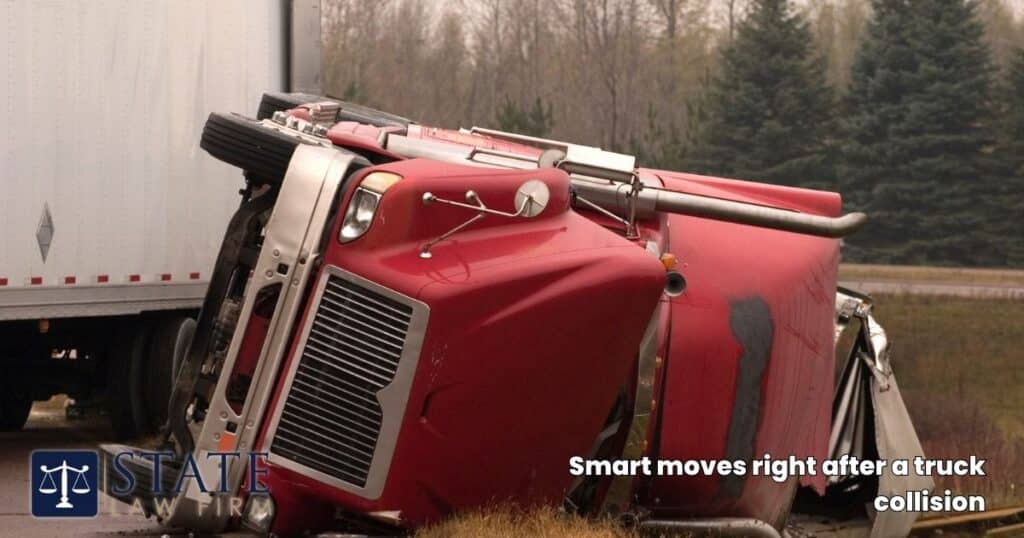
Your health comes first. Get medical care immediately, follow up promptly, and keep every discharge paper, referral, prescription note, and imaging record. Even if you believe you “feel fine,” truck crash forces can hide concussions, spine injury, and internal trauma. If symptoms evolve later, early documentation helps connect the timeline.
Get the crash documented. That means calling law enforcement when appropriate, securing an accident report, and confirming all parties and witnesses are correctly identified. If you need a guide to the accident report process, use how to obtain a California accident report.
Gather and preserve independent evidence early. Truck cases can become a battle of narratives, and neutral proof carries weight. Photos of vehicle positions, damage patterns, visible skid marks, debris fields, signage, and lighting conditions can matter. On many corridors, video evidence may exist through traffic cameras or nearby surveillance. A practical walkthrough is how to get traffic camera footage after an accident.
Avoid casual statements that can be twisted. In practice, insurers often look for sound bites that suggest you “did not see the truck,” “changed lanes,” or “might have been going a little fast.” In California, fault can be allocated across parties and compensation can be reduced by your percentage of fault, so precision matters. If you want a deeper explanation of how shared fault affects recovery, read comparative negligence and shared liability concepts.
If another driver’s action triggered a domino crash, you may still have options even when your vehicle made contact with a third car. Multi-vehicle causation analysis is common in freeway and arterial congestion patterns. Review legal options in multi-vehicle accidents for a plain-language explanation of how chain reaction fault is investigated.
How fault gets proven in commercial trucking cases
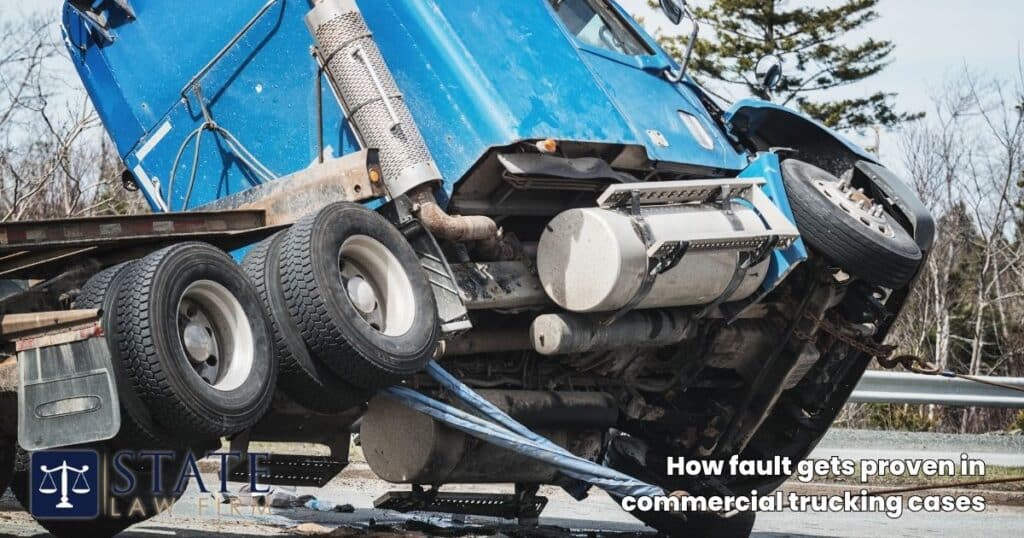
Strong truck accident claims are built from records, not assumptions. A serious investigation typically focuses on the following categories of proof: driver conduct, carrier policies, vehicle condition, cargo handling, and roadway environment. The key is connecting that proof directly to breach of duty and causation, then presenting damages in a way that is easy to verify.
Evidence unique to trucking can include electronic logging data, onboard vehicle systems, inspection and maintenance receipts, dispatch communications, load documents, and post-crash testing records. Many of these items are controlled by the carrier or its vendors, which is why early preservation demands can be critical. If evidence disappears or is overwritten, it can change the playing field. Learn how courts treat this issue in spoliation of evidence in injury claims.
Federal safety regulation context often becomes part of the liability story. Hours of service rules outline limits designed to reduce fatigue risk and establish a framework for what compliant scheduling looks like. Violations are not the only way to prove negligence, but they can be a critical piece of a broader pattern, especially when paired with trip timing, dispatch pressure, and crash reconstruction.
Impairment and prohibited alcohol timing can also be decisive. Federal rules restrict alcohol use within specified periods and define disqualifying conduct such as operating with a measured alcohol concentration at or above commercial thresholds. If impairment is suspected, a case can hinge on whether the carrier followed testing procedures, whether the driver was properly supervised, and whether records match the timeline.
For collisions that look like “the rear driver is always responsible,” it is still important to confirm the facts. Rear-end impacts in traffic often involve reaction time, spacing, distraction, and sometimes sudden unsafe lane changes by other vehicles. A focused explanation of rear-end fault concepts is available in rear-end collision liability.
When you want a full overview of how a trucking case is investigated and advanced from intake through settlement or litigation, see the truck accident case process and broader context in the personal injury resource library.
Compensation that may be available after a truck injury
Truck accident damages usually fall into two large buckets: economic losses you can document with bills and financial records, plus non-economic harm tied to the human impact of the injury. The way you organize and prove each category can drive the outcome more than most people realize.
Economic damages often involve medical care, rehabilitation, medication, future treatment projections, wage loss, reduced earning capacity, and out-of-pocket costs. Non-economic damages can include pain, limitations, recovery burden, emotional distress, and loss of enjoyment of life. If you want a reader-friendly explanation of the categories, see special versus general damages and how pain and suffering is estimated in California cases.
Vehicle losses can include repair costs and “diminished value,” which refers to reduced market worth even after repairs. This issue matters when your vehicle history shows a serious crash and future buyers discount the price. For a deeper dive, read diminished value claims after an accident.
Catastrophic injuries and brain trauma require careful documentation and long-term planning. If you suspect a concussion, persistent cognitive symptoms, or neurological changes after a crash, it is important to take it seriously. For a detailed overview of traumatic brain injuries and legal recourse, review traumatic brain injury facts and legal options and what a traumatic brain injury is.
In rare but severe situations, punitive damages may be a consideration when conduct goes beyond ordinary negligence. These are case-specific and depend on the facts and the legal standards. A plain-language explanation is available in when punitive damages may apply in California.
If a truck crash results in a fatality, the legal issues expand and the family often faces difficult decisions while grieving. For an overview of wrongful death representation and the related legal pathway, see wrongful death help in Los Angeles and wrongful death claims in California.
Finally, settlements can involve liens and reimbursement claims from health plans or other payors. Understanding liens early helps prevent surprises when a settlement is close to closing. For a clear breakdown, read personal injury liens and what happens to your settlement.
Deadlines and process checkpoints in California
Deadlines can decide a case before the facts are even argued. In California, most personal injury claims have a filing deadline measured from the date of injury, and missing it can eliminate the claim entirely. Review California statute of limitations basics for an overview and common exceptions.
If a public entity may be involved, such as a dangerous roadway condition, signage failure, or another government-linked factor, there can be additional claim presentation rules with shorter timelines, sometimes measured in months rather than years. This is where quick issue spotting matters. For background, read suing the government and sovereign immunity in California.
At a practical level, many cases move through a predictable sequence: investigation, medical documentation, an organized demand, negotiation, then litigation if needed. The demand letter is often the turning point where facts, liability proof, and damages are presented in a structured way to an insurer. If you want to understand how demand letters shape settlement negotiations, see the demand letter process in injury cases.
Because insulation tactics are common, it helps to understand what “bad faith” looks like and how unfair handling is identified. If delays and denials become a pattern, this knowledge influences how you respond and how you document your communications. Read insurance bad faith in California.
Work-related truck crashes and overlapping claims
If you were driving for work, making deliveries, traveling between job sites, or performing job duties when the truck collision occurred, workers’ compensation may apply. In some situations, a third-party claim can also exist, which is how injured workers may pursue additional damages that workers’ compensation does not cover.
To understand how workers’ compensation and injury claims intersect after an on-the-job crash, start with workers’ compensation versus personal injury after a work-related crash and then review California workers’ compensation guidance. If you want more educational reading, you can also browse workers’ compensation articles.
Talk to a lawyer before the paper trail controls the story
Truck crash cases often turn into a race between thorough documentation and the insurer’s early narrative. The sooner your side preserves evidence and organizes medical proof, the harder it is for the defense to reshape what happened. For a detailed look at how trucking claims are built from investigation through resolution, review the truck accident representation overview.
If you are ready to talk with an attorney, you can start with a free consultation. If you want to learn about the legal team first, visit the attorneys page and browse client testimonials plus case studies. For general firm background and service coverage, see about the firm and locations served.
For quick answers to common questions people ask after a serious collision, visit frequently asked questions and continue learning through the blog. For broader injury topics beyond trucking, explore personal injury resources.