English
  Spanish
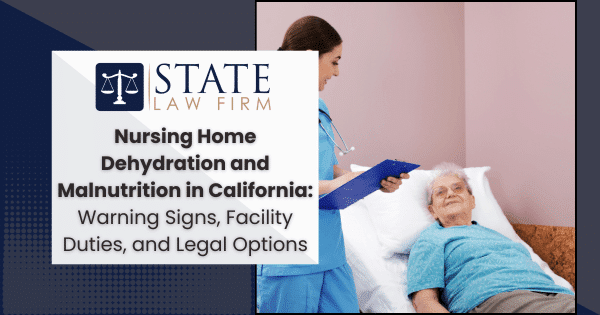
Dehydration and malnutrition in a nursing home can develop because of illness, medication effects, swallowing difficulties, cognitive decline, limited mobility, or inadequate help with eating and drinking. Families should take unexplained weight loss, poor intake, or sudden changes in alertness seriously, while recognizing that a diagnosis alone does not establish neglect.
Direct answer: Dehydration or malnutrition may indicate nursing home neglect when a California facility fails to identify known risks, provide ordered food, fluids, monitoring, or hands-on assistance, or respond to deterioration. A poor outcome alone does not prove neglect. Serious illness, informed refusals, and end-of-life choices may make some decline unavoidable.
Seek immediate medical attention for severe confusion, fainting, minimal urination, inability to drink, reduced responsiveness, or rapid deterioration. Severe dehydration can become life-threatening and may require emergency treatment.
Medical and legal note: This article does not diagnose a resident or determine whether neglect occurred. It focuses primarily on California licensed skilled nursing facilities. Other residential care settings may be subject to different requirements.
Why Dehydration and Malnutrition Require Prompt Attention in Nursing Homes
Older adults can experience serious complications from inadequate food or fluid intake. Dehydration may contribute to weakness, dizziness, confusion, falls, low blood pressure, and worsening medical conditions. Malnutrition may be associated with muscle loss, reduced mobility, impaired immune function, delayed wound healing, and declining independence. These changes should not automatically be dismissed as an ordinary part of aging.
Why Nursing Home Residents May Be Especially Vulnerable
Residents with dementia, swallowing problems, limited mobility, impaired vision, tremors, communication difficulties, or serious illnesses may depend on staff for basic access to food and fluids. Some residents cannot independently reach a cup, pour a drink, remember to drink, safely swallow, or tell staff that they are thirsty.
Federal survey guidance directs reviewers to consider whether a resident can access and consume fluids, whether the facility identified relevant risk factors, and whether staff implemented and evaluated appropriate interventions. This supports individualized assessment rather than relying on the same hydration routine for every resident.
Why a Poor Outcome Does Not Automatically Establish Neglect
Dehydration or weight loss may occur despite appropriate care. A resident may have advanced cancer, an infection, gastrointestinal illness, organ failure, swallowing impairment, or another condition that makes adequate intake difficult. A resident may also make informed choices to refuse treatment, food, or fluids.
The central question is usually not whether a poor outcome occurred by itself. It is whether the facility reasonably assessed the resident, created an appropriate care plan, followed that plan, documented its interventions, and responded when the resident’s condition changed.
Warning Signs of Dehydration and Malnutrition in a Nursing Home Resident
Families often notice meaningful changes during visits, meals, or telephone calls. One symptom may have several possible causes, but a pattern of symptoms or unexplained decline should prompt clinical evaluation.
Possible Signs of Dehydration
Possible warning signs include:
- Dry mouth, cracked lips, or unusually dry skin
- Dark urine or noticeably reduced urination
- Dizziness, weakness, fatigue, or unsteadiness
- New or worsening confusion
- Headache, rapid heartbeat, or fainting
- Increased sleepiness or reduced responsiveness
- Constipation
- Difficulty maintaining normal blood pressure
These symptoms can overlap with infections, kidney problems, medication effects, and other medical conditions. A qualified clinician should evaluate sudden, severe, or persistent changes.
Possible Signs of Malnutrition
Possible signs include:
- Unexplained or unintended weight loss
- Loose-fitting clothing, visible muscle loss, or a thinner face
- Persistent weakness or reduced mobility
- Poor appetite or repeated refusal of meals
- Difficulty chewing or swallowing
- Mouth pain or poorly fitting dentures
- Nausea, vomiting, or gastrointestinal symptoms
- Slow wound healing or worsening pressure injuries
- Recurrent illness or declining functional ability
Involuntary weight loss is an important feature of malnutrition, but it should be considered alongside intake patterns, muscle loss, medical conditions, and functional changes.
Facility and Caregiving Red Flags
Facility-level concerns may include:
- Water repeatedly placed outside the resident’s reach
- Meal trays removed before necessary assistance is provided
- Untouched meals without documented follow-up
- No appropriate alternative when a resident refuses the original meal
- Staff who cannot explain recent weight or intake changes
- Missed weights or incomplete food and fluid records
- Conflicting or late chart entries
- Delayed physician, dietitian, or swallowing evaluation
- Family concerns that are repeatedly ignored or minimized
- Similar food or hydration problems affecting multiple residents
CMS review materials direct surveyors to compare assessments, weight trends, intake, identified causes, interventions, and follow-up. A single chart entry rarely tells the entire story.
Common Causes and When They May Indicate Nursing Home Neglect
Determining why a resident declined often requires reviewing both medical risks and the care actually provided.
| Medical or potentially unavoidable factors | Potentially preventable care failures |
| Dementia or cognitive impairment | Failure to assess eating or drinking limitations |
| Stroke, Parkinson’s disease, or swallowing impairment | Inadequate mealtime or hydration assistance |
| Cancer, infection, gastrointestinal illness, or chronic disease | Failure to follow diet, supplement, or monitoring orders |
| Depression, grief, or social isolation | Failure to provide accessible fluids |
| Dental pain or poorly fitting dentures | Failure to investigate significant weight loss |
| Medication effects | Poor communication among nurses, physicians, and dietary staff |
| Resident preferences or informed treatment refusals | Delayed response to fever, vomiting, diarrhea, or reduced intake |
| End-of-life goals | Staffing or supervision failures that interfere with the care plan |
The cause may be a combination of medical decline and inadequate care. For example, swallowing impairment may be unavoidable, but failing to obtain an ordered swallowing evaluation or provide the prescribed food texture may raise separate concerns.
What California Nursing Homes Are Required to Do
Federal rules and California regulations establish important nutrition, hydration, assessment, and assistance requirements for participating skilled nursing facilities. A regulatory violation may be relevant evidence, but it does not automatically establish every element of a civil claim.
Assess Each Resident’s Individual Nutrition and Hydration Risks
Federal regulations require a comprehensive assessment of each resident’s needs. Relevant information may include nutritional status, diagnoses, medications, weight history, appetite, food and fluid intake, chewing or swallowing ability, functional limitations, laboratory findings, and personal preferences.
Facilities must reassess residents periodically and after significant changes. Assessment findings are then used to develop, review, and revise a person-centered care plan.
Provide Adequate Food, Fluids, and Appropriate Alternatives
Federal quality-of-care regulations generally require facilities to provide sufficient fluids to maintain hydration and to address nutritional needs based on the resident’s assessment, care plan, professional standards, and choices. Therapeutic diets must be provided when properly ordered.
Federal food-service requirements also address nutritionally appropriate meals, suitable alternatives, individualized food preparation, drinks consistent with resident needs and preferences, and assistance with eating when necessary. California regulations similarly address food quality, physician-ordered diets, resident preferences, appropriate food texture, and substitutes when a resident refuses the food served.
Provide Eating and Drinking Assistance
Simply placing a cup or meal tray in a resident’s room may be insufficient when that resident needs cueing, positioning, supervision, adaptive equipment, or direct assistance.
California regulations require assistance for patients who need help eating and require facilities to provide good nutrition and necessary hydration fluids. These duties may be particularly important for residents with dementia, limited hand function, visual impairment, tremors, or swallowing precautions.
Monitor Changes and Respond When Interventions Are Not Working
Facilities may need to monitor weights, meal consumption, supplements, fluid intake, laboratory findings, and changes in function. When an intervention is not working, appropriate responses may include notifying the physician, consulting a dietitian, obtaining a swallowing evaluation, changing assistance levels, or revising the care plan.
California skilled nursing facility regulations require a resident’s weight to be recorded at admission and generally once each month thereafter. More frequent monitoring may be necessary when ordered or required by the resident’s condition and care plan.
What Families Should Do When They Suspect Dehydration or Malnutrition
1. Address Urgent Medical Needs First
Ask for an immediate nursing and physician evaluation. Call emergency services when the resident has severe confusion, fainting, minimal urination, inability to drink, reduced responsiveness, or another potentially life-threatening symptom.
Do not delay medical care while trying to collect evidence.
2. Ask Direct, Specific Questions
Ask facility representatives:
- How much weight has the resident lost, and over what period?
- What food and fluid intake has been documented?
- Has the resident been evaluated for chewing or swallowing problems?
- Have medications and possible medical causes been reviewed?
- What assistance is required during meals and hydration rounds?
- When were the physician and dietitian notified?
- What interventions have been attempted?
- Has the care plan been revised?
Request clear dates, measurements, and explanations rather than general assurances.
3. Request a Care-Plan Meeting
Ask for a meeting that includes nursing staff, dietary staff, the physician, therapy providers, and the resident or authorized representative where appropriate.
Request a plan that identifies:
- Specific interventions
- The staff members responsible
- How often intake or weight will be monitored
- When the physician will be contacted
- A date for evaluating whether the interventions are working
4. Create a Written Record
Record dates, symptoms, weight changes, meal observations, staff statements, hospital visits, and written complaints. Preserve photographs where lawful and appropriate. Follow significant verbal discussions with a concise email or letter.
Families in Sherman Oaks, Los Angeles, the San Fernando Valley, and elsewhere in California may also consult State Law Firm’s nursing home injury attorneys about preserving records and evaluating the facility’s response.
Evidence That May Help Explain What Happened
Medical and Facility Records
Useful records may include:
- Admission, quarterly, and significant-change assessments
- Care plans and care-plan revisions
- Weight records and nutritional assessments
- Meal, supplement, and fluid-intake records
- Nursing and physician progress notes
- Medication administration records
- Dietitian notes
- Speech-language pathology and swallowing records
- Laboratory results
- Hospital and emergency department records
- Incident reports and internal communications, when obtainable
Observations and Outside Records
Additional evidence may include:
- Family photographs and dated observations
- Emails, portal messages, and complaint correspondence
- Witness accounts from visitors or caregivers
- Prior regulatory deficiencies or complaint findings
- Relevant staffing and assignment records, when legally obtainable
Missing, inconsistent, or late documentation may be important, but it should be evaluated alongside the entire clinical record. CMS survey guidance similarly examines whether identified risks, interventions, monitoring, and follow-up are consistent across the resident’s records.
Reporting Suspected Nursing Home Neglect in California
File a Complaint With the California Department of Public Health
The California Department of Public Health accepts complaints concerning licensed health care facilities and may investigate alleged deficiencies. Families can also use Cal Health Find to review facility licensing, complaint, deficiency, and enforcement information or submit a complaint electronically.
An administrative complaint is different from a civil legal claim. Reporting concerns does not replace urgent medical care or individualized legal advice.
Contact the Long-Term Care Ombudsman
California’s Long-Term Care Ombudsman Program advocates for residents and assists with complaints involving care, health, safety, dietary concerns, and residents’ rights. Its services are free and confidential.
Legal Options for Dehydration or Malnutrition Caused by Neglect
A resident or family may have legal options when inadequate nutrition or hydration caused or contributed to injury. The available claims depend on the facility type, responsible parties, medical evidence, conduct involved, and applicable law.
Negligence and Professional Negligence Claims
A negligence claim may examine whether the facility or care providers failed to use reasonable care and whether that failure caused injury. Professional negligence may apply when the conduct arose from medical or professional health care services.
Potential damages depend on facts such as medical expenses, pain, functional decline, prognosis, and causation. An adverse outcome alone does not establish liability.
Elder or Dependent Adult Neglect
California’s Elder Abuse and Dependent Adult Civil Protection Act defines neglect to include certain failures to assist with food and failures to prevent malnutrition or dehydration.
Enhanced remedies under Welfare and Institutions Code section 15657 require additional proof beyond an ordinary negligent act, including the statutory level of culpability. They do not arise from every mistake, regulatory violation, or poor outcome.
Nursing Home Resident-Rights Claims
California Health and Safety Code section 1430 permits certain current or former residents, personal representatives, successors in interest, or specified representatives to pursue an action against a licensee for violations of protected rights under defined circumstances.
Whether the statute applies, and what remedies may be available, depends on the facility, violated right, responsible licensee, dates, and supporting evidence.
Wrongful Death and Survival Claims
A wrongful death or survival claim may be considered when dehydration, malnutrition, or a related complication allegedly contributed to a resident’s death. Medical causation must be evaluated carefully and may require review by qualified experts.
The people permitted to bring a claim and the available damages depend on California law and the resident’s circumstances.
Why Early Legal Review May Matter
Medical records may be updated, staff members may leave, and witnesses may become difficult to locate. Different legal theories can also involve different deadlines, procedural requirements, or parties.
There is no single filing deadline that applies to every nursing home case. Families should obtain prompt, case-specific advice rather than relying on a general limitations period.
Frequently Asked Questions
Is dehydration always evidence of nursing home neglect in California?
No. Dehydration can result from infection, kidney disease, medication effects, swallowing impairment, voluntary refusal, or serious illness despite appropriate care. Neglect becomes a concern when evidence suggests the facility failed to assess known risks, provide necessary fluids or assistance, follow the care plan, monitor changes, or respond reasonably to deterioration.
How much weight loss is concerning in a nursing home resident?
Any unexplained or unintended weight loss should be discussed with the resident’s medical team. Its significance depends on the amount lost, the time period, the resident’s prior weight, muscle loss, food intake, diagnoses, medications, and functional changes. Families should ask for the resident’s complete weight history rather than relying on a single measurement.
What records should a family request after suspected malnutrition?
Families may request care plans, assessments, weight records, meal and fluid-intake documentation, dietary notes, physician and nursing progress notes, medication records, swallowing evaluations, laboratory results, and hospital records. Access may depend on the requester’s legal authority and applicable privacy rules.
Where can I report suspected nursing home dehydration in California?
Concerns about a licensed facility may be reported to the California Department of Public Health. The Long-Term Care Ombudsman can also help residents and families address care, safety, dietary, and resident-rights concerns. Call emergency services first when the resident appears to be in immediate medical danger.
Can a family sue a nursing home for malnutrition or dehydration?
Possibly. A claim may be available when inadequate care caused or contributed to injury or death, but the diagnosis alone does not prove liability. Possible legal pathways include negligence, professional negligence, elder or dependent adult neglect, resident-rights claims, wrongful death, and survival claims. The proper theory depends on the evidence and circumstances.
Protect Your Loved One and Preserve the Facts
Prioritize the resident’s medical safety. Ask the facility for a documented explanation, request an updated care plan, preserve weight and intake records, and report serious concerns to the appropriate California agency.
Speak With a California Nursing Home Neglect Attorney About Your Family’s Concerns
State Law Firm represents injured people and families throughout California, with its primary office in Sherman Oaks. The firm emphasizes direct attorney involvement and clear, accessible communication. Readers can review the firm’s attorneys, learn more about State Law Firm, or review its California office information.
Contact State Law Firm at (877) 659-9223 for a free consultation about suspected nursing home dehydration, malnutrition, abuse, or neglect. An attorney can review the medical records, facility conduct, responsible parties, and legal options without promising a particular result.
Treat unexplained weight loss or dehydration as a health concern first. Obtain medical attention, ask specific questions, request the resident’s records, document what occurred, and seek case-specific legal guidance when the facility’s explanation or response appears inadequate.