Spanish
  English
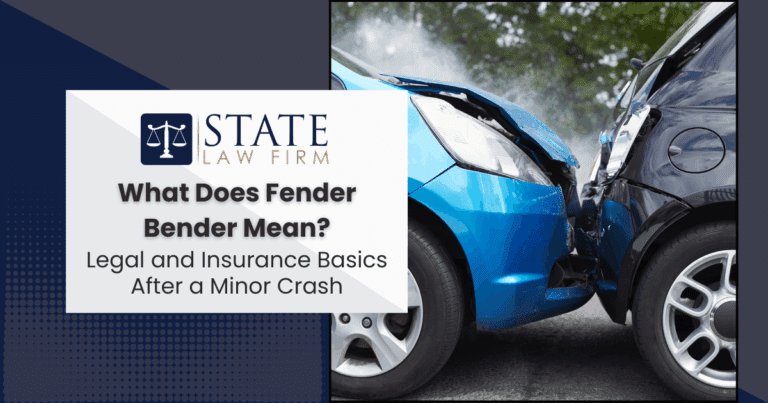
A fender bender is an informal term for a relatively minor vehicle collision, often occurring at a lower speed and causing limited visible damage, such as a dented bumper, scratched paint, broken light, or damaged fender.
The term does not describe a separate legal category of accident. A fender bender is still a motor vehicle collision, and the drivers involved may still have duties to stop, exchange information, report the accident, and notify their insurance companies.
A crash that appears minor can also involve hidden vehicle damage, delayed physical symptoms, disputed fault, and unexpected repair costs. For that reason, drivers should take even a small collision seriously without assuming it will become a major legal claim.
What Does “Fender Bender” Mean?
The phrase “fender bender” generally refers to a minor car accident that causes less severe damage than a high-speed or catastrophic collision.
Common examples include:
- A rear-end collision in stop-and-go traffic
- Two vehicles backing into one another in a parking lot
- A driver striking a parked vehicle
- A low-speed sideswipe
- A minor collision during a lane change or merge
- A vehicle rolling forward into another car at a traffic light
- A driver misjudging the distance between vehicles while parking
Although the phrase includes the word “fender,” the damage does not have to involve an actual fender. Modern vehicles may suffer damage to bumpers, cameras, sensors, lights, brackets, trunks, hatches, or internal safety components even when the exterior damage appears limited.
Is a Fender Bender Still Considered a Car Accident?
Yes. A fender bender is still a car accident.
California law does not excuse drivers from their responsibilities simply because the collision happened at a low speed or caused relatively little visible damage. The applicable duties depend on whether the accident caused property damage, an injury, or a death.
For an accident involving property damage only, California Vehicle Code § 20002 generally requires the driver to stop at the nearest safe location and provide identifying information to the other involved party. Moving a vehicle out of traffic for safety does not, by itself, determine who was at fault. (LegiInfo)
When someone is injured, California Vehicle Code § 20003 also requires the driver to provide identifying information and render reasonable assistance when treatment is apparently needed or requested. (LegiInfo)
Common Causes of Fender Bender Accidents
Colisiones traseras
Rear-end crashes frequently occur when a driver follows too closely, becomes distracted, misjudges stopping distance, or does not react quickly enough to slowing traffic.
The rear driver may bear responsibility in many cases, but fault is not automatic. Road conditions, sudden lane changes, defective brake lights, multiple impacts, and the actions of other drivers may affect the analysis. Learn more about how fault is evaluated after a rear-end collision in California.
Parking Lot Accidents
Parking lots create frequent low-speed conflicts because vehicles may be:
- Backing out simultaneously
- Entering or leaving parking spaces
- Moving through poorly marked lanes
- Turning around pedestrians and shopping carts
- Competing for limited visibility
- Traveling through intersections without clear traffic controls
Fault may depend on which vehicle was moving, whether either driver had the right of way, the direction of travel, available surveillance footage, and what witnesses observed.
Unsafe Lane Changes and Merging
A driver may sideswipe another vehicle after failing to check a blind spot, signal, maintain a lane, or yield during a merge.
Even at low speeds, an unsafe lane change can damage doors, mirrors, quarter panels, wheels, and suspension components.
Conducción distraída
Phones, navigation systems, passengers, food, music controls, and other distractions can cause a driver to look away long enough to strike another vehicle.
A momentary distraction in slow traffic may still be enough to cause a rear-end or parking-lot collision.
Weather and Visibility
Rain, fog, sun glare, darkness, wet pavement, and obstructed sightlines can reduce reaction time and make it more difficult to judge distance, even when vehicles are moving slowly.
What Should You Do After a Fender Bender in California?
The following steps can help protect your safety, document the accident, and reduce later disagreements.
1. Stop and Check for Injuries
Do not leave the scene without first stopping and checking whether anyone may be injured.
Call 911 when someone is hurt, appears disoriented, requests medical help, or when the collision creates an immediate danger. The California DMV also instructs drivers to call 911 when anyone is injured. (DMV de California)
Do not assume that a person is uninjured solely because they can walk, speak, or initially say they feel fine.
2. Move Out of Traffic When It Is Safe
If no one is injured and the vehicles can be moved safely, relocate them to a nearby shoulder, parking area, or other location where they will not obstruct traffic.
California law expressly permits a driver involved in a property-damage collision to move to the nearest location that will not impede traffic or endanger other motorists. Moving the vehicles does not decide fault. (LegiInfo)
Before moving, take a few quick photographs of the vehicles’ positions when doing so will not put anyone in danger.
3. Exchange Information
Collect or photograph the other driver’s:
- Full name
- Current address
- Telephone number
- Driver’s license
- Vehicle registration
- License plate
- Insurance company
- Policy number
- Vehicle make, model, and color
The California DMV advises involved drivers to show their driver’s license, registration, insurance information, and current address to the other parties and law enforcement. (DMV de California)
When another driver refuses to cooperate, review the steps to take when the other driver will not provide insurance information.
4. Photograph the Scene and Damage
Take photographs or video showing:
- All sides of every involved vehicle
- Close-up and wide-angle views of the damage
- The vehicles’ positions
- License plates
- Traffic signs and signals
- Lane markings
- Skid marks, debris, or fluid
- Weather and lighting
- Nearby businesses or homes with cameras
- Any visible injuries
Do not photograph only the damaged bumper. Wider images can help show how the collision occurred and whether either vehicle was turning, backing, merging, or stopped.
5. Look for Witnesses
Ask witnesses for their names, telephone numbers, and email addresses.
A neutral witness may become important if the other driver later changes their account, denies making contact, or claims that you caused the accident.
Also note the locations of nearby surveillance cameras. Video may be overwritten quickly, so it should be requested as soon as reasonably possible.
6. Be Accurate About What Happened
Remain calm and avoid arguing with the other driver.
Provide truthful information, but do not guess about speed, distance, fault, injuries, or facts you did not observe. A statement made immediately after the accident may later be compared with photographs, video, witness accounts, and vehicle damage.
You can express concern for the people involved without making an unsupported admission about legal responsibility.
7. Pay Attention to Physical Symptoms
A relatively small collision can still cause neck pain, back pain, headaches, dizziness, numbness, or other symptoms. Whiplash symptoms frequently begin within the days following an injury rather than necessarily appearing at the scene. (Mayo Clinic)
Seek appropriate medical care when you experience pain, neurological symptoms, worsening discomfort, or other health concerns. Do not delay emergency care in order to collect evidence or speak with an insurance company.
8. Notify the Insurance Company
Review your policy and report the collision within the time and manner it requires.
Provide accurate basic information, photographs, and the other driver’s details. Keep copies of all correspondence, estimates, bills, claim numbers, and documents submitted.
An insurer may request a written or recorded statement while investigating the loss. The California Department of Insurance confirms that insurers may seek detailed information and take a written or recorded statement during the claims process. (California Department of Insurance)
Before agreeing to a recorded interview, understand who is requesting it, whether your policy requires your cooperation, and how the statement may be used. State Law Firm’s guide explains what to consider before giving a recorded statement to an insurance adjuster.
9. Keep a File for the Accident
Save:
- Fotografías y vídeos
- Police or collision reports
- Insurance correspondence
- Repair estimates
- Rental-car records
- Towing and storage bills
- Historiales médicos y facturas
- Prescription receipts
- Wage-loss documentation
- Witness information
- Notes describing symptoms and important conversations
Organized records make it easier to explain what happened and identify which losses remain unpaid.
Do You Have to Report a Fender Bender to the California DMV?
Not every minor contact requires a DMV report. However, an SR-1 report is mandatory within 10 days when:
- Anyone was injured, even if the injury appeared minor
- Anyone was killed
- The accident caused more than $1,000 in property damage
The requirement applies regardless of who caused the accident. An SR-1 is also separate from any report made to the police, California Highway Patrol, or an insurance company. (DMV de California)
Modern vehicle repairs can exceed $1,000 even when the visible damage appears small. Paint, labor, sensors, cameras, brackets, lighting systems, and internal bumper components can make a seemingly minor repair more expensive than expected.
Drivers can submit the official California DMV SR-1 accident report en línea.
Failure to file a required SR-1 can result in suspension of driving privileges. The DMV also explains that law enforcement does not file the SR-1 on the driver’s behalf. (DMV de California)
Do You Have to Report a Fender Bender to the Police?
California does not require drivers to call police for every property-damage-only accident.
However, drivers must stop and exchange the legally required information when the collision causes property damage. If the accident causes an injury or death, California law requires a written report to the appropriate police department or California Highway Patrol within 24 hours. (LegiInfo)
Calling law enforcement may be especially appropriate when:
- Someone is injured
- A driver may be impaired
- A driver refuses to exchange information
- A driver attempts to leave
- The vehicles are blocking traffic
- The parties strongly dispute what occurred
- Public property was damaged
- A commercial or government vehicle is involved
- The other driver has no license or insurance
- The collision creates an ongoing safety hazard
A police report may help document the parties, vehicles, witness statements, and conditions at the scene, but the report does not necessarily make the final decision about civil liability.
You may still be able to pursue an insurance or injury claim even when officers did not respond. Read more about filing a California car accident claim without a police report y Cómo obtener un informe de accidente en California.
What Should You Do After a Fender Bender With No Visible Damage?
Even when neither vehicle appears damaged, take a few basic precautions:
- Stop in a safe location.
- Check whether anyone is injured.
- Exchange contact and insurance information.
- Photograph both vehicles from multiple angles.
- Record the date, time, and location.
- Save witness information.
- Monitor the vehicle and your physical condition.
- Review your insurance policy’s reporting requirements.
Damage may be hidden behind a bumper cover or involve sensors and mounting components that are not visible at the scene. Similarly, physical symptoms may develop after the initial shock and stress of the collision have passed.
Do not agree at the scene that “there was no damage” unless you have enough information to make that statement accurately. It is safer to document what you can see and allow a qualified repair facility to inspect the vehicle when needed.
How Does Insurance Work After a Fender Bender?
The coverage available depends on the policies involved, who caused the accident, the type of damage, and the specific terms and limits of each policy.
Cobertura de responsabilidad civil
Liability insurance pays covered bodily injury or property damage caused to someone else when the insured driver is legally responsible.
California currently requires standard liability limits of at least:
- $30,000 for injury or death to one person
- $60,000 for injury or death to multiple people
- $15,000 for property damage
The DMV lists these as California’s current minimum insurance requirements. (DMV de California)
State Law Firm also provides a detailed explanation of the California minimum automobile insurance requirements.
Cobertura de colisión
Collision coverage can pay for physical damage to your vehicle caused by contact with another vehicle or object, subject to the policy’s deductible and limits.
It may allow repairs to begin while the insurers investigate responsibility. Your carrier may later seek reimbursement from the responsible party or insurer.
Cobertura de pagos médicos
Medical Payments coverage, often called MedPay, can pay certain medical expenses for covered occupants regardless of fault, subject to the policy limit and terms.
Cobertura para conductores sin seguro o con seguro insuficiente
Uninsured or underinsured motorist coverage may apply when the responsible driver has no bodily injury liability insurance or insufficient coverage.
The California Department of Insurance explains that auto policies may include liability, collision, Medical Payments, and uninsured or underinsured motorist coverage, each serving a different purpose. (California Department of Insurance)
When the other driver lacks coverage, review State Law Firm’s guide to what happens after an accident involving an uninsured driver.
Who Is at Fault in a Fender Bender?
Fault depends on how the accident occurred.
Evidence may include:
- Vehicle damage patterns
- Photographs and video
- Declaraciones de testigos
- Traffic signals and signs
- Lane markings
- Driver statements
- Informes policiales
- Surveillance footage
- Dash-camera footage
- Electronic vehicle or phone data
- Applicable traffic laws
The rear driver may be responsible in a typical rear-end collision, but circumstances can change the result. Parking-lot accidents and simultaneous backing collisions may involve shared responsibility. Lane-change crashes may turn on signaling, blind spots, lane position, and right of way.
California permits responsibility to be divided among multiple parties. When an injured person is also partly responsible, compensation may be reduced according to that person’s assigned percentage of fault. California’s civil jury instructions address both a plaintiff’s comparative fault and the apportionment of responsibility among those whose conduct contributed to the harm. (California Courts)
An insurance company’s initial decision is not necessarily the final legal determination. If a carrier refuses to accept responsibility, review the options available when an insurance company denies liability after a California car accident.
What Types of Damage Can a Minor Collision Cause?
Daños al vehículo
Possible property damage includes:
- Scratched or cracked bumpers
- Bent fenders
- Broken headlights or taillights
- Damaged parking sensors
- Misaligned cameras
- Cracked grilles
- Damaged trunks or hatches
- Wheel or tire damage
- Alignment problems
- Bent brackets or reinforcement bars
- Suspension damage
- Reduced vehicle value after repair
A vehicle that appears drivable may still have damage affecting lights, sensors, steering, alignment, or structural components. Review the safety considerations before deciding whether you can drive your car after an accident.
Lesiones físicas
Possible injuries include:
- Neck strain or whiplash
- Back strain
- dolores de cabeza
- Conmoción cerebral
- Lesiones en el hombro
- Knee injuries
- Hand or wrist injuries
- Aggravation of a preexisting condition
The severity of an injury cannot always be determined from photographs of the vehicles. The existence and cause of an injury must be evaluated based on the medical evidence and the circumstances of the collision.
¿Qué tipo de compensación podría estar disponible?
Depending on fault, insurance coverage, and the evidence, an injured person may be able to pursue compensation for:
- Reasonable medical expenses
- Atención médica futura
- Pérdida de ingresos
- Reduced earning ability
- Vehicle repairs
- Vehicle replacement
- Rental-car expenses
- Loss of use
- Towing and storage charges
- Daños a la propiedad personal
- Dolor físico
- angustia emocional
- Pérdida del disfrute de la vida
Not every fender bender supports every category of damages. The losses must be connected to the collision and supported by appropriate evidence.
How Long Do You Have to File a Claim?
Insurance policies usually require prompt notice, so do not wait until the legal filing deadline to notify an insurer.
For many California negligence claims, the general lawsuit deadlines are:
- Two years for an action involving personal injury or death caused by another person’s wrongful act or negligence
- Three years for an action involving damage to personal property
These periods are established by California Code of Civil Procedure § 335.1 y California Code of Civil Procedure § 338. (LegiInfo)
Those are general lawsuit deadlines, not a promise that every claim has the same amount of time. Different rules may apply based on the parties, insurance policy, type of claim, and other circumstances.
Do You Need a Lawyer After a Fender Bender?
Not every minor collision requires an attorney.
A straightforward property-damage claim with no injury, clear fault, sufficient coverage, and a cooperative insurer may be resolved without legal representation.
It may be worth speaking with a lawyer when:
- You were injured
- Symptoms appeared after the accident
- Fault is disputed
- The other driver changed their story
- The insurance company denied liability
- The settlement does not cover your documented losses
- The insurer is pressuring you to settle quickly
- The other driver was uninsured or underinsured
- You missed work
- The vehicle had significant or hidden damage
- A commercial, rideshare, or government vehicle was involved
- Multiple vehicles or insurance companies are involved
- Important evidence may disappear
- You are uncertain about a deadline or release
Before signing a settlement or release, make sure you understand which claims are being resolved. A release may prevent you from seeking additional compensation later, even if repair costs or physical symptoms become more significant.
Preguntas frecuentes
What does fender bender mean?
A fender bender is an informal term for a relatively minor vehicle collision, usually involving limited visible property damage. It remains a car accident for legal and insurance purposes.
Is a fender bender the same as a rear-end collision?
Not necessarily. Many fender benders are rear-end collisions, but the phrase can also describe parking-lot accidents, low-speed sideswipes, backing collisions, and minor lane-change crashes.
Do I have to report a fender bender to the DMV?
You must file an SR-1 with the California DMV within 10 days when anyone was injured or killed or when the property damage exceeded $1,000. The requirement applies regardless of fault.
Do I need to call police after a minor accident?
Police do not necessarily need to respond to every property-damage-only collision. Call for assistance when someone is injured, the road is blocked, a driver refuses to cooperate, impairment is suspected, or the situation presents a safety concern.
What should I do after a fender bender with no damage?
Stop safely, check for injuries, exchange information, photograph both vehicles, record the location and time, and monitor for hidden damage or symptoms. Review your insurance policy to determine whether notice is required.
Does insurance cover a fender bender?
It may. Liability, collision, MedPay, and uninsured or underinsured motorist coverage can apply in different circumstances. Coverage depends on the policy, fault, exclusions, deductibles, and limits.
Can you be injured in a minor fender bender?
Yes. The amount of visible vehicle damage does not necessarily determine whether a person was injured. Some symptoms, including whiplash-related symptoms, may begin after the accident.
Will a fender bender increase my insurance rate?
Not automatically. A rate change may depend on fault, claim history, driving record, policy terms, insurer practices, and applicable California insurance rules.
Can I file a claim without a police report?
Potentially. Other evidence, such as photographs, witness statements, repair records, medical documentation, and insurance information, may help establish what happened.
Should I accept a quick insurance settlement?
Review the offer carefully. Before accepting, consider whether you understand the full repair costs, medical condition, lost income, applicable coverage, and the scope of any release.
Speak With State Law Firm After a California Fender Bender
A minor collision can become more complicated when pain develops, fault is disputed, repairs uncover hidden damage, or the insurance company refuses to cover the full loss.
State Law Firm represents people injured in vehicle accidents throughout California. The firm can review the available evidence, investigate responsibility, communicate with the insurance companies, and explain the options that may be available based on the circumstances.
Learn more about working with a California car accident lawyer, review the firm’s estudios de caso, o llame al (877) 659-9223 Para una consulta gratuita.
You pay no attorney fee unless State Law Firm obtains a recovery for you. Every matter depends on its individual facts, available evidence, injuries, insurance coverage, responsible parties, and applicable law.