Spanish
  English
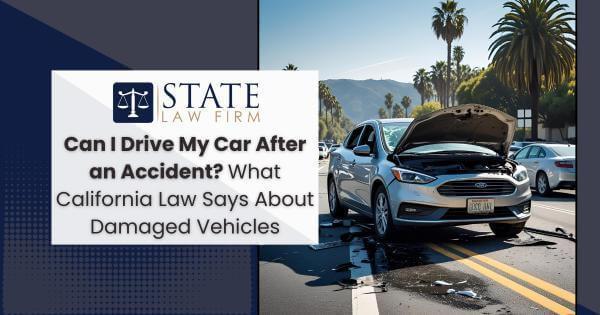
You may be able to drive your car after an accident in California, but only if the vehicle is safe, complies with required equipment rules, and remains legally registered and insured. A running engine or a dent that looks minor does not establish that the vehicle is roadworthy. If steering, brakes, tires, visibility, or restraint systems may be damaged, arrange professional assessment and a tow instead of testing it on the road.
Also consider whether tú are fit to drive. Injury symptoms, distress, or medication can make driving unsafe even when the car appears operable. Get medical help when needed and follow the instructions of emergency responders and your treating clinician.
This guide separates three questions after a crash: whether the car can be driven safely, what California reporting rules require, and how to protect the evidence for an insurance or injury claim.
Comprensión de las leyes de California sobre el estado del vehículo después de un accidente
Bajo California Vehicle Code §24002, a vehicle may not be operated in an unsafe condition that presents an immediate safety hazard, or without the equipment required by the code. The key question is the effect of the damage, not simply whether the car looks dented.
After an accident, you need to:
- Check safety before resuming travel. Do not drive a vehicle that may create an immediate hazard.
- Address damaged required equipment. A short trip home is not a general exemption from equipment rules.
- Handle crash reporting separately. Reporting does not certify the car as safe or give permission to leave the scene without meeting your responsibilities.
A cosmetic scratch is different from a loose bumper dragging on the road, a hood that will not latch, or a wheel displaced by the impact. When the condition is uncertain, have a repair professional assess it before you drive.
Evaluación de daños en su automóvil: ¿cuándo es seguro conducir?
Incluso un pequeño choque puede dejar problemas ocultos. Que tu coche arranque no significa que sea seguro.
Puntos clave de control de daños antes de conducir:
- Faros delanteros, luces de freno y luces direccionales Todos deben ser funcionales.
- Neumáticos y ruedas: Busque bultos, perforaciones o problemas de alineación.
- Dirección y suspensión: A tilted wheel, obvious misalignment, or steering problems noticed during the collision require professional assessment. Do not take a test drive to find out whether the car pulls.
- Parabrisas y espejos: Las grietas u obstrucciones pueden provocar multas y hacer que conducir sea peligroso.
- Leaks, smoke, or fuel odor: Move yourself to safety and obtain emergency help if there is an immediate danger. Do not inspect underneath an unstable vehicle.
- Doors, hood, and loose parts: Do not drive with a door or hood that will not secure, or with parts that could detach.
- Airbags and seat belts: Deployed airbags or damaged restraints require assessment and repair before the vehicle returns to use.
If you notice any of these issues or simply feel uncertain, arrange a post-collision inspection and ask whether the vehicle should be towed. NHTSA advises replacing deployed airbags before driving the vehicle again. A visual checklist is not a substitute for inspecting hidden damage or checking manufacturer-specific repair requirements.
Take photos of visible damage when it is safe to do so, without standing in traffic or delaying care. Keep the inspection findings, repair estimate, towing receipt, and any explanation of why the vehicle was unsafe. These records help distinguish crash damage from unrelated wear or later damage.
La importancia de informar accidentes y consideraciones de seguros
Roadworthiness does not resolve your separate responsibilities to stop, exchange information, report a qualifying collision, and notify your insurer under your policy. Keep a record of what was submitted and to whom.
Lista de verificación para informar accidentes automovilísticos en California
| What to do | Why it matters |
|---|---|
| Stop and address immediate danger | Get emergency help for injuries or hazardous conditions. Follow responders’ directions. |
| Exchange required information | Record the involved drivers, vehicle owners, registration, and insurance details. If property is unattended, additional notice and reporting duties apply. |
| Move safely in a property-damage-only crash | Vehicle Code §20002 requires stopping at the nearest location that does not obstruct traffic or jeopardize others. Compliant movement does not decide fault. |
| Check injury-crash reporting | Vehicle Code §20008 generally requires a written report to CHP or the appropriate city police within 24 hours when a person is injured or killed. Confirm the reporting process with the agency. |
| File an SR-1 when required | File with DMV within 10 days if anyone is injured or killed, or damage to any one person’s property exceeds $1,000. Police and insurance reports do not replace it. |
| Notify the insurer | Follow your policy’s reporting instructions and keep the claim number and correspondence. |
See the actual rules in Vehicle Code §20002 y §20008. Moving a vehicle out of danger after a property-only collision is different from deciding it is safe for a normal journey.
For the DMV filing, use the official SR-1 reporting page. Nuestro California SR-1 form guide explains the criteria, private-property qualifications, and records to keep. If CHP investigated and you need its report, see the separate CHP 190 request guide.
Insurance, towing, and repairs
Ask your insurer what coverage is available for towing, repairs, storage, and temporary transportation. The California Department of Insurance’s automobile guide distinguishes collision coverage from rental reimbursement; having one does not establish that every related expense is covered. Policy terms, deductibles, limits, and responsibility for the crash matter.
Do not keep driving an unsafe car to avoid a towing bill. Ask the repair shop to document what it found and retain receipts. Continuing to use a damaged vehicle can create additional harm and a dispute over which damage came from which event. It does not automatically make you responsible for the original collision.
Los riesgos de conducir un vehículo averiado: implicaciones legales y de seguridad
Driving a damaged car can create a new safety problem on top of the original crash. The risks include:
- Equipment citations if required lights, visibility equipment, or other components do not comply.
- A second collision or injury caused or worsened by unresolved damage.
- Disputes about additional damage and whether it falls within an insurance policy or the original claim.
Those consequences depend on the condition, conduct, evidence, and applicable law. A dent alone does not prove negligence, and driving after a crash does not automatically defeat an injury claim. Preserve the inspection records so the issue can be evaluated on facts.
What if the insurer declares the car a total loss?
A total-loss decision and mechanical drivability are different questions. A car may still start even though repairing it is not economically reasonable. If it becomes a salvage vehicle, do not assume that keeping it or obtaining a salvage certificate authorizes normal road use.
El California DMV’s revived-salvage process involves repair, documentation, inspection, and registration requirements. The Bureau of Automotive Repair explains the current vehicle safety systems inspection, which replaced the older brake-and-light certification process. Confirm the requirements for the particular vehicle before putting it back on the road.
Sus derechos como conductor después de un accidente: lo que necesita saber
Depending on liability, coverage, and the losses caused by the collision, an injured person may be able to pursue compensation for:
- Reparación o reemplazo de vehículos
- Gastos médicos
- Salarios perdidos
- Dolor y sufrimiento
También tienes derecho a:
- Choose a repair shop. El California Department of Insurance’s accident guide explains that insurers cannot require a particular shop. Discuss estimates and covered costs with the insurer and shop.
- Determinaciones de fallas de desafío realizadas por las aseguradoras o la otra parte.
Pero el sistema legal puede ser difícil de navegar, especialmente cuando también hay que lidiar con un tratamiento médico, reparaciones de automóviles o ausencias al trabajo.
If the collision caused an injury and the other driver’s responsibility, insurance coverage, or losses are disputed, State Law Firm’s car-accident lawyers can review the circumstances. Bring treatment records, photographs, the crash report if available, and repair or towing documents. A lawyer’s review of a claim does not replace a mechanic’s safety assessment.
Cómo garantizar su seguridad y cumplimiento legal después de un accidente
Getting back on the road requires more than a running engine. Confirm the vehicle’s safety, address required equipment and registration issues, and keep crash reporting separate from the decision to drive.
Can I drive with a dented bumper?
A dent by itself does not establish whether the car is safe or legal to operate. A loose assembly, damaged lights, tire contact, or hidden structural damage changes the answer. Have a repair professional assess the actual condition rather than relying only on appearance.
Can I drive after the airbags deploy?
Do not treat a running engine as permission to continue. NHTSA recommends replacing deployed airbags before driving again. Arrange towing and proper assessment of the restraint systems and other collision damage.
Will a short drive home be okay?
A short distance does not remove safety hazards or equipment requirements. If the car may be unsafe, arrange a tow. If the issue is moving out of traffic after a property-only collision, follow responders’ directions and the applicable stopping rules.
Does driving away mean I was not injured?
No. Whether you drove afterward is only one fact; it does not diagnose an injury or establish its absence. Seek appropriate medical assessment for symptoms and accurately describe what happened and when they developed.
Your next steps
- Address injuries and immediate hazards first.
- Arrange inspection or towing if the vehicle’s safety is uncertain.
- Complete required crash reports and insurer notifications.
- Keep medical, repair, towing, and insurance records together.
- Get individual advice before accepting a release when injury or responsibility remains unresolved.
This article provides general California legal and safety information. It is not a vehicle inspection, medical advice, or legal advice about a specific collision. Follow emergency responders, your treating clinician, and qualified repair professionals.