English
  Spanish
Construction work in San Bernardino is not routine labor. OSHA classifies construction as a high-hazard industry, and the agency warns workers face falls from elevation, heavy equipment incidents, electrocutions, silica dust, and asbestos exposure. Nationally, construction had the highest number of private industry workplace deaths in 2024, with 1,034 fatalities. In California, the construction sector recorded 81 fatal work injuries in 2024, and 43 of those deaths involved falls, slips, or trips. The California Employment Development Department also describes San Bernardino County construction laborers as working on building, highway, heavy construction, excavation, demolition, trenching, scaffolding, and hazardous waste removal, which shows how many danger points can exist on a single local jobsite.
That local risk is not theoretical. The City of San Bernardino’s Public Works Department manages capital improvement and land development activity, the County Department of Public Works administers transportation and flood control construction projects, and the City’s Building & Safety Division oversees the permit and inspection process for structural, electrical, plumbing, heating, and air-conditioning work. In other words, San Bernardino construction injury cases often arise on active sites involving multiple contractors, overlapping scopes of work, permit requirements, inspection histories, and public or quasi-public infrastructure.
For injured workers and families, the legal issues usually go far beyond one accident report. A serious case may involve workers’ compensation, a third-party negligence claim, a product liability angle, a public entity deadline, or a wrongful death case. That is why anyone searching for construction accident claims, broader workplace injuries, or guidance from California workers’ compensation lawyers needs a legal strategy that looks at every available path to compensation.
Why Construction Injury Cases Are Different in San Bernardino
Construction injury claims in San Bernardino are often more complex than ordinary injury matters because the sites themselves are more complex. Local construction labor includes highway work, trenching, demolition, scaffolding, excavation, and hazardous material removal, while city and county agencies continue to oversee public works, transportation, flood control, and permitted private development. When a worker is hurt on a site with a general contractor, several subcontractors, rental equipment, utility lines, public rights of way, and a property owner with separate responsibilities, liability can become layered very quickly.
That layered structure matters because California’s own fatality data shows how often serious construction losses occur in specialized trades. In 2024, specialty trade contractors accounted for 44 of California’s 81 fatal construction injuries. That makes it especially important to determine who controlled the area where the accident happened, who supplied the equipment, who created the unsafe condition, and whether someone other than the direct employer can be held financially responsible.
For a worker injured in the Inland Empire, that usually means a careful review of the full jobsite structure, not just the immediate employer relationship. A strong case can require investigation into the property owner, site manager, general contractor, framing crew, electrical subcontractor, concrete subcontractor, equipment rental company, delivery company, or another outside party. That is one reason local workers often need more than basic claim filing help and why pages such as vicarious liability and employer accountability and California negligence issues become relevant in major injury litigation.
The Jobsite Hazards That Most Often Lead to Serious Claims
Falls remain the biggest single threat. CPWR reports that the construction Focus Four, falls to lower level, electrocutions, struck-by injuries, and caught-in or between injuries, together cause almost two-thirds of on-the-job construction fatalities, and falls alone account for over one-third of construction deaths yearly on average. OSHA likewise identifies falls as the leading cause of fatalities in construction. California’s 2024 data matches that pattern, with 43 of the state’s 81 fatal construction injuries classified as falls, slips, or trips. That is why cases involving ladders, roofs, decking, unprotected edges, aerial lifts, and scaffolding accidents so often produce life-changing losses.
Electrocutions, struck-by events, and heavy equipment incidents are equally serious. OSHA’s construction guidance specifically warns about electrocutions, heavy equipment, silica, and asbestos, and its struck-by materials note that many struck-by fatalities involve heavy equipment such as trucks or cranes. OSHA also warns that trench collapses pose the greatest risk to workers’ lives in excavation work, and its roadway safety guidance explains that highway and street construction workers face fatal and serious injuries from motorists, construction vehicles, and equipment moving through or around work zones. In a region like San Bernardino, where roadway, warehouse, utility, and civil work are all common, incidents involving workplace electrocution injuries, heavy equipment accidents, trench failures, and industrial loading traffic can create both workers’ compensation and third-party liability issues.
Forklift cases deserve special attention in San Bernardino because local construction labor frequently overlaps with warehouse development, material staging, freight movement, and equipment handling. EDD’s description of local construction work includes the use of hand and power tools, hoists, trenching activity, scaffolding, and site preparation, all of which increase the chance of a worker being pinned, hit, crushed, or backed over by mobile equipment. For workers hurt in those events, resources on forklift accident lawyers in San Bernardino can be especially relevant.
Many of these accidents do not heal cleanly. The Division of Workers’ Compensation explains that if an injured worker does not recover completely, the case can move into permanent disability, and accepted claims may also involve supplemental job displacement benefits when the worker cannot fully return to prior employment. In practical terms, severe San Bernardino construction accidents can evolve into long-term claims involving catastrophic injuries, traumatic brain injury claims, crush injuries, amputation cases, internal organ damage, and paralysis injuries.
Workers’ Compensation Is Only Part of the Recovery Process
California workers’ compensation is a no-fault system for job-related injury claims against an employer. Under Labor Code section 3600, employer liability exists without regard to negligence when the injury arises out of and in the course of employment. DWC also instructs injured workers to report the injury as soon as possible and warns that failure to report within 30 days can cost the worker the right to benefits. Once the employer learns of the injury, it must provide or mail a claim form within one working day, and within one working day after the claim form is filed, the employer or claims administrator must authorize up to $10,000 in treatment while the claim is being accepted or rejected. DWC further states that the worker should hear whether the claim is accepted or denied within 90 days, or the injury will be presumed covered. That framework is why prompt action matters after any San Bernardino site injury, and why pages like no-fault workers’ compensation system and how to file a workers’ comp claim in California matter so much.
Workers’ compensation can provide substantial help, but it is limited. DWC says accepted claims may include medical care, temporary disability, permanent disability, supplemental job displacement benefits, and death benefits. Temporary disability generally pays two-thirds of the worker’s gross lost wages while recovering, but workers’ compensation does not include pain and suffering or punitive damages. For many injured workers, that is the turning point in understanding why a major construction accident may require both a comp case and a separate civil case. Internal resources on when workers’ comp starts paying lost wages in California, common workers’ compensation claims, and why legal representation matters in workers’ comp cases can help workers understand that difference.
At the same time, California law preserves the worker’s right to pursue claims against someone other than the employer. Labor Code section 3852 states that a workers’ compensation claim does not affect the employee’s right of action for damages against a third person. On a San Bernardino construction site, that third party might be a general contractor, a negligent subcontractor, a property owner, an equipment company, a utility contractor, a delivery driver, or someone else outside the direct employment relationship. Because so many local projects involve multiple specialized trades and overlapping site responsibilities, third-party analysis is often where substantial additional recovery is found. That is also where topics like personal injury demand letter strategy and special and general damages start to matter.
If the insurer denies the claim, that is not the end of the case. DWC states that denied claims can be challenged before a workers’ compensation administrative law judge, and the agency maintains a San Bernardino district office with judicial services and an Information and Assistance Unit for local disputes. For injured workers, that makes quick legal review especially important when there is a denied workers’ compensation claim or a benefits dispute that starts moving toward formal proceedings.
What Strong Construction Accident Cases Usually Turn On
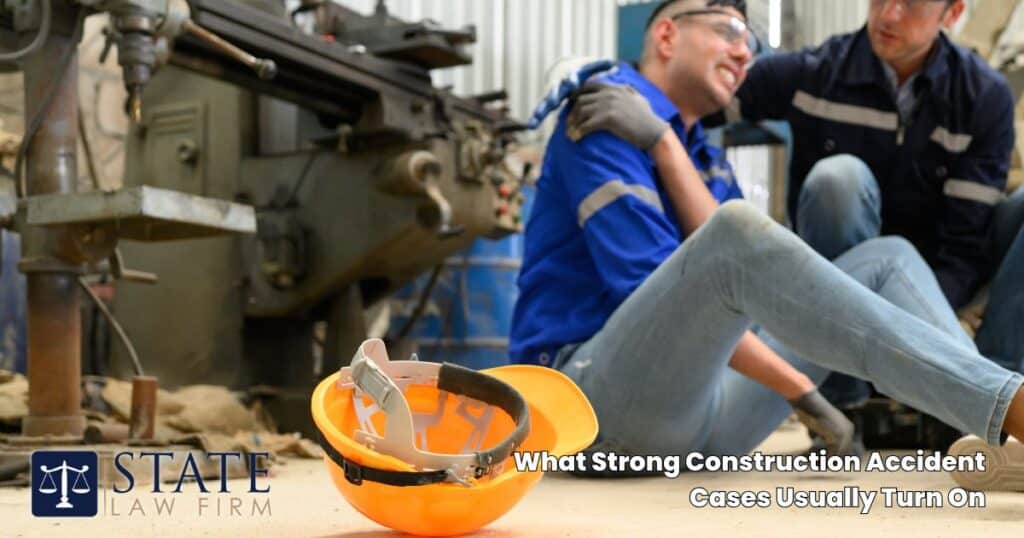
A strong construction accident case usually turns on control, notice, and documentation. In San Bernardino, city and county agencies oversee active public works, flood control, transportation, capital improvement, and permitted construction activity, which means accident cases can involve contracts, permit files, inspection records, maintenance obligations, and site-specific safety responsibilities spread across several entities. In the right case, the most important legal question is not simply who signed the injured worker’s paycheck, but who actually controlled the area, equipment, access point, trench, scaffold, lift, or traffic pattern that caused the harm.
Early documentation can make or break that analysis. DWC’s employer guidance requires the employer to provide the claim form within one working day, return a completed copy, forward the form along with the employer’s report of occupational injury or illness to the claims administrator, and authorize prompt medical treatment. On a serious construction case, counsel will usually want the incident report, witness information, photographs, video, subcontract agreements, equipment records, permit and inspection documents, and any internal or agency investigation materials before they disappear or get overwritten. That is why resources on preserving evidence after a serious injury are often highly relevant in construction litigation.
Cases also become stronger when counsel can show how the unsafe condition violated the practical realities of the job. If a worker falls because edge protection was missing, is crushed because mobile equipment was operating in a blind zone, or is hurt in a trench that lacked proper protection, the legal theory may involve negligent site control, negligent equipment operation, negligent subcontractor performance, or defective safety planning. Those are not abstract issues. They are the core facts that often determine whether a case stays limited to comp benefits or expands into a full-value civil claim. That is one reason many workers also review the benefits of hiring a personal injury attorney after a major jobsite injury.
Deadlines, Public Entity Claims, and Wrongful Death Issues
Deadlines in California construction accident cases are unforgiving. An injured worker generally must give notice to the employer within 30 days under Labor Code section 5400. Workers’ compensation proceedings are generally subject to a one-year limitations rule under Labor Code section 5405. Separate personal injury actions for injury or death caused by another’s wrongful act or neglect are generally subject to the two-year period in Code of Civil Procedure section 335.1. If a public entity is involved, Government Code section 911.2 requires a claim relating to personal injury or death to be presented not later than six months after accrual. For many San Bernardino workers, that means the clock starts running almost immediately. Internal guidance on the statute of limitations in California personal injury cases can be useful, but the practical takeaway is simple: delay can destroy leverage.
Public entity issues are especially important in San Bernardino because city and county departments actively manage public construction, transportation, flood control, and capital improvement work. If the accident happened on a publicly controlled site, involved a government contractor, arose from a dangerous public condition, or was connected to public works traffic control or site design, a separate government claim deadline may apply long before an ordinary lawsuit would be due. That is why injured workers should quickly evaluate possible claims against public entities in California whenever a municipal, county, school, utility, or infrastructure project is involved.
Fatal accidents raise another set of issues. DWC explains that death benefits may be payable to a spouse, children, or other dependents when a worker dies from a job-related injury or illness. California law also preserves claims against third parties whose negligence caused the death. For families dealing with a fatal fall, electrocution, trench collapse, equipment rollover, or struck-by incident, both the workers’ compensation death benefit route and potential wrongful death claims should be evaluated as early as possible.
Answers to Common Questions After a San Bernardino Construction Accident
Can I still have a case if workers’ comp is already paying for treatment?
Yes. Workers’ compensation is generally the exclusive remedy against the employer for covered job injuries, but Labor Code section 3852 preserves the worker’s right to pursue damages against a negligent third party. In real construction cases, that can mean a subcontractor, general contractor, property owner, equipment company, utility contractor, delivery driver, or someone else outside the direct employment relationship.
What should I do the same day the accident happens?
Get emergency treatment if necessary, tell your supervisor the injury is work related, request the DWC-1 claim form, complete your section immediately, and keep a copy. DWC says prompt reporting helps avoid delays and warns that failing to report within 30 days can jeopardize benefits. It also says the claim form should be provided within one working day after the employer learns of the injury.
What if the insurance company delays or denies the claim?
DWC says the worker should hear whether the claim is accepted or denied within 90 days, and if a denial letter is issued, the worker has the right to challenge it. The agency also maintains a San Bernardino district office with judicial services and an Information and Assistance Unit for local disputes.
Why are forklift and equipment cases so common in this area?
Local construction work in San Bernardino County includes heavy construction, excavation, site preparation, hoists, scaffolding, and other equipment-intensive activity, and county public works projects include transportation and flood control construction where moving vehicles and machinery are part of the work environment. That combination naturally increases the risk of struck-by, backing, crush, and material-handling incidents. For those cases, pages on forklift accident lawyers in San Bernardino and heavy equipment accidents can be useful starting points.
When should I speak with a lawyer?
As soon as possible. Early legal review helps protect deadlines, preserve evidence, identify third parties, coordinate the comp claim with any civil claim, and evaluate whether a public entity filing deadline may apply. In serious cases, waiting can cost access to witnesses, documents, surveillance, site conditions, and leverage.
If you need help evaluating a San Bernardino construction site injury, you can start with State Law Firm, learn more about us, review the firm’s attorneys, read case studies, browse client testimonials, explore the firm’s FAQs, and request a free consultation. For workers and families facing a major jobsite injury, early action is usually the best way to protect both benefits and evidence.