English
 Spanish
Reviewing a Temecula Car Accident and Your Next Steps
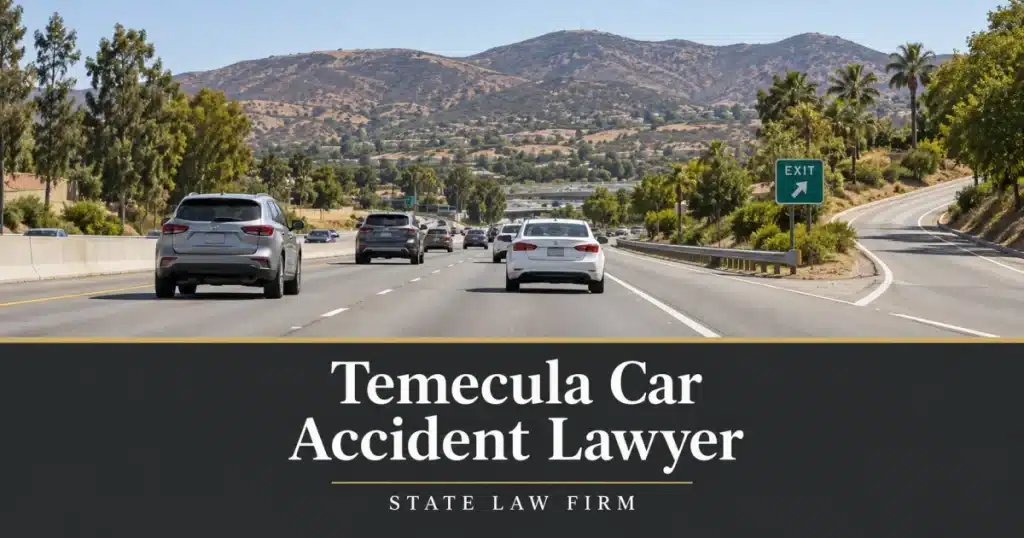
Temecula travel includes Interstate 15, State Route 79, Winchester Road and Rancho California Road. Freeway commuting, shopping trips and travel toward wine-country roads can produce different factual questions after a collision. The useful evidence depends on the movement being disputed, not simply the amount of visible damage.
State Law Firm offers a free consultation to review the collision sequence, available insurance, treatment records, missed work and other documented effects. The same checklist does not fit every crash, and no specific outcome or value can be promised.
From the Road Segment to the Relevant Evidence
Distinguish the I-15 travel lanes from an entrance ramp, exit queue or connecting intersection. Note the direction, lane and nearest identifiable junction. Around Winchester Road or Rancho California Road, document a turn, driveway entry or signal-controlled movement precisely rather than describing only the general area.
A rear impact in stop-and-go traffic raises different questions from a sideswipe, left-turn collision or multi-vehicle event. Preserve original video, witness details and photographs of the scene and vehicles. If you were visiting the area, keep rental, towing and trip records that help establish the route and timing.
Keep Collision Facts and Loss Records Organized
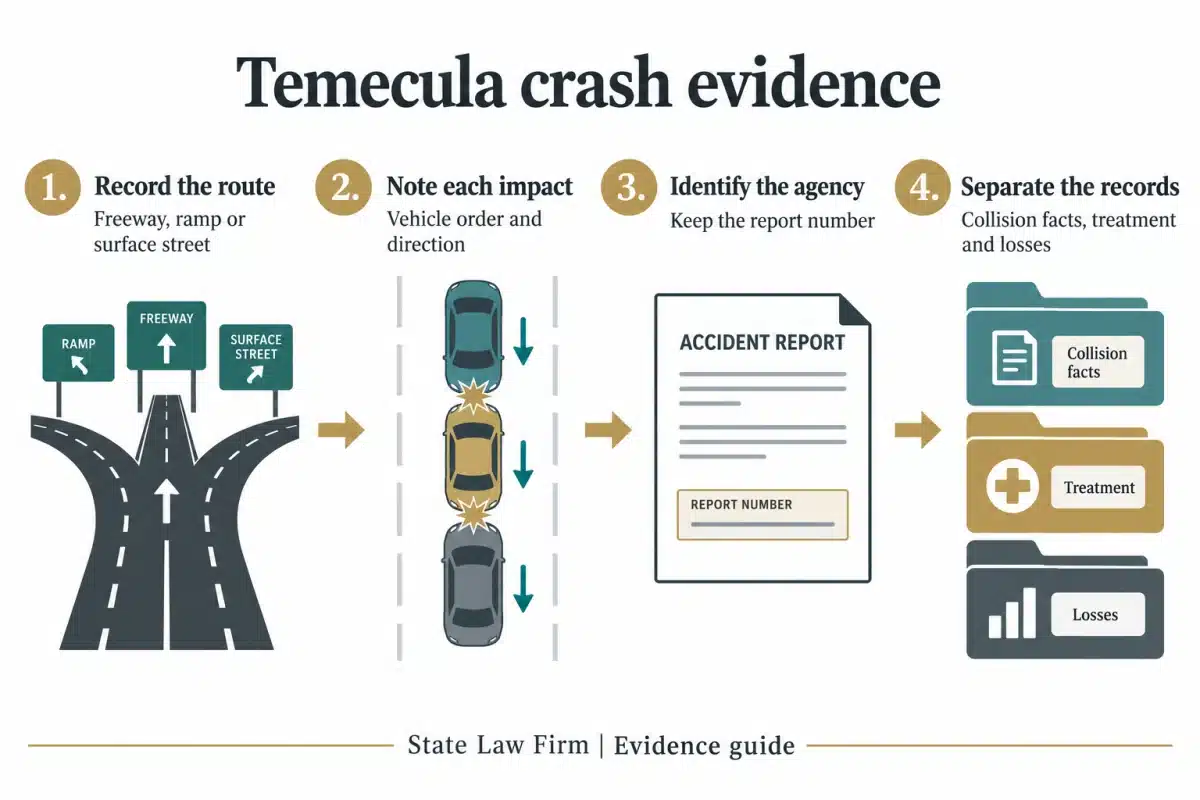
- Route: Freeway, ramp or surface street; direction, lane, time and nearby junction.
- Impact sequence: Vehicle order, points of contact and whether the vehicles were stopped or moving.
- Agency record: Investigating department, report number and exchange-of-information sheet.
- Treatment and losses: Medical records, restrictions, bills, work documentation, towing and repair records.
Keep new records in the same dated file as care and vehicle issues develop. Tell the reviewing attorney about prior relevant injuries, later incidents, ownership questions or inconsistent statements so those issues can be addressed directly.
Temecula Police and CHP Report Resources
Temecula contracts with the Riverside County Sheriff's Office for police services. The official Temecula substations page explains how to check report availability through the Southwest Station and arrange collection of a releasable report. Check current instructions before visiting a substation.
If CHP investigated, use the CHP collision-report guidance. The Sheriff's general online property-crime form is not a traffic-accident reporting form. Use the appropriate agency process; call 911 for an emergency.
A police report is separate from the DMV's SR-1 report. DMV requires reporting within 10 days for a reportable collision involving injury, death or over $1,000 in property damage.
Connect Each Insurance Issue to the Evidence
Fault and insurance are related but separate questions. Identify drivers, vehicle owners and any work-related vehicle use rather than assuming only two people or one policy matter. Keep policy information, claim numbers, requests and coverage positions together.
The injury file should show what was reported, when care began and what limitations were documented. Property and income losses need their own supporting records. Riverside County may be relevant to proceedings, but the correct venue and process depend on the actual parties and facts.
Temecula Car Accident Questions
Does Temecula Police or CHP hold my report?
Check the investigating agency on your incident paperwork. Temecula's police services are provided through the Sheriff's Office, while a CHP-investigated collision follows CHP's report process. A city name alone does not settle the question.
What if I was visiting Temecula when the collision happened?
Keep travel, rental and towing records together with the report number and original scene material. Explain where the vehicle is now and where you are receiving care so the review can identify records held in different locations.
Should I combine later treatment notes with my account of the crash?
Keep both, but label them by date and source. Your account of the collision and the later treatment history answer different questions. Separating them helps avoid confusing a later development with what was known at the scene.
Working With State Law Firm
State Law Firm represents people with California injury claims. Founder Eddie Tehrani is listed by the State Bar as Itamar B. Tehrani, also known as Eddie Tehrani, California Bar No. 303165. You can review the attorney team's backgrounds and verify his State Bar record before choosing representation. The firm's main office is in Sherman Oaks; serving this community does not mean the firm has an office in every city.
A case review can identify disputed collision facts, potentially relevant insurance, missing records and next steps. If the firm accepts representation, the work depends on the facts and agreed scope, which may include investigating evidence, communicating with insurers, evaluating documented losses and considering litigation. No result or claim value is promised.
Consultation, Fees and Case Expenses
The initial consultation is free. State Law Firm handles car-accident cases on a contingency-fee basis: the attorney fee depends on a recovery and the written agreement. Case expenses are a separate issue. Before signing, ask how the percentage is calculated, how expenses are handled and what you could owe if there is no recovery.
Bring the records you already have, any insurance deadline or proposed release, and a list of questions. The initial conversation can identify missing information and whether further review is needed. Requesting a consultation does not guarantee that the firm will accept the case; confirm representation in writing.