English
  Spanish

Visiting a California hotel, casino, or event venue is usually about fun and relaxation. Yet unexpected accidents at these establishments are more common than many realize. Slick lobby floors, dimly lit stairwells, crowded concert halls, and other hazards can quickly turn a pleasant outing into a traumatic injury. When such incidents happen due to negligence, victims have the right to seek compensation under premises liability law. In these situations, a seasoned California hotel & casino injury attorney can be invaluable in holding property owners accountable and navigating the legal aftermath.
In this comprehensive guide, we’ll explore common accidents in resorts, casinos, and event venues, the legal responsibilities of property owners, steps to take if you’re injured, and how an experienced lawyer can help you recover. Our aim is to empower you with knowledge so you can protect your rights and pursue the compensation supported by the evidence and applicable law after an injury in any hospitality or entertainment setting.
Common Accidents in Hotels, Casinos, and Event Venues

Resorts and casinos offer a wide array of amenities – from lavish hotel rooms and restaurants to nightclubs, gaming floors, pools, and concert spaces. With so much activity, accidents can happen in many ways. Here are some of the most frequent incidents that lead to injuries at these properties:
- Slip and Falls: Slippery floors (from spilled drinks, recently mopped surfaces, pool water, etc.), uneven carpeting or flooring, poor lighting, and cluttered walkways can all cause patrons to slip or trip. A hard fall on a marble hotel lobby floor or a wet casino walkway can result in broken bones, back injuries, or even head trauma. Property owners should promptly address hazards like spills or loose rugs – failing to do so is a leading cause of slip and fall accidents.
- Tripping Hazards & Structural Issues: Worn or torn carpets, loose tiles, broken stairs, or poorly maintained escalators and elevators are dangerous in crowded venues. Guests might trip on frayed carpeting in a resort hallway or be injured by a sudden elevator drop. Such structural maintenance issues fall under premises liability obligations of the owner.
- Pool and Spa Accidents: Many resorts have pools, hot tubs, and spas. Wet decks, lack of safety signage, or absence of lifeguards can lead to slips, drownings, or other poolside injuries. Likewise, poorly maintained gym equipment in a hotel fitness center could malfunction and hurt someone.
- Falling Objects: In large event venues and casinos, heavy light fixtures, hanging displays, or poorly secured decorations can fall from heights. A collapsing stage prop at a concert or a piece of ceiling coming loose in a hotel conference hall can cause serious harm to attendees below.
- Crowd-related Injuries: Concerts, conferences, and sports events can become dangerously overcrowded if not managed properly. Stampedes or crowd surges might occur when there’s a panic or insufficient crowd control. Event organizers and venue owners must take measures to prevent overcrowding and ensure safe emergency exits. Inadequate preparation for large crowds is a form of negligence – for example, failure to prevent overcrowding was highlighted as a risk in a discussion of visitor rights at theme parks, and similar principles apply to casinos and concert venues.
- Negligent Security & Assaults: Hotels and casinos are expected to provide reasonable security for their guests. This includes measures like trained security staff, surveillance cameras, proper lighting in parking lots and hallways, and responsive protocols if issues arise. If a venue is in a high-crime area or has a history of past incidents, extra precautions (such as guards or ID checks) should be in place . When security is lax, guests can become victims of assaults, robberies, or other crimes on the premises. For instance, an attacker might take advantage of a poorly lit parking garage or a lack of cameras. These scenarios can lead to a negligent security lawsuit against the property owner if it’s shown that better security could have prevented the incident.
- Food and Beverage Incidents: Resorts often have on-site restaurants, bars, and nightclubs. Injuries here might include burns from spilled hot beverages, cuts from broken glass, or even food poisoning from negligent food handling. Overserving alcohol at a casino bar could lead to drunken brawls or a DUI accident once the patron leaves (though California’s dram shop laws limit liability in many such cases). Still, a venue has a duty to maintain a safe environment in dining and drinking areas – for example, promptly cleaning up spilled drinks to prevent falls. Injuries in these settings are similar to other restaurant accident cases under premises liability law.
- Fires and Emergency Safety Violations: Hotels and event venues must adhere to fire codes and safety regulations (e.g. having functional smoke alarms, clear fire exits, and capacity limits). A nightclub in a casino that lacks sufficient emergency exits or a hotel that doesn’t fix a known electrical issue could be disastrous. If a fire or other emergency leads to injuries or fatalities, the venue may be liable for negligence in safety preparedness.
Key takeaway: Property owners and operators of resorts, casinos, and event centers have a broad duty to keep their premises reasonably safe. Whether you slip on a wet casino floor, get hurt by falling stage equipment, or become a crime victim due to lack of security, these incidents all fall under the umbrella of premises liability if caused by the venue’s negligence. Understanding the common hazards helps guests stay alert – and strengthens any claim by identifying how the venue failed to prevent a foreseeable injury.
Premises Liability in California: Who Is Responsible?

Accidents at hotels and casinos are typically governed by California’s premises liability laws, which hold property owners and occupiers legally responsible when unsafe conditions cause harm. Under California Civil Code §1714 (the basis of premises liability), owners and those who control property must exercise reasonable care to maintain their property in a safe condition. In practical terms, this means they should regularly inspect for hazards and promptly repair or warn of any dangerous conditions. If they fail in this duty and a guest is injured as a result, they can be held liable for the damages .
For a successful premises liability claim (such as a hotel or casino injury case), the injured party generally needs to prove a few key elements:
- Duty of Care: The property owner or operator owed a duty to the victim. In California, customers, guests and patrons are typically considered “invitees” – people invited onto the property for business purposes – which gives them the highest level of protection under the law. Owners must inspect the premises and fix or warn of hazards to invitees. There’s no doubt that hotels, casinos, and event venues owe their paying guests a duty to keep the facilities reasonably safe.
- Breach of Duty (Negligence): The owner or their employees breached that duty by not maintaining safe conditions or not addressing a hazard they knew or should have known about. This could be an action (like improperly stacking heavy boxes that then fall on a guest) or an omission (such as failing to repair a broken stair or not providing any security in a high-crime area). An example is when staff knew about a spill on a casino floor but didn’t put up warning signs or mop it in a timely manner – or if a hotel’s management never implemented basic security despite prior assaults on the property. In legal terms, you must show the owner was negligent in maintaining the premises .
- Causation: The breach of duty must be a substantial factor in causing your injury. In other words, you need to link the dangerous condition to the accident and resulting harm. If you slipped on a wet tile in the hotel lobby, you’d show that the unaddressed wet floor caused your fall (and not, say, your own shoelaces or a medical episode). Often this is established with evidence like photos of the hazard, incident reports, or witness testimony saying “I saw there was no caution sign on the wet floor.” If an assault occurred, causation might involve showing inadequate security (e.g. broken door locks or unlit corridors) enabled the attack.
- Damages: You suffered actual injuries or losses as a result – such as physical injuries, medical bills, lost income, pain and suffering, etc. Without demonstrable damages, there’s no claim even if negligence occurred. In most cases, medical records and bills, as well as personal accounts of the injury’s impact, help prove this element.
An important concept in premises liability cases is foreseeability. The hazard or crime doesn’t have to have happened before, but if a reasonable person could anticipate that it might happen, the owner should take steps to guard against it . For example, it’s foreseeable that spilled drinks occur regularly in a busy nightclub, so management should have procedures for frequent floor checks and cleanup. Or if a convention center in a rough neighborhood has had thefts in the parking lot, it’s foreseeable that more serious assaults could happen, warranting better lighting and security patrols. If an owner ignores foreseeable risks, liability is more likely when an injury occurs .
Multiple Parties May Share Liability: One tricky aspect is that responsibility isn’t always limited to the property owner alone. Depending on the situation, other parties might be partially liable:
- If the property is leased, the business tenant (like a nightclub operator or a store in a hotel lobby) might be responsible for hazards in the areas they control, while the landlord handles structural issues. For instance, a hotel might lease its restaurant to a third-party company – if you get hurt in the restaurant due to a server’s negligence, that company could bear responsibility along with the hotel owner.
- Contractors or Maintenance Companies: Hotels and casinos often hire outside contractors for security, cleaning, or maintenance. If negligence by a security contractor (e.g. a guard who fell asleep or an alarm company that didn’t respond) enabled an incident, that contractor could be liable. Similarly, if an elevator maintenance company performed shoddy work leading to a malfunction, they may share blame. Your attorney will investigate contracts and relationships to identify all liable parties.
- Employees of the Venue: Under the doctrine of vicarious liability, employers are responsible for the negligence of their employees acting in the course of their job. So if a casino cleaning staff member carelessly leaves a hazard (like a mop bucket) in a walkway and someone trips, the casino itself is liable for its employee’s negligence. Essentially, the company “steps into the shoes” of its staff for legal purposes. This is crucial because it ensures the victim can pursue the employer (which has insurance and assets) rather than just an individual employee.
- Event Organizers or Vendors: If an injury happens at a concert or trade show held at a venue, sometimes the promoter or event organizer could be partly responsible (for example, for not providing adequate crowd control or medical staff). The venue owner typically isn’t off the hook, but there may be shared liability. For example, a pyrotechnics company’s negligence at a casino concert causing a fire might implicate both the vendor and the venue.
It often requires a thorough investigation to determine who is responsible for a slip and fall or other accident – it could be one party or multiple. An experienced premises liability attorney will look at “who had control” over the hazard and the area where the injury occurred. They will also examine any contracts that spell out maintenance and security duties. Don’t let the property owner or insurance adjuster automatically pin the blame elsewhere; often several entities can be held accountable for the chain of failures that led to your injury. The role of liability in slip and fall accidents can be complex, but ultimately anyone whose negligence contributed to unsafe conditions may be on the legal hook.
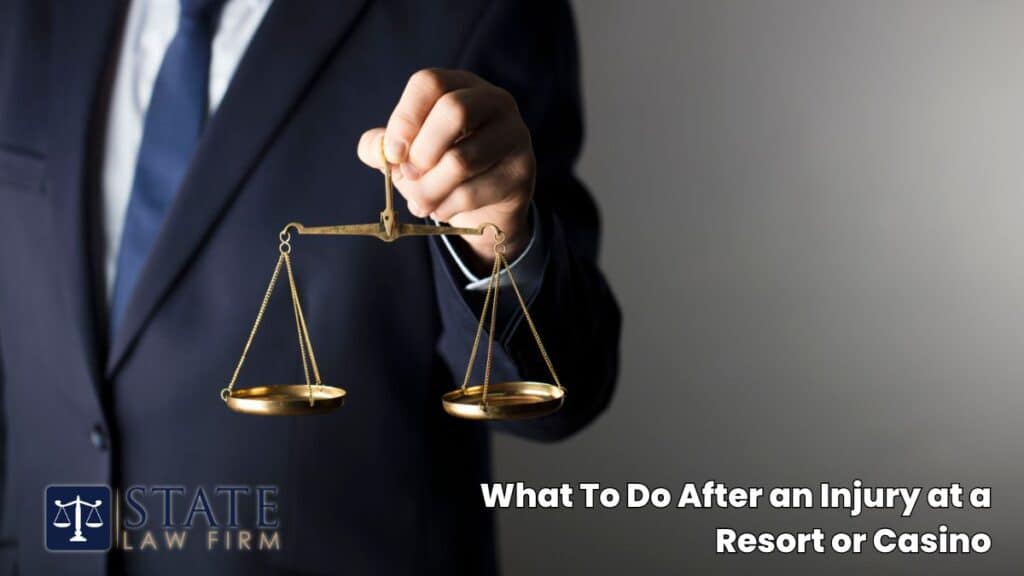
What To Do After an Injury at a Resort or Casino
If you suffer an accident or injury at a hotel, casino, or event venue, your actions in the immediate aftermath can significantly affect your health and your legal case. It’s important to both take care of yourself and preserve your rights. Here are the critical steps to take after an incident:
1. Prioritize Safety and Medical Care: Your well-being comes first. If you are seriously hurt (for example, you felt a snap in your leg or you’re experiencing head trauma symptoms), call for medical help immediately. In a casino or stadium, ask staff to get the on-site EMT or call 911. Even if injuries seem moderate, see a doctor as soon as possible – some issues (like concussions or internal injuries) may not be obvious right away. Prompt treatment not only protects your health but also provides medical records linking the injury to the accident. Don’t shrug it off; adrenaline in the moment might mask pain, so get a medical evaluation.
2. Report the Incident to Management: As soon as you can, notify the property owner or manager about what happened. Hotels and casinos typically have procedures to document accidents (often an incident report will be filled out). Make sure management is aware of the situation and how you got hurt – whether it’s a slip on their floor or an assault on their premises. Reporting does two things: it creates an official record that the incident occurred, and it prompts the establishment to preserve evidence (like saving surveillance camera footage). If you’re at a hotel, notify the front desk or security office; if at a concert, find an event official. Insist on getting a copy of any written report if possible. Pro Tip: Do not sign any liability waivers or settlement offers the venue might shove at you in the heat of the moment. Some unscrupulous managers might try to get you to sign something absolving them – you are not required to sign anything on the spot. Simply report the facts of what happened.
3. Document the Scene and Collect Evidence: If you are physically able (or have a companion who can help), gather evidence right away. This is crucial in premises liability cases because the scene can change quickly – spills get mopped, hazard signs appear post-accident, and employees might “forget” what happened. Use your phone to photograph the hazard that caused your injury (the puddle, broken railing, uneven step, etc.) as well as the general scene. Take pictures from multiple angles and distances. If there were no warning signs present, capture that in your photos. Also photograph your injuries if visible (bruises, cuts). If anyone witnessed your accident or the conditions, get their contact information – independent eyewitnesses can support your story later. For instance, another guest might confirm “that floor was soaking wet for 10 minutes with no caution sign.” If you were assaulted, try to get names or statements of people who saw suspicious conditions (e.g. “the parking lot lights were out, we could hardly see”). In important steps to take after a slip & fall accident guides, documenting everything is always near the top of the list, because it can make or break your ability to prove negligence.
4. Preserve Evidence: In addition to your own documentation, think about other evidence that might exist. For example, casinos and hotels have security cameras almost everywhere. Request that the footage of the area around the time of your accident be saved. It’s wise to do this in writing (email the hotel manager or corporate, if possible) so there is proof of your request. Businesses may routinely erase or overwrite video after a certain period (sometimes in a matter of days) – you want them to preserve that tape. If you later find that evidence “goes missing,” it could raise issues of spoliation of evidence (destruction of evidence), which courts don’t look kindly on. Also, save any physical evidence: for example, the clothing and shoes you wore (don’t wash them, in case they contain traces of the hazard like oily residue), or the object that injured you if it’s portable. Store these in a safe place.
5. Get Contact Information and Official Reports: If police or EMTs respond (common in assaults or serious injuries), obtain the police report or incident number. Also take note of any employee names (like the manager you reported to, or the security guard on duty). This can help later when your attorney is trying to get internal records. If other patrons mention they had reported the hazard earlier (“I told a staff member about that spill 20 minutes ago!”), make a note of that and who said it – it could strongly support your claim that the casino had notice of the danger and failed to act.
6. Refrain from Quick Statements to Insurers: If the venue’s insurance company or risk management department reaches out immediately (which sometimes happens for casinos or big resorts), be cautious. It’s usually best not to give a recorded statement or sign any insurance documents until you have legal counsel. You can politely inform them that you are seeking medical care and will follow up. Insurance adjusters may seem friendly, but remember their goal is to minimize the claim – they might try to get you to admit you “weren’t watching where you stepped” or that you “feel okay now,” which could later be used to undermine your case. You have no obligation to give a detailed statement right after the incident.
7. Contact an Attorney Before Saying Too Much: As soon as practical, reach out to an experienced personal injury attorney who handles premises liability cases. Many offer a free consultation (more on that later). Getting legal advice early will help protect your rights. Your attorney can guide you on how to communicate with the hotel or casino and its insurers going forward. They may also send a spoliation letter to the establishment to formally demand preservation of evidence (like video footage, maintenance logs, etc.). The sooner a lawyer is involved, the better they can start investigating and building your case while evidence is fresh. Don’t delay – in one notable incident, a victim who slipped in a grocery store got an attorney within days who obtained the security video, whereas waiting longer might have meant the tape was taped over and lost forever.
By following these steps, you not only safeguard your health but also strengthen any future personal injury claim. Remember that taking immediate action – report, document, and consult – can make a huge difference in the outcome of a premises liability case. For more detailed guidance on post-accident actions and at-home care for injuries, you can refer to our in-depth resource on steps to take after a slip and fall and treating injuries. Acting promptly will help your recovery and position you better if you decide to pursue compensation for the accident.
Proving Negligence and Building Your Claim
Once the dust has settled after your accident, the next phase is proving that the property owner’s negligence caused your injuries. In a hotel or casino injury case, this means gathering evidence to show the dangerous condition existed, the owners/operators knew or should have known about it, and they failed to fix or warn about it in time. A strong claim is like constructing a solid puzzle – you need to fit multiple pieces of evidence together to see the full picture of negligence. Here’s how you and your attorney can build a compelling premises liability case:
- Incident Reports and Documentation: If the venue prepared an official incident report when you reported the injury, that’s a key starting point. This report might note the time, location, and initial observations (e.g. “patron slipped on wet floor near buffet, no wet floor sign present”). It may even include statements from employees or witnesses. Your attorney will request this report from the establishment. It can serve as early proof that the incident did happen as you described. Additionally, if police were involved (common in assaults or serious situations), the police report will be obtained as evidence.
- Photographic Evidence: The photos you took (or that others took) of the hazard and scene are often some of the most persuasive evidence. Clear images of a puddle with no caution sign, or a broken stair, speak volumes. They can be shown to insurance adjusters, judges, or a jury to paint a vivid picture of the unsafe condition. If you weren’t able to take photos, don’t despair – sometimes surveillance footage or witness descriptions can fill that gap.
- Surveillance Video Footage: As mentioned, many casinos, hotels, and venues have CCTV cameras. Video footage is like gold in these cases. If captured, it might show how long a hazard was present or the exact moment of the accident. For example, a timestamped video might reveal that a spilled drink lay on the casino floor for 15 minutes with staff walking by it before you slipped – excellent proof of negligence (they had time to notice and act, but didn’t). Or footage of an assault could show the assailant lurking in a dark corner where a light was out, supporting a negligent security claim. Obtaining this footage quickly is crucial – your lawyer will send the proper notices and possibly subpoena the video. Pro tip: do not count on the property to voluntarily hand it over or preserve it; sometimes footage “mysteriously” disappears if it’s incriminating. An attorney ensures they’re put on notice to keep it, and if they don’t, there can be legal consequences.
- Maintenance and Inspection Records: In slip/trip cases, a core issue is whether the property owner had a reasonable inspection and maintenance routine. Your attorney can demand maintenance logs, cleaning schedules, and repair records from the venue. For instance, a hotel might have a log that housekeepers inspect hallways every hour – if the logs show a gap or someone signing off without actually checking, that helps your case. Or repair records might show a broken door lock in the hotel was reported by guests multiple times in the past with no fix – evidence they knew of a security hazard and neglected it. These records can prove the “knew or should have known” element of negligence.
- Prior Complaints or Incidents: It bolsters your case if you can show the hazard wasn’t a one-time freak occurrence. Were there previous complaints or similar injuries at this venue? Sometimes a history of problems comes to light – perhaps other guests had filed complaints about slippery tiles by the pool or a lack of security patrols on weekends. Your attorney may uncover prior lawsuits, incident reports, or even online reviews mentioning safety issues. A pattern of negligence can greatly support your claim of foreseeability. For example, if three others slipped on that same step in the month prior, the casino absolutely should have fixed it by the time it got you.
- Witness Testimony and Statements: Eyewitnesses who can corroborate your account are very helpful. This could include people who saw the accident or conditions (“I saw her fall, the area was dim and the carpet was torn”) or even former employees who can attest to negligent practices (“When I worked security there, management ignored repeated requests to fix the broken cameras”). Witness statements may be obtained through interviews or later depositions if a lawsuit is filed. Sometimes, expert witnesses are also used in premises cases – for instance, a building code expert might testify that the stairway where you fell violated safety codes (e.g. improper height or no handrail), or a security expert might opine that the venue’s security measures were inadequate by industry standards.
- Photographic Comparisons and Site Inspections: Your legal team might visit the site (or send an investigator) to inspect and photograph the area under similar conditions. If your fall happened at night due to poor lighting, they’ll want to capture how dark it truly is in that spot with the same lights off. If a handrail was loose, they might physically inspect if it’s been fixed or still loose. These inspections can also reveal if the property remedied the hazard after your injury (e.g. suddenly they installed extra lighting or put down non-slip mats) – interestingly, such subsequent repairs can’t be used to prove negligence (courts want to encourage repairs), but it can help you feel validated that there indeed was an issue.
All of this evidence combines to show what happened, why it happened, and what the venue did wrong. Essentially, you are creating a narrative backed by proof: “The casino failed to maintain a safe floor – a drink spill was left unattended for 20 minutes despite employees nearby, no warnings were posted, and as a result I slipped and tore my ACL.” Or, “The hotel provided inadequate security – they knew the parking lot had crime issues (as shown by prior reports) yet didn’t fix the broken gate or add patrols, and thus an assault occurred, causing my injuries.”
Remember that the burden of proof in a civil injury case is “by a preponderance of evidence” – essentially, you need to show it’s more likely than not (50%+ certainty) that the negligence caused your harm. With solid evidence, meeting this burden becomes much easier.
It’s worth noting that the property owner’s insurance company will also be gathering evidence – often to try and dispute your claims. They might send investigators to the scene or comb through your social media for anything to downplay your injury. Be prepared for that and let your attorney handle communications with them. (More on insurance tactics in the next section.)
Finally, act promptly. Evidence like videos and witness memories can fade with time. The sooner you initiate the investigation and preservation of evidence, the stronger your case can be. This is why involving an attorney early is so important – they know exactly what evidence to secure and how. A well-documented claim is an insurance company’s worst nightmare because it leaves little room to argue against you.
Dealing with Insurance Companies and Common Challenges
After an injury at a resort or casino, you’ll likely be dealing with at least one insurance company, since these establishments carry liability insurance for accidents. It could be the hotel’s general liability insurer, the casino’s risk management department, or if multiple parties are at fault, multiple insurers. It’s important to understand that insurance companies – even your own, if you’re making a medical payments claim – are not truly on your side in this situation. Their goal is to protect their bottom line, which means paying out as little as possible. As a result, you may encounter some challenges and tactics designed to reduce or deny your claim. Here’s what to expect and how to navigate it:
- Quick Lowball Settlement Offers: It’s not uncommon for a venue’s insurer to reach out soon after the incident (especially if liability seems clear on its face) with a fast settlement offer. They do this hoping to catch you before you’ve fully grasped the extent of your injuries or spoken to a lawyer. The offer might cover your immediate medical bills and throw in a small amount for inconvenience, but often it’s far below what your case is actually worth. For instance, they might say, “We’ll pay you $5,000 right now and cover your ER visit bills, but you must sign a release of all claims.” This can be very tempting if you’re out of work and bills are looming – that’s what they count on. However, signing too soon could mean you’re on the hook for any future complications or additional costs that arise, with no further recourse. It’s almost always wise to consult an attorney before accepting any early offer. As one of our resources on insurance companies’ role in personal injury cases explains, initial offers are frequently lowball and not reflective of the full damages, especially pain and suffering or long-term impacts.
- Shifting Blame / Comparative Negligence Claims: Insurance adjusters may try to argue that you were partially or wholly at fault for your accident, which can reduce or eliminate their payout. California follows a “pure comparative negligence” rule, meaning if they succeed in pinning some percentage of blame on you, your compensation would be reduced by that percentage. For example, they might claim you were 30% at fault for not paying attention while walking, so they only owe 70% of your damages. In extreme cases, they might argue you were entirely responsible (e.g. “You were running intoxicated through the hotel lobby in high heels, so the fall is on you, not the wet floor”). Expect questions or statements like: “Weren’t you looking at your phone when you fell?”, “You chose to walk in that area that was clearly under construction,” or “Other people managed not to fall, are you sure you weren’t being careless?” These are tactics to undermine your claim. A skilled attorney will anticipate these and gather evidence to counter them – for instance, showing that the hazard wasn’t open and obvious, or that you were behaving prudently under the circumstances. Even if you might share a small portion of blame, your lawyer can fight against any unfair over-assignment of fault. (We have tips on fighting 50/50 insurance claims and proving liability when insurers try to push undue blame onto victims.)
- Disputing the Severity of Injuries: Another common move is for the insurance company to downplay your injuries or attribute them to something else. They might say, “The medical reports show only a mild sprain – you should be fine in a week,” when in reality you know you’re in immense pain and the long-term prognosis is unclear. Or they could point to a pre-existing condition: “We see you have a history of back issues; this wasn’t caused by the slip, it was an old injury.” Under law, a pre-existing condition doesn’t bar recovery if the accident aggravated it, but insurers love to use this argument. This is why having thorough medical documentation and perhaps doctor testimony is key – to prove cause and effect. If needed, your attorney may have you undergo an independent medical exam to evaluate the link between the accident and your injury severity.
- Requests for Recorded Statements or Releases: Adjusters often ask victims to give a recorded statement about what happened, or to sign a medical release form “to evaluate your injuries.” Be cautious – do not provide a recorded statement without legal advice. They might ask tricky questions to get you to inadvertently admit fault or minimize your pain (e.g. “It all happened so fast you probably aren’t sure what you slipped on, right?”). As for medical releases, they often try to get a broad release to fish through your entire medical history, looking for other causes of your condition. You have the right to privacy; typically, your attorney will provide the relevant medical records to the insurer in a controlled way. Only very limited information should be shared.
- Delaying Tactics: Sometimes insurers drag their feet in the hopes that you’ll become desperate and give up or accept a low offer. They might take a long time to respond, “lose” paperwork you send, or continually say the claim is under review. They know injured people face mounting bills. This tactic is essentially to wear you down. An attorney can cut through a lot of these delays by staying on top of the claim, threatening legal action, and demonstrating that you mean business. If necessary, filing a lawsuit often stops the stonewalling, because then discovery deadlines and court schedules come into play.
- Denial of Liability: In some cases, the insurance company may outright deny the claim. They’ll say their insured (the hotel/casino) was not negligent, or they might claim lack of evidence that an unsafe condition existed. For example, “We found no report of a spill, and no one else fell, so we don’t see proof of a dangerous condition.” Or, “The injury was reported a day later, how do we know it even happened on our property?” Don’t be discouraged – initial denials can be overcome with proper evidence gathering. Your lawyer can file suit and use subpoena power to get at the truth (like obtaining maintenance logs or interviewing employees under oath, which might reveal prior complaints that the insurer conveniently ignored).
Why Having an Attorney Matters Here: Going up against insurance companies on your own is tough. Adjusters handle claims all day and know all the tricks to minimize payouts. When you have an experienced personal injury attorney, you level the playing field. Your lawyer will handle communications and negotiations with the insurer so you don’t have to go back-and-forth. They’ll present the evidence of negligence clearly, push back on any unwarranted blame on you, and properly value your claim so you don’t settle for pennies on the dollar. If the insurer refuses to be reasonable, a lawyer can file a lawsuit and litigate the matter, which many individuals wouldn’t be prepared to do alone.
In some egregious cases, if an insurance company acts in bad faith (for example, denying a valid claim without a reasonable basis or not investigating properly), there could even be a separate cause of action for insurance bad faith. California has laws to protect consumers from unfair insurance practices . While you hope it doesn’t come to that, the threat of a bad-faith claim can sometimes prod an insurer to act more fairly.
Bottom line: Don’t be intimidated by insurance company tactics. Expect that they will try to minimize your claim – that’s just standard operating procedure. By being prepared, documenting your damages fully, and having a strong advocate, you can counter these challenges. The difference between settling versus filing a lawsuit often comes down to how cooperative (or not) the insurer is. If you can negotiate a fair settlement with their insurance, great – but if not, being ready to take legal action ensures you won’t be forced into an unfair deal. Remember: you deserve full compensation for an injury that was not your fault, and you have the right to fight for it.
Compensation for Victims: What Can You Recover?
If you’ve been injured due to a hotel or casino’s negligence, you’re probably wondering, “What kind of compensation can I get for everything I’ve been through?” The law allows injured guests to recover a range of damages – which is the legal term for the monetary compensation for your losses. The goal is to make you “whole” to the extent money can, by covering both your financial costs and the intangible impacts on your life. In California, personal injury damages are generally divided into two categories: economic (special) damages and non-economic (general) damages . Let’s break down each, as well as other potential damages that can come into play:
1. Economic (Special) Damages: These refer to your tangible, out-of-pocket expenses that can be calculated to a specific dollar amount. They include:
- Medical Expenses: All past and future medical bills related to your injury. This covers emergency room visits, hospital stays, doctor appointments, medication, physical therapy, surgery, medical devices (braces, wheelchairs), and so on. Be sure to account for future treatment too – if you’ll need ongoing rehab or a future surgery, those estimated costs should be included. Even travel costs to medical appointments can be counted.
- Lost Income and Earning Capacity: If your injury forced you to miss work, you can claim lost wages for that period. If you have to use sick or vacation days, those can be valued too. Moreover, if the injury has long-term effects on your ability to work (for instance, you can only work part-time or can’t perform the same job anymore), you may recover for loss of earning capacity – essentially the difference in what you would have earned over your career if the accident hadn’t happened. This often requires expert analysis, especially if you’re young or self-employed, to project how your career trajectory and earnings have been altered.
- Other Out-of-Pocket Costs: Any other expenses you’ve shouldered because of the injury – for example, hiring help for household chores or childcare you can’t do while recovering, home modifications (like installing a wheelchair ramp), or even cancelation fees for a trip you missed due to the injury. Keep receipts for anything extra you’ve had to spend.
These economic damages are typically documented with bills, receipts, pay stubs, tax returns, and expert testimony (like a life-care planner or economist for future costs). There’s no cap on economic damages in a typical negligence case – you should be compensated for every penny you lost due to the accident.
2. Non-Economic (General) Damages: These compensate you for the intangible losses – real harms that don’t have a direct bill or price tag. They include:
- Pain and Suffering: This covers the physical pain and discomfort you endured (and may continue to endure) from the injuries. A broken leg, a herniated disc, a concussion – these come with significant pain, and you deserve compensation for having to go through that. Pain and suffering also encompasses things like limitations on your activities and hobbies; e.g., if you loved jogging or dancing and now you can’t do that because of the injury, that loss of enjoyment of life is factored in.
- Emotional Distress and Mental Anguish: Accidents can be traumatizing. You might experience anxiety, depression, insomnia, or PTSD-like symptoms after a violent event (especially in cases of assaults or shootings at a venue). The mental impact – such as fear of going out, flashbacks, or general loss of sense of security – is compensable. For instance, someone attacked in a hotel hallway may no longer feel safe staying in hotels or even have nightmares; that emotional harm is considered.
- Scarring or Disfigurement: If you suffered visible scars, burns, or other disfigurements, compensation is warranted for the embarrassment, loss of confidence, or social discomfort that can result, apart from any medical treatment of it.
- Loss of Quality of Life: Serious injuries can alter your lifestyle. Perhaps you can’t play with your kids like before, can’t travel, or need help with basic tasks. The reduction in your life’s quality and independence is recognized in general damages.
- Loss of Consortium (for spouses/family): If you’re married, your spouse may have a claim for loss of consortium, which means the loss of companionship, affection, and marital intimacy due to your injuries. For example, if you can no longer contribute to household chores or participate as a partner as you once did, that affects your spouse too. While loss of consortium is a separate legal claim typically brought by the spouse, it’s often addressed in settlement discussions as part of the overall resolution.
Non-economic damages can be substantial, especially for severe or permanent injuries. There’s no fixed formula in California – juries (or negotiations) will consider the severity and duration of your suffering. Sometimes attorneys use a “multiplier” method (multiplying economic damages by a certain factor based on injury severity) to value pain and suffering, but ultimately it’s a subjective determination. Our firm has a guide on estimating pain and suffering in California that delves into factors influencing these awards. Every case is unique: a broken ankle to a pro dancer might merit more pain and suffering pay than the same injury to someone who is more sedentary, due to the larger life impact.
3. Potential Punitive Damages: In ordinary negligence cases, punitive damages are not available. They are reserved for situations of egregious wrongdoing – basically when a defendant’s conduct goes beyond negligence into gross negligence, recklessness, or intentional harm. For example, if a hotel knowingly removed batteries from smoke detectors to avoid alarm malfunctions and then a fire broke out causing injuries, that level of willful disregard for safety might warrant punitive damages. These are not tied to your specific loss, but rather intended to punish the wrongdoer and deter similar conduct . Punitive damages in California require proving by clear and convincing evidence that the defendant acted with oppression, fraud, or malice. They are relatively rare in premises liability cases, but not impossible. A notable scenario could be if a casino tried to cover up evidence or had a long pattern of hiding injuries – that malicious conduct might open the door to punitive awards. While you shouldn’t count on punitive damages, be aware they exist for extreme cases. We discuss more in our guide to punitive damages in California.
4. Wrongful Death Damages: If the worst happens and a loved one dies due to an accident or attack at a resort/casino, California law allows the family to pursue a wrongful death claim. This is a bit different from an injury claim because it compensates the surviving family members for their losses. Wrongful death damages can include funeral and burial expenses, loss of financial support (what the deceased would have earned/income provided to the family), and the intangible loss of love, companionship, guidance, and household services. Additionally, the decedent’s estate might have a survival action to recover things like medical bills and pain the person endured before passing. For example, after a fatal balcony collapse or a deadly assault on the property, the spouse and children of the victim could seek these damages. Our firm has compassionate Los Angeles wrongful death lawyers who handle such cases, ensuring families get justice and financial security after a preventable loss.
It’s important to capture the full extent of your damages when making a claim. That means:
- Keeping detailed records of all medical treatments and expenses.
- Recording days of work missed and how your paycheck was affected.
- Saving receipts for any injury-related purchase.
- Perhaps keeping a journal of your pain levels, struggles in daily life, and emotional state during recovery. These personal notes can be powerful evidence of your suffering.
- Having friends or family note changes they observe in you (e.g., “He used to be active and outgoing, now he mostly stays home due to pain/anxiety”).
When negotiating with the insurance company or presenting to a jury, your attorney will paint a comprehensive picture of how this injury affected your life financially, physically, and emotionally. We aim to ensure nothing is left out because once you settle or the case is done, you typically cannot go back for more if, say, you later realize “I forgot to include those counseling session costs” or “I didn’t anticipate this new complication.” So, we err on the side of being thorough and even a bit forward-looking (for future needs).
Also note, California has no cap on personal injury damages in premises liability cases, unlike some states. The only cap that exists here is in medical malpractice cases for pain and suffering. But for a hotel or casino injury case, there’s no statutory limit on either economic or non-economic damages – it will depend on what you can prove.
In summary, you can seek full compensation for both the monetary losses and the human losses you’ve suffered. Financial recovery can cover your bills and losses, and while money can’t erase trauma or physical pain, it’s the civil justice system’s way to acknowledge those harms and help you move forward. A knowledgeable attorney will calculate a reasonable demand value for your case, often after you’ve reached a point of maximum medical improvement so that long-term effects are clearer. We often negotiate by highlighting the compelling evidence and, if needed, demonstrating that we’re ready to prove these damages in court. Our goal at State Law Firm is to obtain a settlement or verdict that truly reflects everything you’ve endured – from the dollars and cents to the sleepless nights and lost joys.
Legal Timeframes and Special Situations to Be Aware Of
While pursuing compensation, it’s critical to keep an eye on legal deadlines and unique rules that might apply to your case. Here are a couple of key considerations:
- Statute of Limitations: In California, the general statute of limitations for personal injury cases (including premises liability like hotel/casino injuries) is two years from the date of injury. This means you must file a lawsuit within two years, or you’ll likely lose your right to do so. If you miss this deadline, the court can dismiss your case, and no insurance company will pay at that point. There are a few exceptions (for instance, if the victim is a minor, the clock starts at age 18; or if the injury wasn’t discovered right away, the clock might start when it was discovered), but don’t bank on extensions – it’s safest to assume you have 24 months ticking away . Also, if you’re negotiating with an insurer as the deadline nears, be cautious – some insurers might drag talks out just past the two-year mark and then you lose leverage because you can no longer threaten a lawsuit. A good attorney will make sure to file before the statute runs if a fair settlement isn’t reached. (See our article on the statute of limitations for personal injury in California for more details on timing.)
- Claims Against Government Entities: If your injury occurred on a property owned or run by a government entity – say you were hurt at a state-run fairground, a city-owned convention center, or a county park during an event – special rules apply. California law requires that a claim against a government entity (city, county, state, etc.) be filed much sooner, typically within 6 months of the incident (for injury or death claims). This is a written claim you file with the appropriate government department. Only after they reject or ignore it can you file a lawsuit, and even that has its own short deadline. This is due to sovereign immunity laws and the California Tort Claims Act. The bottom line is: if your case involves a public entity, don’t delay even a few months in seeking legal help. The timeline is drastically shorter than the normal 2 years. Our blog on suing a government entity in California explains the procedural hurdles. Missing the 6-month claim window can completely bar your claim, no matter how strong it is.
- Incidents on Tribal Land: Worth noting – some casinos in California are on tribal reservation land (many Indian casinos). These are governed by tribal law and sometimes have their own court systems or immunity rules. If you were injured at a Native American owned casino, the situation can be more complex. Some tribes have waived sovereign immunity for certain claims or have special processes (often outlined on the back of the casino entry ticket or posted on property). You’d want an attorney familiar with tribal jurisdiction issues in that scenario. The normal California state court process might not apply. Each tribe is different, so this is a very specialized area of law.
- Contractual Waivers and Ticket Disclaimers: Sometimes event venues have liability waivers embedded in their tickets or hotel registration forms (e.g., fine print that says “Resort not liable for injuries except as provided by law” or concert tickets that mention assuming the risk of injury). Generally, you cannot waive gross negligence and certain rights, especially as a member of the public, and such blanket waivers are often unenforceable for ordinary negligence in California if they’re unconscionable or against public policy. However, it could become a point of contention. Don’t automatically assume a waiver kills your claim – have a lawyer review it. Often, those disclaimers are more to discourage lawsuits than to actually shield liability in serious cases. For example, theme parks have guests sign waivers for certain rides, but if the park is grossly negligent, they can still be sued. Assumption of risk might be argued if you were doing an obviously risky activity (like an injury in a casino’s boxing ring event might have assumed risk), but for general hazards like wet floors or unsafe premises, you as a guest did not assume that risk.
- Criminal Case Intersection: If your injury was from an assault or other criminal act on the property, there might be a criminal case against the perpetrator. That is separate from your civil claim. You should still pursue the civil premises liability/negligent security claim against the property owner regardless of what happens criminally. A conviction of the criminal can even help in a way (some of their evidence might be used to show the incident happened), but the casino or hotel can be liable even if the criminal is never caught, because the focus in your case is on the venue’s security lapses. In fact, civil suits can proceed even if a criminal case is pending or if the criminal was not convicted.
Being mindful of these timelines and legal quirks ensures you don’t unintentionally forfeit your rights. A qualified attorney will keep all these in check – one of the many reasons it’s beneficial to have legal guidance early on. We make sure all filings are timely and proper procedures are followed so that your case stays viable.
In summary, act promptly, especially with potential shorter deadlines for certain defendants. Even if you’re still recuperating, have a lawyer working in the background to preserve your claim. Missing a deadline or a procedural step is one of the few things that can slam the courthouse doors in your face, regardless of how badly you were hurt or how blatant the negligence was. Don’t let that happen – knowledge of the law’s timing requirements is power.
How a Seasoned Attorney Can Help You Win Your Case
Recovering from an injury is hard enough – trying to take on a hotel’s legal team or an insurer’s adjusters at the same time can be downright overwhelming. This is where an experienced personal injury attorney earns their keep. Especially in complex premises liability cases involving large resorts or casinos (which often have significant resources and aggressive insurers), having a legal expert in your corner can dramatically improve the outcome. Here’s how a skilled attorney – like our team at State Law Firm – can help with your hotel or casino injury case:
- Expert Investigation: Attorneys know what to look for and how to get it. As we discussed, proving negligence requires evidence that may not be readily handed over. A seasoned lawyer will promptly investigate the scene, secure evidence (videos, maintenance logs, etc.), and possibly bring in private investigators or experts. We know the right questions to ask and the right people to talk to. For example, we might track down former employees to get insight on the property’s safety practices, or subpoena records that show negligence. Our firm has handled numerous premises liability cases, so we have established methods to uncover the truth – even if it’s buried under corporate paperwork or guarded by reluctant witnesses.
- Knowledge of Premises Liability Law: Premises cases can involve nuanced points of law (like notice requirements, building code violations, foreseeability tests, etc.). An attorney with 25+ years of experience in personal injury (as the user asks for in style) will be deeply familiar with California premises liability statutes and relevant case law precedents. We understand what legal standard the property owner should be held to, and we know how similar cases have played out. This expertise allows us to formulate a legal strategy tailored to your situation – whether it’s demonstrating that the hazard was present long enough that the venue “should have known” or that inadequate security measures violate industry standards.
- Accurate Valuation of Your Claim: One of the biggest mistakes unrepresented victims make is undervaluing (or sometimes overvaluing) their claim. An attorney evaluates all your damages – present and future – and knows what range of compensation is fair for your type of injury in California. We draw on past settlements and verdicts, use formulas for certain damages, and consult experts when needed (like medical experts for future care or economists for lost earnings). This ensures when we make a settlement demand, it’s grounded in reality and not leaving money on the table. We account for things like special vs. general damages, ensuring your pain and suffering is given proper weight, not just your medical bills.
- Handling the Insurance Company: As covered, dealing with insurers can be fraught with pitfalls. When you have a lawyer, we take over communication with the insurance adjusters. That means no more stressful calls or pressure on you to say the “right” thing – we handle it. A good attorney will also shield you from giving damaging statements and will push back on any lowball offers or blame games. Insurance companies are often more responsive and reasonable when they see that a claimant has competent legal representation, because they know they can’t easily bully or trick a lawyer who does this daily. We also have negotiation skills honed over years – knowing when to be firm, when to be flexible, and how to present your case compellingly to the adjuster or their lawyers.
- Preparing for Litigation (and Going to Court if Needed): While many premises cases settle out of court, some do require filing a lawsuit and possibly going to trial – particularly if liability is disputed or the insurer plays hardball. Our firm is prepared to file a lawsuit and litigate aggressively when it’s in your best interest. That involves drafting strong complaints, engaging in discovery (getting sworn testimony from the venue’s staff, obtaining internal documents, etc.), and filing motions to strengthen your position. We are adept at courtroom procedures and strategy, which can be daunting for someone without legal training. If it comes to a trial, we will present your case to a jury with persuasive arguments, witness examinations, and evidence – painting a clear picture of the defendant’s negligence and your suffering. Not all lawyers are equally comfortable in trial; at State Law Firm, we pride ourselves on being litigators who are ready to go the distance, not just settle at the first opportunity. Insurance companies know which attorneys are willing to go to court – and they often offer better settlements to those who are, because they’d rather avoid a losing battle in front of a jury.
- Contingency Fee – No Upfront Cost to You: Most personal injury attorneys (including us) work on a contingency fee basis, meaning we only get paid if we win or settle your case. There’s no hourly rate or retainer you have to worry about. This is crucial for injured folks who are already facing financial strain. It aligns our interests – we’re motivated to get you the compensation supported by the evidence and applicable law because our fee is typically a percentage of the recovery. It also means you can afford a top-notch lawyer with no out-of-pocket cost. We even advance the costs of litigation (for things like filing fees, expert witnesses, etc.), and those are reimbursed from the settlement or judgment. In essence, you get legal firepower now, and the payment comes later from the at-fault party’s pocket, not yours. If we don’t win, you owe nothing for our services. We believe this arrangement makes justice accessible to everyone, not just those with deep pockets.
- Personal Guidance and Peace of Mind: Beyond the tangible legal work, a good attorney provides peace of mind. We guide you through the process, keep you informed of your case’s status, and advise you on important decisions (like whether a settlement offer is fair or if you should pursue litigation). Knowing you have a veteran advocate handling the heavy lifting lets you focus on healing and rebuilding your life. We often tell clients, “You worry about getting better; we’ll worry about the rest.” This support can relieve a lot of stress during a difficult time.
- Maximizing Your Recovery: Ultimately, our job is to document the full scope of the claim. Studies have shown that, on average, injury victims who hire attorneys recover more (even after attorney fees) than those who go it alone. We aim to prove that true in every case. By not missing damages, countering insurance tactics, and being willing to press forward until you get a just result, we work to ensure you get every dollar you deserve. Whether it’s through a negotiated settlement, mediation, or a jury verdict, our measure of success is getting you the resolution supported by the facts and law possible. As one of our blogs on the benefits of hiring a personal injury attorney points out, having professional advocacy can significantly influence the trajectory and result of your claim.
Navigating a legal claim alone can feel like being lost in a maze. By hiring an attorney – essentially your legal navigator – you have someone who knows the way and can avoid the dead ends and traps. Particularly when going up against corporate defendants or insurers for a resort/casino, experience matters. Our firm, for instance, is a boutique team of driven attorneys that has dealt with these exact scenarios across California, from slip-and-falls in Los Angeles hotels to assault cases in San Diego nightclubs. We bring that wealth of knowledge and a fierce commitment to every case we handle.
In short, you don’t have to go through this alone. The right lawyer will shoulder the legal burdens, fight for your rights, and put you in the best position to reclaim not just your financial losses, but a sense of justice. After an accident upends your life, that feeling of justice – knowing the negligent party is held accountable – can be incredibly important to moving forward.
Conclusion: Protecting Your Rights After a Resort or Casino Accident
Accidents in hotels, casinos, and event venues can be life-changing, but remember that you have legal rights and options. California law is on your side when it comes to holding property owners accountable for negligence. If you or a loved one has been injured at a resort, casino, theme park, concert arena, or any similar establishment, you don’t have to quietly bear the consequences. By taking prompt action – seeking medical care, documenting what happened, and consulting with a knowledgeable attorney – you can pursue the justice and compensation supported by the evidence and applicable law.
These cases can be complex, involving detailed investigations and battles with insurance companies or corporate legal teams. But with the right approach and support, victims can and do prevail. Whether it’s a slip-and-fall accident resulting in weeks off work, or a traumatic assault due to poor security, the law allows you to demand accountability from those who failed in their duty of care. Many victims are surprised at just how common such incidents are and how they often stem from preventable negligence. By filing a claim, you’re not only seeking your own recovery but also encouraging safer practices – motivating hotels and venues to fix hazards and beef up security so future injuries are less likely to occur.
At State Law Firm, our dedicated team of personal injury attorneys has extensive experience handling premises liability cases across California. We pride ourselves on treating clients like family and fighting tenaciously for their rights. From day one, we focus on building the strongest case possible and guiding you through every step. Our goal is to alleviate your burdens, not add to them.
Remember, time is of the essence. Don’t wait until memories have faded, evidence has vanished, or a statute of limitations has passed. If you’re uncertain about your situation, it costs nothing to reach out and get informed. We offer a completely free consultation to evaluate your case and advise you on the best course of action. This initial case review comes with no obligation – it’s an opportunity for you to understand your rights and for us to understand your story.
Injuries at “The Happiest Place on Earth” or a luxury casino resort are not supposed to happen – but when they do, you have a right to reclaim your peace of mind and financial stability. Let us help you navigate the legal journey so you can concentrate on healing. Contact our experienced team for a free consultation. We’ll listen to what happened, answer your questions, and outline how we can assist in pursuing justice.
With over 25 years of expertise in personal injury law, we not only know how to fight for compensation supported by the evidence and applicable law, but also how to explain your rights clearly and compassionately. Our track record speaks to our commitment – we don’t back down until we’ve secured the best possible outcome for you.
Stay safe, stay informed, and know that legal help is available if an accident strikes. By understanding the risks and the remedies, you empower yourself as a consumer and as a victim seeking recovery.
From all of us at State Law Firm, we hope you never need to call us for an injury at a hotel or casino – but if you do, rest assured we’ll be ready to stand by your side, guide you through the process, and fight for the justice you deserve.
Related legal resources: Premises liability resources, California Apartment Complex Common Area Injury Attorney – Falls in Shared Hallways, Stairwells, and Community Spaces, California Public Transportation Station Injury Lawyer – Accidents at BART, Metro, and Transit Platforms, Bay Area Lawn Equipment Injury Lawyer, California Shopping Mall Injury Lawyer – Slip and Falls at Westfield, Galleria, and Retail Centers, Free consultation.