English
  Spanish
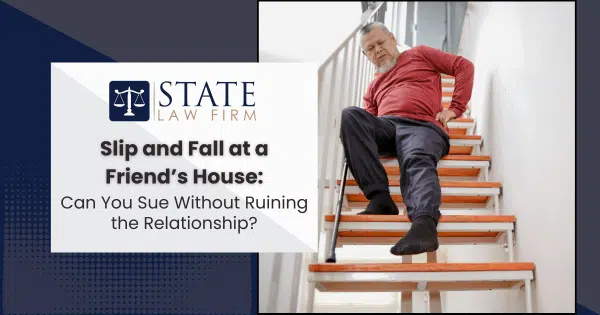
A slip and fall at a friend’s house can feel like the worst kind of accident because it mixes pain with awkwardness. You might be hurt, missing work, and staring at medical bills, all while worrying that bringing up compensation will sound like betrayal.
In 2023, more than 8.8 million people were treated in emergency departments for fall-related injuries, which is a reminder that falls are common, and the aftermath can be expensive fast.
Not sure where to begin? This resource on Workplace injury lawyers walks you through eligibility, evidence, and recovery options.
What matters most is this: protecting your health and protecting your friendship do not have to be mutually exclusive. With the right approach, many claims can be handled through insurance and resolved quietly, respectfully, and without turning a personal relationship into a personal feud.
Understanding Slip and Fall Accidents in Private Homes
A private home is not a public sidewalk or a grocery store, but the legal concept is similar: homeowners and occupants generally have a responsibility to exercise reasonable care in maintaining the property. In real life, that responsibility turns on ordinary situations, the ones nobody thinks about until someone is on the floor.
Common home hazards include:
- Wet or freshly mopped floors with no warning
- Loose rugs, curled corners, or slick runners on hardwood
- Dim lighting in hallways, stairwells, or entryways
- Uneven steps, broken handrails, or cluttered walkways
- Cords, toys, or pet bowls placed in high-traffic areas
- Outdoor hazards like slippery patios, cracked walkways, or pooling water
The key question is not whether your friend is a bad person. The question is whether a hazard existed, whether it was reasonably preventable, and whether the person who controlled the property took reasonable steps to fix it or warn you.
If you are dealing with a serious injury, it helps to think in a simple sequence:
- Was there a hazardous condition?
- Did the homeowner or occupant know about it, or should they have known through reasonable care?
- Did that condition cause the fall and the injury?
- What losses did the injury actually create? (medical costs, time off work, long-term limits, pain)
That framework is often where cases are won or lost, and it is also where you can keep things grounded and less emotional.
Your Legal Rights After a Slip and Fall at a Friend’s House
Most people hesitate because the word “sue” sounds like you are choosing conflict. But “legal rights” often begin long before a lawsuit is filed. The first step is usually a claim, which is frequently handled through insurance.
In California, premises liability claims generally focus on reasonable care and responsibility for the condition of the property. That can apply even when you are a social guest. It does not mean you automatically win, nor does it mean your friend automatically pays. It means there is a legal pathway to address harm when negligence played a role.
What you can recover, depending on the case
Every case is different, but the categories are familiar:
- Medical bills (including future treatment when supported by evidence)
- Lost wages and loss of earning capacity
- Out-of-pocket costs (medication, devices, transportation to care)
- Pain, suffering, and loss of enjoyment of life in appropriate cases
What can reduce recovery
Even strong cases can be reduced if the defense argues you share responsibility. For example:
- You were wearing slippery shoes on a rainy patio
- You used a dark staircase without turning on a light
- You ignored a visible warning sign
That does not automatically end a claim. It means the facts matter, and they need to be gathered early while memories and evidence are still fresh.
If you are unsure whether your injury is “serious enough” to justify a claim, a short consult can help you understand the realistic value of the case and whether insurance coverage may apply before you have a difficult conversation with your friend.
The Role of Homeowner’s Insurance in Slip and Fall Claims
This is the part that usually saves the relationship.
Many homeowners’ insurance policies include two types of coverage that can matter after a guest injury:
- Medical payments to others (often called “MedPay”). This can sometimes pay certain medical expenses for a guest’s injury without requiring a full liability case.
- Personal liability coverage. This applies when the homeowner is legally responsible for an injury and typically includes a legal defense provided by the insurer.
Practically, an insurance adjuster may handle your claim and, if needed, defense counsel appointed by the carrier. Your friend may have to report the incident and cooperate, but they are not necessarily writing checks out of a personal account.
What you should do early if you suspect insurance will be involved
- Get medical care promptly and follow through. Gaps in treatment give insurers room to argue the injury was minor or unrelated.
- Photograph the condition as soon as possible. Take wide shots (to show context) and close shots (to show detail).
- Write down what happened while it is fresh. Include time, lighting, weather, footwear, and what you saw before and after the fall.
- Save footwear and clothing. Do not throw away the shoes you wore. They can become evidence.
- Identify witnesses. A simple text to a mutual friend like “Can you confirm what you saw?” can matter later.
What not to do
- Do not argue your case in a group chat.
- Do not post about the fall on social media.
- Do not sign releases or accept quick payments without understanding what rights you are giving up, especially if symptoms are evolving.
If an insurer is involved, the process can feel impersonal and fast. A lawyer can take over communications, present evidence in the right format, and reduce the pressure on your friendship by moving the dispute into professional channels.
Navigating the Conversation: How to Discuss Your Injury With Your Friend
This is where tone matters as much as facts.
You are not asking your friend to “pay you.” You are telling your friend you are hurt, and you need to understand what insurance coverage exists. If you approach it like a practical problem to solve together, you lower the emotional temperature.
A relationship-preserving script you can adapt
- “I’m really sorry this is awkward, but I wanted to talk to you directly because I value our friendship.”
- “My injury ended up being more serious than I expected, and the bills are adding up.”
- “I’m not trying to blame you. I’m trying to figure out whether your homeowners insurance has coverage for guest injuries.”
- “If you’d rather not handle this personally, I can communicate through the insurance company or through counsel so it stays respectful and professional.”
That framing accomplishes three things:
- It shows respect.
- It makes the request about coverage, not character.
- It offers a path that does not require them to negotiate with you personally.
Make it easier for them to say yes
Many people freeze out of fear of the unknown. Offer something concrete:
- Ask for the insurer’s name and policy number, if they are comfortable
- Suggest they report the incident and let the insurer guide the next steps
- Reassure them you are focused on medical recovery and fair handling, not drama
Tasteful next step: If your friend becomes defensive or shuts down, that does not mean your relationship is over. It usually means they are scared. Moving the communications to professionals can actually protect the friendship.
Pursuing Compensation Without Destroying Your Relationship
There is a quiet, respectful way to handle this, and it often looks like this:
Step 1: Treat it like an insurance claim, not a personal dispute
Insurance exists for accidents. When you focus on coverage, you remove the accusation.
Step 2: Document your damages carefully
Insurers respond to organized proof. A strong demand package commonly includes:
- Medical records and itemized billing statements
- Wage documentation (pay stubs, employer letter, tax records if self-employed)
- Photos of the hazard and the scene
- A brief narrative of what happened and how life changed after the injury
Step 3: Consider early resolution tools
If the insurer disputes liability or value, you still do not have to go straight to trial. Options may include:
- Informal settlement discussions
- Mediation with a neutral third party
- A structured negotiation process through counsel
Mediation, in particular, can be useful when both sides want closure but do not want the intensity of litigation.
Step 4: Keep your friend out of the crossfire
Even when your friend is the named person in a claim, the goal is to keep the relationship intact:
- Do not send angry messages when an adjuster delays
- Avoid turning mutual friends into messengers
- Let your lawyer handle the back-and-forth when emotions rise
If the injury affects your ability to work, care for your family, or live normally, you deserve an honest evaluation of the claim’s value. A consult can clarify whether you are dealing with a small MedPay matter or a case that requires deeper investigation.
When Should You Consider Legal Action?
Legal action is not the first move in many friend-house cases. It becomes appropriate when the stakes are real and informal resolution is not working.
You should consider speaking with a personal injury attorney when:
- You suffered a fracture, head injury, back injury, or significant soft-tissue injury
- Your medical care is ongoing, or you may need future treatment
- You missed work, or your earning ability is impacted
- The insurer denies liability or blames you entirely
- The insurer offers a quick settlement that does not cover the whole picture
- You are approaching a filing deadline
Timing matters. Waiting too long can make evidence disappear, and legal deadlines can cut off your rights even if your injury is legitimate.
Just as importantly, getting help can reduce relational damage. Once counsel is involved, communications often become calmer because they are no longer personal.
State Law Firm can assess liability, coverage, and damages and advise on a strategy that prioritizes resolution. The goal is to protect your health and your future, and to reduce the emotional cost of the process.
Protecting Your Rights While Preserving Your Friendship After a Slip and Fall Accident
A friend’s home should feel safe. When it does not, and you get hurt, you are allowed to take your injury seriously without treating your friend like an enemy. The smartest path is often the least dramatic one: get medical care, preserve evidence, explore insurance coverage, and keep the conversation respectful.
If you are facing real medical bills, time off work, or long-term limitations, you do not have to guess your way through it. A clear legal plan can keep the process professional and prevent the situation from spilling into your personal life.
You can pursue compensation after a slip and fall at a friend’s house without “ruining the relationship” by focusing on insurance, staying evidence-driven, and keeping communications respectful. When the injury is serious or the insurer pushes back, getting legal guidance can protect both your recovery and your peace of mind.