English
  Spanish
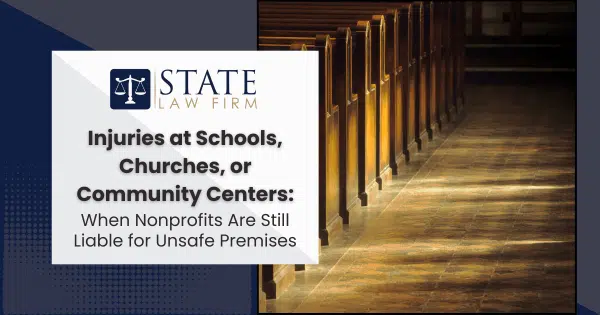
A school fundraiser. A Sunday service. A community center class. These places are built on trust, and people walk in expecting to be safe. But nonprofit status is not a shield against responsibility when a preventable hazard causes real harm.
In fact, fall injuries remain a leading driver of emergency care nationwide, and many of those incidents happen in everyday spaces like the ones our families visit weekly.
Not sure where to begin? This resource on Navigating Elder Sexual Abuse walks you through eligibility, evidence, and recovery options.
Understanding Premises Liability for Nonprofit Organizations
Premises liability is not a special category of law reserved for big corporations. It is a basic rule of fairness: if you control property and invite people onto it, you have a duty to act reasonably to keep that property safe.
For nonprofits, the setting may look different, but the obligation is familiar. A church that runs a daycare, a private school that hosts after-hours sports, or a community center that opens its gym for events still controls the environment.
Control is the keyword. Whoever owns, leases, maintains, or manages the premises may be responsible if they fail to address hazards they knew about or should have discovered through reasonable care.
This matters because nonprofits often operate with volunteers, tight budgets, and busy calendars. Those realities can explain how a hazard slipped through the cracks, but they do not automatically excuse it.
A loose handrail is still loose. A spill is still a slip risk. A burned-out light bulb still makes stairs dangerous. When the harm is foreseeable, and the fix is reasonable, the law expects action.
A related point catches many people off guard: “nonprofit” does not mean “immune.” Some volunteers and certain individuals may have limited protections in specific circumstances, but the organization itself can still face liability for unsafe property conditions, negligent supervision, or failure to warn.
Common Causes of Injuries in Schools, Churches, and Community Centers
Most premises injuries in nonprofit spaces fall into patterns. They are rarely mysterious. They are often ordinary, and that is exactly why they are preventable.
Slip and fall hazards
- Wet floors from cleaning, leaks, tracked-in rain, or spilled drinks after events
- Poor drainage near entrances or restrooms
- Worn carpet edges, curled mats, or unsecured rugs
- Uneven walkways, cracked pavement, or raised thresholds
Trip and fall hazards
- Cords and extension cables for microphones, projectors, or holiday lighting
- Cluttered hallways during set-up and breakdown
- Poorly marked steps, sudden changes in elevation, or missing contrast strips
Stair and railing issues
- Loose handrails or missing rails
- Inadequate lighting on stairwells or exterior steps
- Noncompliant stair dimensions or broken step edges
Playground and youth activity injuries
- Falls from playground equipment
- Hard, deteriorated, or uneven surfacing beneath equipment
- Unsafe or poorly maintained sports areas and gym flooring
- Inadequate supervision for age-appropriate activities
Negligent security and crowd risks
- Poor lighting in parking lots or walkways
- Unsecured access points at schools or large gatherings
- Lack of security planning for predictable crowd flow, especially at events
Each category raises the same practical question: was the risk foreseeable, and did the nonprofit take reasonable steps to prevent it or warn people in time?
When Are Nonprofits Held Liable for Injuries on Their Property?
Liability usually turns on a simple chain: duty, breach, causation, and damages. The real fight is often about the middle, whether the nonprofit acted reasonably under the circumstances.
Here are the most common fact patterns that support a claim:
1) The nonprofit created the hazard
If staff or volunteers set up an unsafe condition, liability becomes easier to prove. Think of a freshly mopped hallway with no warning, a power cord taped poorly across a walkway, or chairs stacked in a way that collapses into an aisle.
2) The nonprofit knew about the hazard and did nothing
Actual notice can look like a prior complaint, a maintenance request, an earlier incident, or a staff member acknowledging the issue. If the organization had a clear heads-up and failed to act within a reasonable time, that is a serious problem.
3) The hazard existed long enough that the nonprofit should have known
Constructive notice is the concept courts use to address hazards that were not formally reported but were still discoverable. A long-standing leak stain, a chronic puddle near an entrance, or a worn stair tread that has been deteriorating for months can point to a failure to inspect and maintain.
4) The nonprofit failed to warn when a fix was not immediate
Even when repairs take time, warnings do not. Cones, signage, barricades, and clear rerouting can help prevent injuries during scheduled maintenance.
5) Special rules may apply if the property is public
This is a crucial fork in the road. Some schools and community centers are run by public entities, not private nonprofits. Claims involving public property often require strict notice and deadline rules that can be imposed quickly, sometimes within months rather than years. If your injury happened at a public school or a city-run community center, you should treat the situation as time-sensitive from day one.
Tasteful CTA: If you are unsure whether the location was public, private, or nonprofit, State Law Firm can help identify who controlled the property and what deadlines apply before evidence fades.
The Role of Insurance in Protecting Nonprofit Organizations
Insurance is common in nonprofit operations, and it often becomes the practical pathway to compensation after an injury. That does not make the process automatic. Insurance companies still investigate, still dispute fault, and still minimize claims when they can.
Nonprofits may carry:
- General liability coverage for slip and fall and visitor injuries
- Property coverage for building-related losses (not the same as injury coverage)
- Directors and officers coverage for management decisions (often not designed for day-to-day premises hazards)
- Special event coverage for one-time gatherings
- Abuse and molestation coverage for organizations serving children or vulnerable adults, depending on the program and policy
If a nonprofit’s insurer is involved, documentation matters. Clear evidence of the hazard, the timeline, and the injuries can be the difference between a prompt, fair resolution and a long fight.
A well-prepared claim tells the story once, tells it clearly, and tells it with proof. If an insurer is pressuring you for a recorded statement or a quick settlement, it may be time to get counsel involved.
Steps Nonprofits Can Take to Prevent Accidents and Reduce Liability Risk
Prevention is not just about avoiding lawsuits. It is about keeping the community safe and preserving trust. The strongest safety plans are those that fit the organization’s routine, not those that sit untouched in a binder.
Practical steps nonprofits can take include:
1) Build inspections into the schedule
- Quick walk-throughs before services, classes, or events
- Weekly checks for stairs, rails, lighting, and entrances
- Seasonal checks for rain-related slip risks and drainage
2) Create a simple maintenance reporting system
- A single point of contact for hazards
- A written log of issues and fixes
- A plan for temporary warnings when repairs are delayed
3) Train staff and volunteers on the basics
- How to respond to spills immediately
- When to place warning signs and barricades
- How to document hazards and report them up the chain
4) Improve lighting and visibility
- Replace bulbs quickly
- Add motion lighting for exterior walkways and parking areas
- Mark steps and elevation changes with high-contrast strips
5) Revisit event set-up rules
- Keep cords out of walkways or use proper cord covers
- Avoid overcrowding aisles and exits
- Assign specific people to crowd flow and safety monitoring
These steps are not expensive compared to the cost of an injury, and they signal something important: that the organization values people more than convenience.
Your Rights If You Are Injured at a School, Church or Community Center
If you are injured in a nonprofit space, your first priority is your health. Your second is preserving the facts. The truth of a premises case often lives in details that disappear quickly: a spill that gets wiped up, a sign that gets moved, a camera clip that gets overwritten.
Here is what to do, as soon as you can, without putting yourself at further risk:
1) Get medical care and follow through
Even “minor” falls can cause fractures, torn ligaments, concussions, and back injuries. Treatment creates a record, and a record matters.
2) Report the incident and ask for documentation
Notify a staff member or administrator. Ask whether an incident report was completed and request a copy if available.
3) Photograph the scene
Get wide shots and close-ups:
- The hazard itself (spill, defect, broken rail, missing lighting)
- The surrounding area (signage, cones, floor texture)
- Conditions that explain why it was dangerous (poor lighting, clutter, missing markings)
4) Identify witnesses
Names and contact information help, especially when the hazard is fixed quickly after the injury.
5) Preserve what you can
Keep the shoes and clothing you wore, especially if they show residue or tearing. Save event tickets, flyers, or emails that show why you were there and whether you were invited.
6) Be cautious with early insurance conversations
Do not guess about fault. Do not downplay your symptoms. Do not agree to a quick settlement before you understand your diagnosis and prognosis.
Special note for vulnerable community members: Many nonprofit spaces serve children, seniors, and people with disabilities. If your injury involves a vulnerable person, the duty of care can take on added weight because the risks are easier to foresee and the consequences are often more severe. If the harm involves abuse rather than a premises defect, the legal and evidentiary steps may differ.
Not sure where to begin? This resource on Navigating Elder Sexual Abuse walks you through eligibility, evidence, and recovery options.
A consultation is not a commitment to sue. It is a way to understand who is responsible, what evidence matters, and what deadlines may apply. State Law Firm can help you make that assessment with clarity and care.
Staying Safe, And Legally Secure, on Nonprofit Premises
Nonprofits do meaningful work, and communities depend on them. But meaning does not replace maintenance. When an organization opens its doors, it assumes responsibility for keeping walkways safe, repairing hazards, warning when danger appears, and planning for foreseeable risks.
If you were injured at a school, church, or community center, you do not have to choose between compassion and accountability. You can respect the mission and still protect your health, your future, and your right to recover.
Nonprofit status does not erase the duty to maintain safe premises. If a preventable hazard caused your injury, focus on medical care first, preserve evidence quickly, and get legal guidance early, especially when public-property deadlines or vulnerable victims are involved.