English
  Spanish
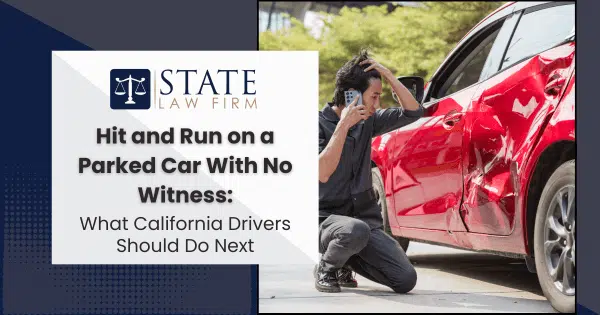
Hit and run damage to a parked car can feel personal because someone made a choice to disappear and leave you with the bill.
The good news is that you can still protect yourself and, in many cases, recover your repair costs by taking the right steps early.
If you are in East Los Angeles and want guidance tailored to your situation, start here: East Los Angeles car accident lawyers.
Understanding Hit and Run Laws in California
California treats a hit and run differently depending on whether the incident caused injuries or only property damage.
When a driver damages property, including another vehicle, they must stop and provide identifying information. If the owner is not present, the driver must leave a written notice in a conspicuous place and notify local law enforcement without unnecessary delay.
That legal backdrop matters for you as the victim because it explains why police and insurance adjusters care about documentation.
The law focuses on identification, notice, and reporting. Your job is to create a clean, credible record of what happened, when you discovered it, and what the damage looks like, so the facts do not drift over time.
A practical point: do not assume “no witnesses” means “no evidence.”
Many hit-and-run cases on parked cars are solved through a mix of small details: paint transfer, broken trim left behind, nearby cameras, and a timeline that narrows the window.
Immediate Steps to Take After Discovering Damage to Your Parked Car
1) Make sure your car is safe to drive.
Before you do anything else, check for issues that could turn a minor scrape into a dangerous drive: a leaking fluid, a loose bumper dragging near a tire, a cracked headlight that no longer works, or a wheel that looks misaligned. If anything seems unsafe, move the car only if necessary and consider a tow.
2) Photograph like you are telling the story to a stranger.
Take wide shots that show where the car is parked, the nearest cross street or parking stall number, and the surroundings. Then take close-ups of every damaged area from multiple angles. If you see paint transfer, photograph it clearly. If plastic pieces or glass are on the ground, photograph them before you touch them.
Tip: turn on your phone’s time and location settings if you are comfortable doing so. If not, you can still write down the exact time you discovered the damage.
3) Write down a tight timeline.
Create a short note in your phone that includes:
- Where you parked and approximately when
- When you returned and discovered the damage
- Whether you moved the car after discovery
- Any unusual details (street sweeping, construction, a crowded event, delivery trucks double-parked)
This matters because timelines unlock camera footage. Many systems overwrite video quickly.
4) Look for cameras immediately.
Scan the area for:
- Doorbell cameras on nearby homes
- Security cameras on apartment buildings
- Cameras at gas stations, markets, and restaurants
- Parking lot or garage cameras
If you spot a camera, politely ask the owner or manager whether they can preserve footage for the time window. Keep it simple. You are not asking them to “solve the case,” you are asking them to keep the video from being erased.
5) Tell your insurer early, even if you are not sure you will file.
Most policies require prompt notice of a loss. Early reporting also helps you understand what coverage applies, what your deductible looks like, and what steps the insurer expects next.
Tasteful next step if you want help: if the damage is significant, if your car is a total loss, or if the insurer is pushing back, a quick consult can prevent expensive mistakes. You can speak with our East Los Angeles car accident lawyers to get clarity before you commit to a strategy.
How to File a Police Report for a Parked Car Hit and Run in California
A police report can do three important things: it documents the incident, it creates an official case number you can give your insurer, and it gives law enforcement a pathway to investigate if leads appear.
Where to report.
For a parked car hit and run, you typically report to the local police department where it occurred, or to the California Highway Patrol if it happened in an area under CHP jurisdiction. Many agencies allow online reporting for non-injury collisions, but requirements vary by city and county.
What to bring or include.
- Photos of the damage and surrounding area
- The exact location (address or nearest intersection)
- The time window when it likely occurred
- Any evidence left behind (photos first, then preserve safely)
- Any potential camera locations you identified
- Any witness names and contact information, if you found anyone
What not to do.
Do not guess facts you do not know. If you are unsure, say so. The strongest reports are clean and precise.
A separate DMV reporting duty may apply.
California also requires certain accidents to be reported to the DMV on an SR-1 form within a specific time frame when injuries occur or when property damage exceeds the threshold. Check out the official DMV overview.
Navigating Insurance Claims: What Coverage Applies?
Insurance is often where parked car hit and run cases are won or lost, not because the rules are unfair, but because people assume the wrong coverage applies.
Collision coverage (often the workhorse here).
If you carry collision coverage, it may pay for repairs to your vehicle regardless of who caused the damage, subject to your deductible. For many hit-and-run victims with no identified driver, collision coverage is the most direct path to getting the car fixed.
Uninsured motorist coverage (important, but fact-specific).
Uninsured motorist coverage is designed for situations involving an uninsured driver. In hit-and-run situations, eligibility can depend on details and deadlines, especially where bodily injury is involved. If you suspect you have any injury symptoms, even if they appear later, treat that as a separate issue and get medical guidance promptly. Then document everything.
Comprehensive coverage (usually not the right fit).
Comprehensive coverage is typically for non-collision events like theft, vandalism, or weather damage. If a vehicle struck your car, that is usually treated as a collision event, but policy language controls.
Minimize claim friction with a simple checklist.
- File the police report and save the case number
- Keep all photos and your written timeline
- Get one or two repair estimates, or follow your insurer’s preferred shop process
- Do not repair before the insurer documents the damage, unless safety requires it
- Keep receipts for towing, storage, and rental costs if applicable
If the insurer is delaying, disputing the scope of damage, or pressuring you into a quick decision, it helps to have a lawyer who handles car accident claims regularly.
Our East Los Angeles car accident lawyers can review the denial letter or estimate issues and tell you what options realistically exist.
Tips for Gathering Evidence When There Are No Witnesses or Video Footage
Even without witnesses or video, you can build evidence that supports an insurance claim and, sometimes, an investigation.
Start with the damage itself.
- Paint transfer can suggest the color of the other vehicle
- Height and shape of the impact can suggest a sedan vs SUV vs truck
- Broken pieces sometimes have part numbers that identify a make or model
- Tire marks, scrapes on a curb, or debris patterns can show angle and movement
Widen the net around the scene.
- Ask nearby residents or businesses if they heard an impact or saw a vehicle leaving
- Check whether a neighbor has a dashcam in parking mode
- If you were in a lot or garage, contact the operator and request incident logs or gate records if they exist
Preserve first, analyze second.
Keep originals of photos and any files. Avoid editing images before you share them with police or your insurer. If you must send copies, send duplicates and keep the originals untouched.
If you find the likely vehicle, do not confront.
It is tempting to walk the neighborhood looking for matching damage, and sometimes that works. But if you believe you found the vehicle, document what you see from a lawful vantage point and contact law enforcement. Escalation is not worth it.
Your Legal Rights & Responsibilities After a Hit & Run on Your Parked Car in California
Your rights include the right to pursue compensation if the driver is identified.
If the at-fault driver is found, you may be able to recover repair costs and other related losses through an insurance claim against their carrier, or through a direct claim, depending on the situation.
Your responsibilities are mostly practical, not dramatic.
You are responsible for protecting your own claim by reporting, documenting, and meeting deadlines. Two deadlines that commonly matter in car-related cases are:
- The DMV accident reporting deadline is when the accident is reportable
- The civil statute of limitations that can apply if you pursue a lawsuit
Those timelines can be short enough to surprise people, especially when “it was just a parked car.” If the damage is substantial, if you believe the driver may be identifiable, or if you are dealing with injuries or significant financial loss, it is worth getting legal advice early rather than late.
A note on legal writing and real life.
The law often rewards the person who can present the clearest record. When you write down the timeline, preserve photos, and collect the small facts, you are doing what good advocates do: you are making the truth easy to prove.
Conclusion: Protect Yourself, What Every California Driver Should Know About Parked Car Hit & Runs
A parked car hit-and-run with no witnesses is frustrating, but it is not hopeless. Prioritize safety, document thoroughly, file a police report, and notify your insurer promptly.
Move quickly on potential camera footage, and do not underestimate the importance of the DMV reporting rules when the accident meets the threshold.
Treat the first 24 to 48 hours as your evidence window. The clearer your record, the smoother your insurance claim tends to be, and the better your odds if the driver is eventually identified.
If you want someone to walk you through the next step based on your facts, contact our East Los Angeles car accident lawyers.
External references used in this article for reader’s convenience:
- California Vehicle Code Section 20002 (property damage hit and run duties): https://leginfo.legislature.ca.gov/faces/codes_displaySection.xhtml?lawCode=VEH§ionNum=20002
- California DMV SR 1 reporting overview: https://www.dmv.ca.gov/portal/dmv-virtual-office/accident-reporting/
- NHTSA 2023 traffic crash overview (hit and run statistics): https://crashstats.nhtsa.dot.gov/Api/Public/Publication/813705