English
  Spanish
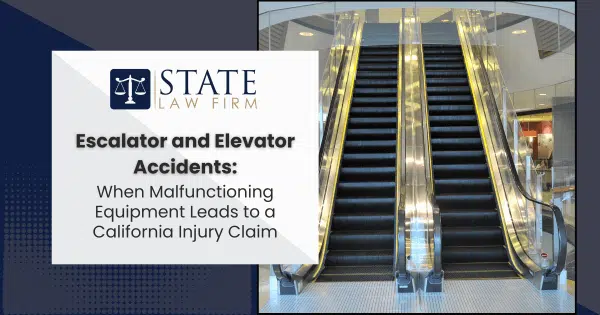
An elevator ride is supposed to be forgettable. An escalator step is supposed to move you, not betray you. But when a sudden stop, a misleveled landing, or a door that closes too fast turns routine into impact, the law starts asking a different question: who let this happen, and who has to make it right?
Injury data underscores how often these “everyday” devices become emergency-room events, especially for older adults. If you were hurt in a building incident like this, the same investigation mindset used in major collisions often applies, which is why many people start by speaking with a team like our El Monte car accident lawyers, who know how to secure evidence fast and build liability from the ground up.
Common Elevator and Escalator Malfunctions That Cause Injuries
Most elevator and escalator cases are not about “bad luck.” They are about predictable failure points that should have been prevented through inspection, maintenance, and safe design.
On elevators, a sudden stop or a hard start can throw riders off balance, especially if they are carrying bags, holding a child, or using a cane. Misleveling is another frequent trigger, where the car stops slightly above or below the floor, creating a hidden trip hazard at the threshold. Door injuries happen when sensors fail, timing is off, or a door closes with unreasonable force. There are also more alarming scenarios, like unexpected movement with doors open, or a car that does not stop where it should.
On escalators, injuries often follow trip-and-fall mechanics. A sudden change in speed, uneven steps, missing demarcation, slick treads, or a damaged comb plate can cause a stumble that turns into a pileup. Entrapment injuries, where a shoe, lace, clothing, or a child’s hand gets caught near the side skirt or comb plate, can lead to severe lacerations and crush trauma.
Action step: if you can do so safely, take note of the device number, location, and the closest visible signage. That detail can later connect your injury to specific service logs, inspections, and prior complaints.
Where These Accidents Happen Most Often
Elevator and escalator injuries tend to cluster where foot traffic is high and maintenance is a constant challenge.
Hotels and apartment buildings see repeated use by residents and guests who do not know the quirks of the equipment. Shopping malls, airports, and stadiums add crowd pressure, rushed movement, distractions, and luggage. Office buildings bring steady daily volume, plus after-hours staffing gaps that can delay incident response and reporting.
Parking structures and mixed-use developments are a common setting for elevator incidents because riders are often carrying groceries, pushing strollers, or managing uneven lighting. If an accident happens around a parking area or after you had been resting in your vehicle, do not assume you have “no case” because of a side issue. For example, people sometimes worry they will be blamed for being in a garage late at night or for sleeping in their car. If that is on your mind, read our practical guide on California laws on sleeping in your car and then focus on the core question: did a dangerous condition or equipment failure cause your injury?
Action step: report the incident immediately and ask where the property keeps its incident reports. The fact that a report exists, and when it was created, can matter later.
Who Can Be Liable When Equipment Fails
Liability usually follows the people and companies who had control, responsibility, and notice.
- Property owners and building operators may be responsible when a dangerous condition exists on the premises, when complaints were ignored, or when safety procedures were not followed.
- Maintenance companies and elevator service contractors may be responsible if they performed careless repairs, missed known issues, skipped required adjustments, or failed to document problems.
- Manufacturers and distributors may be responsible if the device was defectively designed, defectively manufactured, or sold without adequate warnings and instructions.
- Inspectors and third-party vendors can become relevant depending on the role they played and what they were obligated to do.
In real cases, multiple parties may share fault. That is why early investigation focuses on the paper trail: who had the contract, who last serviced the unit, what parts were replaced, what codes applied, and what the history shows.
Tasteful but practical CTA: If you want help identifying who should be on the claim, start with a structured intake and evidence plan. Our team routinely approaches these cases with the same discipline used in complex injury investigations, including those handled by our El Monte car accident lawyers.
The Role of Cal/OSHA Elevator Unit in Safety, Permits, and Inspections
California treats elevator safety as a regulated system, not a casual “call us when it breaks” arrangement. The Cal/OSHA Elevator Unit plays a central role in permitting and safety enforcement, and those records can become powerful evidence.
One practical detail matters for everyday riders: in many situations, a valid permit to operate must be posted in the elevator car. You can learn more about the permit requirement and posting rules through the California Department of Industrial Relations here: Elevator Permits (DIR).
Why does this matter for your injury claim? Because permits, inspections, and compliance history help answer questions like:
- Was the device legally allowed to operate at the time?
- Was it overdue for inspection or renewal?
- Did the property have repeated code issues?
- Was a known hazard left in place?
Action step: if you were injured in an elevator, look for the posted permit and take a clear photo. If you cannot safely do that, write down what you saw and where it was posted.
Negligence vs Product Liability: Which Theory Fits Your Case
Most cases follow one of two tracks, and sometimes both.
Negligence focuses on unreasonable conduct. In elevator and escalator cases, that often means poor maintenance, careless repairs, failure to inspect, failure to respond to complaints, or letting the public use equipment that should have been taken out of service. The proof usually centers on what a reasonable owner or contractor should have done, and what they actually did.
Product liability focuses on a defective product. A claim might be based on defective design (the system is unsafe even when used as intended), a manufacturing defect (something went wrong in production), or failure to warn (the product lacked adequate warnings or instructions). This theory can matter when the device fails in a way that points to engineering, components, or known hazards associated with a particular model or part.
Action step: do not let anyone convince you this is “just a slip and fall.” These are mechanical systems. Your case often turns on technical evidence, and the legal theory should match the failure mechanism.
When “The Accident Speaks for Itself”
Some elevator and escalator incidents feel so abnormal that common sense kicks in before the paperwork does. Elevators do not normally slam to a stop. Escalator steps do not normally trap a rider’s foot. Doors do not normally crush someone who is entering normally.
That instinct aligns with a legal concept often called “the accident speaks for itself,” known in court as res ipsa loquitur in the right factual setting. The idea is simple: when an accident is the kind that does not ordinarily happen without someone’s negligence, and the instrumentality was under the defendant’s control, the circumstances can support an inference of negligence even if you cannot point to the exact broken component on day one.
This does not erase the need for evidence. It makes early preservation even more important, because the defense will often argue misuse, rider error, or a sudden unavoidable failure. The more you can lock down the condition of the equipment and its history, the harder it is for the story to be rewritten after the fact.
Evidence That Usually Decides These Claims
In many cases, the winning evidence is not dramatic. It is specific.
Look for:
- Surveillance video showing the approach, the moment of malfunction, and what happened after.
- Incident reports and internal communications created the same day.
- Maintenance records and service logs showing prior problems, repeated repairs, and parts replaced.
- Inspection history and permits demonstrating compliance issues or lapses.
- Witness statements from bystanders, employees, and first responders.
- Photos and measurements of misleveling, gaps, broken comb plates, missing step demarcation, or damage.
Action step: request that video be preserved immediately. Many systems overwrite footage quickly. If you wait, the most objective evidence can vanish on a routine deletion cycle.
The First 48 Hours: Preserving the Equipment and Records
The first two days after an elevator or escalator injury are not about “being aggressive.” They are about preventing evidence from being lost, changed, or quietly repaired away.
If you are physically able, or if a family member can assist, focus on these steps:
- Get medical care and document symptoms early. Medical records create a timeline that is hard to dispute later.
- Identify the exact device. Location, device number, building name, and time matter.
- Send a preservation request. Ask that the property and any maintenance contractor preserve the equipment condition, video, service logs, and inspection records.
- Do not accept informal explanations as proof. “It has never happened before” is not a record. A service log is.
- Avoid recorded statements while medicated or in pain. Keep your account accurate, consistent, and grounded.
If the property rushes to repair the device immediately after your injury, that can raise spoliation issues. The safest approach is to preserve first, repair second, especially when someone has been harmed.
Tasteful CTA: If you are not sure how to request preservation or who to send it to, legal counsel can step in quickly to secure the records before they disappear.
Injuries Common in Elevator and Escalator Cases
These injuries are often more serious than they look in the moment because the mechanics amplify force and unpredictability.
Common patterns include:
- Head injuries and concussions from falls or secondary impacts.
- Fractures of wrists, ankles, hips, and ribs, especially in misleveling and sudden-stop scenarios.
- Back and neck injuries from abrupt jolts, twisting falls, or bracing during a malfunction.
- Crush injuries from elevator doors or crowd compression on escalators.
- Entrapment injuries to hands and feet, including deep lacerations and nerve damage.
- Psychological impact, including anxiety around enclosed spaces, transit systems, and crowded public environments.
Document bruising and swelling early with photos. Soft tissue injuries can be real and life-altering, even when imaging looks “normal” at first.
What Damages You May Be Able to Recover
A strong claim measures the full cost of what the malfunction took from you, not just the invoice you received that week.
Potential damages may include:
- Past and future medical bills, rehab, medication, and assistive devices
- Lost wages and reduced earning capacity if your work is interrupted or limited
- Pain and suffering, including loss of enjoyment of life
- Emotional distress, especially after traumatic entrapment or a violent fall
- Future care needs, including ongoing therapy, injections, or surgery
Action step: keep a simple recovery journal. Note sleep disruption, mobility limits, missed events, and daily pain levels. When written consistently, it becomes a credible picture of your lived experience.
Government Buildings and Public Transit: Special Claim Rules
If your injury happened in a government building or on public transit, the rules can change fast. Claims against public entities often require an initial government claim before you can sue, and the deadlines are shorter than most people expect.
These cases also often involve “dangerous condition of public property” issues, where the focus is on notice, foreseeability, and failure to correct a known hazard. Stations, civic buildings, courthouses, and airports can introduce overlapping responsibilities among agencies and contractors, so early identification of the correct entity matters.
If you suspect a public entity is involved, do not wait to “see if it gets better.” The clock can start immediately, and missing a claims deadline can end an otherwise valid case.
Deadlines to Take Action in California
In many personal injury cases, California’s general statute of limitations is two years. You can read the statutory language here: California Code of Civil Procedure Section 335.1.
If a public entity is involved, the timeline can be much shorter. For many injury claims against a public entity, the claim presentation deadline is typically six months. The statutory language is here: California Government Code Section 911.2.
Action step: write down the date of injury, the location, and whether the property is public or private. That simple classification can change everything about your deadlines.
When to Talk to a Lawyer
Talk to a lawyer early when:
- You suffered a fracture, head injury, back injury, or entrapment injury
- The property will not provide video or records
- The device was quickly repaired after the incident
- Multiple companies are pointing fingers
- A public agency may be involved
A good legal team does not just “file paperwork.” They move quickly to preserve evidence, identify every responsible party, and match the facts to the right liability theory.
If you are ready to discuss next steps, State Law Firm can help you build an evidence-first plan and protect your timeline. And if your injury happened in a parking structure or around vehicle-related circumstances that raise extra questions, our resources like California laws on sleeping in your car can help you separate myths from what actually matters.
Takeaway
Elevator and escalator injuries are often preventable, and the best cases are built early. Focus on medical documentation, device identification, video preservation, and records that show who controlled the equipment and what they knew. If the malfunction caused real harm, you do not have to carry the burden alone. The law has tools for accountability, but timing and evidence decide whether those tools work for you.