English
  Spanish
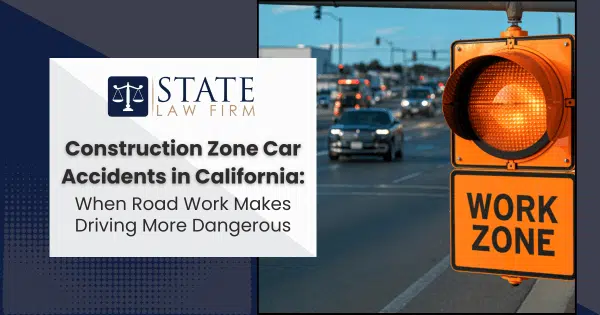
Construction zones turn familiar roads into moving puzzles: lanes shift overnight, signage changes by the hour, and drivers are forced to make fast decisions in tight spaces.
When a crash happens, those same conditions can change what caused the collision and who may be responsible.
If you were injured in or near an active work area, getting the facts right early matters, especially when road work is involved.
Nationally, hundreds of people are killed each year in work zone crashes, and federal safety data shows speed and rear-end impacts remain recurring factors.
If your collision happened near El Monte or along an active project corridor, our El Monte car accident lawyers can help investigate whether the work zone setup, a careless driver, or both contributed to what happened.
Why Construction Zone Crashes Are Different From Regular Accidents
A “normal” traffic collision usually has a familiar rhythm: clear lane lines, consistent sight distance, predictable merge points. Work zones disrupt that rhythm. Drivers are asked to process more information, faster, while operating in narrower lanes with less room to recover when something goes wrong. That is why construction zone car accident California cases often involve multiple overlapping causes, not just one bad driving choice.
Common hazards show up again and again in road work accident liability investigations:
- Lane shifts and sudden merges: A taper that begins too late or a merge that is poorly communicated can force last second lane changes.
- Uneven pavement and abrupt drop offs: Changes in elevation between old and new surfaces can affect braking, steering, and motorcycle stability.
- Loose gravel, debris, and temporary plates: Materials on the roadway can reduce traction and cause loss of control.
- Reduced visibility and confusing lighting: Glare, shadows, or missing reflective elements can hide barriers and lane edges at night.
- Narrowed lanes and temporary barriers: A minor drift that would be harmless on an open highway can become a sideswipe or barrier strike.
Actionable guidance: after any work zone crash, assume the scene will change quickly. Take wide photos that show the overall setup, including advance warning signs, arrow boards, cones, taper length, and the point of impact. Then take close ups of pavement conditions, debris, and any missing or damaged devices. Those details often disappear by the next shift change.
Tasteful note: the goal is not to “blame the construction.” The goal is accuracy. When a work zone increases risk, the evidence usually lives in the layout, the signage sequence, and what drivers could realistically perceive in time.
Speed Limits, Double-Fine Zones, and the Move Over Rule
Work zones are not just inconvenient. They come with legal rules that can shape fault, insurance arguments, and citations.
Reduced speed limits and “within the work area” rules. California agencies can post reduced speeds in a restricted zone when properly signed. That matters because a driver may be treated as speeding in a road work area even if they were “only” keeping pace with traffic. Separate from the posted number, the basic idea still applies: drivers must travel at a safe speed for conditions, especially where lanes narrow and stopping distance shrinks.
Double fine zones and enhanced penalties. Some highway segments are designated as Safety Enhancement Double Fine Zones. When a violation happens inside a properly signed zone, the penalties can increase. Practically, this can change how an adjuster frames the crash. If the at fault driver was cited in a designated work zone, that documentation can become an important piece of the liability picture.
Move Over or Slow Down near roadside work vehicles. California’s Move Over law is not limited to police lights. It can apply when a driver approaches stationary vehicles on a freeway shoulder that are displaying warning lights, including highway maintenance vehicles and certain work vehicles. The rule is simple in concept: move over if practicable, and if you cannot, slow down and pass with due caution. You can review the statute itself here: California Vehicle Code Section 21809.
Actionable guidance: if your crash involved a rear end collision work zone scenario, do not let the conversation end at “they hit me.” Ask what everyone was reacting to. A sudden lane closure, a stopped queue, or a work vehicle entering traffic can explain why braking happened so abruptly. That context can help distinguish simple inattention from a chain reaction caused by unsafe traffic control.
Who Can Be Liable When Road Work Contributes to a Crash
Liability in a highway construction accident rarely fits into one neat box. The law cares about who created the risk, who controlled the scene, and what was reasonably foreseeable.
When another driver causes the crash in a work zone. Many cases still come down to classic negligence: distracted driving work zone behavior, unsafe lane change work zone moves, following too closely construction zone impacts, or speeding in a narrowed corridor. If a driver made a bad decision, they can be responsible even if the work zone made driving harder.
When the construction setup itself is the problem. Sometimes the layout is the hazard. Inadequate signage work zone planning, missing warning signs, improper taper length, confusing lane shift markings, poor lighting, or a barrier placed in a way that pinches traffic can contribute to collisions. A key question becomes whether the traffic control matched what a reasonable driver needed to safely navigate the area.
Contractors, subcontractors, and traffic control companies. Work zones are often managed by multiple entities: the general contractor, a traffic control subcontractor, and suppliers providing devices. If the plan was not followed, devices were missing, or warnings were not maintained, more than one party may share responsibility.
Public entity liability. When a city, county, or Caltrans controls the roadway, claims may involve “dangerous condition of public property” theories. That is a different legal pathway than a standard two driver crash. The evidence focus shifts to notice, foreseeability, and whether the condition created an unreasonable risk.
Tasteful call to action: if you suspect the work zone played a role, it helps to talk with a lawyer early because liability investigation is time sensitive. Our El Monte car accident lawyers can help preserve evidence and identify which entities controlled the work area before records and layouts change.
Deadlines, Evidence, and What To Do After a Construction Zone Crash
Work zone cases are won by urgency and documentation. The layout changes, crews rotate, and third party records can take time to obtain.
Critical deadline: government claims must usually be filed fast. If a city, county, or Caltrans may be responsible, California’s Government Claims Act can require a claim presentation within a short window, often six months for injury and property damage claims. You can read the statute here: Government Code Section 911.2. Miss that step and you can lose the ability to pursue the case, even if liability is clear.
Deadlines for regular injury lawsuits. If the case is not a government case, the standard statute of limitations still matters. Waiting too long can permanently bar the claim, so it is smart to treat the calendar like an evidence issue, not an afterthought.
Evidence that wins work zone crash claims. Strong cases usually include: dashcam footage, witness names, a clear sequence of signage photos, weather and lighting documentation, vehicle damage angles, and medical records tying injuries to the crash mechanics. If you can safely do so, capture video driving through the area again within a day or two to show the signage sequence a driver would actually experience.
Getting work zone records and project documents. Requests may include the traffic control plan, daily logs, lane closure schedules, change orders, and incident reports. For Bay Area collisions, Caltrans District 4 maintains a public records request process here: Caltrans District 4 Records Request. These requests can take time, so starting early matters.
What to do right after a construction zone crash. Get medical care promptly, request a collision report, and avoid “quick explanations” at the scene. A work zone can make fault look obvious when it is not. Also, if your car is not drivable and you are forced to wait, rest, or shelter temporarily, make sure you understand your rights and local restrictions. This guide may help: Is it illegal to sleep in your car in California laws.
When to talk to a lawyer: if you suspect the setup was unsafe, if a public entity may be involved, if there were serious injuries, or if you need help preserving work zone evidence. In work zone injury cases, the earlier the investigation starts, the more of the truth you can capture.
Construction zones increase risk because they compress time, space, and visibility. If you are hurt in a work zone crash, focus on two things immediately: preserve the work zone evidence before it changes, and protect your deadlines, especially if a government entity may be responsible. If you want help sorting out liability and building a clean evidence record, start with a conversation with our El Monte car accident lawyers.