Spanish
  English
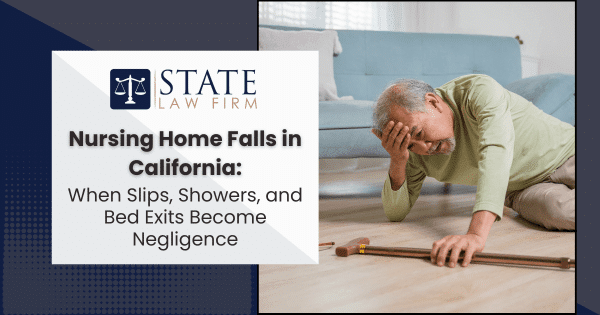
Yes. You may be able to sue a nursing home for a fall in California when the facility failed to take reasonable precautions for a known or foreseeable risk. A claim may arise when staff ignored a resident’s fall history, failed to provide required assistance, left the resident unattended during a transfer, did not follow the care plan, or allowed an unsafe condition to remain uncorrected.
However, a fall does not automatically prove negligence. Nursing home residents may fall even when appropriate care is provided. The central question is whether the facility properly assessed the resident, recognized the risks, created an appropriate plan, and carried out that plan in practice.
Federal nursing home regulations require facilities to assess each resident’s needs, develop and implement an individualized care plan, keep the resident’s environment as free from accident hazards as reasonably possible, and provide adequate supervision and assistance devices to prevent accidents.
When Is a Nursing Home Responsible for a Resident’s Fall?
A nursing home may be responsible when its conduct fell below the level of care reasonably required under the circumstances and that failure contributed to the resident’s injury.
A strong claim usually involves evidence showing that:
- The resident faced a known or reasonably discoverable fall risk.
- The facility knew or should have known about that risk.
- Reasonable precautions were available.
- The facility failed to take those precautions.
- The failure was a substantial factor in causing the fall and resulting injuries.
The case is not simply about whether someone ended up on the floor. It is about what the facility knew before the fall and what it did with that information.
For example, a fall may be preventable when the chart shows that a resident required one-person or two-person assistance, but staff allowed the resident to transfer alone. The same may be true when a resident repeatedly attempted to leave bed without help, yet the facility failed to revise the care plan or increase supervision after earlier incidents.
What Duties Do California Nursing Homes Have to Prevent Falls?
Assess the Resident’s Individual Risks
Bajo 42 C.F.R. § 483.20, a nursing facility must perform comprehensive assessments of each resident’s functional capacity, health conditions, cognition, medications, physical functioning, and other care needs.
A proper fall-risk assessment may consider:
- Previous falls or near-falls
- Weakness or limited mobility
- Dementia or confusion
- Impulsive attempts to stand or walk
- Mareos o desmayos
- Poor vision
- Neuropathy
- Stroke history
- Urinary urgency or incontinence
- Medication side effects
- Recent illness or hospitalization
- Use of a walker, wheelchair, or other device
- Need for assistance with transfers or toileting
An assessment is meaningful only when staff use it to guide the resident’s daily care.
Develop and Follow an Individualized Care Plan
42 C.F.R. § 483.21 requires nursing facilities to develop and implement a person-centered care plan based on the resident’s assessed medical, nursing, functional, and psychosocial needs.
Depending on the resident, the plan may require:
- Assistance when getting in or out of bed
- One-person or two-person transfer assistance
- Scheduled toileting
- Use of a gait belt or mechanical lift
- Properly fitted mobility equipment
- Non-slip footwear
- A lowered bed
- Frequently used items within reach
- Increased observation
- Medication review
- Physical or occupational therapy
- Additional precautions after a prior fall
A written plan does not protect a resident when the facility fails to implement it. One of the most important questions after a fall is whether the care documented in the chart was actually provided on the floor.
Provide Adequate Supervision and Assistance Devices
Federal law requires a nursing facility to keep the resident environment as free from accident hazards as possible and to provide each resident with adequate supervision and assistance devices to prevent accidents. The rule does not require a facility to guarantee that a resident will never fall, but it does require precautions tailored to that resident’s identified risks. 42 C.F.R. § 483.25(d) addresses these accident-prevention duties directly.
Maintain Adequate Staffing and Working Call Systems
California’s Skilled Nursing and Intermediate Care Facility Patient’s Bill of Rights requires facilities to employ an adequate number of qualified personnel. It also requires nursing units to maintain an operating call system that provides audible and visible communication between residents and nursing staff. California Health and Safety Code § 1599.1 describes these obligations.
Staffing becomes relevant when residents wait too long for toileting help, attempt transfers alone because call lights go unanswered, or receive care from employees who have not been adequately trained to use transfer equipment.
Common Examples of Nursing Home Fall Negligence
A Resident Is Left Alone During a Transfer
Transfers between a bed, wheelchair, toilet, shower chair, or other surface can be dangerous for a resident with weakness or poor balance.
A claim may arise when:
- The care plan required assistance, but no staff member was present
- One employee attempted a transfer that required two
- Staff did not use an ordered gait belt or lift
- The resident was rushed
- The wheelchair was not locked
- Footrests or other equipment were positioned incorrectly
- Staff abandoned the transfer before the resident was secure
Staff Fail to Answer the Call Light
A resident who needs help using the bathroom may eventually attempt to stand alone when assistance does not arrive.
A single delayed response does not automatically establish negligence. A pattern of unanswered call lights, delayed toileting, inadequate staffing, or prior attempts to self-transfer can be much more significant.
A Resident Falls in the Bathroom or Shower
Bathrooms combine wet surfaces, urgency, limited space, and difficult transfers.
A nursing home fall lawsuit may be appropriate when:
- The resident required supervision during bathing
- The floor lacked adequate slip protection
- Grab bars or shower equipment were defective
- Staff left the resident unattended
- The resident was permitted to stand despite documented instability
- Necessary transfer equipment was unavailable
- Toileting assistance was repeatedly delayed
When the injury involved a dangerous physical condition rather than deficient clinical care alone, general California premises liability principles may also be relevant.
The Facility Ignores a Prior Fall or Near-Fall
A prior incident can be an important warning.
After a resident falls or nearly falls, the facility may need to reassess the resident, identify contributing factors, and revise the care plan. Repeating the same approach despite evidence that it is not working can support an argument that the later injury was preventable.
Medication or Medical Changes Are Overlooked
Sedatives, blood-pressure medications, pain medication, diabetes treatment, and other drugs can affect balance, alertness, or blood pressure.
A fall may raise questions when a resident became newly dizzy, weak, confused, dehydrated, or sedated, but the facility did not notify the appropriate provider, review the medication regimen, or increase assistance and monitoring.
The Resident Falls While Leaving Bed
Bed-exit falls often involve residents with dementia, nighttime confusion, poor judgment, or an established need for assistance.
Relevant questions may include:
- Did staff know the resident attempted to stand without help?
- Was the call light accessible?
- Was the bed positioned appropriately?
- Were required checks performed?
- Was the resident’s room located where staff could reasonably observe them?
- Had the care plan been revised after earlier incidents?
- Was the resident attempting to reach a bathroom because help was delayed?
Unsafe Equipment Contributes to the Fall
A wheelchair, walker, lift, bed, shower chair, or other device may contribute to an injury when it is broken, poorly maintained, improperly fitted, or used incorrectly.
Federal rules also impose specific requirements concerning the assessment, installation, use, and maintenance of bed rails because improperly used rails can create entrapment and fall risks.
What If Nobody Witnessed the Fall?
An unwitnessed fall is not automatically proof of neglect, but the absence of a witness does not end the inquiry.
The facility should not simply state that the resident “must have fallen” and close the matter. The surrounding circumstances may still be reconstructed through:
- The resident’s physical condition
- The location in which the resident was found
- Clothing and footwear
- Bed, wheelchair, or bathroom positioning
- Call-light records
- Staff assignment records
- Chart entries
- Alarm or monitoring information
- Security footage
- Witness observations before or after the incident
- The nature of the injuries
- Prior falls and care-plan requirements
State Law Firm’s separate guide explains the evidence and investigation issues that arise after an Caída sin testigos en una residencia de ancianos. Keeping that page focused on unwitnessed incidents allows this article to address the broader question of when any nursing home fall can support a lawsuit.
Is a Nursing Home Fall Considered Negligence or Elder Abuse?
A nursing home fall may involve ordinary negligence, professional negligence, elder neglect, or more than one legal theory. The correct classification depends on the conduct that caused the injury.
California law defines elder or dependent-adult neglect to include the negligent failure of a caregiver to exercise reasonable care, failure to provide necessary medical care, and failure to protect an elder or dependent adult from health and safety hazards. Welfare and Institutions Code § 15610.57 contains that definition.
Not every negligent fall qualifies for the enhanced remedies available under California’s elder-abuse statutes. Under Código de Bienestar e Instituciones § 15657, Las medidas correctivas reforzadas requieren prueba de abuso, negligencia o abandono junto con imprudencia, opresión, fraude o malicia según el estándar probatorio aplicable.
La distinción es importante. Un solo error puede constituir negligencia, mientras que la negligencia reiterada ante las necesidades básicas de atención de un residente puede justificar una teoría de negligencia más grave. Las clasificaciones deben basarse en la evidencia real, en lugar de asumirse únicamente a partir del hecho de que se produjo una caída.
¿Qué pruebas pueden ayudar a demostrar una reclamación por caída en una residencia de ancianos?
Las pruebas más importantes suelen generarse antes de que la familia sepa que puede haber una disputa legal.
Los registros pertinentes pueden incluir:
- Evaluaciones de admisión
- Evaluaciones del conjunto mínimo de datos
- Evaluaciones del riesgo de caídas
- El plan de atención original
- Revisiones del plan de atención
- Documentación previa sobre caídas y casi caídas
- Notas de enfermería
- Registros de asistente de enfermería certificado
- documentación de actividades de la vida diaria
- Órdenes del médico
- Registros de administración de medicamentos
- Registros de tratamiento
- Registros de terapia física y ocupacional
- Registros hospitalarios y de urgencias
- Informes de incidentes
- Horarios de personal y hojas de asignación
- Call-light records
- Registros de inspección y mantenimiento de equipos
- Fotografías o vídeo
- Comunicación con la familia del residente
- Registros de quejas presentadas antes de la caída
Las residencias de ancianos deben mantener historiales médicos completos, documentados con precisión, accesibles y organizados sistemáticamente para sus residentes. Los residentes también tienen derecho a acceder a sus historiales clínicos y a participar en las decisiones sobre su atención.
Las familias deben conservar copias de correos electrónicos, mensajes de texto, fotografías, mensajes de voz y notas que describan las conversaciones con el personal. Documenten quién proporcionó cada explicación y cuándo se dio.
¿Qué debe hacer una familia después de una caída en una residencia de ancianos?
Obtenga la atención médica adecuada.
La salud del residente es lo primero.
Una lesión en la cabeza, una fractura de cadera, una lesión interna o una lesión en la columna vertebral pueden requerir una evaluación de urgencia. Pregunte qué examen se realizó, a quién se notificó, si el residente fue trasladado a un hospital y qué medidas de seguimiento se ordenaron.
Solicita una explicación por escrito.
Solicitar información básica sobre:
- Cuándo y dónde se encontró al residente
- ¿Quién descubrió al residente?
- La condición del residente
- Lo que el personal cree que sucedió
- ¿Qué empleados fueron asignados?
- Si se estaba siguiendo el plan de atención
- ¿Qué proveedores médicos y familiares fueron notificados?
- ¿Qué cambios se realizaron después del incidente?
No se fíe únicamente de una breve explicación telefónica.
Solicitar los registros del residente
El residente o un representante debidamente autorizado deberá solicitar los registros clínicos pertinentes con prontitud.
Solicite específicamente las evaluaciones de riesgo de caídas, los planes de atención, las notas de progreso, los registros de medicación, los requisitos de asistencia para traslados, los registros de terapia y la documentación de los días anteriores y posteriores a la caída.
Fotografiar el medio ambiente
Cuando el acceso esté disponible y hacerlo no interfiera con la atención, documente:
- La cama y su altura
- Ubicación del botón de llamada
- estado de la silla de ruedas
- Superficies de baño y ducha
- Barras de apoyo
- Iluminación
- Desorden
- Calzado
- Equipos de movilidad
- El lugar donde se encontró al residente
Las condiciones pueden cambiar rápidamente después de un incidente.
Preservar las pruebas de vídeo y electrónicas
Envíe una solicitud por escrito lo antes posible pidiendo al centro que conserve las grabaciones de vigilancia pertinentes, los datos de los registros electrónicos, la información de las luces de llamada, los registros de asignación y demás pruebas.
Los sistemas de vídeo pueden sobrescribir las grabaciones, y los registros electrónicos pueden contener información de auditoría que no es visible en un gráfico impreso ordinario.
Evite firmar documentos sin comprenderlos.
Es posible que se le pida a una familia que firme un formulario de transferencia, un acuse de recibo del incidente, un documento de arbitraje, un acuerdo o una liberación de responsabilidad. Lea cada documento detenidamente y busque asesoramiento si su efecto no está claro.
Considere la posibilidad de denunciar el incidente.
Las familias pueden presentar una queja sobre un centro de enfermería especializada ante el Departamento de Salud Pública de California. California Programa del Defensor del Pueblo para la Atención a Largo Plazo También ayuda a los residentes y a sus familias a abordar las quejas que afectan a la salud, la seguridad, el bienestar y los derechos de los residentes.
Una queja administrativa puede dar lugar a una investigación, pero no compensa automáticamente al residente ni sustituye una demanda civil.
¿Qué lesiones pueden resultar de una caída en una residencia de ancianos?
Las caídas que involucran a residentes médicamente frágiles pueden causar:
- Fracturas de cadera y pelvis
- Brazos o muñecas fracturados
- lesiones en la cabeza
- Hemorragia cerebral
- Conmociones cerebrales
- Lesiones de la columna vertebral
- Cortes y moretones
- Lesiones en el hombro
- Movilidad reducida
- Miedo a caminar
- Pérdida de independencia
- Complicaciones derivadas de la cirugía o la inmovilidad.
- Empeoramiento del deterioro cognitivo o físico
Una caída grave puede convertirse en una lesión catastrófica cuando provoca una discapacidad permanente, una pérdida importante de función o la necesidad de apoyo médico a largo plazo.
¿Qué tipo de compensación podría estar disponible?
Dependiendo de la reclamación y las pruebas, la indemnización puede incluir:
- tratamiento médico de emergencia
- Hospitalización
- Cirugía
- Rehabilitación
- Terapia física y ocupacional
- Atención médica futura
- Dolor y sufrimiento
- angustia emocional
- Pérdida de movilidad
- Pérdida de independencia
- Gastos de atención adicionales
- Costos de reubicación
- Daños a la propiedad personal
Si el residente muere debido a lesiones o complicaciones causadas por la caída, los familiares elegibles también pueden necesitar evaluar un Demanda por homicidio culposo en California. La muerte por negligencia y las reclamaciones pertenecientes al patrimonio del residente implican diferentes indemnizaciones y normas procesales.
¿Cuánto tiempo tengo para demandar a una residencia de ancianos?
No existe un plazo único que se aplique de forma segura a todos los casos de caídas en residencias de ancianos.
El plazo general de prescripción en California para las lesiones causadas por un acto ilícito o negligencia de otra persona es generalmente de dos años. Código de Procedimiento Civil § 335.1 indica que período general.
Cuando una reclamación se basa en negligencia profesional por parte de un proveedor de atención médica calificado, Código de Procedimiento Civil § 340.5 Por lo general, se aplica al plazo que ocurra primero entre tres años después de la lesión o un año después de que el demandante descubra, o razonablemente debiera haber descubierto, la lesión, con sujeción a excepciones específicas.
También pueden aplicarse plazos diferentes a las reclamaciones por maltrato a personas mayores, supervivencia, muerte injusta, incumplimiento de contrato o relacionadas con el gobierno. Dado que el plazo correcto puede depender de cómo se clasifique legalmente la conducta, las familias no deben esperar hasta el último momento.
Guía del bufete de abogados estatal para Plazo de prescripción para lesiones personales en California Proporciona información general adicional sobre los plazos de presentación.
Preguntas frecuentes
¿Se puede demandar a una residencia de ancianos cada vez que un residente se cae?
No. Una caída por sí sola no implica automáticamente responsabilidad. Generalmente, una demanda requiere pruebas de que el centro no tomó las precauciones razonables y que dicha omisión contribuyó a la lesión.
¿Qué factores hacen que una caída en una residencia de ancianos sea prevenible?
Una caída puede ser evitable cuando el personal conocía el riesgo del residente pero no proporcionó la supervisión necesaria, la asistencia para el traslado, el equipo, el apoyo para ir al baño, el control médico o las medidas de seguridad ambiental.
¿Se considera negligencia una caída causada por falta de personal?
Puede ser. La falta de personal puede ser relevante cuando el centro carece de personal cualificado suficiente para responder a las llamadas de los residentes, realizar traslados seguros, supervisar a los residentes o llevar a cabo planes de atención individualizados.
¿Puede una residencia de ancianos culpar al residente por levantarse solo?
Se puede tener en cuenta la conducta del residente, pero el centro no puede ignorar el deterioro cognitivo conocido, la impulsividad, el juicio deficiente, las limitaciones de movilidad o los intentos repetidos de ponerse de pie. El plan de cuidados debe contemplar las conductas razonablemente previsibles.
¿Y si mi ser querido ya se hubiera caído antes?
Las caídas y los incidentes de riesgo previos pueden alertar al centro sobre la insuficiencia de las precauciones existentes. La investigación debe determinar si se reevaluó al residente y si se revisó y siguió el plan de cuidados.
¿Podemos demandar después de una caída en una residencia de ancianos sin testigos?
Potencialmente. Incluso sin un testigo presencial, los registros, las pruebas físicas, las asignaciones del personal, los hallazgos médicos, los vídeos y el lugar donde se descubrió al residente pueden ayudar a determinar lo que ocurrió.
¿Presentar una queja ante el CDPH da lugar a una demanda?
No. Una queja ante las autoridades competentes y una demanda civil son procesos distintos. Una queja puede dar lugar a una investigación o a resoluciones regulatorias, pero no conlleva automáticamente una indemnización.
¿Se producen abusos contra ancianos en todas las residencias de ancianos?
No. Algunas caídas implican negligencia ordinaria o negligencia profesional. Las indemnizaciones más severas por maltrato a personas mayores generalmente requieren pruebas adicionales de conducta imprudente, opresiva, fraudulenta o maliciosa.
Can a family obtain the resident’s nursing home records?
The resident and properly authorized representatives generally have rights concerning access to clinical records. The facility may require documentation establishing the representative’s legal authority.
What if the resident dies after the fall?
The family may need to investigate both the resident’s potential claims and a separate wrongful death claim. Medical evidence must establish whether the fall and resulting complications contributed to the death.
Speak With State Law Firm About a California Nursing Home Fall
A nursing home may describe a fall as unavoidable before the family has seen the care plan, staffing records, prior incident history, or medical chart. Those records can reveal whether staff followed the resident’s assessed needs or whether warning signs were ignored.
State Law Firm represents individuals and families in California nursing home injury matters. The firm can review the circumstances of the fall, preserve evidence, evaluate the facility’s care and supervision, and explain which legal claims and deadlines may apply.
Learn more about State Law Firm’s nursing home abuse and neglect practice, review the firm’s estudios de caso, o llame al (877) 659-9223 Para una consulta gratuita.