Spanish
  English
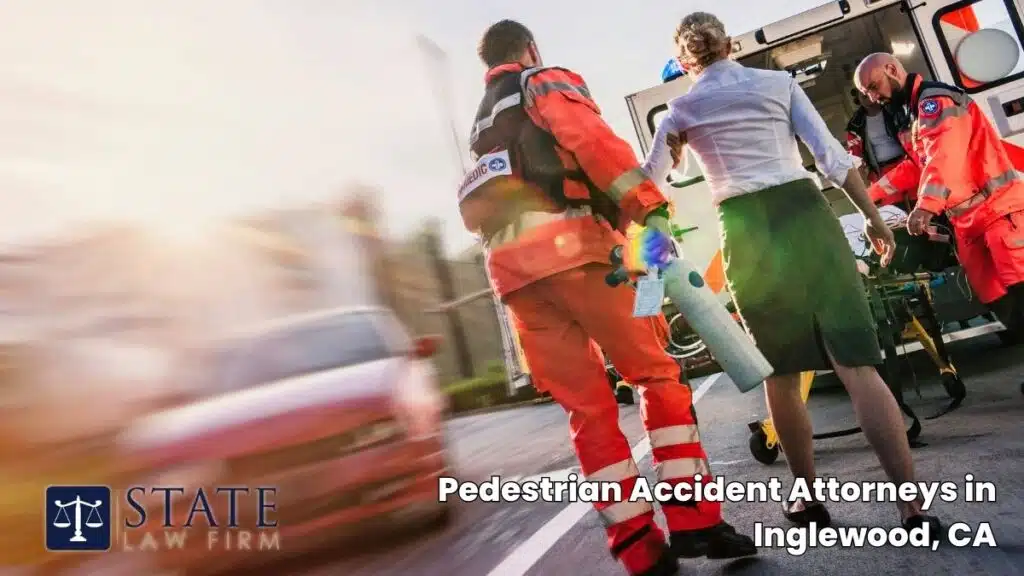
Getting hit while walking or jogging is not just a “traffic incident.” It is a sudden, full-body impact that can create fractures, head trauma, spinal damage, and life-long mobility issues in seconds. What comes next is usually just as overwhelming: medical appointments, missed work, insurance pressure, and a crash investigation that often moves on before you have even processed what happened.
Inglewood is not a low-risk city for pedestrians. The California Office of Traffic Safety (OTS) crash rankings show Inglewood had 63 pedestrian victims killed or injured in 2023, ranking 2 out of 62 among similarly sized cities in its grouping. In 2022, the city recorded 59 pedestrian victims killed or injured, ranking 6 out of 61. These rankings are built from statewide crash reporting inputs and are designed for apples-to-apples comparisons across population groups.
If you are searching for help right now, start here: request a free consultation. You can also review the firm’s broader injury resources through the personal injury library y el auto accidents library.
Why pedestrian injury claims in Inglewood require a fast, evidence-driven approach
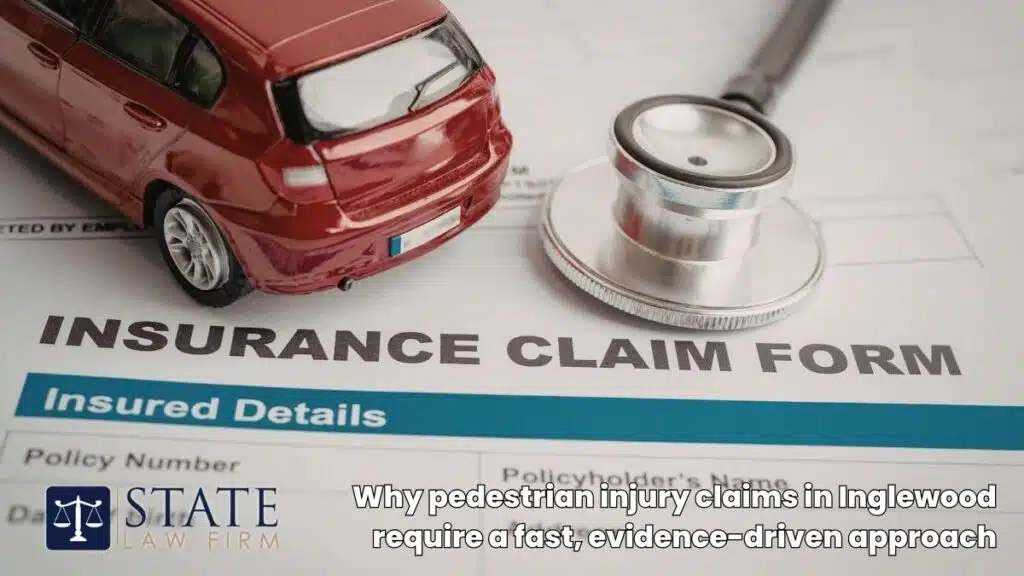
Pedestrian claims are different from typical vehicle-to-vehicle cases because the injury severity is usually higher and the defense playbook is more aggressive. Insurers commonly argue that the pedestrian “came out of nowhere,” crossed outside a crosswalk, wore dark clothing, was distracted, or “should have seen the car.” The earlier you lock down objective proof, the harder it becomes for anyone to rewrite your story.
The most valuable evidence in pedestrian cases is often time-sensitive: traffic camera footage, business surveillance video, vehicle damage photos, witness contact details, and the first medical documentation tying symptoms to the impact. If you suspect cameras were nearby, use this step-by-step guide on obtaining traffic camera footage as soon as possible. Even the guide itself warns that retention windows can be short (often measured in days or weeks), which is exactly why prompt action matters.
A second reality in Inglewood pedestrian cases is that liability is not always limited to “the driver.” Depending on where and how the crash happened, the claim may involve rideshare coverage, commercial policies, public-entity deadlines, or premises issues tied to sidewalks, lighting, or road design. That is why it helps to work with a firm that regularly handles overlapping injury categories, including rideshare collisions y responsabilidad civil de las instalaciones.
For an overview of how pedestrian cases are typically handled and what compensation can include, you can also review this pedestrian accident attorney page. It lays out common next steps, case themes, and what claimants should expect when injuries are serious.
California pedestrian right-of-way rules that often decide fault
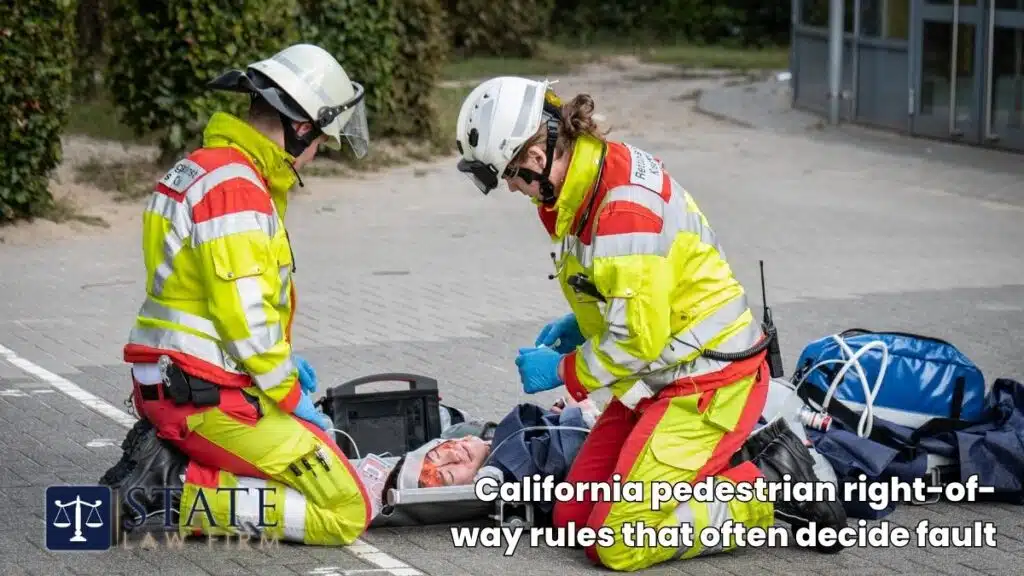
Fault in a pedestrian crash often comes down to a few key statutes and how they apply to the exact moment of impact. Under California Vehicle Code section 21950, drivers must yield the right-of-way to pedestrians crossing within both marked crosswalks and unmarked crosswalks at intersections. The same statute also states that drivers approaching a pedestrian within a crosswalk must exercise due care and reduce speed or take other action as needed to safeguard the pedestrian. In plain English: crosswalk cases are not just about “who had the signal,” they are about whether the driver exercised due care when a pedestrian was present.
Insurance companies will also point to the pedestrian’s legal duties. California Vehicle Code section 21954 says that when a pedestrian crosses a roadway at a point other than a marked crosswalk or an unmarked crosswalk at an intersection, the pedestrian must yield to vehicles close enough to be an immediate hazard. Importantly, that section also states that drivers are not relieved of the duty to exercise due care for pedestrian safety. That is a critical detail in real cases: even when a pedestrian is outside a crosswalk, drivers still have responsibilities, and “outside the crosswalk” does not automatically equal “pedestrian at fault.”
California’s general negligence framework reinforces these duties. Civil Code section 1714 states that everyone is responsible for injury caused by their lack of ordinary care, while also recognizing that a person’s own lack of care can factor into responsibility. In real-world injury litigation, this is part of why evidence matters so much: fault is often shared in percentages, not decided as all-or-nothing.
For a practical look at how fault disputes play out in negotiations, review this guide to fighting a 50/50 liability claim. It focuses on what evidence actually moves the needle when an adjuster tries to split blame.
Common causes of Inglewood pedestrian crashes and who may be responsible
Many pedestrian accidents follow predictable patterns: drivers failing to yield at intersections, turning across crosswalks, speeding through congested corridors, driving distracted, or backing out of driveways and parking areas without checking for walkers. But the legal question is bigger than “what happened.” It is “who had a duty, who breached it, and what coverage is available.”
The most common liable parties in pedestrian cases include the at-fault driver first, but that is not the end of the list. If the driver was working at the time, an employer may be involved. If a rideshare driver caused the crash or the pedestrian was hit in connection with a rideshare pickup or drop-off, rideshare policy layers may matter. If the incident involves a bus or other public transit vehicle, special government-claim deadlines can apply.
If a rideshare vehicle is part of the fact pattern, these resources are useful starting points: rideshare accident attorneys y what to do after an Uber or Lyft crash. Even though those pages focus on rideshare occupants, the insurance concepts often apply when pedestrians are struck by rideshare drivers too.
If the crash involves public property, street design, a dangerous intersection, or a roadway defect, a government entity may be part of the case. Government liability is real, but it is procedural and deadline-heavy. California Government Code section 815 establishes the baseline concept that public entities are not liable for injuries except as provided by statute. When the claim is based on a dangerous condition of public property, Government Code section 835 sets out what must be proven: a dangerous condition, causation, foreseeability, plus either creation by a negligent public employee or actual or constructive notice with time to protect against it.
For a plain-language explanation of these cases, see this guide on suing the government in California y this breakdown of poor road maintenance injury claims. If the harm is tied to sidewalk defects, this sidewalk liability resource is also relevant because sidewalk responsibility can involve both public entities and adjacent property owners depending on the facts.
Not all “pedestrian harms” come from cars. E-bikes, scooters, and other micromobility devices can cause serious impacts on sidewalks and paths. If you were hit by a rider on a sidewalk, review this pedestrian rights guide for e-bike and scooter sidewalk collisions.
What injured pedestrians should do after a crash to protect their health and their claim

Your first priority is medical care. Even when you can stand up after an impact, symptoms like concussion, internal injury, and spinal trauma can evolve over hours or days. Early medical documentation also becomes the starting point for proving damages later, which matters when insurers challenge whether treatment was “really related” to the collision.
Once the immediate emergency is addressed, the next priority is documentation. A police report can anchor the basic facts of the incident, identify involved parties, and preserve early witness statements. If you need a walkthrough of reporting steps, use this guide to filing a police report after an accident. If you need to obtain the completed report, use this guide to obtaining a California accident report.
California has multiple reporting systems, and they do not all have the same deadlines. Vehicle Code section 20008 requires a written report to CHP or the local police department within 24 hours for drivers involved in an accident resulting in injury or death. Separately, the DMV SR-1 form is required within 10 days in certain reportable crashes, including those involving injury, death, or property damage over a threshold. If you are dealing with SR-1 requirements, use this SR-1 form guide to avoid preventable mistakes.
If CHP investigated, the CHP collision report can be one of the most relied-upon documents in the case. The CHP 190 process matters because access is limited to qualifying “parties of interest.” For that step, use this CHP 190 crash report guide.
Evidence preservation is where many otherwise solid cases weaken. Video disappears. Vehicles get repaired. Phones get replaced. Witnesses lose interest. If you suspect another party may destroy or “lose” evidence, review this spoliation of evidence guide. For a practical reminder about online activity risks, read how social media can affect an injury case.
Finally, if the collision was a hit and run, do not assume you have no options. California Vehicle Code section 20001 requires drivers involved in injury crashes to stop and fulfill legal duties, and it sets criminal penalties for violations. Even when the driver is not immediately identified, early reporting and evidence collection can improve the odds of identification and coverage recovery. For practical steps in this scenario, review this hit and run legal steps guide, which overlaps with pedestrian reality in many ways.
What compensation can include for injured walkers and joggers

Pedestrian crashes often create a long tail of costs that do not show up in the emergency room bill. A strong claim is built around the full picture of harm, including medical treatment, rehabilitation, lost income, reduced earning capacity, and the human impact of pain, anxiety, and lost independence.
California personal injury damages are commonly discussed in two large categories: special damages (the financial losses you can add up) and general damages (pain, suffering, and quality-of-life harm). For a deeper breakdown that matches how claims are actually negotiated, see special vs. general damages in personal injury cases y how pain and suffering is estimated in California.
Emotional harm is often part of pedestrian collisions, especially when the impact was violent or the person now fears walking near traffic. If you want realistic expectations and proof concepts, review this emotional distress payout guide, IIED vs. NIED in California, y psychiatric injury claims for stress and depression.
Many pedestrian injuries also qualify as catastrophic. Your claim value can change dramatically when injuries involve paralysis, amputation, or internal organ damage because future medical needs and life care become central. For more on severe harm cases, explore the catastrophic injury practice area, as well as related resources like paralysis injury representation, paraplegia injury cases, amputation claims, y internal organ damage lawsuits.
If the crash resulted in a death, the legal focus shifts to wrongful death damages and the rights of surviving family members. California’s two-year limitations period for actions involving injury or death is stated in Code of Civil Procedure section 335.1, and the details of who may have claims and what losses can be included require careful analysis. For more information, see Reclamaciones por muerte por negligencia en California y Abogados de muerte por negligencia en Los Ángeles.
One more angle matters for joggers and walkers who were injured while working (delivery work, parking operations, event staffing, security, or other on-foot tasks). In those situations, a workers’ compensation claim may exist alongside a third-party injury claim, depending on who caused the crash. Start with California workers’ compensation help, Los Angeles workers’ compensation representation, y this guide to on-the-job crash claims.
Deadlines, insurance tactics, and how an attorney protects your case
Deadlines decide whether you can recover at all. For most non-government personal injury cases in California, Code of Civil Procedure section 335.1 provides a two-year window to file an action for injury or death caused by another’s wrongful act or neglect. This is why claimants are repeatedly warned not to “wait and see.” The longer you wait, the more evidence disappears and the more leverage shifts to the insurer.
Government cases can move even faster. Government Code section 911.2 states that claims for death or injury must generally be presented within six months after accrual. In plain terms, if your pedestrian crash involves a public entity, the real deadline may be measured in months, not years. If you suspect that is part of your case, read this sovereign immunity and government claim guide immediately.
Insurance behavior is the next challenge. Adjusters are trained to minimize payouts, dispute liability, and pressure injured people into early settlements. If you want a detailed breakdown of insurer incentives and tactics, read the role of insurance companies in injury cases y insurance bad faith tactics in California. If blame is being pushed onto you, revisit the 50/50 liability dispute guide.
A strong attorney-driven pedestrian claim typically includes an immediate investigation plan, preservation of video and vehicle evidence, medical record organization, a damages package, and a negotiation strategy that is built for trial leverage rather than quick closure. Demand letters also matter because they frame the claim, attach proof, and define how the insurer should evaluate liability and damages. To understand that step, review this personal injury demand letter guide.
If the insurer refuses to be fair, litigation becomes the tool that creates accountability. Many cases still resolve before trial, but the lawsuit process can shift leverage because it adds subpoenas, sworn testimony, and court oversight. For clear explanations of these paths, review lawsuit vs. settlement y the litigation timeline. If you are wondering how long the process can take, this settlement timeline resource explains why some cases resolve in months while others take longer.
When you are ready to speak with a lawyer, you can start with this consultation page. If you want to learn more about the team and experience before reaching out, review the attorneys page, estudios de caso, y testimonios de clientes. For a broader overview of services and locations across the state, see ubicaciones and the main Bufete de abogados estatal site.