Spanish
  English
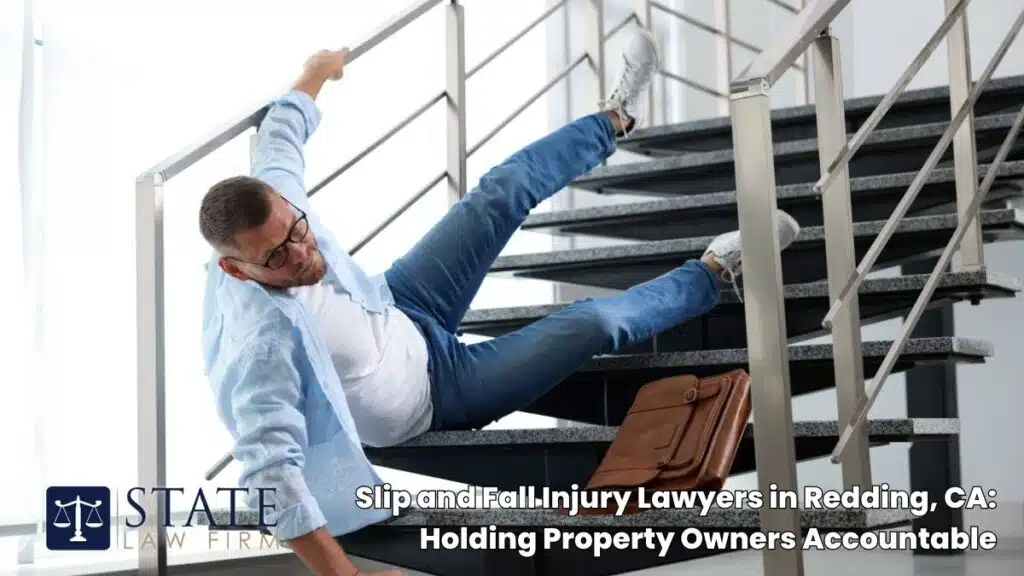
A slip and fall can be over in seconds, but the consequences can follow you for months. A fractured wrist, a torn knee ligament, a concussion, or a back injury can mean time away from work, new medical bills, and a day-to-day routine that suddenly feels uncertain. If you were hurt in a fall in Redding, it is normal to feel frustrated when the dangerous condition looked preventable.
California premises liability law exists because unsafe conditions on property are often predictable. When a property owner, manager, tenant, or business in control of a location fails to use reasonable care in inspection, maintenance, repair, or warning, the law may allow an injured person to pursue compensation. For a broader look at safety-related injury claims, explore premises liability resources and the wider personal injury library.
This article focuses on slip, trip, and fall claims in Redding and throughout Shasta County. It explains how liability works, what evidence tends to matter most, and why early action can protect your case before key proof disappears.
Why slip and fall cases in Redding demand fast action
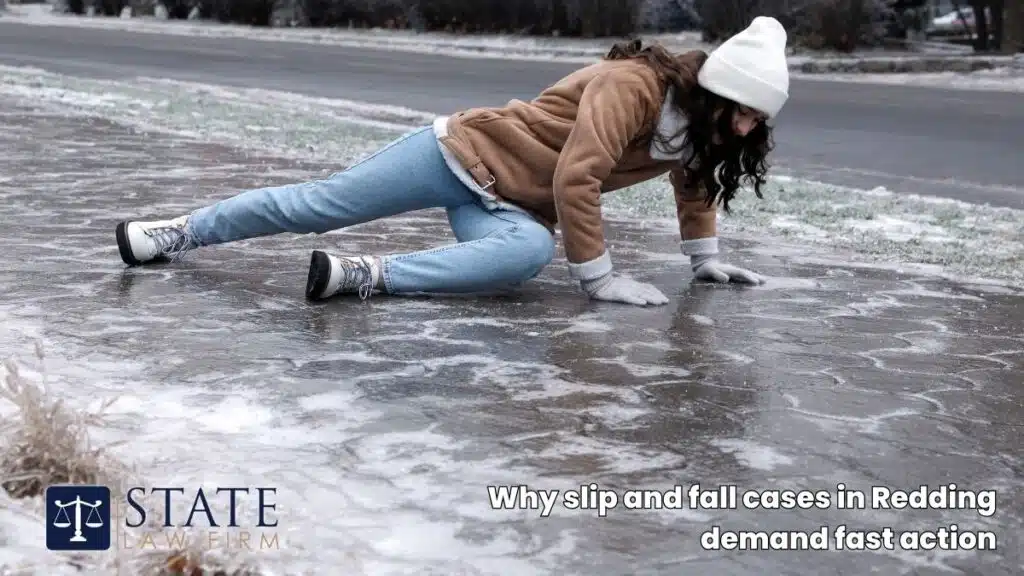
Slip and fall evidence has a short shelf life. Floors get cleaned. Temporary mats appear after the fact. Warning cones show up once an incident has already happened. Surveillance video systems overwrite footage, sometimes within days. Even when nobody is trying to hide anything, the scene can be reset so quickly that the most important details vanish.
Fast action matters because premises liability claims usually turn on proof. If you can capture the hazard, the surrounding conditions, and the timeline before the property changes, you make it much harder for the defense to claim that nothing unsafe existed or that the condition appeared only moments before you fell.
Weather-driven hazards show why timing is critical. Rainwater tracked into entryways, slick outdoor steps, poor drainage, and dim lighting can create fall risks that are foreseeable. Rain does not automatically make a fall your fault. Owners can still be responsible when they could reasonably foresee wet-weather hazards and failed to inspect, fix, protect, or warn. For a clear explanation of how rainy-day claims are evaluated, read rainy weather slip and fall claims in California.
How California law holds property owners accountable
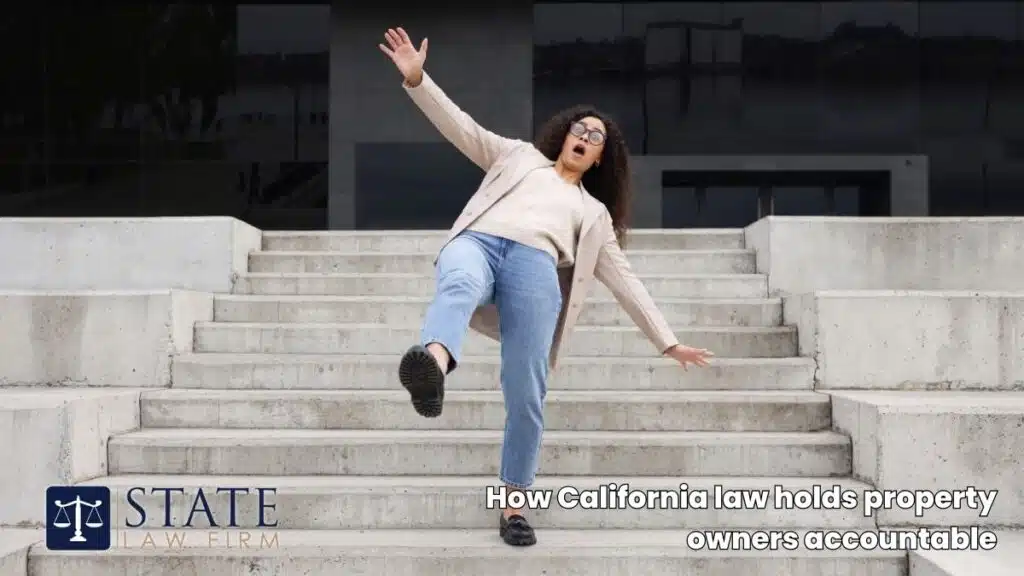
Slip and fall cases are part of premises liability, and they are typically built on a simple chain: a dangerous condition existed, the defendant controlled the property, the defendant failed to act with reasonable care, and that failure was a substantial factor in causing injury. This frame matters because it keeps the focus on responsibility, not on embarrassment or hindsight.
If you want a plain-language overview of who may be responsible in different fall scenarios, review El papel de la responsabilidad en los accidentes por resbalones y caídas.
One of the biggest fights in these cases is notice. Property owners often argue they did not know the hazard existed. Sometimes that is true. Other times, the more useful question is whether they should have known, because a reasonable inspection and maintenance routine would have discovered the condition before someone got hurt.
That is where constructive notice comes in. Constructive notice does not require proof that the owner actually knew about the hazard. It asks whether the condition existed long enough, or was obvious enough, that a reasonably careful owner would have discovered it through ordinary inspection and maintenance. It is often the bridge between a denial of knowledge and a finding of responsibility. Learn how this concept works in constructive notice in slip and fall cases.
Wet floors and warning signs are another common dispute. Many people assume a missing wet floor sign automatically proves the business was at fault, and a posted sign automatically ends the case. Real claims are more nuanced. A missing warning can support liability when the danger was not obvious and the owner knew, or should have known, the area was wet. At the same time, a sign is not always enough if the business should have fixed the underlying issue or used stronger safety measures. For a focused breakdown of how these cases are evaluated, see wet floor slip and fall cases with no warning sign.
Premises liability is not automatic. Property owners are not insurers responsible for every injury that happens on their land. The standard is reasonableness. A claim succeeds when evidence shows the risk was unacceptable and avoidable under ordinary safety practices.
Common Redding slip and fall scenarios that can trigger a claim
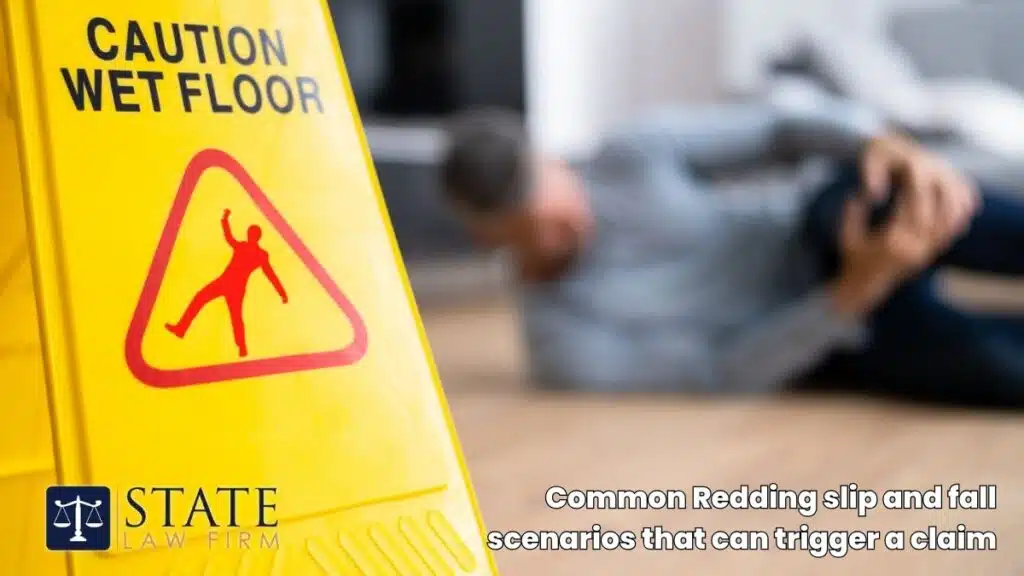
Slip and fall hazards repeat across properties. The location where you fell often points to the records you need, the parties who may share responsibility, and the kinds of safety failures that tend to matter most.
Apartment complexes and rental communities. Common areas like stairs, hallways, walkways, pools, and parking lots are frequent fall zones. Typical hazards include slick surfaces, uneven pavement, raised edges, and burned-out lighting that makes changes in elevation hard to see. If your fall occurred in a rental common area, review apartment slip and fall landlord liability in California.
HOA communities and shared common areas. Many HOA neighborhoods control walkways, stairs, entrances, and shared facilities. Liability can hinge on control, maintenance obligations, and whether a known issue was left unaddressed. For common HOA patterns, see HOA slip and fall liability in California.
Stores, shopping centers, and retail entrances. Spills happen, but the legal question is prevention and response. Were inspection routines reasonable for the foot traffic? Was the hazard recurring, like an entryway that stays slick during wet weather or a refrigerated area that repeatedly leaks? Were employees trained to monitor high-risk zones? These details often decide whether a fall is treated as unavoidable or negligent.
Store parking lots and pedestrian walk paths. Parking lots involve pedestrian routes, lighting, curbs, and surface maintenance. In many shopping-center layouts, responsibility can be split between the owner of the property and the tenant business. If your fall happened in a shared or unmarked area, review injured in a store parking lot and who is responsible.
Sidewalk defects and outdoor walkways. A raised sidewalk edge or broken slab can cause a sudden trip and hard impact. The challenge is often figuring out whether the liable party is a private owner, a city, or another public entity, and the procedure can change depending on the answer. If your fall involved a sidewalk defect, start with broken sidewalk falls and city vs property owner liability.
Staircases with poor lighting, loose railings, or code issues. Stair falls can involve multiple small failures lining up at once: shadowed treads, worn nosings, unstable handrails, or inconsistent step geometry. Code violations can be powerful evidence, and even code compliant stairs can become unsafe through wear and delayed repairs. For an in-depth breakdown, read staircase injuries and liability in California.
Hotels and short-term rentals. Falls at hotels and short-term rentals can involve multiple layers of responsibility and overlapping insurance coverage. If your incident happened during a stay, review slip and fall injuries in hotels or Airbnb stays y injured at an Airbnb in California.
Schools, churches, community centers, and nonprofits. Nonprofit status does not automatically erase liability for unsafe premises. The focus remains whether reasonable care was used under the circumstances. For common fact patterns, read injuries at schools, churches, and community centers.
Falling objects and overhead hazards. Some premises cases are not about slipping at all. They involve unsafe storage, unstable shelving, or merchandise stacked in ways that endanger customers and workers. If you were hurt by a falling object, read injuries caused by falling objects in stores or warehouses.
What to do after a slip and fall in Redding

After a fall, it is easy to downplay injuries because adrenaline can mask pain. The best approach is to protect your health first, then preserve the evidence before it disappears. The goal is simple: clarity.
- Get medical care quickly. Prompt treatment supports your recovery and creates records that link the injury to the incident.
- Report the fall to the right person. If the fall happened at a business or managed property, request an incident report and ask for a copy if available.
- Photograph the hazard and the surroundings. Capture lighting, missing warnings, nearby mats, floor texture, and anything that shows why the condition was dangerous.
- Preserve footwear and clothing. Do not throw away shoes or clothing that may show wetness, debris, tears, or scuff patterns.
- Avoid off-the-cuff fault statements. Do not guess about blame or minimize symptoms in the moment.
- Request video preservation early. Many properties have cameras, and footage can be overwritten quickly.
For a practical checklist with explanations behind each step, read Pasos importantes a seguir después de un accidente por resbalón y caída.
Proving fault when the other side denies responsibility
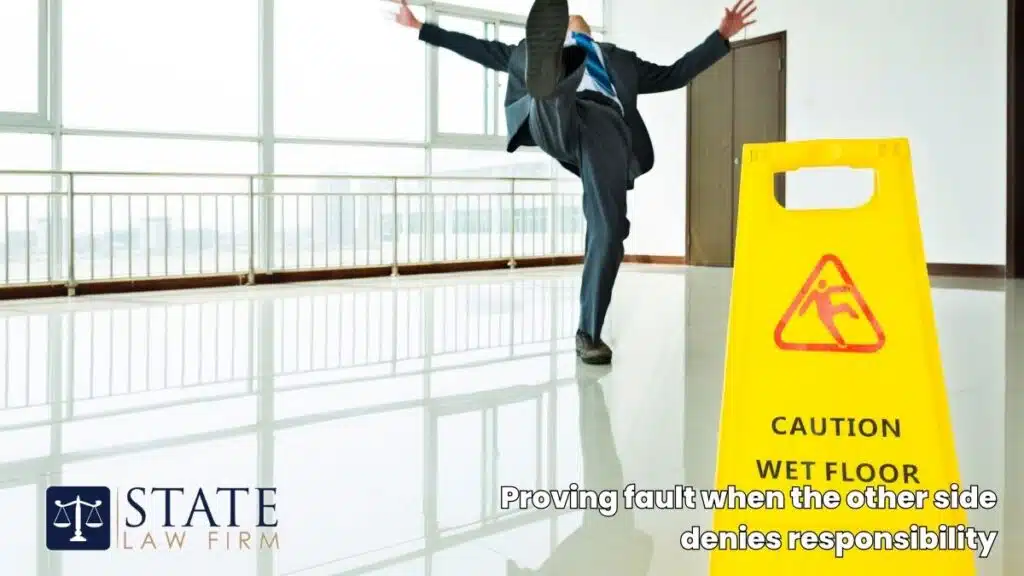
Premises claims are frequently defended with familiar arguments: the hazard was not actually dangerous, the owner had no reasonable way to know, the risk was open and obvious, your footwear or distraction caused the fall, or your injuries are unrelated. The response is not louder emotion. It is stronger documentation.
No witnesses does not mean no case. Falls often happen without an eyewitness. A strong claim can still be built through photos, video, incident reports, maintenance records, medical documentation, and a timeline that makes your explanation more likely than not. For practical methods that work in real disputes, read how to build a strong slip and fall case with limited evidence.
Constructive notice can close the gap. If the defense argues the hazard appeared moments before your fall, constructive notice evidence often becomes the battleground. Time, inspection routines, and recurring risk zones matter. Revisit constructive notice in slip and fall cases to see the kinds of details that tend to matter most.
Some evidence gets lost or destroyed, and that is a real problem. Video can be overwritten and records can disappear. Scene changes can also erase proof that matters. If you are concerned about missing evidence, review spoliation of evidence in personal injury claims.
Insurance adjusters evaluate claims to protect the insurer. Adjusters investigate, review records, and recommend settlement value. Many tactics are designed to reduce payout, including fast low offers and attempts to capture statements that shift blame. Understanding the adjuster’s role can help you avoid common pitfalls. For a detailed explanation, read El papel de las compañías de seguros en los casos de lesiones personales.
A demand letter often sets the tone for negotiation. Many premises cases resolve through settlement discussions. A well-prepared demand package can present liability, medical treatment, and damages in a structured way that pushes the carrier toward a fair offer. Learn what a demand letter includes and why it matters in the personal injury demand letter guide.
Compensation and deadlines for California slip and fall claims
Slip and fall compensation is typically built around two categories: economic losses and non-economic harm. Economic losses include medical bills, follow-up care, rehabilitation, missed income, and other out-of-pocket costs. Non-economic harm includes pain, emotional distress, and loss of enjoyment of life caused by the injury’s impact on daily living.
For a clear breakdown of these categories and the evidence that supports them, read special damages vs general damages y Cómo estimar el dolor y el sufrimiento en un caso de lesiones personales en California.
Many fall injuries involve soft tissue damage that can be painful even when imaging looks normal. If you are dealing with that kind of injury, you may find this helpful: soft tissue injuries and personal injury claims.
In more severe falls, head trauma can create long-term consequences. For educational background on brain injury and accident-related legal rights, see ¿Qué es una lesión cerebral traumática? y traumatic brain injury legal rights after an accident.
Medical billing can also complicate a settlement. Liens and reimbursement claims can reduce what you receive at the end, even if the settlement amount sounds large at first glance. To understand liens and how they affect payouts, read personal injury liens in California.
Deadlines matter. California has strict time limits for filing personal injury claims, and those limits can change based on who is involved and where the incident happened. Start with the statute of limitations for personal injury claims in California.
If your fall may involve a public entity, such as a sidewalk defect controlled by a city or county or an unsafe condition on public property, special procedures and shorter notice deadlines can apply. For those cases, read suing the government in California and sovereign immunity exceptions and revisit broken sidewalk falls and city vs property owner liability.
If you fell at work, the injury may involve workers’ compensation, third-party liability, or both, depending on who controlled the premises and what caused the hazard. For a starting point, see Abogados de compensación laboral de California y el workers’ compensation resources.
People often ask whether they should settle or file a lawsuit. The right answer depends on liability strength, medical documentation, and whether the defense is acting reasonably. To understand the tradeoffs, read filing a lawsuit vs settling out of court y litigation timeline basics.
Choosing a slip and fall lawyer for a Redding claim
A strong premises case is usually built early, then negotiated and, when necessary, litigated with discipline. A lawyer can help identify responsible parties, preserve surveillance footage and inspection records, evaluate maintenance and code issues, and value damages in a way that reflects both bills and real-life disruption.
If you want to learn more about the firm, start with sobre nosotros and meet the team through abogados. For examples of outcomes and client experiences, visit estudios de caso y testimonios. For general process questions, review frequently asked questions.
If you were injured in a slip and fall in Redding and you want to discuss your options, request a case review through consulta gratuita.
This information is provided for general educational purposes and is not legal advice. Reading this page does not create an attorney client relationship. Every claim depends on its specific facts, including notice, control, and available evidence.