Spanish
 English
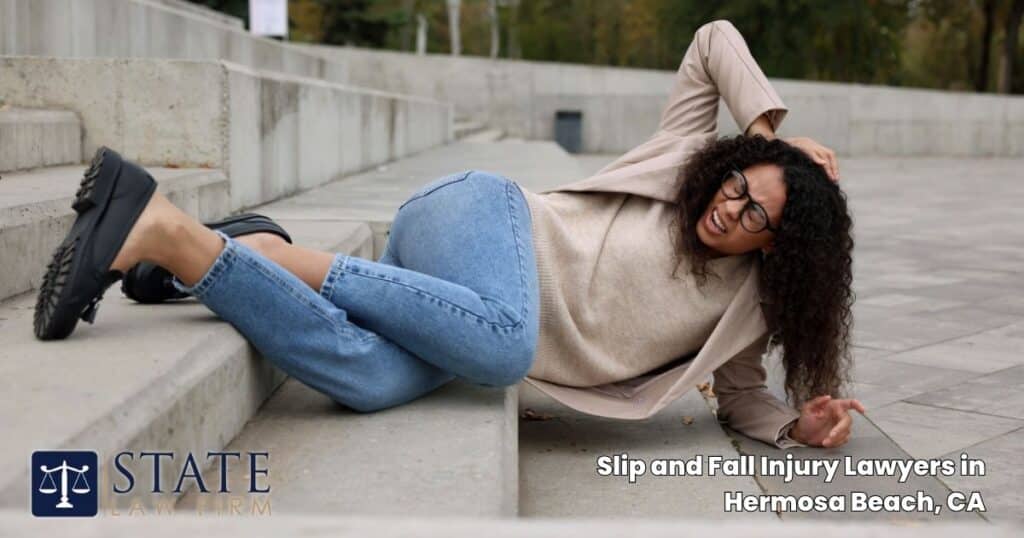
Slip and fall accidents in Hermosa Beach can happen in seconds, then reshape your life for months. A wet entryway, a cracked sidewalk, a poorly lit stairwell, a hidden trip hazard in a parking lot, or a loose handrail can lead to fractures, head trauma, soft-tissue damage, and time away from work that does not disappear just because the fall happened quickly.
What matters after a serious fall is not only getting proper medical care, but also protecting the evidence that explains why the fall happened in the first place. That evidence often decides whether the claim gets taken seriously or treated like “just an accident.”
If you are looking for help, start with a conversation that is focused on your facts and your next steps. You can connect with State Law Firm and request a consulta gratuita.
Why slip and fall cases in California are premises liability cases
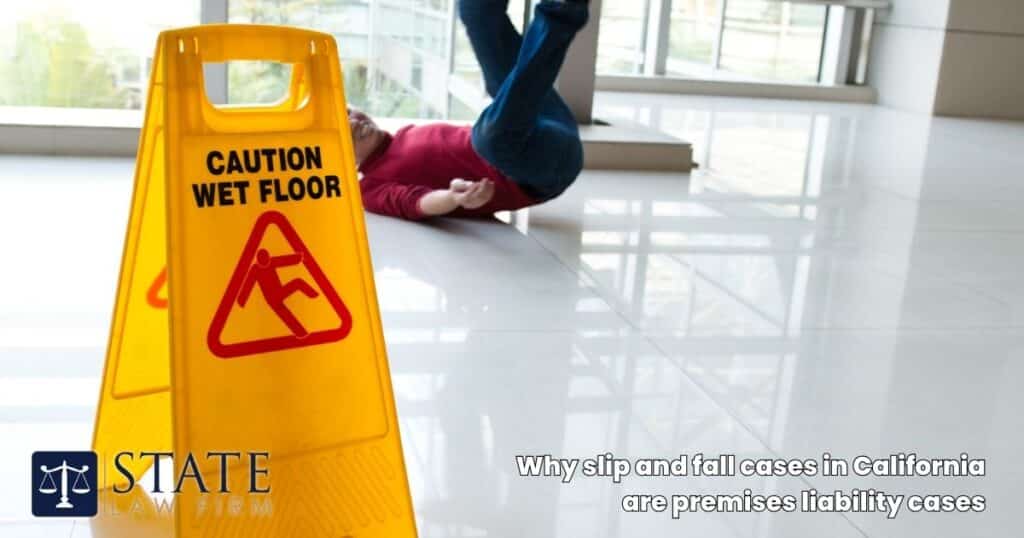
In California, slip and fall claims usually live under premises liability, meaning the legal focus is on whether a person or entity who owned or controlled property failed to use reasonable care to keep it safe or to warn about hazards that could not be fixed right away. A foundational duty of ordinary care is reflected in California Civil Code section 1714.
In practical terms, most premises cases revolve around a familiar set of elements used in California civil jury instructions: who owned or controlled the property, whether they were negligent in its use or maintenance, whether you were harmed, and whether the negligence was a substantial factor in causing that harm.
One issue that repeatedly decides slip and fall claims is notice. If the property owner created the hazard, notice is often easier to prove. If they did not create it, the case may turn on actual notice (they truly knew) or constructive notice (the condition existed long enough, or was obvious enough, that reasonable inspections should have found it). If you want a deeper explanation of how “should have known” arguments get built, read constructive notice in a slip and fall case.
For a broader foundation, you can also explore premises liability articles and the overview of how premises liability works through premises liability representation.
Common Hermosa Beach slip and fall situations and who may be responsible
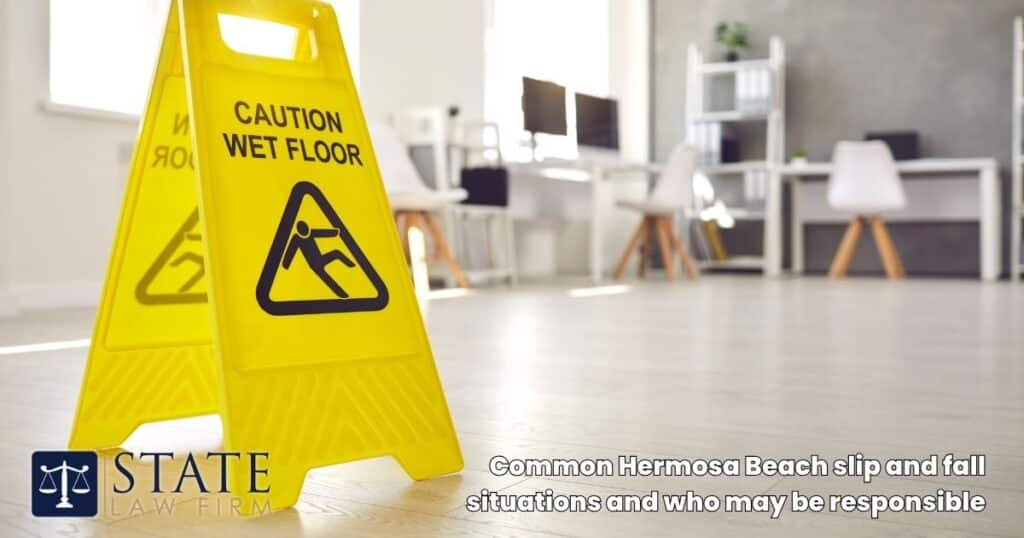
Hermosa Beach is full of places where people move constantly: storefronts, restaurants, short-term rentals, multi-tenant buildings, staircases, walkways, parking areas, and public-facing spaces. Liability usually depends on control of the area and whether reasonable safety steps were taken before you got hurt.
Wet floors, spills, and missing warnings. A classic example is slipping on a wet surface where there is no warning, no blocking of the hazard, and no timely cleanup for a foreseeable risk. For a focused breakdown, see wet floor cases without a warning sign.
Rainy conditions and tracked-in water. Rain does not automatically make a slip “your fault.” Many cases come down to whether the owner reasonably anticipated wet-weather hazards and took steps such as mats, inspections, cleanup, and warnings. See rainy weather slip and fall claims in California.
Apartment buildings and shared common areas. Falls in hallways, stairwells, entryways, courtyards, laundry rooms, and parking areas often involve landlord or property management responsibility because those areas are typically under their control. For the most common patterns (control, notice, and reasonableness), see apartment slip and fall landlord liability.
HOA-managed communities. Condo and HOA communities often involve shared sidewalks, stairwells, pool areas, and parking structures. Claims can turn on inspection practices, maintenance records, vendor conduct, and whether hazards were addressed within a reasonable time. See HOA slip and fall liability.
Hotels and short-term rentals. Premises cases in hotels and short-term rentals may involve ownership, host or management control, maintenance practices, and insurance layers. For practical guidance on how liability can be evaluated, see slip and falls in hotels or short-term rentals y injuries at Airbnb-style rentals.
Private homes. A fall at someone’s home can feel personal, but many claims are handled through insurance rather than direct conflict. For a realistic explanation of how these situations often get addressed, see slip and falls at a friend’s house.
Stairs, lighting, railings, and code-driven safety issues. Staircase cases often involve poor lighting, loose rails, inconsistent steps, worn traction, and preventable maintenance problems. For a deep dive into how these hazards create liability narratives, see staircase injuries and liability.
Sidewalk defects and public-entity issues. Sidewalk falls can raise a key question: is this a private-party case, a public-entity claim, or both? This is not only a liability question, it is also a deadline question. See broken sidewalk falls and who can be responsible y demandar al gobierno en California.
Parking areas and shared shopping-center spaces. Liability in shared parking areas often involves who controls common areas like lighting, driving lanes, walkways, and pavement maintenance, plus whether property management had maintenance responsibility. See injured in a store parking lot.
Falling merchandise or falling objects. Not every property injury is a “slip.” Stores and warehouses can create serious injury risks through unstable stacking, unsafe displays, and poor inspection routines. See injuries caused by falling objects.
Churches, schools, and community centers. Nonprofits are not automatically immune from premises responsibility. These cases commonly focus on whether the organization acted reasonably under the circumstances and whether hazards were addressed. See nonprofit premises liability.
Negligent security in property settings. Some serious injuries on property involve foreseeable crime risks and inadequate safety measures, creating negligent security claims under premises liability principles. See negligent security lawsuits in California.
What to do after a slip and fall in Hermosa Beach

The first priority is medical care, especially because head, back, and joint injuries can worsen or become clearer after the adrenaline fades. The second priority is documentation, because properties change fast: spills get cleaned, mats appear, lights get replaced, and video gets overwritten.
Start with the practical checklist in Pasos importantes a seguir después de un resbalón y caída. It emphasizes key actions like getting treatment, reporting the incident, taking photos, and avoiding premature statements that can get used against you later.
If nobody saw you fall, do not assume you have “no case.” Many claims are built through circumstantial proof, consistent medical documentation, and timelines that show the hazard existed long enough to be discoverable. A strong, evidence-based approach is explained in no witnesses slip and fall cases.
Video evidence is often decisive. Many properties have cameras, and public agencies may have footage that is retained only briefly. If your fall involved a public area, intersection-adjacent space, or any setting where a public camera might exist, review how to get traffic camera footage as a starting point for understanding time-sensitive requests and preservation.
Preserving evidence is also about preventing it from “disappearing” once a claim becomes real. If you suspect records, footage, or physical evidence could be altered or destroyed, learn how spoliation issues work in spoliation of evidence in personal injury claims.
How compensation is evaluated in slip and fall injury cases

Slip and fall compensation is usually built around two categories: economic losses you can add up (medical bills, lost income, out-of-pocket costs) and non-economic harm that reflects how the injury changed your day-to-day life (pain, emotional distress, loss of enjoyment). For a clear explanation of these categories, see special damages vs general damages.
Pain and suffering is often significant in serious falls because the harm is not limited to a single doctor visit. It can include disrupted sleep, limited mobility, loss of independence, anxiety about walking, and interruptions to family life. For how these damages are commonly evaluated and supported, see estimating pain and suffering in California.
Emotional harm can also be part of the claim when the incident and its aftermath are genuinely disruptive or traumatic. For legal context on emotional distress theories, see IIED vs NIED in California y average emotional distress payout discussions.
Many fall injuries are not “just bruises.” Soft-tissue injuries can be difficult to see on imaging, but still affect work, sleep, and movement. See reclamaciones por lesiones de tejidos blandos.
Head injuries can be life-altering, and falls are a major cause of TBIs. If your fall involved a head impact, concussion symptoms, or delayed cognitive issues, review derechos legales en caso de accidente con lesión cerebral traumática and the broader discussion of severe injury cases through catastrophic injury claims.
If the defense argues you were careless or distracted, that does not automatically end the case. California uses comparative fault principles, meaning damages can be reduced based on your share of responsibility rather than treated as all-or-nothing.
Deadlines, government claims, and insurance tactics that can derail a strong case
Deadlines are not a technicality. They are often the difference between having legal leverage and being forced to walk away. In California, the general statute of limitations for personal injury claims (including slip and fall cases) is commonly two years from the date of injury. See California statute of limitations for personal injury.
Government-related cases can move much faster. If the fall involves public property or a public entity, you may need to present a government claim within a much shorter window that is commonly discussed as six months. The statutory framework for government-claim timing is frequently associated with Government Code section 911.2.
Insurance strategy also matters. Adjusters investigate to value a claim, but they are not neutral decision makers. Understanding common adjuster tactics, timing pressure, and settlement leverage helps you avoid mistakes like accepting an early offer before you know your prognosis. See El papel de las compañías de seguros en los casos de lesiones personales.
When a case is built well, a demand letter can be the tool that frames liability, documents damages, and triggers serious negotiations. See the personal injury demand letter guide.
If an insurer is unreasonably delaying, denying, or undervaluing a valid claim, that may raise bad-faith concerns depending on the facts and policy relationships involved. For a practical overview, see insurance bad faith in California.
Two financial issues that surprise many injured people show up near the end of a case: liens and subrogation. These can affect your net recovery even after a settlement is reached. For planning ahead, see personal injury liens in California y subrogation and repayment claims.
Related resources and ways to connect
If you want a deeper library of slip and fall and premises-liability guidance, explore premises liability resources, personal injury resources, and the firm’s main blog.
If you are specifically comparing fall-related claim types, these pages can help you match your situation to the right legal framework: slip and fall representation, slip and fall claims overview, y premises liability guidance.
For workplace-related falls in Hermosa Beach (and potential overlap between workers’ compensation and third-party premises claims), these pages are useful starting points: California workers’ compensation lawyers, Los Angeles workers’ compensation lawyers, lesiones en el lugar de trabajo, y how to file a workers’ comp claim.
To discuss a slip and fall injury claim and get a case-specific plan, you can request a consulta gratuita through State Law Firm.
Disclaimer: This content is for general informational purposes and is not legal advice.