Spanish
  English

California’s snow-capped mountains and ski resorts offer thrilling adventures for skiers and snowboarders each winter. However, with the excitement of the slopes comes the risk of serious injuries, especially when accidents are caused by negligence. Each year, thousands of people are injured at ski resorts – from high-speed collisions on the runs to mishaps on chairlifts – and many of these accidents could have been prevented with proper care and safety measures. If you or a loved one has been hurt in a skiing or snowboarding accident due to someone else’s negligence, you have legal rights. In this comprehensive guide, we’ll explore how negligence can lead to ski resort injuries, what laws apply, and how a ski accident attorney can help you pursue compensation.
En Bufete de abogados estatal, located in Sherman Oaks, California, our team of dedicated personal injury attorneys has over 55 years of combined experience fighting for accident victims. We handle all types of cases – from car crashes to slip and falls to recreational accidents – and we understand the complexities of responsabilidad civil de las instalaciones and sports injury claims. Whether you were injured on a chairlift, struck by another skier, or hurt due to unsafe conditions on the mountain, our Abogados de lesiones personales en Sherman Oaks are committed to helping you seek the compensation you deserve. (Learn more about our approach to injury cases on our Sherman Oaks Personal Injury Lawyer página.)
Common Causes of Ski and Snowboard Accidents at Resorts
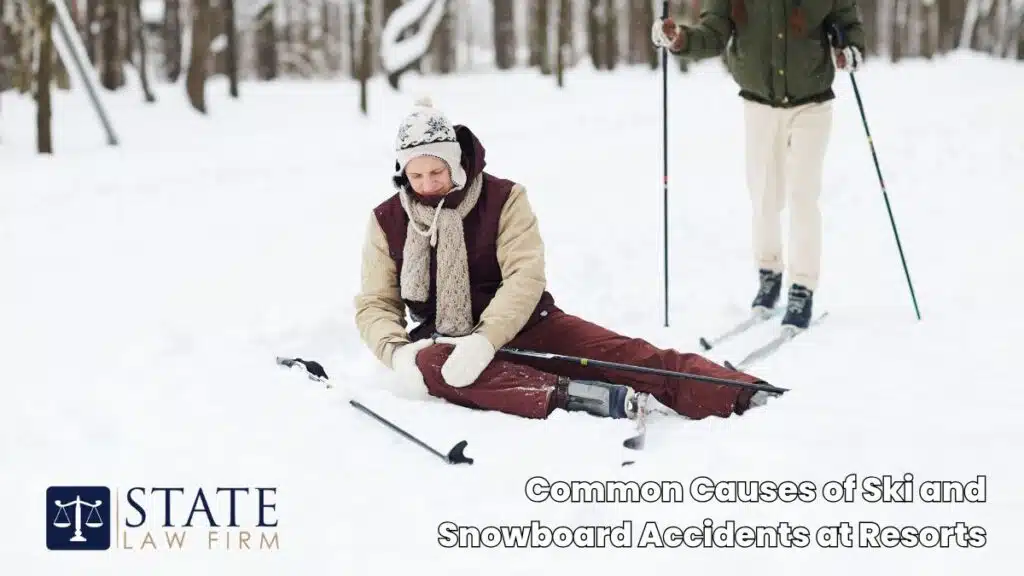
Not every skiing injury is grounds for a lawsuit – after all, skiing and snowboarding are inherently risky sports. But when accidents happen because someone failed to act responsibly or a ski resort didn’t ensure a safe environment, it crosses into negligence. Here are some common negligence-related causes of ski resort injuries:
- Poor Slope Maintenance or Hazards: Ski resort operators must keep trails and runs reasonably safe. If trails are not properly maintained – for example, dangerous obstacles (like rocks or tree stumps) are left unmarked, or grooming is neglected leading to icy patches or moguls beyond the norm – serious accidents can result. Failing to post warning signs for closed trails, cliffs, or avalanche risks can also put guests in danger. These lapses may make the resort liable under responsabilidad civil de las instalaciones principles, since they did not correct or warn of a hazardous condition on their property. (Premises liability holds property owners accountable for injuries caused by unsafe conditions – see our premises liability lawyers page for more on an owner’s duty of care.)
- Ski Lift Malfunctions or Operator Error: Chairlifts, gondolas, and other ski lifts come with risks that resorts are obligated to manage. Mechanical failures (such as a broken cable or faulty safety bar) or operator negligence (like stopping the lift abruptly or not assisting during loading/unloading) can lead to falls and serious injuries. Ski resorts must regularly inspect and maintain lifts and train lift operators thoroughly. When a lift accident occurs because of poor maintenance or human error, the resort can be held responsible for resulting injuries. For instance, a sudden lift stoppage throwing riders or a failure to shut down a lift during high winds may be deemed negligent operation.
- Faulty or Improper Equipment: Many skiers and snowboarders rent gear from the resort, such as skis, snowboards, boots, and helmets. If the rental equipment is defective or improperly adjusted, the risk of injury increases. Imagine a ski binding that doesn’t release during a fall or a helmet with a broken strap – the renter could suffer far worse injuries. Resorts and rental shops have a duty to inspect and maintain their equipment. If you were hurt because the gear failed (for example, bindings malfunctioned or a snowboard snapped due to a flaw), you may have a product liability or negligence claim against the rental provider or manufacturer.
- Inadequate Supervision or Instruction: Ski resorts often offer lessons and guided tours. Instructors and guides must exercise caution, especially when teaching beginners or leading groups. If an instructor takes students onto terrain that is too advanced or fails to keep a reasonable watch on their group, injuries can happen. For example, a child in a ski school could wander off to a dangerous area due to lack of supervision, or a novice snowboarder might be taken down a steep slope they aren’t ready for. These scenarios could constitute negligence on part of the resort’s staff for not providing a safe learning environment.
- Unsafe Facility Conditions (Off the Slopes): Not all ski resort injuries happen on the ski runs – many occur around the facilities, parking lots, and lodges. Resorts must also keep these areas safe for guests. Slips, trips, and falls can happen if walkways are icy and not salted, stairways lack railings, or floors inside the lodge are wet without warning signs. A fall on an icy resort parking lot or a poorly lit stairwell could cause broken bones or head injuries just like a fall on the mountain would. These incidents fall under general premises liability as well – the resort should address hazards like icy surfaces, uneven flooring, or inadequate lighting to prevent injuries. (For example, see our article on El papel de la responsabilidad en los accidentes por resbalones y caídas to understand how property owners may be held responsible when guests get hurt.)
- Collisions Caused by Recklessness: High-speed collisions between skiers or snowboarders are a leading cause of injuries on the slopes. While not directly the resort’s fault, if another skier or snowboarder was skiing recklessly or out of control and hit you, that person could be considered negligent. Skiers owe a duty to those around them to ski safely and in control (for instance, the skier downhill has the right of way under common “ski etiquette”). If someone ignores safety rules or behaves recklessly (such as straight-lining through a beginner area or skiing while intoxicated) and causes a crash, they can be liable for the injuries you suffer. In some cases, a resort might share blame if they failed to enforce safety rules or allowed obviously intoxicated individuals on the slopes. But primarily, these would be personal injury claims against the at-fault skier/snowboarder. (Their homeowner’s or umbrella insurance might cover such claims.) Proving liability in skier-skier collisions can be complex, often requiring witness statements or even expert analysis of how the crash happened. (For tips on handling disputed fault situations, read our guide on proving liability when fault is contested.)
In all these scenarios, the key question is whether negligencia contributed to the accident. Negligence means someone (the resort, an employee, or another skier) failed to use reasonable care, breaching a duty and causing injury. If your injury stemmed from an inherent risk of skiing (like you simply lost balance on a difficult slope or wiped out while attempting a jump), you might not have a claim because that’s part of the sport. But if it was caused by an avoidable hazard or careless behavior that increased the normal risks, you shouldn’t have to bear the costs alone.
Assumption of Risk and Ski Resort Liability Waivers
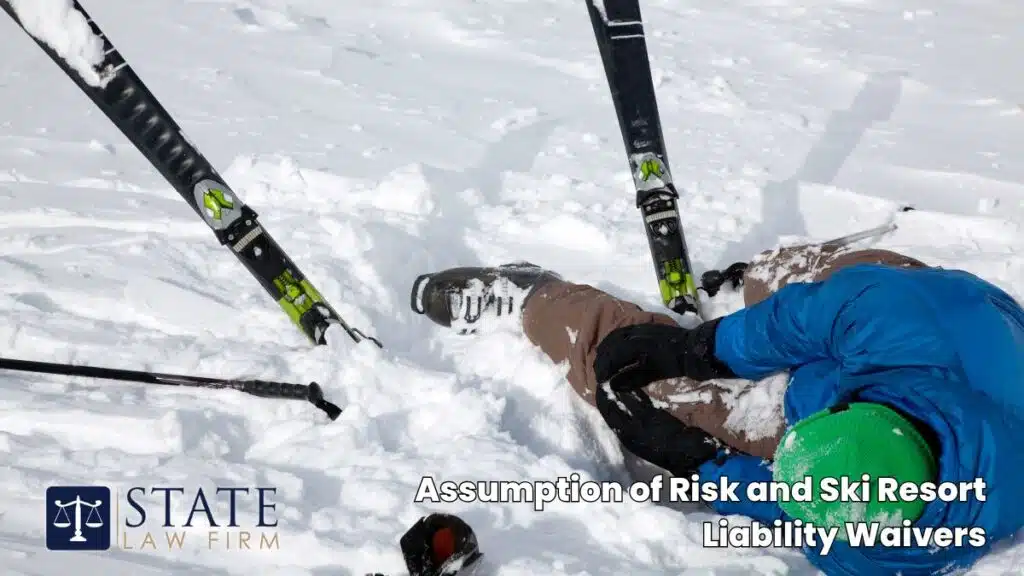
When you buy a lift ticket or sign up for a ski lesson, you almost always agree to a liability waiver – typically printed on the back of the ticket or rental agreement. Additionally, California law follows the doctrine of “assumption of risk” for sports activities. This means that participants assume the inherent risks of the sport. In plain language, by choosing to ski or snowboard, you accept that certain dangers come with the territory (like falls, weather conditions, or collisions that are part of the sport).
Sin embargo, assumption of risk is not a free pass for negligence. A ski resort cannot simply wave away its responsibility to keep you reasonably safe. Under California law, even if you signed a waiver, a resort still owes a duty not to increase the risks beyond those inherent in the sport. For example, skiing inherently involves speed and the possibility of hitting a tree if you go off course – but it does no inherently include the risk of a chairlift collapsing due to poor maintenance or an unmarked construction ditch across a ski run. If the resort’s negligence created a hazard beyond the ordinary risks of skiing, the waiver may not shield the resort from liability. Waivers also generally cannot protect a company from negligencia grave or intentional harm. Gross negligence is an extreme lack of care – think of something egregious like operating a ski lift known to be dangerously faulty. In such cases, courts are unlikely to enforce a waiver to deny an injured person’s claim.
It’s also worth noting that assumption of risk applies to fellow participants. If another skier or snowboarder causes your injury, the resort’s waiver doesn’t cover that person – they weren’t a party to your ticket agreement. You may pursue a claim against the negligent skier. In these cases, the challenge is proving that the other skier was acting outside the bounds of normal, expected behavior for the sport. Collisions do happen even when everyone is being careful, so you must show the other party was skiing in a negligent manner (excessive speed, out of control, ignoring posted slow zones, etc.). An experienced attorney can help reconstruct the accident and demonstrate negligence, if applicable.
En resumen, signing a ski resort waiver doesn’t automatically mean you have no legal recourse. If you suspect negligence, it’s wise to have your case evaluated. Resorts often initially deny claims by pointing to the waiver or assumption of risk, but those defenses can be overcome with the right evidence. Don’t be discouraged from seeking legal advice just because you signed a ticket or the sport is considered “risky.” The circumstances of the accident matter greatly.
Premises Liability and the Duty of Ski Resorts to Visitors

Ski resorts in California have a legal obligation to maintain a safe environment for their guests. This falls under the realm of premises liability law, which holds property owners and operators responsible when their negligence leads to injuries on their property. Just as an amusement park must ensure rides are safe for patrons , a ski resort must take reasonable steps to keep skiers and snowboarders safe on its mountain and facilities.
What duties does a ski resort have to you as a visitor? Here are a few important ones:
- Routine Inspection and Maintenance: Resorts should regularly inspect ski lifts, rental equipment, trails, and facilities. Potential dangers (like a loose bolt on a chairlift, a broken fence on a trail, or ice on a lodge staircase) need to be identified and fixed promptly. California, in fact, has strict regulations for amusement rides and tramways; ski lifts are subject to oversight and must meet safety standards. Failing to maintain equipment or infrastructure is a common basis for negligence claims against resorts.
- Training Staff and Emergency Preparedness: From ski patrol and lift operators to instructors and maintenance crew, staff should be properly trained in safety protocols. Ski patrol should be ready to respond swiftly to accidents or medical emergencies on the slopes. Lift operators must know how to safely load/unload passengers and react to problems. If an injury is worsened because staff were unprepared or slow to help (for instance, a slow or inadequate response to someone who hit a tree), the resort’s preparedness might be questioned. Additionally, crowd control on busy days (managing lift lines and preventing slope overcrowding) is part of ensuring safety.
- Posting Warnings and Following Safety Regulations: Resorts must warn guests of known hazards. This includes putting up signs for things like steep terrain, areas with thin snow cover, or upcoming trail merges. If a particular run is closed or has a dangerous condition, it should be roped off and marked clearly. Safety padding should be placed on obstacles like lift towers or poles in high-traffic areas. In terrain parks (stunt areas), signage about jump difficulty and proper use is essential. California’s ski industry follows the “Skier Responsibility Code” which outlines rules (like yield to downhill skier, etc.) – while this code is more about skier behavior, resorts should display these rules and encourage compliance for everyone’s safety. Ignoring standard safety practices can make a resort liable if someone gets hurt as a result.
- Keeping Facilities Safe for Guests: As mentioned, not all injuries happen on the snow. Resorts must also keep lodges, restaurants, restrooms, parking lots, and walkways safe. This means mopping up melted snow puddles on floors, clearing snow and ice from entrances, providing adequate lighting at night, and security measures where appropriate. If you slip on a wet cafeteria floor with no warning sign, or fall in a dimly lit parking lot at night, the resort could be responsible for those injuries just as if you fell on a ski run due to their negligence. (For more examples of property owner duties, you can refer to our responsabilidad civil de las instalaciones resources where we discuss visitor rights at venues like theme parks and how owners must work to prevent foreseeable harm.)
In essence, a ski resort must act as a reasonable property owner would under the circumstances. They aren’t expected to guarantee absolutely no one gets hurt (which is impossible in an active sport like skiing), but they son expected to do things like maintain their lifts, mark hazards, train their staff, and generally not put guests in unnecessary danger. When they fail in this duty and you get injured as a result, you have the right to seek compensation for their lapse in responsibility.
Common Injuries in Skiing and Snowboarding Accidents
Ski and snowboard accidents can range from minor sprains to life-altering injuries. It’s important to understand the potential severity because the costs of these injuries – physically, emotionally, and financially – can be enormous. Some of the most common injuries we see in ski resort accident cases include:
- Orthopedic Injuries (Broken Bones and Ligament Tears): The forces in a ski crash can easily break bones. Fractured legs (especially tibia/fibula), broken arms or wrists (common when trying to break a fall), and knee injuries like ACL or MCL tears happen frequently. A serious break might require surgery with pins, plates, or screws, followed by months of rehabilitation. Joint injuries can lead to long-term arthritis or mobility issues.
- Lesiones en la cabeza y traumatismos craneoencefálicos (TCE): Despite helmets being strongly encouraged (and often required for minors), head injuries are still a major risk. A collision with a tree, a hard fall on ice, or getting hit by another skier can cause concussions or more severe brain trauma. Lesiones cerebrales traumáticas can be life-changing – a victim might suffer memory loss, cognitive impairments, personality changes, or even permanent disability. The recovery can be long and require extensive therapy. (Our article on legal rights after a traumatic brain injury delves into how TBI victims can seek compensation for long-term care and impacts on their life.)
- Lesiones y parálisis de la médula espinal: High-speed falls or impacts (like being thrown from a chairlift or off a jump) can injure the spinal cord. This might result in conditions ranging from herniated discs to, in the worst cases, paralysis (paraplegia or quadriplegia). A spinal cord injury often requires emergency surgery and can lead to permanent loss of sensation or function below the injury level. These are devastating injuries that not only affect mobility but also bodily functions, requiring lifelong care and adaptive equipment. lesiones catastróficas like these mean the victim will need significant compensation to cover medical needs for the rest of their life.
- Shoulder and Wrist Injuries: Skiers commonly injure shoulders in falls (rotator cuff tears, dislocated shoulders) and snowboarders often break wrists (as they tend to use arms to brace during a fall). While these might seem less severe than head or spine injuries, they can still require surgery and cause long-term pain or limited use of the limb. For instance, a bad shoulder injury might prevent someone from returning to certain jobs or hobbies.
- Facial Injuries and Eye Trauma: Hitting your face on hard snow or ice, or collisions that shatter goggles, can cause facial fractures, dental injuries, or eye injuries. Surgery may be needed to repair facial bones, and in some cases, vision could be affected if the eye is injured.
- Hypothermia or Frostbite (in rescue delays): In some negligence cases, an injury incident might be compounded by a delayed rescue or response in cold conditions. For example, if ski patrol fails to promptly find and assist an injured skier who went off an open trail, that person could suffer exposure. While less common as a primary injury, it’s something to note – resorts need adequate search and rescue procedures for missing or injured guests to prevent this scenario.
Tragically, fatalities can occur on the mountain as well. High-speed impacts with objects, severe head injuries, or avalanches can be deadly. Families of those killed in ski resort accidents may consider a demanda por muerte por negligencia if negligence played a role in the tragedy. (Learn more about how Reclamaciones por muerte por negligencia en California work, and what surviving family members can recover after a preventable loss.)
Remember, even what starts as a seemingly “small” injury can become serious. For example, a simple knee injury might develop complications requiring surgery, or a concussion might have lingering symptoms (post-concussion syndrome) that affect daily life. That’s why immediate medical evaluation is critical after a ski accident – not only for your health and recovery, but also to document your injuries for any potential claim.
What to Do After a Ski Resort Accident
If you are injured in a skiing or snowboarding accident, your actions in the immediate aftermath can protect both your health and your legal rights. It can be a chaotic, painful, and confusing time, so here are important steps to take after a ski resort accident:
1. Seek Medical Attention Right Away: Your well-being comes first. If you’re seriously hurt on the slope, ski patrol should be called to come assist. They can provide first aid and arrange evacuation off the mountain if needed. Even if you think you’re okay or your injury is minor, get checked by a medical professional as soon as possible. Adrenaline and cold temperatures might mask symptoms of an injury. A doctor’s examination will not only treat hidden injuries (like a concussion or internal damage) but also create an official record that you were injured, which can be important evidence. Don’t try to “ski down” if you’re hurt — wait for help. If you can move safely, go to the resort’s first aid clinic or nearest hospital. Your health is paramount, and prompt treatment also strengthens any future claim by linking the injuries to the incident.
2. Report the Incident to the Resort: As soon as practical, make sure the ski resort management is informed of your accident. Most resorts will have an incident report form or will document it through ski patrol. Report what happened and where – whether it was a chairlift malfunction, a fall caused by an unmarked hazard, or a collision with another skier. Insist that the incident is officially documented and request a copy of the accident report if possible. Reporting does two things: it creates a record of the event (so the resort can’t later say it never happened or was reported much later), and it notifies the resort of a potential claim, which might prompt them to preserve evidence (like lift maintenance logs or surveillance footage). If you left the resort without reporting (for instance, you were taken straight to the hospital), try to call the resort management the same day or as soon as you can to report it. In cases where another skier or snowboarder was involved, get their name and contact information during the report if you haven’t already, and find out if ski patrol made any notes on them as well.
3. Document the Scene and Gather Evidence: If you are able (or ask a friend or family member on the trip), tomar fotos y videos of the accident scene as soon as possible. Visual evidence can be crucial. Capture the area where you fell or were hurt: for example, photograph that unmarked hazard (like a rock or hole in the trail), the condition of the slope (was it an icy sheet or bare patch?), or the defective equipment (a broken ski binding, a stopped chairlift with people stranded, etc.). If a collision occurred, take pictures of where it happened, and any damage to equipment (skis, helmet, etc.) or visible injuries you have. Also, talk to witnesses. Often, other skiers or employees nearby might have seen what happened. Get the names and phone numbers of any witnesses willing to help – their statements could be very valuable later in establishing fault. If an employee makes any comments (e.g., “Yeah, that lift has been acting up all day” or “We told management this section was dangerous”), make note of it or, if appropriate, record it on your phone; such admissions can strongly support your case. Keep any physical evidence as well: save the lift ticket, rental agreement, and even the equipment involved (don’t throw out damaged skis/boards or helmet). These items might be examined by experts later.
4. Do Not Admit Fault or Sign Anything Prematurely: In the immediate aftermath, avoid apologizing or accepting blame for what happened. You might instinctively say “I’m sorry” – try not to, as this can be misconstrued as admitting you caused the accident. In truth, you might not be aware yet what factors truly caused it. Also, be cautious about giving statements to the resort’s insurance representatives without legal advice. It’s generally best not to give a recorded statement to an insurance adjuster or sign any settlement offers or waivers from the resort right after the accident. Resorts might ask you to sign an incident report – if so, stick to the facts when describing what happened and do not speculate or agree to any language that pins blame on you. If you’re presented with any document that seems like a liability release or something you don’t fully understand, politely decline to sign until you’ve consulted an attorney. Remember, even if you suspect you were partially at fault, do not volunteer that information. There may have been other causes you’re unaware of. Let a thorough investigation determine fault.
5. Consult an Experienced Ski Accident Attorney: Once you’ve addressed your immediate medical needs, reach out to a personal injury attorney with experience in ski or premises liability cases. These kinds of claims can be complex due to the ski resort waivers, the assumption of risk issues, and the need for technical evidence (for example, engineering experts to examine a ski lift or industry experts on ski safety standards). An attorney will ensure that critical evidence is preserved (surveillance videos at the resort often get overwritten after a short period – a lawyer can send a letter to preserve such evidence). They will also handle communication with the resort and insurance companies on your behalf, so you don’t inadvertently say something that hurts your case. At State Law Firm, nuestros abogados have decades of experience handling personal injury and premises liability cases. We know how to investigate ski resort accidents, work with experts, and build a strong case for negligence. Do not hesitate to contact us – we offer a consulta gratuita to evaluate your situation and advise you on the next steps. Having a skilled lawyer by your side early can significantly increase your chances of recovering fair compensation.
By taking these steps, you’ll be protecting both your health and your legal rights. It can be overwhelming dealing with an injury, especially in a setting far from home (many ski resorts are in mountain areas away from your local city). But being proactive and getting the right help will put you in the best position to heal and pursue justice.
(For additional guidance on what to do after an accident, you might also read our general post on important steps to take after a slip & fall accident. The circumstances may differ, but the principles of getting medical care, reporting, documenting, and seeking legal advice are very similar.)
Pursuing Compensation: Your Legal Rights and Options
Being injured in a ski accident caused by negligence can leave you facing hefty medical bills, lost income from time off work, and a great deal of pain and suffering. Through a personal injury claim or lawsuit, you can seek compensation (known as “damages”) for these losses. In California, the goal of damages is to make you “whole” again to the extent possible – or at least financially compensate for what you’ve lost. Here are some components of compensation you may be entitled to:
- Gastos médicos: This includes all hospital and doctor bills, surgery costs, medication, physical therapy, chiropractic care, and any other medical services required to treat your injuries. Don’t forget future medical costs – if you need ongoing rehabilitation, future surgeries, or long-term care (common with severe injuries like spinal cord damage or TBI), those estimated costs should be included in your claim. Medical bills from ski accidents can be enormous, especially if an air ambulance (helicopter evacuation off the mountain) was needed or if you had extended hospitalization.
- Pérdida de salarios y pérdida de capacidad de ingresos: If your injury forced you to miss work, you can claim the income you lost during recovery. For many, a broken leg or concussion might mean weeks or months out of work. In more serious cases, if your injury permanently limits your ability to work or forces you to take a lower-paying job (for example, a severe brain injury or paralysis), you can claim pérdida de capacidad de ingresos. This attempts to quantify the future income you will lose because you can’t pursue your original career or work full-time as before. Financial experts might be involved to calculate this, especially for young victims who had decades of work life ahead.
- Dolor y sufrimiento: Estos son daños no económicos meant to compensate you for the physical pain and emotional distress caused by the accident. Ski injuries can be extremely painful and can also rob you of the ability to enjoy life as you did before. Maybe you can no longer participate in beloved activities or you’re dealing with trauma and fear (some accident survivors develop anxiety about skiing or even nightmares and PTSD, especially if the incident was harrowing like a chairlift fall or avalanche). There’s no precise price tag on pain and suffering, but it’s a critical part of your compensation. California allows juries (or insurance adjusters in settlement negotiations) to consider the severity and duration of your pain, and the overall impact on your life. (For more insight into valuing pain and suffering in an injury claim, see our article on estimating pain and suffering damages in California personal injury cases.)
- Angustia emocional y angustia mental: Beyond the general pain and suffering, if you’ve experienced serious psychological effects – depression, anxiety, PTSD – as a result of the accident, those are compensable too. For example, someone who barely survives an avalanche or a near-death experience on a ski lift might suffer lasting emotional trauma.
- Discapacidad o desfiguración permanente: If the accident left you with a permanent impairment (such as paralysis, a limp, loss of a limb, or significant scarring and disfigurement), compensation should reflect the lifelong impact of that. California law recognizes that these lasting harms justify substantial damages because they affect your quality of life every day going forward.
- Pérdida del consorcio: If you are married, your spouse may have a claim for loss of consortium. This refers to the negative effect your injuries have on your relationship – for instance, loss of companionship, affection, or sexual relationship due to your injury. While this is a separate derivative claim, it’s worth mentioning if the injury has deeply affected family relationships. (Parents of injured minors can also claim some related damages in certain cases, such as loss of companionship or having to provide care.)
- Daños por muerte por negligencia (si corresponde): In the unfortunate event that a ski accident causes a loved one’s death, the surviving family can pursue wrongful death damages. These typically include funeral and burial expenses, loss of financial support (the income the deceased would have provided), and loss of love, companionship, and guidance. While no amount of money replaces a life, these damages help families cope with the financial fallout and hold the negligent parties accountable.
When you file a claim, the ski resort or the at-fault party’s insurance company will likely be involved in paying these damages (assuming liability is established). Be prepared: insurance companies often try to minimize payouts. They may argue that you assumed the risk, or you were partly to blame, or that your injuries aren’t as severe as claimed. This is where having an attorney really makes a difference. An experienced lawyer will gather all the necessary documentation – medical records, expert opinions, accident reconstruction, witness statements – to build a compelling case for the full amount you deserve.
California sigue una negligencia comparativa rule, meaning if you were partially at fault for your own accident, your compensation can be reduced by your percentage of fault, but you are not barred from recovery. For example, if it’s determined that a resort was 70% negligent for an unsafe condition but you were 30% negligent for skiing too fast under the circumstances, you could still recover 70% of your damages. Insurance companies know this and might try to exaggerate your share of fault to pay less. Don’t let these tactics discourage you – even if you think you were a bit careless, you should still seek compensation for the portion of fault that belongs to others. A good attorney will fight any unfair blame game from insurers and work to maximize your recovery. (For a deeper dive into dealing with insurance adjusters and their strategies, check out our resource on Comprender el papel de las compañías de seguros en los casos de lesiones personales.)
Importantly, there are time limits to take action. In California, the statute of limitations for most personal injury cases is dos años from the date of injury. (If your claim is against a government entity – perhaps a publicly owned ski facility or if ski patrol is a governmental search and rescue unit – the deadline can be much sooner, often 6 months to a year to file an initial claim notice.) Missing the deadline usually means losing your right to recover anything, so time is of the essence. (For more, see our guide on the California statute of limitations for personal injury.) This is another reason to consult a lawyer promptly after your accident, so you don’t accidentally run out of time while trying to negotiate on your own.
How a Ski Resort Injury Attorney Can Help
Navigating a ski accident injury claim can be an uphill battle – but you don’t have to face it alone. Here’s how an experienced California ski resort injury attorney (like those at State Law Firm) can assist you:
- Evaluación de casos y asesoramiento legal: A lawyer will review the facts of your accident and give you an honest opinion about liability and your options. Because we understand the nuances of ski accidents (from the legal issues with waivers to the practical aspects of skiing), we can quickly pinpoint potential negligence that a layperson might miss. For example, we might recognize that the pattern of a lift malfunction matches a known issue or recall, or that the resort violated an industry safety standard. We’ll explain your rights and what kind of compensation you might expect, empowering you to make informed decisions.
- Investigación y recopilación de pruebas: Our legal team will dive deep into investigating your accident. We can obtain maintenance records (to see if that chairlift had a history of problems), personnel files or training records (was the lift operator properly trained?), and surveillance video from the resort (which might have caught the incident on camera). We’ll interview witnesses and even consult with expert witnesses – such as ski instructors, mechanical engineers, or ski area operations experts – to testify on what the resort debería have done to prevent the accident. Building a strong evidence-backed case is crucial, especially if the resort is contesting fault.
- Dealing with Insurance and Legal Filings: Once we represent you, we handle all communications with the ski resort’s insurance company (or the other skier’s insurer). This means you won’t have to worry about saying the wrong thing – we’ll present the facts in the light most favorable to your claim. We will also handle the paperwork: filing a claim, drafting a carta de demanda por lesiones personales outlining your case and damages, and if necessary, filing a lawsuit and navigating the court process. (For a look at how a demand letter is structured and why it’s important, see our Personal Injury Demand Letter Guide.)
- Negotiation and Maximizing Compensation: Insurance companies often offer low settlements initially, especially in recreational injury cases where they hope the waiver scares you off. Our attorneys are skilled negotiators who won’t be intimidated by these tactics. We will fight to get you a fair settlement that truly reflects all your losses. We calculate not just your past medical bills and lost wages, but also future costs and intangible damages like pain and suffering. If the insurance refuses to be reasonable, we are fully prepared to take the case to court. Sometimes, filing a lawsuit (or at least being ready to) motivates a better offer; other times, a trial is necessary to achieve justice. Either way, we advocate zealously for your best interests.
- Orientación y apoyo: Suffering a serious injury can turn your life upside-down. Beyond the legal work, a good attorney provides peace of mind and guidance through a difficult time. We handle the legal headaches so you can focus on healing. We also can connect you with resources – for instance, if you need help finding medical specialists or getting your medical bills deferred until your case resolves (via medical liens), we assist with that. Our goal is to lighten your burden in any way we can.
Importantly, at State Law Firm, we work on a contingency fee basis for personal injury cases – that means you pay nothing upfront and no fees at all unless we win compensation for you. This arrangement allows anyone, regardless of financial status, to access top-notch legal representation. The insurance companies have their lawyers; you deserve to have an experienced advocate on your side too, without worrying about hourly legal bills.
Our track record includes successfully handling numerous complex accident cases and negotiating substantial settlements for our clients. We pride ourselves on being not just lawyers, but champions for injured individuals. (Read about the benefits of hiring a personal injury attorney to understand how having the right lawyer can significantly affect the outcome of your case.) When it comes to something as complicated as a ski resort injury claim, having a seasoned attorney can often be the difference between a token offer and the full compensation you truly need.
Conclusion: Protecting Your Rights After a Ski Resort Accident
A day of fun on the slopes can turn into a nightmare when negligence leads to a serious accident. While skiing and snowboarding will always involve some risk, you shouldn’t have to suffer the consequences of someone else’s carelessness. California law provides recourse for injured victims, but ski accident cases involve unique challenges like liability waivers and technical issues about ski area safety. That’s why partnering with a knowledgeable ski resort injury attorney is so critical to protect your rights and pursue justice.
If you or someone you love has been injured at a California ski resort – whether at a major destination like Mammoth Mountain, Lake Tahoe, Big Bear, or a local ski hill – don’t hesitate to explore your legal options. You may be entitled to significant compensation for your medical bills, lost income, and the pain and suffering you’ve endured. But time is of the essence: evidence can fade and legal deadlines will apply to your case.
En Bufete de abogados estatal, we are here to help you navigate the aftermath of a ski or snowboarding accident caused by negligence. Our experienced team understands the laws and will tirelessly advocate on your behalf. We believe in holding negligent parties accountable, whether it’s a large ski resort corporation or an irresponsible individual, so that you receive the support you need to recover and move forward with your life.
Contact us today for a consulta gratuita. We’ll listen to your story, answer your questions, and outline a strategy to pursue your claim. There’s no obligation, and you won’t pay any fee unless we win for you. Let us handle the legal challenges while you focus on healing.
Skiing and snowboarding should be enjoyable and exhilarating – and by standing up for your rights when something goes wrong, you not only work toward your own recovery, but also help encourage safer practices on the slopes for everyone. Stay safe, and remember that if negligence shatters your day in the snow, legal help is available to put you on the path to justice and fair compensation.