Spanish
  English
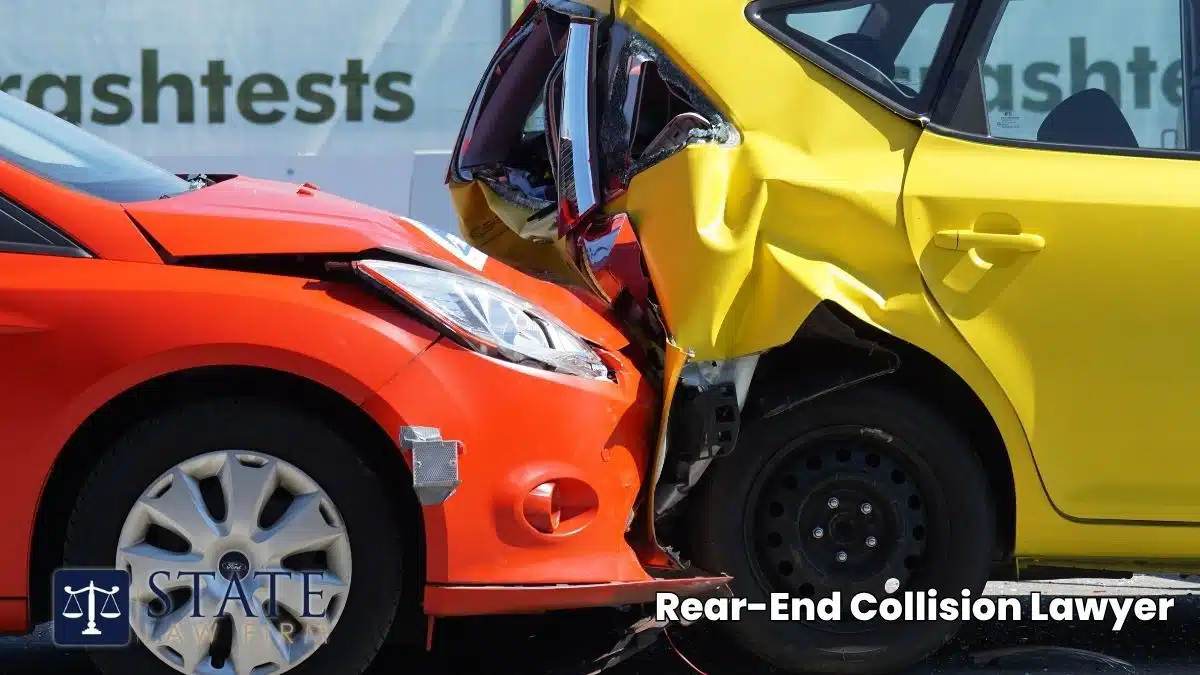
Rear-end collisions are one of the most common types of accidentes automovilísticos, making up nearly a third of all crashes on U.S. roads. They happen in an instant – a sudden jolt from behind – yet the consequences can be serious. Victims often suffer injuries like whiplash or back pain that may not fully show up until days later. If you’ve been hurt in a rear-end accident, you might be facing medical bills, missed work, and plenty of stress. This is where a rear-end collision lawyer comes in. An experienced attorney can guide you through the legal aftermath, from proving who was at fault to negotiating with insurance adjusters, so you can focus on healing. In this comprehensive guide, we’ll cover everything you need to know about rear-end accidents and how a lawyer can help protect your rights.
Common Causes of Rear-End Collisions
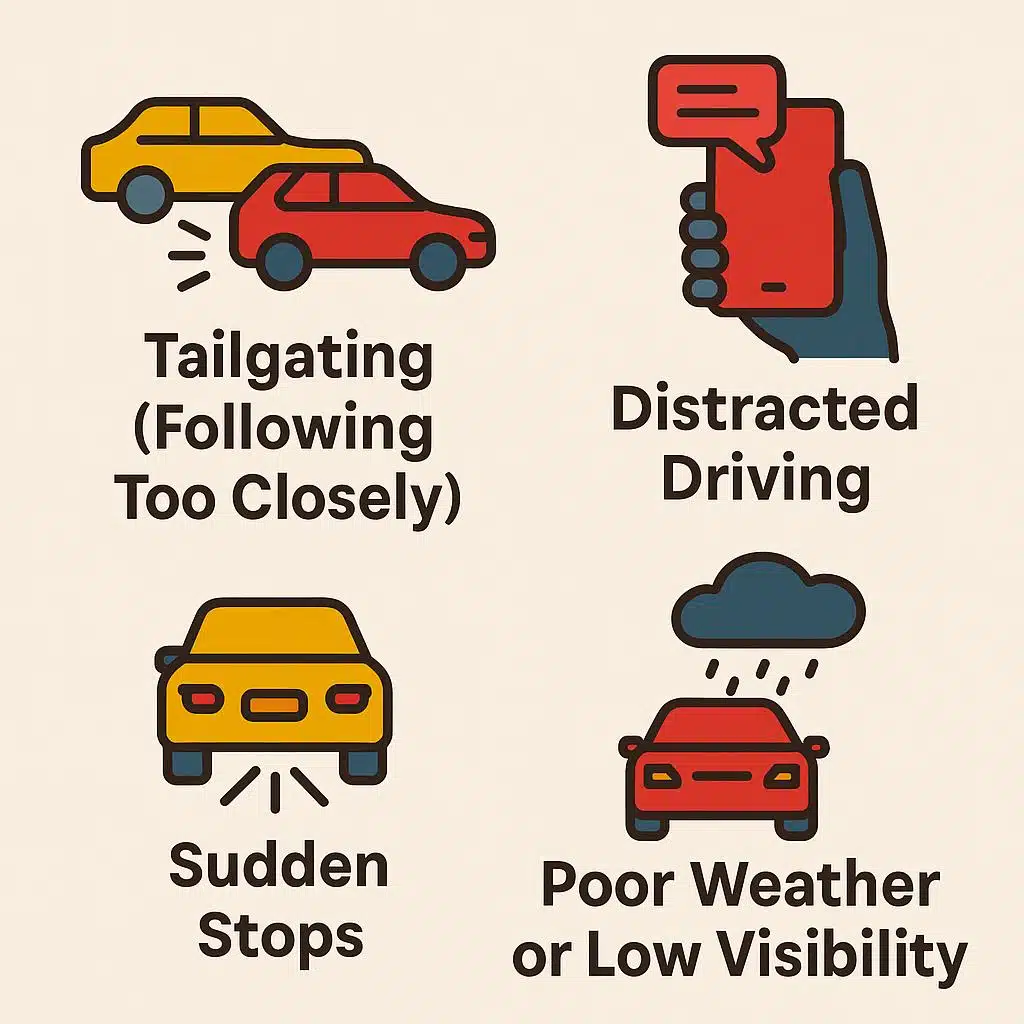
Most rear-end crashes are preventable and usually caused by driver inattention or unsafe driving behavior. Understanding why these accidents happen can help in determining fault and liability. Some typical causes include:
- Tailgating (Following Too Closely): When a driver doesn’t leave enough distance, they may not stop in time if the car ahead brakes suddenly. Tailgating is a leading cause of rear-end crashes and is outright dangerous. At highway speeds or in heavy traffic around cities like Los Angeles, tailgating often ends in a collision.
- Conducción distraída: Texting, using a GPS, changing music, or any activity that takes a driver’s eyes off the road can lead to disaster. Just a few seconds of distraction is enough to miss that the car in front has slowed or stopped. Many rear-end accidents involve a distracted driver who never even hit the brakes. If you suspect the person who hit you was texting, a rear-end collision lawyer can help prove it (for example, by obtaining phone records or other evidence).
- Sudden Stops: Sometimes the front car stops abruptly – perhaps for an animal crossing the road or an unexpected red light. If the rear driver isn’t alert or is following too closely, a sudden stop can cause a crash. Even if the front driver had a valid reason to brake, the trailing driver can still be liable if they were too close or not paying attention.
- Conducción imprudente o con exceso de velocidad: A driver going too fast will have trouble slowing down in time to avoid a rear-end collision. Speeding also makes impacts more severe. Reckless behaviors like weaving in traffic or “brake-checking” (slamming on brakes intentionally) create dangerous situations where rear-end crashes are more likely.
- Poor Weather or Low Visibility: Rain, fog, or slick roads can lengthen stopping distances. If a driver doesn’t adjust their driving for weather conditions, they may slide into the vehicle ahead. Likewise, in fog or heavy rain, a driver might not see traffic stopped ahead until it’s too late. While weather can be a factor, drivers are still expected to drive prudently for the conditions to avoid accidents.
Consejo profesional: Always leave a safe following distance – the classic rule is at least one car length for every 10 mph of speed, or a 3-4 second gap between you and the vehicle ahead. This buffer can prevent a crash and also protect you legally by showing you were driving at a safe distance.
Common Injuries from Rear-End Accidents
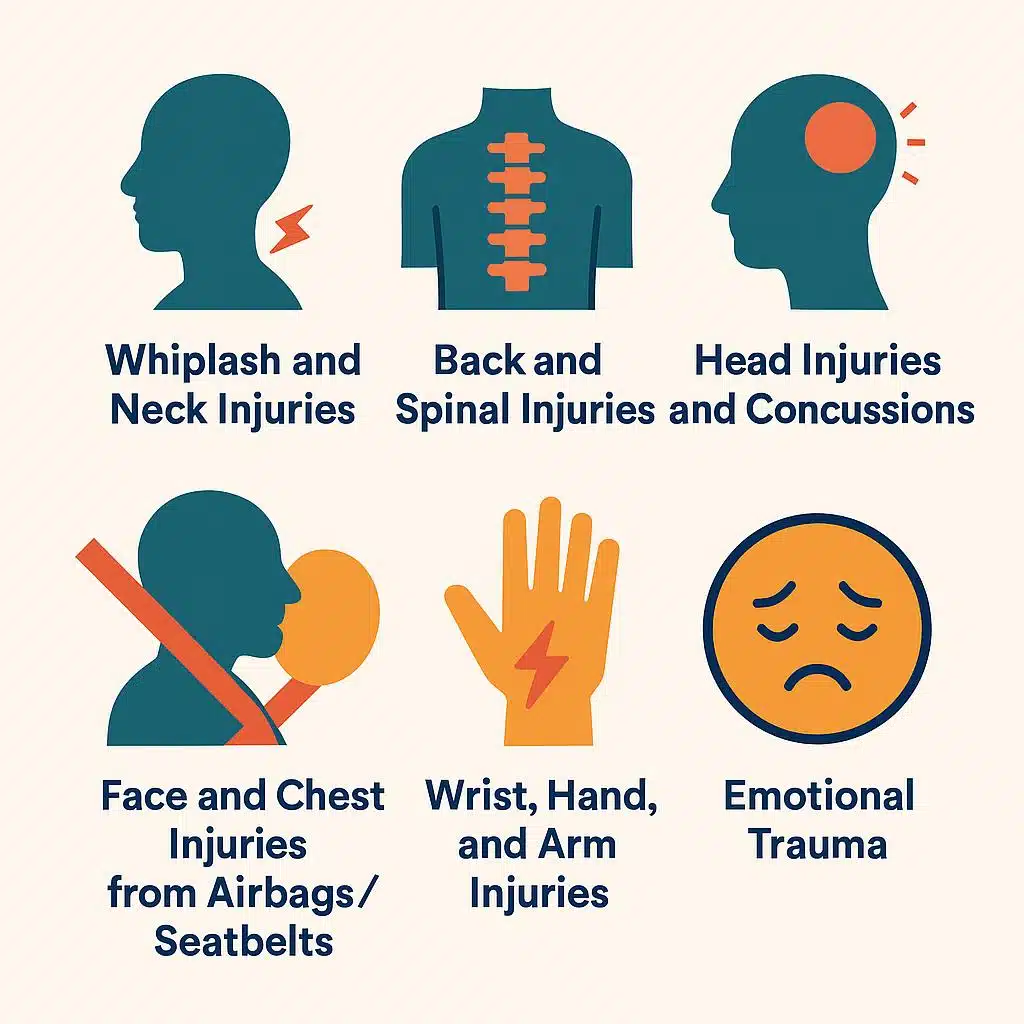
Even at moderate speeds, a rear-end collision can jolt your body unexpectedly, leading to injuries. Some injuries might seem mild at first but can become chronic or severe over time. Common rear-end accident injuries include:
- Latigazo cervical y lesiones de cuello: Whiplash is the hallmark injury of rear-end crashes. The impact can whip the head and neck forward and back violently, straining the neck muscles and ligaments. Symptoms of whiplash (neck pain, stiffness, headaches, dizziness) might not appear until 24-48 hours after the crash. Despite being called a “soft tissue” injury, whiplash can be very painful and sometimes whiplash is a serious injury that requires extensive therapy or even injections/surgery in severe cases. If you experience any neck pain or discomfort after being rear-ended, see a doctor and don’t dismiss it as minor. It’s important to document these injuries for your claim.
- Back and Spinal Injuries: The force of a rear impact can compress the spine. Victims might suffer mid-back or lower back injuries such as muscle sprains, herniated discs, or even spinal cord damage in high-speed crashes. A herniated disc or nerve compression can cause lingering pain, numbness, or weakness in limbs. These lesiones de tejidos blandos may require physical therapy, chiropractic care, or other treatments over weeks or months.
- Head Injuries and Concussions: If the impact is forceful, an occupant’s head can hit the headrest, steering wheel, or window. Even if you don’t strike an object, the sudden motion can cause your brain to jostle (a coup-contrecoup effect), leading to a concussion or more severe traumatic brain injury (TBI). Signs of a concussion might include confusion, dizziness, headache, or briefly losing consciousness. It’s critical to get evaluated by a medical professional after a rear-end crash, because a lesión cerebral traumática may not be immediately obvious. In severe cases, TBIs can have life-changing effects, so identifying them early is key to getting proper compensation for long-term care.
- Face and Chest Injuries from Airbags/Seatbelts: Modern cars are designed with safety features that deploy in a crash, but they can also cause injuries. The airbag in a rear-end collision (especially if you are the front car that gets pushed into another object or hit hard enough) may deploy and cause facial injuries like a broken nose or cuts/bruises. The seatbelt locking up can bruise or fracture ribs and injure internal organs. These seatbelt injuries are common, especially in high-speed collisions, and while they are usually less severe than what would happen without a seatbelt, they still require medical attention.
- Wrist, Hand, and Arm Injuries: Often a driver’s natural reaction is to brace on the steering wheel. The force of impact can sprain wrists, or an airbag deployment can cause wrist and hand fractures. Passengers might instinctively put their hands out, leading to similar injuries.
- Trauma emocional: Not all injuries are physical. Being hit out of nowhere can be a frightening experience. It’s not unusual for car accident victims to develop anxiety about driving, nightmares, or even symptoms of angustia emocional such as depression or PTSD after a bad crash. These psychological injuries are very real and are considered part of your damages in a personal injury claim (more on that below).
Always seek medical attention after a rear-end accident, even if you feel “okay” at first. Adrenaline can mask symptoms immediately after the crash. A doctor can check for hidden injuries (like a concussion or internal injury) and create medical records that link your injuries to the accident – crucial evidence for your claim.
Who Is At Fault in a Rear-End Collision?
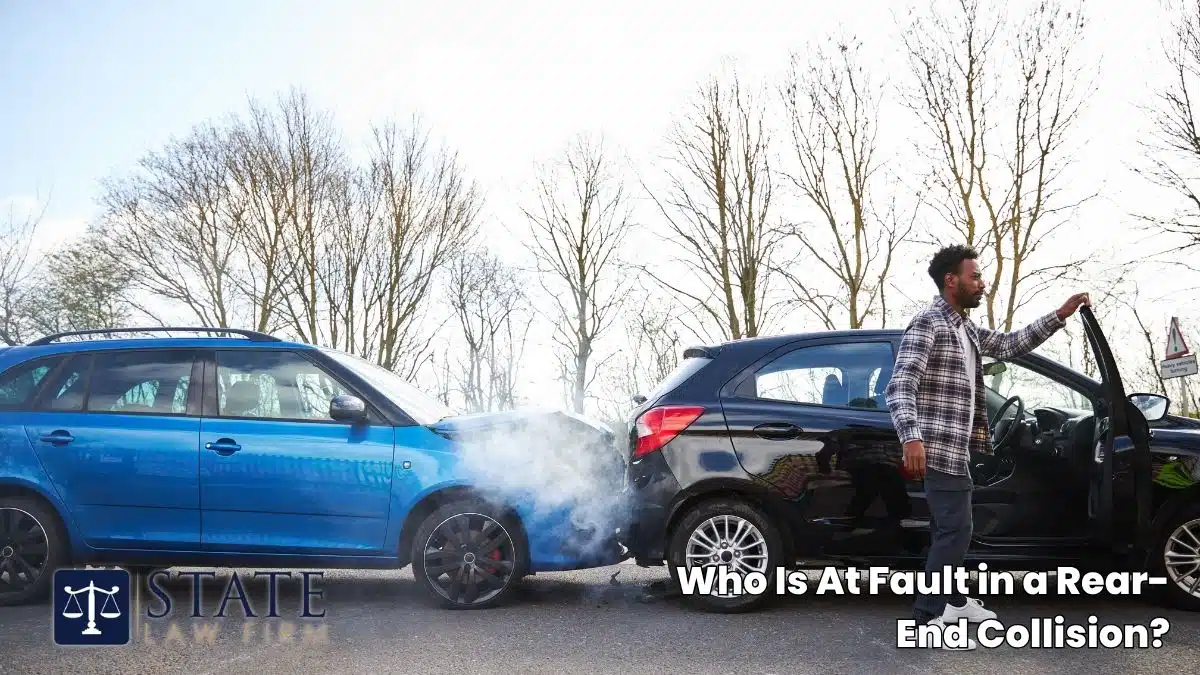
One of the first questions people ask is: “Is the driver who rear-ended me automatically at fault?” In California and most other places, the general rule is that the rear driver is presumed to be at fault in a rear-end collision. The logic is simple: drivers are supposed to follow at a safe distance and be in control of their vehicle at all times. If they hit you from behind, it typically means they were too close or not paying attention. In fact, California Vehicle Code §21703 explicitly states that a driver must not follow another vehicle more closely than is reasonable and prudent – essentially the law against tailgating. So if someone slams into your bumper out of nowhere, they likely violated this rule. Courts and insurance companies often view rear-end accidents as clear cut because of this presumption.
Sin embargo, fault isn’t always automatic, and there can be exceptions. For instance:
- Comparative Negligence Scenarios: California sigue una negligencia comparativa pura rule. This means each party can be assigned a percentage of fault, and your compensation can be reduced by your share of fault. So while the rear driver is usually at fault, there are cases where the front driver bears some blame. Perhaps the front car stopped suddenly for no reason (brake-checking out of road rage) or reversed unexpectedly. Maybe the front car’s brake lights were not functioning, so the rear driver had less warning. These factors might make the front car partially responsible. If it’s argued that you (as the front driver) were partly negligent, you can still recover damages, but they’d be reduced according to your percentage of fault. For example, if you were 20% at fault, you’d recover 80% of your damages. A seasoned attorney will fight against any unfair fault claims and present evidence to minimize your share of blame. (You can read more about how California handles split fault in accidents under its negligencia comparativa rules.)
- Multi-Vehicle Pileups: Sometimes a rear-end crash involves more than two cars – e.g., Car C hits Car B, which then gets pushed into Car A. These chain reaction accidents can complicate fault determination. Who caused what? Often Car C (the last car) might be primarily at fault for hitting B, but Car B could also be partly at fault if they were too close to A, etc. Insurance companies may try to play hot potato with liability in multi-car collisions. If you were in a multi-vehicle accident, it’s crucial to have a lawyer investigate thoroughly. They can examine vehicle damage, skid marks, and witness statements to piece together the sequence of impacts and identify the responsible party (or parties). Don’t let insurers pin blame unfairly on you in a chain-reaction crash.
- Third-Party Contributing Factors: Occasionally, fault for a rear-end accident may extend beyond the two drivers involved. For example, imagine you were rear-ended because the other driver’s brakes failed due to a manufacturing defect or shoddy brake job by a mechanic. In such a case, you might have a third-party liability claim against the brake manufacturer or the auto shop that recently serviced the brakes. Another scenario: the design of the roadway or a malfunctioning traffic light contributed to the crash (perhaps a poorly timed light caused a sudden backup). While rare, these situations mean an experienced lawyer will look at all possible contributing factors. If a third party played a role, they can be brought into the claim to ensure you receive full compensation.
- Commercial Vehicle Rear-Ends: If you were hit by a driver who was on the job – say a delivery truck or company car – the driver’s employer might also share liability. Under the legal doctrine of responsabilidad indirecta, an employer is responsible for accidents employees cause while working. Getting rear-ended by an Amazon delivery van or a service truck, for example, could mean the company’s insurance (usually with higher policy limits) is on the hook. Your attorney can identify if the at-fault driver was working and pursue claims against the employer, which can be crucial for covering large damages. (On the flip side, if tú were on the job when a car accident happened, you may have both a personal injury claim and a workers’ compensation claim – we’ll touch on that later.)
Conclusión clave: In most rear-end collisions, the trailing driver is at fault, but don’t assume it’s automatically a slam dunk. You still need to prove negligence (the other driver’s careless behavior) to their insurance company or in court. A dedicated rear-end collision lawyer will gather the evidence needed – whether it’s photos of the crash scene, vehicle damage consistent with a rear impact, black box data from the cars, or eyewitness accounts – to firmly establish that the other driver’s negligence caused the accident. They’ll also be ready to counter any arguments that you were partly to blame.
Your Legal Rights as a Rear-End Collision Victim
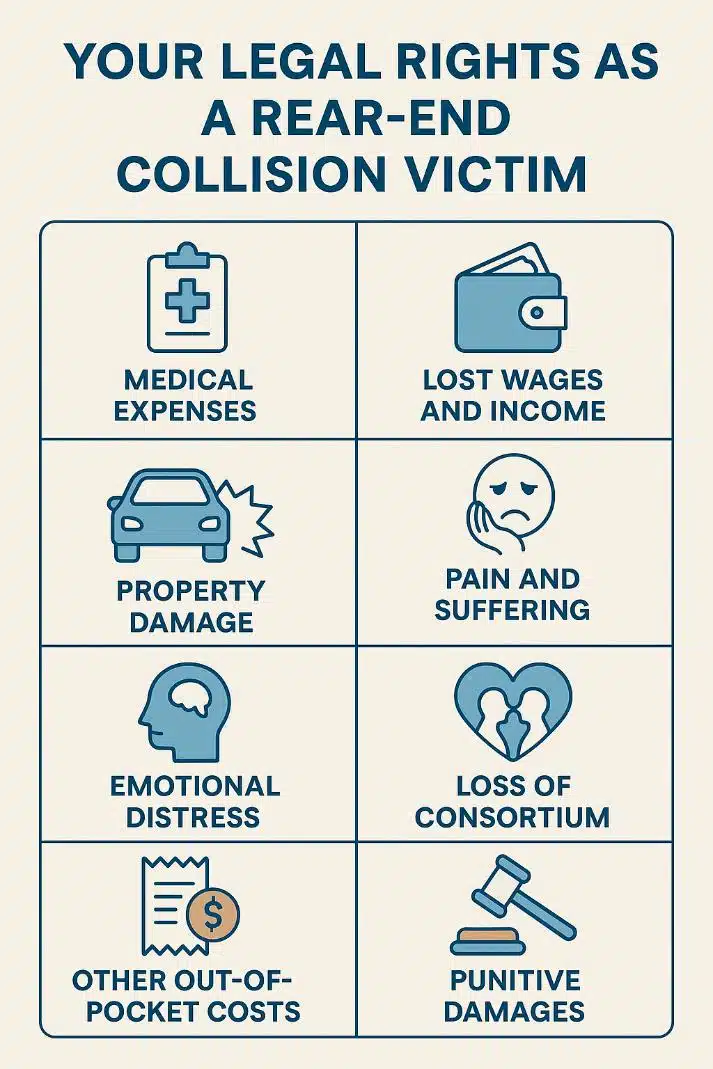
Being the victim of a rear-end accident means you have the right to seek compensation for the losses you suffer as a result of the crash. In legal terms, you would file a reclamación por lesiones personales (usually against the at-fault driver’s auto insurance) to recover damages. What exactly can you claim? It helps to break it down into categories:
- Gastos médicos: You are entitled to compensation for todas las facturas médicas related to treating injuries from the accident. This includes emergency room visits, hospital stays, doctor appointments, chiropractic care, physical therapy, prescription medications, imaging tests (X-rays, MRIs), and any future treatment you might need. Keep a file of every medical bill and record – they will be the foundation of your economic damages. Even if you have health insurance covering some costs, the at-fault party still owes for those expenses. Don’t forget things like ambulance fees or the cost of medical devices (braces, crutches) – those count too.
- Salarios e ingresos perdidos: If your injuries force you to miss work, you can claim your lost earnings. This isn’t just your salary – it can include lost overtime, bonuses, or gig work opportunities you had to forgo. For those with more severe or long-term injuries, you might also seek damages for pérdida de capacidad de ingresos if you can’t return to the same line of work or perform at the same level as before. For example, a back injury from a rear-end crash might prevent you from doing heavy lifting required by your job. A rear-end collision lawyer can help calculate these losses (possibly with input from vocational experts for serious cases).
- Daños a la propiedad: Usually handled separately from the injury claim, but worth noting – you should be compensated for the damage to your vehicle. This includes repair costs or the valor justo de mercado of your car if it was totaled. You’re also entitled to reimbursement for towing fees and a rental car while yours is in the shop. While property damage is often straightforward, sometimes disputes arise (like the insurance offering a low amount for a totaled car). Your attorney can assist or advise on the property damage claim too, although it’s typically resolved earlier than the injury part.
- Dolor y sufrimiento: Beyond the bills and financial losses, the law recognizes that an accident causes real human suffering. Dolor y sufrimiento damages fall under what are called daños no económicos. This covers the physical pain you endured and the impact on your day-to-day life. For example, you might have trouble sleeping due to neck pain, or you can’t play with your kids or go to the gym because of your injuries. Maybe hobbies you enjoyed are off-limits while you heal. All these inconveniences and losses of enjoyment are part of your pain and suffering. There’s no exact formula for these damages – often, attorneys and insurance companies negotiate using the severity and duration of your injuries as a guide (sometimes using multipliers of medical costs as a rough estimate). To maximize this aspect of your claim, it helps to keep a journal of how your injuries affect you and follow through with medical treatment. Documentar todo – it paints a picture of your suffering that can justify a higher settlement.
- Angustia emocional: As mentioned earlier, accidents can leave psychological scars. Maybe you now have a fear of driving, or you experience panic attacks when you approach intersections where you have to stop (common after being rear-ended at a stoplight, for instance). angustia emocional is a component of pain and suffering damages, but it’s worth highlighting. Symptoms of anxiety, depression, PTSD, or general loss of enjoyment of life fall here. If you sought therapy or counseling after the accident, those costs can be claimed as well. Don’t be shy about discussing mental health with your doctor or attorney – it’s an important part of your recovery and your claim. No one should trivialize what you’re going through just because your injuries are “invisible.”
- Pérdida del consorcio: If you are married, your spouse may have a claim as well for pérdida de consorcio. This refers to how your injuries have affected your relationship – for example, if you can no longer provide the same companionship, affection, or sexual relationship due to the injuries. While not every case will involve a separate loss of consortium claim, it is something that can be considered in more severe injury cases. It’s usually handled as a separate element of damages or even a separate claim by your spouse, but it’s tied to the same accident.
- Otros costos de bolsillo: Keep receipts for any miscellaneous expenses you have because of the accident. This might include transportation costs to doctor appointments (mileage, Uber rides), modifications to your home or car if needed (like a special back cushion or installing a ramp for a wheelchair), or even hiring help for chores you can’t do (maybe you had to pay someone to mow your lawn while you were recovering from a back injury). These costs can be claimed as well.
- Punitive Damages (in rare cases): Most rear-end collision claims won’t involve punitive damages, because those are reserved for when the at-fault party’s behavior was egregiously bad. Standard negligence (like not paying attention) isn’t enough for punitive damages – you’d need something like the driver who hit you was drunk or under the influence, or intentionally rammed your car, or was street racing at the time of the crash. In those extreme cases, you could seek punitive damages, which are meant to castigar the wrongdoer and deter such conduct, beyond just compensating you. California has specific standards for punitive damages, and they require clear and convincing evidence of malice, fraud, or oppression by the defendant. If your case involves something like a DUI rear-end crash, talk to your lawyer about this possibility. Pursuing punitive damages can sometimes encourage an insurer to offer a higher settlement to avoid the risk.
Every accident case is unique. A minor fender-bender that just caused some inconvenience will have a very different claim value than a high-speed crash resulting in a hospital stay and surgery. A skilled rear-end collision attorney will fully assess todos los daños you are entitled to. This includes not just the readily calculable bills, but also the harder-to-quantify impacts on your life. They might refer to past settlement examples or verdicts for similar injuries to argue for fair compensation in your case.
Steps to Take After a Rear-End Collision
What you do (and don’t do) immediately following a rear-end accident can significantly affect both your health and your legal case. Here are the critical steps to take after being rear-ended:
- Check for Injuries and Call 911: Your health is the top priority. If you or anyone in your vehicle is injured (even if it seems minor), call 911 right away. Request an ambulance if needed. Some injuries like whiplash or concussions may not be obvious at the scene, but it’s better to have medical professionals evaluate everyone. Adrenaline can mask symptoms. Also, calling the police to the scene is important for the next step.
- Get to a Safe Area: If the vehicles are drivable and it’s safe to move, pull off to the side of the road or a safe location nearby. This helps prevent a secondary accident from oncoming traffic. Turn on your hazard lights. However, if you or anyone is seriously hurt or the cars are not movable, just stay put, turn on hazards, and wait for emergency services.
- Report the Accident to the Police: Tener un funcionario informe policial is very valuable for your claim. When officers arrive, they will document the scene, take statements, and often assign an initial assessment of fault (like noting that your vehicle was rear-ended and perhaps citing the other driver for a violation). Be polite and factual with the police. Explain what happened from your perspective, but do not admit fault or downplay your injuries. Even if you feel okay, say you want a medical evaluation. The police report will be an objective record of the crash. Be sure to find out how to obtain a copy of the report later – your lawyer can help obtain the California accident report when it’s ready.
- Exchange Information, But Be Cautious: Get the other driver’s name, contact info, driver’s license number, license plate, and especially their insurance information (company and policy number). Also gather contact information for any witnesses who saw what happened; independent witness statements can be incredibly helpful if there’s any dispute about the facts. When talking to the other driver, keep it brief and cordial. Do not apologize or say things like “I didn’t see you” or “I’m not hurt” – such comments can be used against you later as admissions. Just ensure everyone is okay and focus on exchanging info. Let the police handle the deeper discussion with the other driver about what happened.
- Documentar la escena: If you can, use your phone to take photos and videos from multiple angles. Photograph your car’s damage, the other car’s damage, any skid marks, vehicle positions (if they haven’t been moved yet), and the overall scene including intersections or traffic signs. Also photograph the other car’s license plate and the surrounding area. If you have visible injuries (bruises, cuts), photograph them as well (these might worsen in appearance the next day, so continue to document over time). Visual evidence is often the strongest evidence to prove how the accident occurred. If it’s safe, you might even snap a picture of the other driver (for identification purposes). Also note the time, date, weather conditions, and any relevant details like “traffic was heavy” or “it was at a red light.” If you happen to have a dashboard camera, save the footage – it could be the golden proof of the other driver’s actions leading up to the crash. Good dashcam footage has helped many victims prove liability conclusively in rear-end accidents.
- Busque atención médica lo antes posible: Don’t brush off going to the doctor. If paramedics arrive and suggest an ER visit, take it. If you don’t go to the ER from the scene, at least see a doctor within the next day or two. Mention every ache and pain, no matter how small, so it gets recorded. Some injuries (like soft tissue neck/back injuries or internal pain) might not fully surface immediately. Early medical evaluation creates a clear link between the accident and your injuries. Follow the doctor’s advice and attend all follow-up appointments. Not only is this crucial for your health, but gaps in treatment or delays can give an insurance adjuster room to argue that you weren’t really hurt or that something else caused your injuries.
- Notify Your Insurance Company (But Be Careful): Most auto insurance policies require that you report any accident to your own insurer, even if the other driver was 100% at fault. Call your insurance and provide the basic facts – time, location, who was involved. No dar una declaración grabada or extensive details to the other driver’s insurance before consulting a lawyer. When speaking to any insurance adjuster, stick to the facts and avoid speculation. You can simply say, “I was rear-ended. The police report isn’t ready yet, and I’m still getting medical evaluation.” You have no obligation to give the other driver’s insurance a statement right away, despite how insistently they might call you. Remember, insurance companies – even your own – are looking out for their bottom line, not you. They may try to use anything you say against you later. If the other party’s insurer reaches out, it’s often best to politely decline to discuss details until you have legal advice. If you’ve already hired an attorney, you can refer all insurer calls to them.
- Consult a Rear-End Collision Lawyer: This step is crucial and can really come at any point soon after the accident (the earlier, the better). Consultas gratuitas are offered by most personal injury lawyers, so there’s no reason not to get expert advice. A lawyer with experience in car accidents – especially rear-end cases – can evaluate your situation and explain your options. They’ll tell you if you have a strong case, what kind of compensation you might expect, and handle communications with insurance going forward. Once you have a lawyer, you won’t have to deal with pushy adjusters or worry about saying the “wrong” thing – your attorney will take that burden off you. They will also start investigating promptly, which can make all the difference in preserving evidence (for example, obtaining any imágenes de cámaras de tráfico or nearby surveillance videos before they get overwritten, or getting statements from witnesses while memories are fresh). Bottom line: engaging a qualified car accident attorney early on helps protect your rights and often leads to a better outcome.
Following these steps will not only safeguard your health but also strengthen any claim you pursue later. The period immediately after a crash is often chaotic and stressful, but taking the right actions can make your life much easier in the months to come.
Importante: California law generally gives you dos años from the date of the car accident to file a personal injury lawsuit (this is the estatuto de limitaciones for injury cases). That seems like a long time, but a lot needs to happen before then – treatment, negotiation, etc. If you miss that deadline, you could lose your rights to compensation entirely. So don’t delay in taking action and speaking with a lawyer. Even if you think your case can settle out of court, you want that lawsuit option available as leverage. A rear-end collision lawyer will keep track of all legal deadlines and make sure your case is filed in time if needed.
Dealing with Insurance Companies After a Rear-End Accident
Insurance issues after a rear-end collision can become a headache. On paper, it sounds simple: the at-fault driver’s liability insurance should pay for your damages. In practice, insurance companies often try to minimize what they pay, even in seemingly straightforward rear-end crashes. Here’s what to expect and how to protect yourself:
Expect a Quick Settlement Offer (Be Wary!): If the other driver was clearly at fault, their insurance adjuster might call you very soon (even within days) with an offer to settle your claim. They know you’re shaken up and might be incurring expenses, so they dangle what may sound like a lot of money up front. Beware: That initial offer is almost always a lowball. It might only cover your immediate medical bills and car repairs, with little or nothing for pain and suffering or future treatment. Once you take a settlement and sign a release, you cannot ask for more later, even if you discover new injuries or your medical bills end up higher. This is why having a lawyer is so valuable – they can advise if an offer is fair. In most cases, a rear-end collision lawyer will advise you not to accept any quick offer until you’ve finished medical treatment or at least have a clear picture of your prognosis.
Declaraciones grabadas: Adjusters may ask you for a recorded statement about what happened. You are not required to give the other side’s insurance a recorded statement, and it’s usually not in your interest to do so. They might ask tricky questions like “What were you doing right before the crash?” or “How are you feeling? Are you hurt?” It’s easy to accidentally say something that can be twisted – for example, saying “I’m fine” out of politeness, when in fact you have pain. The safer course: decline politely and inform them that the facts will be clear from the police report and that you’ll provide any necessary information in writing or through your attorney.
Don’t Admit Fault (Even Partial): We mentioned this earlier, but it bears repeating in the insurance context. Even saying something like “The car in front of me slammed their brakes, so I barely had time to stop” could be misconstrued as you admitting to following too close. Let the investigation speak for itself. In California, even if you were somehow partly at fault, you can still recover damages (with reduction by your fault percentage). Insurance companies love to claim you were partially at fault, as it reduces what they pay. A common tactic in rear-end claims is to argue that maybe you, the front driver, contributed – by having non-working brake lights, by stopping suddenly, etc. Unless there’s clear evidence of something like that, these arguments often don’t hold water. Your attorney will push back on any attempt to assign you unwarranted blame. If you hear the term “50/50 liability” from an adjuster, be very skeptical – it often means they’re arbitrarily trying to cut their payout in half. You have the right to fight that with evidence. In fact, there are guides on probar la responsabilidad when an insurer tries to claim it was 50/50; knowledge and evidence are your allies here.
Handling Your Own Insurer: If the other driver is uninsured or underinsured, your own policy’s Uninsured Motorist (UM) or Underinsured Motorist (UIM) coverage can kick in. In a hit-and-run scenario (where the at-fault driver fled and can’t be identified), UM coverage on your policy would be crucial. When you make a UM claim, oddly enough you are now in an adversarial position with tu propio insurance company – essentially, you have to prove your case to them just like you would to the other party’s insurer. Don’t assume they’ll just cut a check because you’re their customer. They’ll scrutinize your claim as well. Again, a lawyer can handle these communications. We have seen situations where clients without attorneys had their own insurer pressure them or delay their claim unfairly on a UM case. Don’t let that happen – you paid premiums for this coverage, and you deserve to be treated fairly.
Medical Bills and Insurance: After an accident, you might be bombarded with medical bills. It’s important to know that the at-fault’s insurance won’t pay them as they come in. They typically pay once, in a lump sum settlement, at the end of the case. In the meantime, how do bills get paid? If you have health insurance, you should use it for treatment (it can be reimbursed from the settlement later if required). If you don’t have health insurance, a abogado de lesiones personales can often help you get medical care on a lien basis – meaning the provider agrees to treat you now and get paid out of the future settlement. Also, California has something called Med Pay (Medical Payments Coverage) in auto policies – if you have it on your own policy, it can cover a certain amount of medical bills right away, regardless of fault. It’s worth checking if you have Med Pay coverage. Using it does not typically raise your rates since you were not at fault.
Dealing with Medical Liens: As your case progresses, you might find that various entities (your health insurance, hospitals, etc.) place liens on your personal injury claim. This means if you win or settle, they expect to be paid back for the benefits they provided. Don’t panic if you see lien notices – this is standard. A good attorney will often negotiate down these liens at the end of the case so that you net more from your settlement. Part of an attorney’s job is not just to get you the best settlement, but also to help manage and negotiate your medical bills so you’re not left with huge balances. This can significantly increase the money in your pocket when all is said and done.
Insurance Company Tactics: It’s an unfortunate truth that insurance companies sometimes act in bad faith. They might drag their feet on processing your claim, “forget” to return calls, or dispute obvious facts. Some may even surveil you (yes, it happens) if you claim serious injuries – they might, for instance, follow you to see if you actually go to physical therapy, or if you ever lift groceries (to argue you aren’t hurt). It can feel invasive and frustrating. If an insurer is truly acting egregiously – denying a valid claim without reason or violating fair claim practices – your lawyer can advise you on whether any mala fe insurance claims or complaints are warranted. In most cases, aggressive advocacy and presenting a strong case file will keep the insurance company in line.
En resumen: In a rear-end accident claim, as with any personal injury case, el conocimiento es poder. Insurance companies handle claims every day and have teams of adjusters and lawyers on their side. You deserve to level the playing field. By understanding the process and having a dedicated rear-end collision lawyer fighting for you, you can counter the common insurance tricks and ensure you’re not shortchanged.
Special Situations in Rear-End Collisions
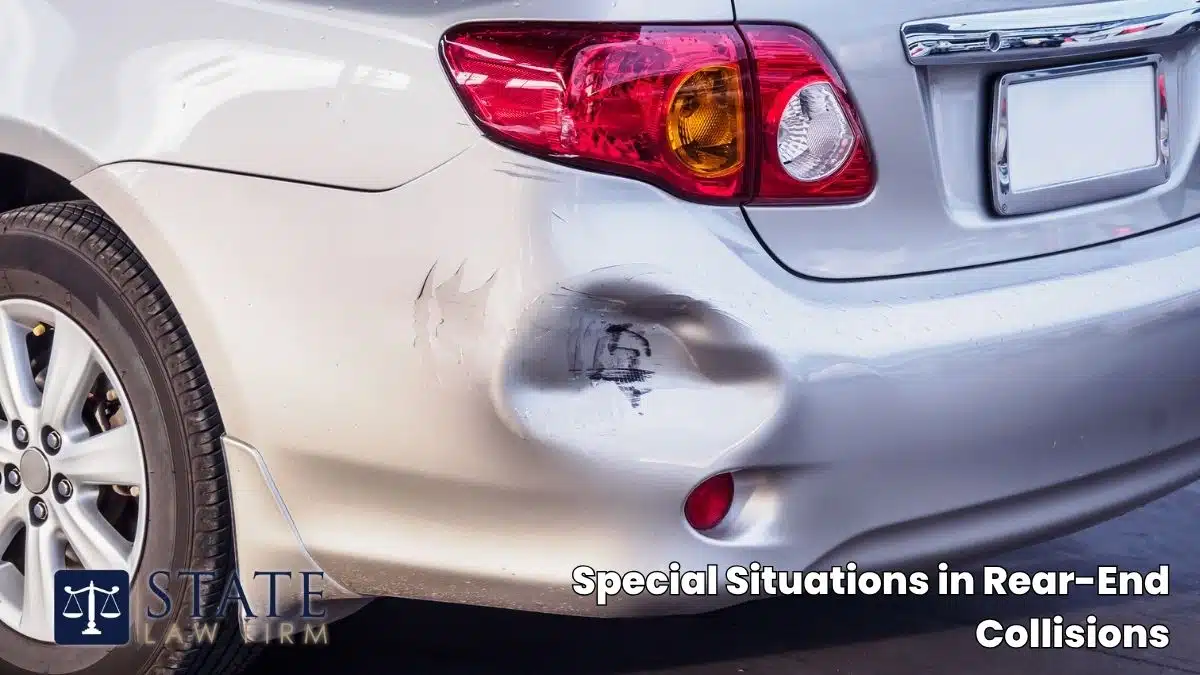
Not every rear-end accident is a simple two-car fender bender. Some situations bring additional legal complexities. Here are a few special scenarios and how they might affect your case:
Hit-and-Run Rear-End Accidents: If you were rear-ended and the other driver flees the scene, it can be incredibly stressful. You’re left with damage and possibly injuries, and no obvious person to hold accountable. In California, leaving the scene of an accident with injury is a crime (hit-and-run). First, always report a hit-and-run to the police immediately and provide any info you can – even a partial license plate, vehicle description, or direction the driver went can help track them down. Police sometimes do find the culprit (through traffic cameras or witnesses). If they find them, you can pursue a claim against that driver normally. If the hit-and-run driver isn’t found or turns out to be uninsured, your Uninsured Motorist coverage will be vital (as discussed earlier). Make sure to notify your own insurer quickly that you were involved in a hit-and-run. UM claims have specific notice requirements. A rear-end collision lawyer will guide you through a hit-and-run claim, ensuring you take the right steps. They can also help gather evidence like nearby surveillance footage (maybe a store camera caught the incident) or canvass for witnesses. Never chase a hit-and-run driver; instead, try to get a description and let the authorities handle it. Focus on getting medical attention and legal help. Your attorney can also explain how to maximize your UM claim – for example, if you have multiple vehicles with UM coverage, there may be a possibility to stack policies depending on the terms. The key is, a hit-and-run doesn’t mean you’re out of options, but it does change the path to recovery.
Accidents Involving Rideshare Vehicles (Uber/Lyft): Rear-end collisions involving rideshare drivers or passengers come with a unique insurance situation. Let’s say you’re rear-ended by an Uber driver, or you are a passenger in a Lyft that gets rear-ended by another car – whose insurance pays what? The good news is, companies like Uber and Lyft carry substantial insurance policies for accidents that occur when their drivers are “on the app.” If an Uber/Lyft driver is at fault for an accident while carrying passengers or en route to pick someone up, the rideshare company’s liability policy (which can be $1 million or more) should cover injuries. If another vehicle hits the Uber/Lyft you’re in, that at-fault driver’s insurance is primary, but Uber/Lyft have uninsured/underinsured coverage that can cover their passengers if the at-fault driver’s insurance isn’t enough. These claims can get complicated quickly – for example, if you were the Uber driver and got rear-ended, you might have a claim against the other driver and potentially workers’ comp if you’re considered an employee (currently, rideshare drivers are generally independent contractors, but laws evolve). It’s wise to consult a lawyer who understands rideshare accident insurance. They can navigate the interplay between personal auto insurance and the rideshare company’s coverage. Be aware that rideshare companies often try to route everything through their systems; having an attorney ensures you don’t unknowingly sign away rights or take a smaller payout than you deserve. Our firm has handled many Uber and Lyft accident cases, so we know how to cut through the red tape and get results from the likes of Uber’s insurer. If your rear-end accident involved a rideshare vehicle, make sure to mention this during your consultation, as it opens additional avenues for recovery.
Rear-End Collisions Involving Commercial Trucks: If you were rear-ended by a semi-truck or big rig, the dynamics of the case change. Trucking companies and their insurers are notoriously aggressive in defending claims, because the injuries in car vs. truck collisions are often very severe (and thus expensive claims). A truck’s weight and momentum can absolutely devastate a smaller vehicle even at moderate speeds. The good thing for your case is that commercial trucks are required to carry high insurance limits (often $1 million or more). However, the challenge is proving fault might get contested more. Trucking companies will send investigators to the scene immediately. The truck driver might claim you cut them off or braked unexpectedly. Many trucks have onboard cameras or black boxes; your attorney needs to send a carta de expoliación quickly to preserve that evidence. Also, trucking is subject to federal safety regulations – perhaps the driver was over their hours (fatigued) or the truck’s brakes were not maintained. These factors can establish negligence per se on part of the trucking company. It becomes almost like a hybrid of auto accident and product liability/work safety case. If you find yourself hit by a commercial truck, you definitely want legal representation. A specialized truck accident lawyer will know how to handle these complexities and deal with trucking insurers and their lawyers. Our team has experience with truck accident cases and can help ensure crucial evidence (driver logs, maintenance records, etc.) is not lost.
Work-Related Rear-End Accidents: We touched on this earlier, but it’s worth elaborating: If you were rear-ended while on the job, you might have two claims. For example, imagine you’re a delivery driver or even just running a quick work errand and someone hits you from behind. You are entitled to workers’ compensation benefits through your employer y you have a personal injury claim against the at-fault driver (called a “third-party” claim in the workers’ comp context). Workers’ comp can cover your medical bills and some wage loss quickly, but it doesn’t pay for pain and suffering or the full range of damages a personal injury claim would. You’ll want a lawyer who understands both systems so they can coordinate the claims. One wrinkle: if you recover money from the at-fault driver, your employer’s workers’ comp insurer will likely have a lien to get reimbursed from that recovery. Don’t worry, though – a skilled lawyer can often negotiate that down as part of the settlement. Now, if the other driver was working (e.g., a FedEx truck rear-ended you), then as mentioned, their employer is vicariously liable. That usually just means there’s a bigger insurance policy to go after, but it can also introduce more defense attorneys on the other side. Either way, when an accident involves work, either yours or the other driver’s, let your attorney know immediately so all avenues are pursued. We have attorneys well-versed in both personal injury and compensación laboral who collaborate to make sure you get everything you’re entitled to in such situations.
Rear-End Collisions Involving Pedestrians or Cyclists: While “rear-end” typically implies car-on-car, sometimes a vehicle strikes a pedestrian or a bicyclist from behind. For instance, a car might not see a cyclist in front of them in the same lane and hit them, or a turning car could rear-end a pedestrian running or walking in a crosswalk. These cases often result in severe injuries to the pedestrian/cyclist (since they lack the protection of a vehicle). Legally, the driver is almost always going to be held liable because motorists have a high duty of care to avoid hitting vulnerable road users. If you or someone you know was hit from behind while walking or cycling, the case would proceed as a personal injury claim against the driver’s insurance, similar to a regular car accident claim, but with potentially higher damages due to seriousness of injuries. There may also be nuances like asserting crosswalk laws or the fact that cyclists have a right to the road. Our firm handles pedestrian accident y accidente de bicicleta cases too – the key is gathering witnesses and perhaps expert reconstructions, since these incidents can sometimes have fewer impartial witnesses. In any event, the process of claiming medical costs, lost wages, and pain and suffering is the same, and a personal injury attorney can guide victims through it.
Each of these special situations shows why having an attorney who’s seen it all can make a difference. A rear-end collision might sound straightforward, but factors like hit-and-run, rideshare involvement, commercial vehicles, or work-related issues can create a web of legal considerations. With an experienced lawyer on your side, you won’t miss out on any compensation sources or get tripped up by the complexities.
How a Rear-End Collision Lawyer Can Help You
Navigating the aftermath of a car accident on your own can feel overwhelming. A dedicated rear-end collision lawyer’s job is to take that burden off you and advocate for your best interests. Here are some key ways that an attorney can make a real difference in your rear-end accident case:
- Investigación y recopilación de pruebas: A lawyer will launch a thorough investigation into your crash. This can include visiting the accident scene, taking photographs, and securing any available video footage (traffic cams, security cameras from nearby businesses, etc.). They may also download data from your vehicle or the other vehicle’s “black box” (EDR – event data recorder) which can show speed and braking. If needed, attorneys can hire accident reconstruction experts to analyze the collision dynamics – especially useful in contested liability or multi-vehicle crashes. Your attorney will also gather all relevant documents: the police report, medical records, witness statements, and more. Importantly, they will send preservation letters to ensure evidence (like that imágenes de cámaras de tráfico or the other car’s inspection records) isn’t destroyed. As time passes, evidence can disappear – having someone who moves quickly to secure proof is invaluable.
- Proving Fault and Negligence: In a rear-end collision, proving the other driver’s negligence might involve showing they were distracted, speeding, or violating a traffic law. A seasoned attorney knows the legal standards of negligence and how to demonstrate that the at-fault driver failed to uphold their duty of care. For example, if phone records are relevant (perhaps the driver was texting), your lawyer can subpoena cell phone records or use discovery to uncover that. If the driver was cited or arrested (for say, DUI or driving on a suspended license), those records will be obtained and used to bolster your case. Lawyers also anticipate defenses – for instance, if the other side tries to claim you “cut them off,” your attorney will look for evidence to counter that, such as the nature of damage to show the point of impact, or witness testimony that you were driving normally. In essence, your lawyer crafts a compelling story backed by facts that establishes the other driver was at fault.
- Handling All Communication: Once you have an attorney, you can direct insurance calls to their office. This is a huge relief for most clients. You no longer have to worry about saying the wrong thing to an adjuster. Your lawyer and their team will handle phone calls, emails, and paperwork with both your insurance and the at-fault driver’s insurance. This includes filing necessary forms, setting up claims, and negotiating on your behalf. If insurance companies send documents or requests, your attorney will review and respond appropriately. Basically, the lawyer becomes your buffer and advocate in all interactions, ensuring your rights are protected at each step.
- Evaluating Your Claim’s Value: Determining what your case is worth is not straightforward. People often underestimate their claim’s value, focusing only on immediate bills. A rear-end collision lawyer will work with you and perhaps economic/medical experts to calculate the full extent of your damages. This includes projecting future medical needs or lost earning capacity if your injuries have lasting effects. They will put a dollar amount on intangibles like pain, suffering, and loss of life quality. Lawyers experienced in personal injury have a sense of what similar cases have settled for or what juries have awarded in your area. They use this knowledge to set a target for negotiations. Importantly, they won’t let the insurance company shortchange you – if the insurer says “this is our final offer,” your lawyer can confidently say, “it’s not enough, and we’re prepared to file a lawsuit,” if indeed the offer is unfair.
- Negociación con Compañías de Seguros: Insurance adjusters are professional negotiators. They handle claims daily and are trained to save the company money. When you have an attorney, especially one with a strong reputation, the dynamic changes. Insurers know they can’t get away with lowball offers or stalling tactics as easily. Your lawyer will present a carta de demanda to the insurance company outlining your case – detailing their insured’s liability, your injuries, medical treatment, and a dollar figure for settlement. The insurance company will respond (often with a lower counter-offer), and negotiations go back and forth. This phase can be lengthy, but an attorney knows how to leverage the evidence and legal arguments to push the insurer toward a fair amount. If negotiations hit a roadblock, your lawyer can advise whether it’s best to accept a certain offer or proceed to litigation. Sometimes just filing a lawsuit (even before trial) pressures insurers to up their offer, because it shows you mean business.
- Lawsuit and Litigation (if needed): Most car accident claims settle without going to trial, but some do require filing a lawsuit to get a just outcome. If a lawsuit is filed, having a lawyer is essential. They will handle drafting the complaint, filing it within the statute of limitations, and navigating the litigation process. This includes discovery (exchanging evidence, taking depositions of parties and witnesses, etc.), pre-trial motions, and potentially the trial itself. Litigation is complex, with many rules and deadlines – not something you want to tackle on your own while also recovering from injuries. A skilled litigator will build your case for trial, bringing in experts like medical professionals (to testify about your injuries) or accident reconstructionists. They’ll also prep you for giving a deposition or testimony, and handle the courtroom presentation. Sometimes, just before trial or during trial, insurers will come forward with a much better settlement offer – often as a result of the case your lawyer has built making them realize they could lose big if a jury sympathizes with you.
- No Fees Upfront – Contingency Representation: One of the biggest advantages of hiring a personal injury lawyer is the honorarios de contingencia arrangement. This means you no pague nada por adelantado and only pay attorney fees if they recover money for you (either through settlement or verdict). The fee is typically a percentage of the recovery. What this means for you is that anyone can access quality legal representation, regardless of financial status. You don’t have to be rich to hire a great lawyer for your car accident – we only get paid when you get paid. Additionally, the initial consultation is free, so it costs nothing to at least speak with an attorney about your case. Our firm, for instance, operates on this no-win no-fee basis and advances all case costs (for investigations, filings, experts) so you’re not out of pocket.
- Orientación y tranquilidad mental: Beyond the tangible tasks, a good lawyer provides reassurance during a stressful time. They’ve handled many cases like yours and can answer your questions patiently. Worried about how your medical bills will get paid? They’ll explain it. Not sure if you should use your sick leave or take disability? They can advise. Getting anxious because the insurance process is slow? They’ll keep you updated and explain the timeline. Essentially, having an advocate in your corner reduces the anxiety and confusion that often plague accident victims. You can focus on your recovery while knowing someone is focusing on your financial and legal recovery.
En Bufete de abogados estatal, we pride ourselves on going above and beyond for our clients in all these ways. When you hire us, you’re not just getting a lawyer to fill out forms – you’re getting a team that truly cares about your outcome and treats you like family. We know that after a rear-end collision, you might be in pain, missing your regular life routine, and unsure what to do. Our goal is to handle the heavy lifting of the claim so that you can get back on your feet. From making sure you get the medical care you need, to fighting aggressively with insurance companies for every dollar you deserve, we’ve got your back.
Choosing the Right Attorney for Your Rear-End Accident Case
Not all lawyers are created equal. Personal injury law is a broad field, and while many attorneys take car accident cases, you want someone who has a strong track record specifically with auto accidents and even more so with rear-end collisions (since they have their nuances). Here are some tips on choosing a rear-end collision lawyer and why our firm might be the right fit for you:
- Experience and Focus: Look for a lawyer or firm that focuses on personal injury and car accidents as a significant part of their practice. An attorney with 25+ years of experience in this arena has likely seen every trick insurance companies use and every scenario of accident case. They’ll know how to handle a simple claim and when to ramp up for a fight on a complex one. Our team, for example, has decades of combined experience solely in personal injury law – this is what we do day in and day out.
- Testimonios de clientes: Reviews and testimonials from past clients can speak volumes. Happy clients often mention things like good communication, a satisfactory settlement, and feeling cared for. Check out some of our client testimonials to see real stories of people we’ve helped – like drivers and passengers who were initially overwhelmed after accidents but were relieved they chose us to represent them. We’re proud of our positive feedback and strive to treat every new client with the same dedication and compassion.
- Case Results: While every case is different, seeing a law firm’s estudios de caso or results can give you an idea of their capability. Successful verdicts or settlements, especially in car accident cases, indicate that the firm knows how to maximize value. We have an entire section of case studies showing how we’ve recovered millions of dollars for injury victims. For instance, we’ve secured high-dollar settlements for rear-end accident clients who suffered serious injuries, even when insurance initially offered very little. We’re not afraid to take a case to court if it means getting fair compensation.
- Atención personalizada: Some big law firms handle cases in a volume, almost “factory-like” manner. You might rarely speak to the actual lawyer, dealing mostly with assistants. That’s not our style. We’re a bufete de abogados boutique by choice – we limit the number of cases we take so that each client gets personal attention. When you sign with State Law Firm, you will have direct communication with your attorney and regular updates. We treat clients like people, not file numbers.
- Recursos y red: Even though we’re boutique in service, we have extensive resources at our disposal. We work with top-notch accident investigators, medical experts, and if needed, will bring in economists or life-care planners for calculating damages in serious cases. Having a strong network means no case is too big or complex for us to handle. From minor whiplash injuries to catastrophic spine or brain injuries, we can assemble the right team to build your case.
- Conocimiento local: Laws can vary by state, and local procedures or jury tendencies can vary by county. Our firm is based in California with offices in Sherman Oaks (Los Angeles area) and San Diego, and we handle cases across the state. We know California traffic laws, the nuances of insurance regulations here, and the court systems in SoCal and beyond. Whether your accident happened on the busy streets of Los Angeles or a highway in the Bay Area, we can help. We’ve likely dealt with the local insurers and even the defense attorneys in your region, giving us insight that out-of-town or inexperienced lawyers might lack.
- Free Consultation & Honest Case Evaluation: When you reach out to us, we offer a consulta gratuita. In that meeting or call, we’ll listen to the details of your accident, answer questions, and give you an honest take on what to expect. There’s no obligation to hire us after a consultation – our goal is to inform you of your rights. We’ll also be upfront about our fee structure and any costs. Transparency is important; you should feel comfortable and trust your lawyer. If you decide to proceed with us, great – we’ll sign a fee agreement and get to work immediately. If you want to think about it or consult with others, that’s fine too. We’re confident that once you speak with our attorneys, you’ll recognize the level of expertise and care we bring.
Ultimately, hiring the right lawyer can be the difference between a frustrating, drawn-out process with a subpar result, and a smoother experience that ends with you receiving the compensation you need to move forward. We encourage anyone who has been injured in a rear-end collision (or any accident) to reach out and talk. Knowledge is free – get the information, then decide how to proceed.
Get Help from a Rear-End Collision Lawyer Today
A rear-end accident can upend your life in the blink of an eye. You shouldn’t have to navigate the aftermath alone or accept less than you deserve for someone else’s mistake. At Bufete de abogados estatal, our mission is to stand up for crash victims like you and ensure you receive full justice and compensation under the law. We’ve helped countless Californians recover after car accidents – now let us help you.
When you’re ready, take advantage of our free consultation. There’s no pressure and no cost to speak with us about your case. We’ll review what happened, answer your questions, and outline a game plan tailored to your situation. If you choose us to represent you, you can rest easy knowing you have a tough, caring legal team fighting in your corner.
Recordar, el tiempo es esencial. Evidence can fade, and legal deadlines do apply. The sooner you get a knowledgeable rear-end collision lawyer involved, the better your chances of a successful outcome. Whether your accident happened here in Los Angeles, down in San Diego, or anywhere in between – from the Central Valley to the Bay Area – we have the resources to assist clients across California. Our reach is statewide: we’ve successfully handled cases in busy urban centers and quiet rural communities alike, from Glendale y Pasadena in the L.A. area, all the way to Fresno y Riverside. No matter where your rear-end crash occurred, we’re just a phone call away and ready to serve.
Contact us today for a free consultation and case review. Let our experienced team help you turn this stressful situation around. We’ll handle the legal heavy lifting and aggressive insurance companies – you focus on healing and getting your life back on track. With our firm by your side, you can confidently pursue your claim knowing that a proven rear-end collision lawyer is fighting for maximum compensation on your behalf. Don’t wait – get the help you need and the justice you deserve. Reach out to State Law Firm now and let us start advocating for you.