Spanish
  English
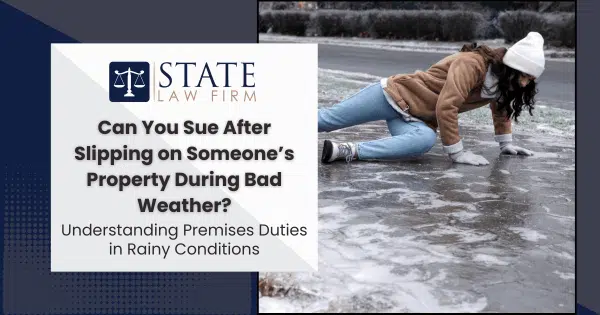
Rain changes everything. A walkway that feels safe on a sunny afternoon can turn slick in minutes, and one misstep can mean weeks of pain, missed work, and medical appointments.
Falls are not “small accidents,” especially for older adults. The CDC reports that over 14 million adults age 65 and older, about 1 in 4, report falling each year.
Not sure where to begin? This resource on Navigating Elder Sexual Abuse walks you through eligibility, evidence, and recovery options.
So what happens when a fall occurs on someone else’s wet property? You may have a claim, but it depends on what made the surface dangerous, what the owner knew (or should have known), and what reasonable steps were taken to prevent harm.
What Constitutes a Slip and Fall Accident During Bad Weather?
A slip-and-fall in the rain is usually not about the rain itself. It is about what the rain reveals, creates, or worsens.
In real cases, wet-weather falls often involve conditions like:
- Water tracked indoors with no mats, no warning signs, and no cleanup plan
- Smooth tile or sealed concrete that becomes slippery when wet
- Pooling water from poor drainage, clogged gutters, or sloped walkways that funnel runoff
- Worn stair treads, loose handrails, or uneven steps that become far more hazardous when visibility drops
- Leaves, mud, or debris that collect on paths and turn into a slick layer after rainfall
- Lighting problems that make it hard to see puddles, edges, or elevation changes
The key idea is simple: rain is predictable. If the hazardous condition was predictable too, the law may expect the property owner to plan for it.
That does not mean every rainy-day fall leads to liability. People are also expected to use common sense in bad weather. But when the property is managed carelessly, and the risk is preventable, a premises liability claim may be the right tool to pursue accountability.
The Legal Concept of Premises Liability Explained
Premises liability is a negligence claim, focused on how property is maintained and how risks are handled. In plain English, it asks:
Did the person or business in control of the property act reasonably to keep visitors safe?
That “control” point matters. Liability may involve:
- Homeowners
- Tenants who control the area where the fall happened
- Businesses (stores, restaurants, hotels, gyms)
- Property management companies
- Landlords (especially for common areas)
- In some situations, public entities (like a city responsible for sidewalks or public buildings)
In most slip and fall cases, the heart of the dispute is reasonableness:
- Was there a dangerous condition?
- Was it foreseeable that someone could slip?
- Did the owner take reasonable steps to discover it?
- Did the owner repair it, protect against it, or warn people?
In rainy conditions, “reasonable care” often looks like planning for predictable wetness. That can include inspections, cleanup procedures, mats, slip-resistant treatments in high-traffic areas, working drains, adequate lighting, and clear warnings where a hazard cannot be fixed immediately.
If you are wondering whether a case is worth pursuing, focus on this: Was the hazard preventable with ordinary, practical precautions? That question tends to separate an unavoidable mishap from a legally actionable failure.
When Is a Property Owner Liable for Accidents in Rainy Conditions?
Property owners are not insurers. They are not automatically responsible just because someone got hurt on their property during a storm. But they can be liable when their choices (or lack of choices) create an unreasonable risk.
Here are the most common ways rainy-day premises claims succeed.
1) Failure to inspect and address foreseeable wet-weather hazards
Rain is not a surprise in California, even in years with lighter rainfall. If a business knows customers track water inside, it should have a plan. If a homeowner knows the front steps pool water every time it rains, ignoring it can become a problem.
A strong case often shows a pattern: the same slippery entryway, the same drainage problem, the same dim stairwell, and no real effort to address it.
2) Failure to warn when a hazard cannot be fixed right away
Warnings are not magic shields, but they matter. In wet conditions, warnings often include:
- Wet floor signs
- Cones or barricades around pooling water
- Temporary “use other entrance” directions
- Clear marking for slick surfaces, steps, or abrupt transitions
A warning is especially important when the hazard is not apparent, like a thin film of water on dark flooring, or an indoor lobby where you do not expect wetness.
3) Creating the hazard through poor maintenance
Many rainy-day falls are really maintenance failures, such as wearing a raincoat. Examples include:
- Clogged drains or broken downspouts that dump water onto walking paths
- Cracked or uneven surfaces that become slippery and unstable when wet
- Worn stair treads, missing grip strips, loose mats that slide
- Leaky ceilings that drip onto smooth floors
When a property owner could maintain the area but did not, that is often the story a jury understands.
4) “Open and obvious” does not always end the case
Property owners often argue: “It was raining. Everyone knows wet surfaces are slippery.”
Sometimes, that argument lands. But not always.
A condition can be “obvious” in one sense and still unreasonably dangerous in another. For example, a puddle might be visible, but the layout may force people through it. Or the lighting may make the puddle hard to see. Or the surface may be unusually slick when wet, beyond what a person would expect.
Also, even when a warning is not required, property control can still come with a duty to take reasonable protective measures when harm is foreseeable. In other words, “you should have seen it” is not the end of the inquiry. It is the beginning of a fault analysis.
5) Comparative negligence can reduce recovery, not necessarily eliminate it
Rainy-day cases often involve shared fault arguments:
- “You were looking at your phone.”
- “You chose the faster route instead of the safer route.”
- “You wore slippery shoes.”
- “You ignored warning cones.”
Even if some of that is true, it may not erase your claim. Instead, it may reduce damages based on the percentage of fault.
This is one reason evidence matters so much. If the property owner’s failure is clear, and the hazard is well-documented, the “blame the injured person” defense can lose its force.
If you are unsure whether your actions will be used against you, talk to counsel early. A good case evaluation does not just ask “were you careful,” it asks what a reasonable person would do under the same conditions and whether the property was made unreasonably dangerous.
Evidentiary Challenges: Proving Fault After a Slip and Fall Incident in Bad Weather
Rain creates a unique problem: water disappears. By the next day, the puddle is gone, the floor is dry, the leaves have blown away, and the property looks “fine.”
That is why slip and fall cases are built on early documentation. If you can do so safely, focus on collecting proof that answers three questions:
What was dangerous?
- Photos or video of the exact area, including close-ups and wider shots
- Evidence of poor lighting, missing mats, pooling water, slippery steps, or broken handrails
- Footwear and clothing preserved as they were (do not throw away shoes)
Why was it dangerous?
- Weather conditions at the time (screenshots of rainfall, storm alerts, or timing can help)
- Where water came from (leak, tracked-in rain, drainage failure, slope)
- Whether the surface type made wetness more dangerous (smooth tile, polished concrete)
What did the owner do or fail to do?
- Were there warning signs or cones, and where were they placed?
- Was there an inspection or cleaning routine?
- Did employees acknowledge the hazard, apologize, or say “this happens all the time”?
- Was there surveillance footage that might capture the area before and after the fall?
Just as important: make an incident report if the fall happened at a business, and request a copy if possible. Ask for the names of employees involved and any witnesses who saw you fall or saw the condition right beforehand.
A practical step many people forget: send a short written request to preserve evidence, especially video. Some surveillance systems overwrite footage quickly. Preservation letters can matter.
If your injuries are significant, it is also wise to get medical care promptly. Medical records often become the timeline that ties the fall to the injury, and waiting too long can invite arguments that something else caused your pain.
Tasteful next step: If you are dealing with a serious injury, State Law Firm can review what happened, identify who controlled the property, and map out what evidence should be preserved before it disappears.
Compensation: What Damages Can You Recover?
A premises claim is meant to make you whole, not just reimburse a hospital bill. Depending on the facts, recoverable damages may include:
- Gastos médicos (ER visit, imaging, surgery, physical therapy, medications)
- Atención médica futura (ongoing treatment, mobility aids, follow-up procedures)
- Pérdida de ingresos (missed work, reduced hours, loss of earning capacity)
- Dolor y sufrimiento (physical pain, sleep disruption, limitations on daily life)
- Out-of-pocket costs (transportation to appointments, home modifications if needed)
Rainy-day falls can be deceptively serious. Wrist fractures, torn ligaments, back injuries, concussions, and hip fractures can all stem from one slip. If symptoms worsen over the next 24 to 72 hours, do not tough it out. Protect your health first.
Tasteful next step: If an insurer is pushing a quick settlement while you are still in pain, that is a signal to slow down and get advice. Early offers can overlook future care, time off work, and the real impact on your life.
Steps to Take If You Were Injured on Wet Property
If you are reading this after a fall, here is a clear roadmap.
- Get medical attention and describe exactly how you fell.
- Photograph the scene as soon as possible, including lighting, mats, drains, puddles, steps, and warning signs.
- Report the incident to the property owner or manager and request documentation.
- Collect witness information and save any texts, emails, or messages about the fall.
- Preserve evidence such as shoes and clothing, and request preservation of surveillance footage.
- Avoid recorded statements to insurers until you understand the implications.
- Move quickly on deadlines, especially if the fall involved government property, where notice requirements can be much shorter than ordinary injury claims.
Tasteful next step: A lawyer can help determine who is legally responsible, whether notice can be proven, and what evidence is needed to support the claim. If you want guidance, State Law Firm can evaluate the facts and help you understand your options.
Rain does not erase responsibility. If a property owner could reasonably foresee slippery conditions and failed to inspect, fix, protect, or warn, you may have a valid premises liability claim. The strongest cases are built early, with clear evidence of the hazard and a documented link between the fall and your injuries.