Spanish
 English

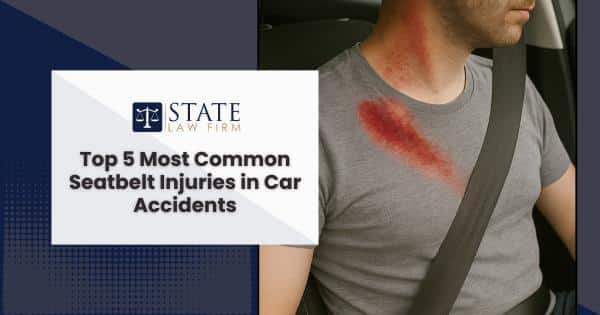
Seatbelts save lives, but a serious collision can still injure a restrained driver or passenger. Bruising along the belt, chest pain, abdominal discomfort, and shoulder or neck symptoms deserve attention after a crash. A mark on the skin cannot tell you how serious an injury is or which part of the collision caused it.
Get medical help immediately for chest pain, difficulty breathing, sudden or severe abdominal pain, or a tender, rigid abdomen after a crash. Call 911 for a medical emergency. Do not delay care to photograph injuries or speak with an insurer. MedlinePlus identifies recent abdominal injury and these associated symptoms as reasons to seek urgent help.
This guide explains five injury categories, not a statistical ranking of the five most frequent diagnoses. It provides general information, not a medical diagnosis or legal advice about your individual case.
Why Seatbelts Remain Essential
A lap-and-shoulder belt helps restrain your body during a crash. According to NHTSA, these belts reduce fatal-injury risk by 45% and moderate-to-critical injury risk by 50% for front-seat passenger-car occupants. Those are population-level estimates, not a prediction for an individual collision.
Injury does not prove that someone wore a belt incorrectly or that the belt was defective. Crash forces, contact with the vehicle, and the restraint system may all require investigation. Continue wearing your seatbelt on every trip.
1. Neck Pain and Whiplash After a Crash
Sudden crash-related movement can injure the neck even when a belt is used correctly. Report neck pain, restricted movement, or new symptoms to your treating clinician rather than deciding that the belt alone caused them.
Tell the clinician when each symptom began and whether it changes. Avoid relying on a generic online recovery timeline. The appropriate evaluation and treatment depend on the diagnosis, not the label “seatbelt injury.”
2. Chest Bruising and Injuries Beneath the Belt
Pressure and impact across the chest can leave visible bruising. A clinician may also need to assess deeper injury; the appearance of a bruise is not a reliable severity test. Chest pain or breathing difficulty after a collision should not be dismissed as routine soreness.
When it is safe, preserve dated photographs showing changes in visible marks. Keep the medical assessment alongside those photographs: pictures document appearance, while medical records document examination findings and diagnosed injuries.
3. Abdominal Injury and the Seatbelt Sign
The “seatbelt sign” describes a belt-pattern mark or bruising after a crash. It is not, by itself, a diagnosis of internal injury. Abdominal bruising should be brought to a clinician’s attention because the visible mark does not tell you whether deeper tissues were injured.
Medical teams decide what examination, imaging, or observation is appropriate. A multicenter study of adults with abdominal seatbelt signs examined how CT findings help assess bowel-injury risk. That research is not a home checklist for ruling out injury or a reason to skip evaluation.
If symptoms develop or worsen after discharge, follow your discharge instructions and seek medical advice promptly. Our guide to delayed pain after a car accident discusses documenting symptom changes and treatment gaps without replacing medical care.
4. Shoulder Pain and Limited Movement
The shoulder-belt area may be sore after a crash, but the location of pain alone does not establish a particular tendon, joint, or bone injury. Describe changes in your ability to reach, lift, dress, or work to your clinician. Do not assume that every painful shoulder is a rotator cuff tear or that every tear resulted from belt pressure.
For more on the records relevant to a diagnosed shoulder injury, see our shoulder and rotator cuff injury guide.
5. Pain Around the Hips and Lap-Belt Area
Marks or pain around the hips and lap-belt area should be included in your medical history after the crash. Do not self-diagnose a pelvic fracture from bruising, or rule one out because you cannot see a mark. Tell the treating team about difficulty walking, new pain, and the position of the belt during the collision.
Document any restrictions your clinician gives you and their practical effect on your work and daily activities. Avoid estimating future disability before the medical picture is clear.
How to Position Your Seatbelt Correctly
NHTSA’s seatbelt guidance explains that the lap portion belongs across the hips, not the stomach, and the shoulder portion belongs across the chest. Never place the shoulder strap behind your back or under your arm. Follow your vehicle’s instructions and ask about proper fit when needed.
Correct positioning reduces risk; it does not guarantee that a collision will cause no injury. An injury alone does not tell you whether the belt fit properly.
What to Preserve Before Discussing an Injury Claim
Once immediate medical needs are addressed, assemble a clear factual record:
- Crash date, location, seating position, and the facts you remember.
- Medical records, discharge instructions, bills, and follow-up appointments.
- Dated injury photographs and a factual symptom log.
- Available vehicle photographs, police-report information, and witness details.
- Documented missed work and clinician-issued restrictions.
- Insurance correspondence, including any requests for statements or records.
Keep original files and distinguish what you observed from what you were told. Do not exaggerate symptoms or guess that a belt failed. If a defect is suspected, discuss evidence preservation with counsel before disposing of relevant equipment. The evidence needed depends on the claim.
Medical expenses can create immediate practical questions. Our separate guide addresses who may pay medical bills after a California car accident; it does not promise that every expense will be recovered.
How Seatbelt Injuries Fit Into a California Injury Claim
A belt-related injury and responsibility for a collision are separate questions. You need evidence of what happened, how you were injured, and the losses you are claiming. A photograph of bruising can support your account, but it does not establish the entire claim.
El California Courts’ personal injury guide explains that an injury case may seek payment for medical expenses, lost earnings, and other injury-related harm. What can be recovered depends on the facts and legal basis of the claim. Do not use a generic online settlement figure to value your case.
Legal review may be useful when the injury is significant, fault is disputed, or more than one person or business may be responsible. Ask about the deadline that applies to your circumstances rather than assuming every claim follows the same schedule.
Frequently Asked Questions About Seatbelt Injuries
Does a seatbelt bruise always mean an internal injury?
No. A visible mark is not a diagnosis. It should be reported during a medical evaluation, especially if it crosses the abdomen. Do not decide that an injury is minor based only on the bruise’s size or color.
Can a seatbelt injure you even if it is worn correctly?
Yes. A belt can apply substantial force while restraining you in a collision. Injury does not automatically mean misuse or a defect. Seatbelts remain an important protection and should be worn correctly on every trip.
How long does seatbelt pain last?
There is no single recovery timeline for a symptom with several possible causes. Ask your treating clinician about your diagnosis, expected progress, activity restrictions, and symptoms that should trigger follow-up. New or worsening symptoms should not be ignored while waiting for a bruise to fade.
Should I photograph bruises before going to the hospital?
Do not delay medical care for photographs. Once it is safe, dated photos can help document visible changes. Keep the originals with your medical records and a factual timeline of symptoms.
Can I pursue a claim if the seatbelt was involved in my injury?
Potentially. The important questions include who is legally responsible, whether the collision caused the claimed injuries, and what losses the evidence supports. Belt involvement alone does not establish or defeat a claim. A suspected restraint defect requires its own investigation.
Discuss Your Crash and Medical Records With State Law Firm
If you were injured in a California collision, State Law Firm’s car accident team can review the circumstances and explain potential next steps. Bring the records you already have and identify anything still missing. There is no universal settlement amount for a seatbelt injury, and a visible mark alone does not establish fault or claim value.
Medical care comes first. A legal consultation should help you understand the claim, not substitute for diagnosis or delay urgent treatment.