Spanish
  English
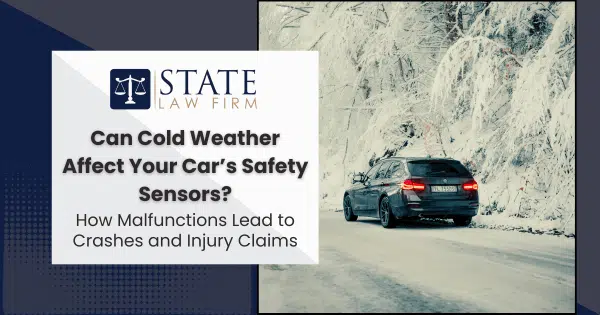
Cold weather has a way of turning small problems into dangerous ones, especially on the road. When visibility drops, traction disappears, and traffic tightens, many drivers lean harder on modern safety tech, trusting the car to warn, brake, and steer with machine precision.
But winter conditions can interfere with the very sensors those systems rely on, leading to sudden, severe consequences.
The Federal Highway Administration reports that each year, over 1,300 people are killed and more than 116,800 are injured in crashes on snowy, slushy, or icy pavement, a reminder that winter mistakes are rarely minor.
If a sensor-related failure contributes to a catastrophic crash, families may need experienced counsel, including Spanish-speaking support through our page for Oceanside wrongful death attorneys.
Understanding Vehicle Safety Sensors: Their Role in Modern Cars
Most newer vehicles do not just rely on a driver’s eyes and instincts. They also use a network of cameras, radar, ultrasonic sensors, and software to interpret the road and predict risk.
These systems often fall under the umbrella of ADAS (advanced driver assistance systems) and power features such as automatic emergency braking, adaptive cruise control, blind spot monitoring, lane departure warnings, lane keeping assistance, and parking aids.
The promise is straightforward: detect hazards faster than a human can, then alert you or intervene. Under ideal conditions, these systems can reduce crashes and soften impacts. The key phrase, though, is “best conditions.” Sensors receive information from the environment. Winter changes that environment. It adds glare, fog, slush, grime, and ice. It hides lane lines, dulls contrast, and coats lenses. It can turn a clean signal into noise.
A useful way to think about it is this: driver assistance is not a substitute for driving. It is a layered safety net. And winter is the season when that net can snag.
For an overview of what these technologies are designed to do, NHTSA’s plain-language guide is a helpful starting point: Driver Assistance Technologies (NHTSA).
How Cold Weather Impacts Car Sensors: Common Issues and Causes
Cold weather does not “break” sensors in one single way. It pressures the system from several angles at once.
1) Physical blockage
Snow, sleet, and road spray can coat the camera area near your rearview mirror, the radar cover in your front grille, and the sensors near bumpers. Even a thin layer of slush can distort what a camera sees or weaken what radar can detect. A vehicle may respond by disabling features, showing warnings, or behaving inconsistently if the blockage comes and goes.
2) Condensation, fogging, and glare
Warm air inside the vehicle meets cold glass, and fog forms. Headlights reflect off falling snow. Low winter sun hits at an angle that flattens contrast. Cameras, in particular, rely on clear visual contrast, and winter is a master of creating visual chaos.
3) Hidden lane markings and altered road “rules.”
Lane keeping systems often depend on visible lane lines. But winter roads can obscure paint under water, ice, or snow, or replace crisp lane boundaries with ruts and tire tracks. The car may not know which “lane” you are in because the lane is no longer there in any meaningful sense.
4) Dirt, salt, and grime buildup
Winter roads often involve sanding and salting. The residue sticks. It dulls lenses and sensor covers. It turns a camera into a dirty windshield and a radar cover into a cloudy filter.
5) Calibration sensitivities
Many sensors require precise alignment. A minor collision, a bumper replacement, or an improperly mounted bracket can shift angles enough to matter. Winter driving increases the odds of curb strikes and low-speed impacts, the kind that look harmless but can still throw off sensor orientation.
Actionable steps that actually help:
- Clean sensor areas before you drive, not just the windshield.
- Use the defroster early and consistently to reduce fogging and internal condensation.
- If your vehicle throws repeated “sensor blocked” warnings, treat that as a safety issue, not an annoyance.
- In heavy snow or road spray, consider turning off adaptive cruise control and driving manually with extra following distance.
If you are injured after a crash where these systems played a role, it is worth speaking with counsel early. The evidence that proves a sensor issue can disappear quickly, sometimes with a simple car wash or a body shop repair.
Types of Sensor Malfunctions in Winter Conditions: Real-World Examples
Winter sensor problems tend to show up in predictable patterns. The specific dashboard messages vary by manufacturer, but the risks look familiar.
False negatives, when the car misses what matters
A forward-facing camera may struggle to identify a dark vehicle through blowing snow. Radar may have difficulty when ice or heavy spray distorts returns. The driver expects a warning or automatic braking and does not get it, or gets it too late to matter.
False positives, when the car reacts to the wrong thing
Sensors may misinterpret slush spray, snowbanks, or irregular roadside shapes as hazards. That can lead to sudden alerts, abrupt braking, or a driver jerking the wheel in response to a warning that is not grounded in the road reality.
Feature shutdowns at the worst time
Many systems disengage when they detect blocked sensors. In clear weather, that is an inconvenience. In a winter storm, it can be a dangerous surprise, especially if the driver has grown accustomed to adaptive cruise control or lane centering on long drives.
Backup camera and parking sensor confusion
A rear camera lens can get coated with slush almost immediately. Ultrasonic sensors can struggle if the sensor face is iced or packed with grime. The driver thinks they are seeing “the whole picture,” but the picture is blurred, delayed, or misleading.
Lane assistance drift
When lane markings disappear, a system may hunt for lines that do not exist, or misread the edge of snow as a lane boundary. If a driver expects steady lane support, that mismatch can create a moment of panic, and panic is a frequent precursor to overcorrection crashes.
A careful legal analysis will ask not just “Did a sensor fail?” but also “How did that failure influence what a reasonable driver did next?” That chain of cause and effect is where liability often lives.
The Link Between Sensor Failures and Vehicle Accidents During Cold Weather
Winter crashes are rarely the product of a single factor. They are usually stacked failures: reduced traction, lower visibility, heavier traffic, and human misjudgment all at once. Sensor issues can become the tipping point.
Here are common accident pathways we see when winter conditions and ADAS collide:
Overreliance
A driver trusts adaptive cruise control to slow smoothly, or trusts automatic emergency braking to catch a hazard. But sensor performance is degraded, and the driver reacts a beat too late because they assumed the car would act first.
Unexpected system behavior
A sudden warning, a surprise brake pulse, or a system disengagement can startle a driver. In slick conditions, surprise is dangerous. The smallest steering correction can become a slide.
Miscommunication between the driver and the machine
Driver assistance systems communicate through icons, chimes, and quick warnings. Winter driving already demands attention. If the driver misses a “sensor blocked” message or does not understand it, the driver may continue driving as though protections are active when they are not.
Crashes that escalate to catastrophic harm
Winter impacts are often at higher closing speeds because stopping distances grow. A rear-end collision that might be a fender-bender in July can become a life-altering injury in January.
For context on how frequently winter road conditions contribute to serious crashes, the Federal Highway Administration’s snow and ice safety data is sobering: FHWA Snow & Ice.
If your crash involved severe injuries or a fatal outcome, the legal questions become even more urgent. Families dealing with loss often need both clarity and advocacy, and we provide Spanish-language guidance through our Oceanside wrongful death attorneys resource.
Pursuing an Injury Claim After a Crash Caused by Sensor Failure: What You Need to Know
A sensor-related crash is not always a “product defect case,” and it is not always “the other driver’s fault.” Often, the truth is layered, and the law is built to handle layered truth.
1) Start with the basics: negligence still matters
Most injury claims begin with the ordinary rules of safe driving. A driver is still required to drive at a safe speed for conditions, keep a proper lookout, and maintain a safe following distance, even when the car has advanced safety features.
2) Product liability may apply, but it must be proven
If the sensor system failed due to a defect in design, manufacturing, or warnings, a product liability claim may be viable. That typically requires technical evidence showing the system performed unreasonably under foreseeable winter conditions, or that the warnings and instructions were inadequate for real-world driving.
3) Maintenance and repair liability is a real possibility
Improper calibration after windshield replacement, bumper work, or collision repair can contribute to failures. If a shop returned a vehicle without properly calibrating safety systems that require calibration, that can become part of the liability picture.
4) Evidence preservation is everything
Sensor cases are often won or lost on early steps. Consider:
- Photos of the vehicle immediately after the crash, including sensor areas and windshield camera zones
- Dashboard warnings captured on phone video, if safe to do so
- Repair invoices and calibration records
- Vehicle data downloads were available (event data recorders and system logs)
- A prompt request that the vehicle not be altered until it is inspected
If you are hurt, it is not “too early” to talk to a lawyer. It is often the only window to preserve the proof before it is overwritten, repaired, or washed away.
If you suspect ADAS or sensor issues played a role, State Law Firm can help you evaluate liability, preserve evidence, and pursue the full scope of damages, including medical costs, lost income, and pain and suffering.
Tips for Drivers: Protecting Your Car’s Sensors During the Winter Months
You cannot control the weather. You can control preparation.
Before you drive
- Clear snow and ice from the entire vehicle, not just the windshield.
- Wipe the camera area near the rearview mirror, the front grille, the radar cover, and the bumper sensor zones.
- Confirm that the windshield wipers are effective and that the washer fluid is filled with winter-grade solution.
- Allow the defroster to fully clear the windshield before you rely on camera-based systems.
During the drive
- In heavy snow, sleet, or road spray, consider turning off adaptive cruise control and relying on manual speed control.
- Increase the following distance beyond what feels normal.
- Treat any “sensor blocked” or “system unavailable” alert as a safety warning, not a nuisance notification.
- Assume lane assist may be unreliable when lane markings are obscured.
After the drive
- Clean off salt and grime. It does not just corrode paint. It can cloud sensors and make tomorrow’s drive riskier.
And if you are shopping for a new vehicle, ask direct questions about sensor placement and winter performance. Small design choices, like whether a sensor is exposed or protected behind a cover, can make a practical difference.
For a deeper technical discussion of how camera and radar performance can degrade from weather and contamination, AAA’s research report is a useful reference point: AAA Sensor Performance Degradation Report
Staying Safe—How Awareness of Cold Weather Effects on Safety Sensors Can Prevent Crashes and Support Claims
Winter driving is not just about slower speeds and warmer jackets. It is about understanding what your vehicle can and cannot do when the road becomes unpredictable. Safety sensors can be powerful allies, but cold weather can block, confuse, or disable them, sometimes without a dramatic warning.
The safest approach is deliberate: keep sensor areas clean, treat alerts seriously, drive with extra margin, and never delegate your judgment to a screen icon.
If you were injured in a crash where sensor malfunction, calibration issues, or driver overreliance may have contributed, you deserve a clear assessment of fault and a plan to protect your claim. And if the harm was fatal, families can find Spanish-language wrongful death guidance through our Oceanside wrongful death attorneys página.
Cold weather can interfere with ADAS sensors, leading to missed warnings, sudden braking, or system shutdowns. Drive as if the tech may be limited, and if a crash occurs, preserve evidence early, as it is often the key to proving what went wrong.