Spanish
  English
Long Beach premises liability lawyers
Long Beach Slip and Fall Injury Lawyers
Injured after a fall at a Long Beach store, restaurant, apartment complex, parking lot, sidewalk, hotel, or public property? State Law Firm helps preserve evidence, prove notice, and pursue compensation.
No fee unless we win
More than $300M recovered for Californians
Video, reports, sweep logs, and notice evidence
Serving Long Beach and Southern California
After a Long Beach slip and fall, get medical care, report the incident, photograph the hazard and nearby cameras, save your shoes and clothing, collect witness information, and speak with an attorney before giving a recorded statement or signing a release.
A serious fall in Long Beach is not only about what was on the floor or sidewalk. The claim usually turns on proof: who controlled the property, how the hazard formed, whether the owner or manager had notice, what inspections should have caught it, and how the injury changed your medical care, work, and daily life.
State Law Firm helps people injured in Long Beach slip-and-fall and trip-and-fall incidents build premises liability claims around evidence, not assumptions. That includes quick preservation letters for video, incident reports, sweep logs, maintenance records, witness information, and photos before the condition is cleaned, repaired, or disputed.
Attorney-backed Long Beach fall strategy
Attorney-prepared claim review
This page is prepared for attorney review by Eddie Tehrani, and the firm’s attorney team can evaluate property control, notice, comparative fault, medical proof, insurance coverage, and litigation strategy.
Evidence before it disappears
Stores, restaurants, apartments, parking lots, hotels, and public properties often have video, inspection logs, maintenance records, and incident reports that need to be preserved quickly.
California accident results
State Law Firm reports more than $300M recovered for Californians. Verified premises liability and slip-and-fall examples are included below with a past-results disclaimer.
Long Beach service area
The firm serves injured people in Long Beach and across Southern California. Consultations are available by phone, video, or at an appropriate meeting location.
Slip and fall attorneys for serious premises cases

Eddie Tehrani
Eddie Tehrani founded State Law Firm and helps injured Californians evaluate liability, insurance coverage, damages, and case strategy after preventable accidents.

Arnold Gross
Arnold Gross is a partner at the firm and has been involved in more than 90 major jury trials, along with hundreds of court trials and arbitrations.
California premises liability results
The following examples come from existing State Law Firm case-study records. Past results do not guarantee a similar outcome, and every case depends on its own facts, injuries, evidence, insurance coverage, defendants, venue, and legal issues.
$2,000,000
Restaurant wet-floor fall
A restaurant patron slipped on a wet floor with no proper warning signs, suffered a fractured hip, and required multiple surgeries.
$550,000
Big-box retailer wet-floor fall
A shopper slipped on a wet floor and suffered neck, low back, bilateral knee injuries, and sleep disturbance. The initial demand was denied before litigation pressure changed the result.
$600,000
Business premises trip hazard
A premises liability case involving irrigation wires at a business, shoulder surgery, and lost earnings.
$225,000
Shopping center parking-lot fall
A shopper slipped over liquid buildup from a water drain in a parking lot and suffered a fractured nose.
Where Long Beach slip and fall claims happen
Long Beach fall claims can involve private homes, apartments, retail stores, restaurants, parking lots, sidewalks, public buildings, entertainment venues, waterfront walkways, and work sites. The location matters because each property type has different records, responsible parties, insurance coverage, and deadlines.
Stores and markets
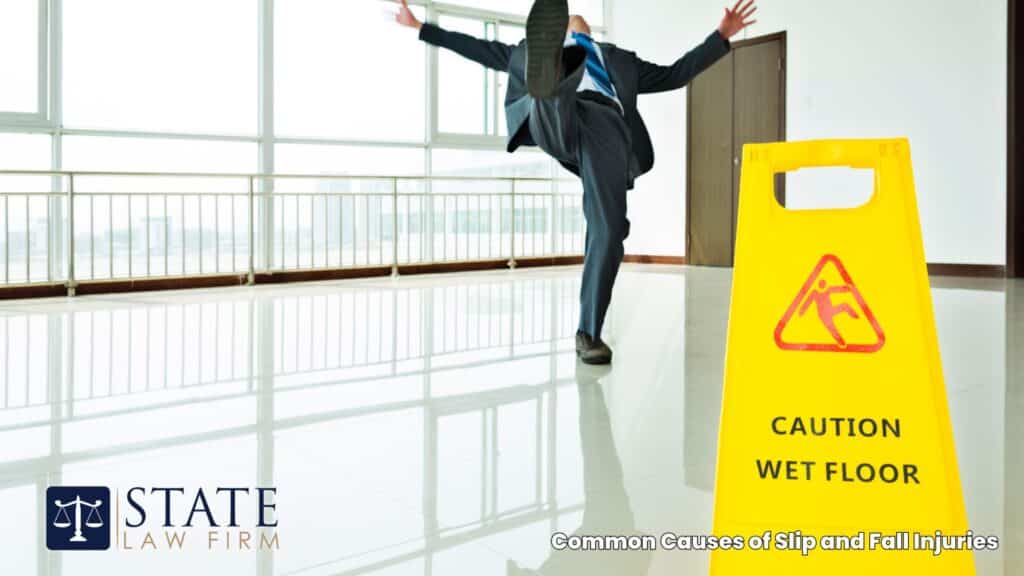
Grocery stores, big-box retailers, pharmacies, and retail aisles often turn on spill timing, floor inspections, surveillance footage, employee reports, and whether warning signs were placed in a useful location.
Restaurants and nightlife
Restaurants, bars, hotels, and event venues can create fall risks through spills, poor lighting, crowded walkways, uneven flooring, loose mats, greasy surfaces, or stairs without safe handrails.
Apartments and HOAs
Landlords, property managers, and HOAs may need to address broken stairs, dark hallways, loose handrails, leaking pipes, raised transitions, and common-area hazards after complaints or inspections reveal a risk.
Parking lots and garages
Parking lot falls can involve potholes, poor drainage, wheel stops, broken concrete, inadequate lighting, unmarked changes in elevation, and shared maintenance duties between owners, tenants, and vendors.
Sidewalks and public property
Falls involving city sidewalks, parks, public buildings, or other government property may require fast government-claim analysis in addition to proof of a dangerous condition and notice.
Waterfront and rain conditions
Beach access points, waterfront walkways, entrances, and rainy-day floor conditions raise questions about mats, drainage, warning signs, lighting, inspection routines, and recurring moisture problems.
Residential, commercial, and public property claims
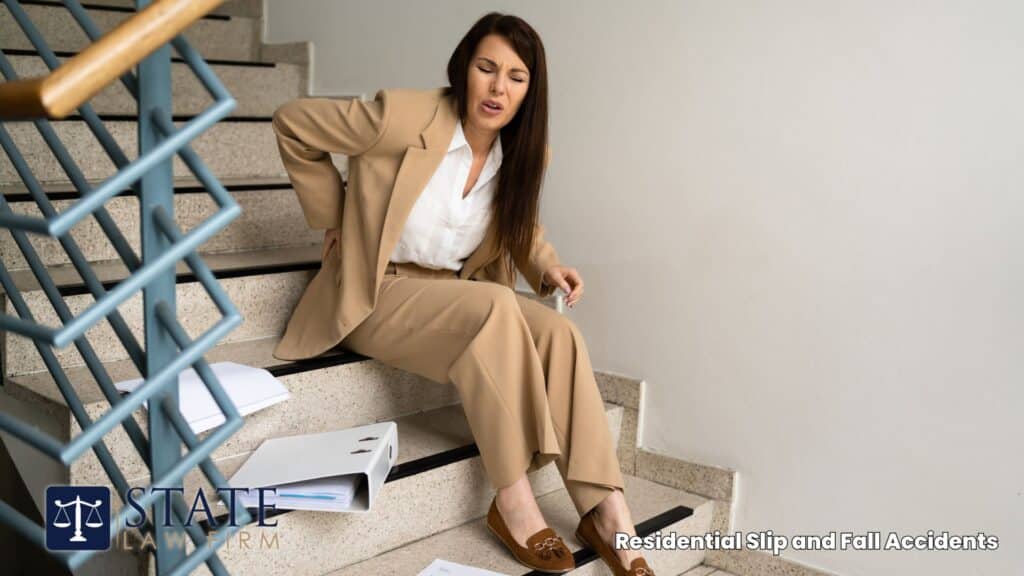
Residential falls can involve a homeowner, landlord, property manager, HOA, maintenance company, tenant, or insurance carrier. The key question is usually whether someone responsible for the area knew or should have known about a hazard and failed to fix it or give a reasonable warning.
Commercial and public-facing properties usually have more records to investigate. A supermarket may have sweep logs. A hotel may have surveillance footage. A restaurant may have incident reports and employee statements. A shopping center may have vendor contracts or maintenance records that show who controlled the area.
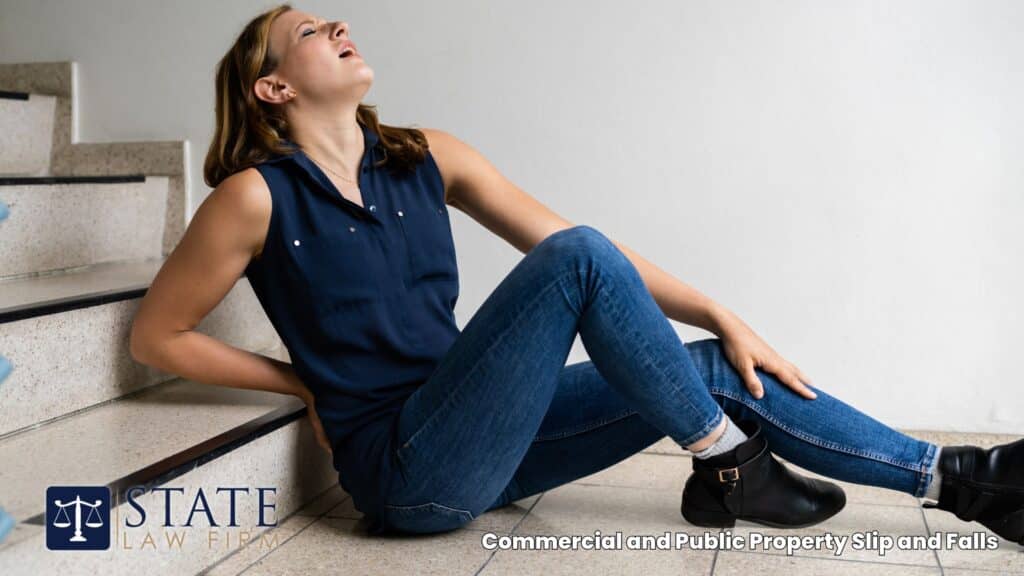
Public property has a different track. If a fall happened on city property, a public sidewalk, a public building, or another government-controlled area, the injured person may need to satisfy government-claim rules before a lawsuit can move forward. That is why sidewalk, park, and public-building falls should be reviewed quickly.
What must be proved in a California slip and fall case
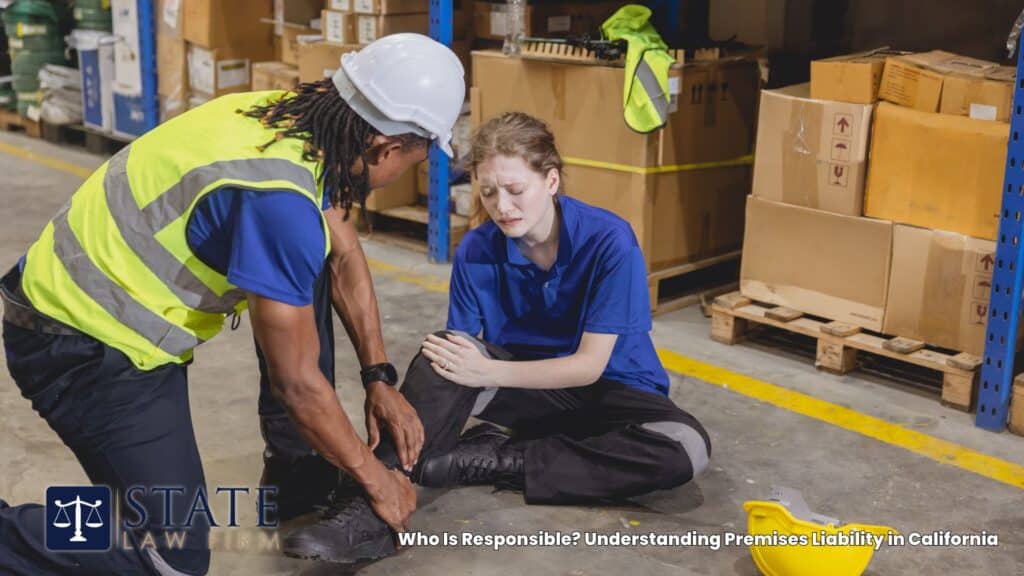
California premises liability cases are not automatic just because an injury happened on someone else’s property. The claim needs proof that a dangerous condition existed, that the defendant had a legal duty connected to the property, that the hazard caused the fall, and that the injury caused real damages.
Control of the property
The responsible party may be an owner, tenant, landlord, property manager, HOA, maintenance vendor, contractor, business operator, or public entity depending on who controlled the area.
Dangerous condition
The hazard needs to be identified clearly: liquid, debris, broken pavement, a height differential, loose carpet, poor lighting, unsafe stairs, missing handrails, drainage problems, or another unsafe condition.
Notice
Many cases turn on actual or constructive notice. Did someone report the hazard? Did employees see it? Did it exist long enough that a reasonable inspection should have found it?
Causation and damages
Medical records, imaging, mechanism-of-injury analysis, treatment timelines, work restrictions, and future-care needs connect the fall to the losses claimed.
Defense arguments are common. A store may argue the spill was new. A landlord may claim no one complained. A city may dispute notice. An insurer may say the defect was minor, the hazard was open and obvious, or you were distracted. The response depends on evidence: photos, measurements, lighting, video, inspection logs, repair history, witnesses, footwear, and medical documentation.
Evidence to preserve before it disappears
State Law Firm can send preservation letters, request records, investigate responsible parties, and coordinate the claim strategy before the insurance company frames the fall as your fault. This is especially important when the hazard was temporary, such as liquid on a floor, tracked-in rain, debris in an aisle, or a newly repaired sidewalk defect.
What to do after a slip and fall in Long Beach
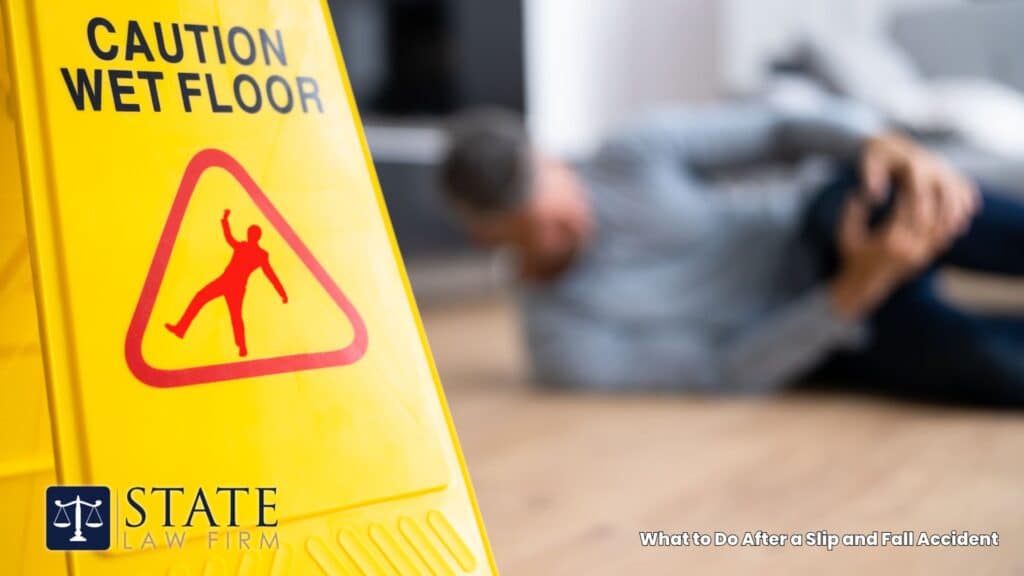
- Get medical care first, especially for head injuries, hip pain, back pain, neck pain, fractures, dizziness, numbness, or worsening symptoms.
- Report the fall to the property owner, manager, landlord, security desk, city department, or event staff and ask how to obtain an incident report.
- Photograph the exact hazard, surrounding area, lighting, warning signs or lack of signs, footwear, clothing, visible injuries, and any nearby cameras.
- Save the shoes and clothing you wore, unwashed, because insurers sometimes blame footwear or claim the condition could not have caused the fall.
- Collect witness names, phone numbers, employee names, manager names, receipt records, parking records, and any messages about the incident.
- Avoid recorded statements, broad medical authorizations, quick settlement offers, or releases before legal review.
For lower-level soreness or bruising, medical follow-up still matters. A delayed diagnosis can make the insurer argue the fall did not cause the injury. For general recovery guidance after a minor fall, review the firm’s guide to Tratamiento de lesiones por resbalones y caídas en el hogar, but do not use home care as a substitute for medical evaluation when symptoms are serious or worsening.
Injuries and damages in a premises liability claim
Falls can cause injuries that take months or years to resolve. Common claim issues include fractures, hip injuries, concussions, traumatic brain injuries, neck and back injuries, herniated discs, shoulder tears, knee injuries, ankle injuries, wrist fractures, facial injuries, lacerations, scarring, chronic pain, and loss of mobility.
Medical damages
Emergency care, ambulance bills, imaging, surgery, hospitalization, follow-up care, physical therapy, pain management, medication, medical equipment, and future treatment.
Income and work impact
Lost wages, missed shifts, reduced earning capacity, business losses, job restrictions, retraining, and time missed for medical appointments.
Human losses
Pain, suffering, loss of enjoyment of life, sleep disruption, anxiety around walking or stairs, loss of independence, scarring, and permanent limitations.
Insurance and liens
Health insurance, medical liens, Medicare, Medi-Cal, ERISA plans, and reimbursement claims can affect the net recovery and should be handled carefully.
California deadlines and public-property rules
California’s general negligence duty comes from sección 1714 del Código Civil, which is why premises cases often focus on ordinary care in the management of property. Many private-property injury lawsuits use the two-year deadline in sección 335.1 del Código de Procedimiento Civil.
Government claims can be much shorter. sección 911.2 del Código de Gobierno generally requires claims for injury to a person to be presented no later than six months after accrual. Public-entity dangerous-condition cases also involve proof under La sección 835 del Código de Gobierno, including dangerous condition, causation, foreseeable risk, and creation of the condition or notice.
The City of Long Beach says most claims seeking money damages from the City or its employees require a properly filed written claim before a lawsuit for money damages can proceed. The City’s claim page lists the City Clerk submission address and notes the six-month deadline for death, personal injury, or personal-property claims.
This deadline discussion is general information, not legal advice. The correct filing deadline can change based on the defendant, injury date, notice, claim type, age of the injured person, delayed discovery issues, and other facts. If a public sidewalk, public building, park, bus stop, city facility, or other government property may be involved, get deadline advice quickly.
Long Beach slip and fall resources
Frequently asked questions
Do I have a case if I fell at a Long Beach store or restaurant?
Possibly. The claim depends on whether a dangerous condition caused your fall, whether the business or property owner knew or should have known about it, and whether your injuries and damages can be documented. Video, incident reports, sweep logs, witnesses, and medical records can be critical.
What if there was no warning sign?
No warning sign can help, but it does not automatically prove the case. The larger question is whether the owner or operator acted reasonably. A freshly mopped floor, recurring leak, tracked-in rain, or spill in a busy aisle may require warnings, cleanup, mats, inspections, or another safety response.
What if I was partly at fault for my fall?
California comparative-fault rules may reduce a recovery by the injured person’s share of fault, but partial fault does not automatically end a claim. Insurers often overstate distraction, footwear, or obvious-hazard arguments, so physical evidence and witness statements matter.
How long do I have to bring a Long Beach slip and fall claim?
Many private-property injury lawsuits in California use a two-year deadline, but claims involving the City of Long Beach, another public entity, a public sidewalk, or public property may require a government claim within six months. Deadlines should be checked against the facts of the incident.
Can I sue for a fall on a Long Beach sidewalk?
Sometimes. Sidewalk claims require analysis of who controlled or maintained the area, whether a dangerous condition existed, who had notice, whether any city or adjacent-property rules apply, and whether a government claim is required.
Will State Law Firm handle the insurance company for me?
Yes, when the firm accepts representation, the team can communicate with insurers, investigate fault, preserve evidence, document injuries, address liens, negotiate settlement, and file litigation when needed. The representation agreement controls the scope and fee terms.
Talk to a Long Beach slip and fall lawyer
State Law Firm represents people injured in slip-and-fall and trip-and-fall incidents in Long Beach and throughout Southern California. If a store, restaurant, apartment complex, parking lot, sidewalk, hotel, or public property hazard caused your fall, the next step is to preserve proof before it disappears.
Solicite una revisión gratuita de su caso o llame al (877) 659-9223.
More slip and fall resources
These related pages cover premises liability issues in other California service areas: