Spanish
  English
Public transportation is a lifeline for millions of Californians, but unfortunately accidents at train stations and transit platforms are not uncommon. From the Bay Area’s BART stations to Los Angeles Metro stops, passengers can suffer serious injuries due to hazardous conditions or negligence. If you or a loved one has been hurt in a public transportation station accident, understanding your legal rights is crucial. In this comprehensive guide, we’ll discuss common transit platform accidents, who may be liable, what steps to take afterward, and how an experienced attorney can help you seek compensation. Our goal is to empower you with knowledge – gleaned from decades of personal injury experience – so you can protect your rights and pursue a fair recovery after a station injury.
Common Accidents at BART, Metro, and Transit Stations
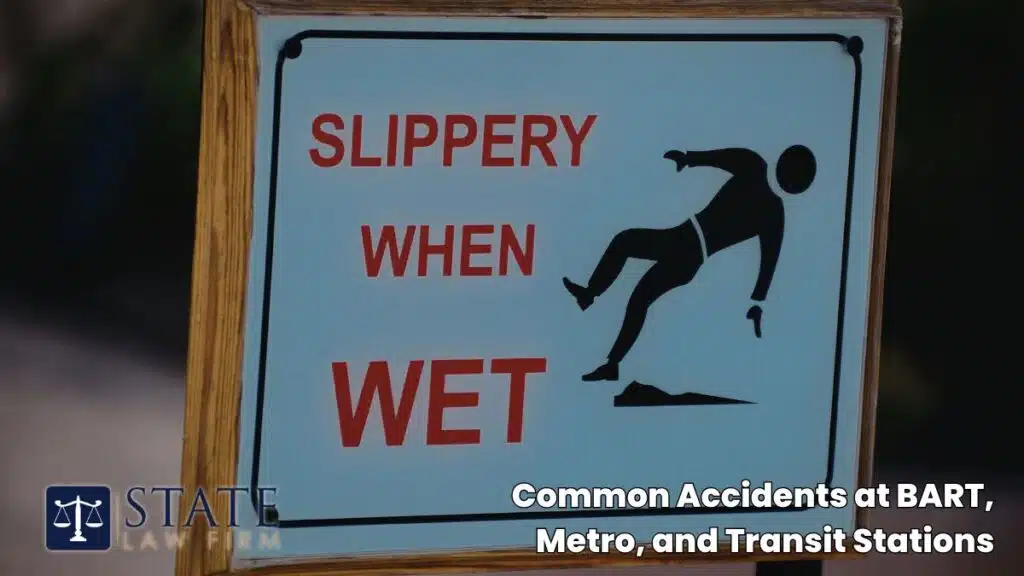
Transit stations are busy public spaces, and a variety of accidents can occur on platforms, stairways, and surrounding areas. Some of the most common public transportation station accidents incluir:
- Accidentes por resbalones y caídas: Spilled liquids, rainwater on floors, cracked tiles, or debris can all create slip or trip hazards on a station platform. A person rushing to catch a train might resbalón y caída on an unmarked wet spot or loose flooring. These incidents often lead to injuries like fractures, sprains, or head trauma. In California, property owners (including transit agencies) have a duty to keep premises reasonably safe. If they fail to address hazards, they may be liable for resulting injuries . (Learn more about liability in slip and fall accidents in our related guide aquí.)
- Platform Gaps and Falls onto Tracks: Many train platforms have a gap between the platform edge and the train door. If a gap is excessive or a person loses balance, they could fall onto the tracks. Tragically, there have been cases of riders being struck by trains after falling or being pushed from a platform. In one incident, a BART passenger’s clothing got caught in a departing train door, resulting in the rider being dragged and severely injured. That case led to a multi-million dollar settlement, underscoring how serious these accidents can be. Falls from a platform often cause lesiones catastróficas like brain trauma, spinal cord damage, or even death. Transit agencies must take precautions (such as adequate warnings, platform sensors, or attendants) to prevent these nightmares. If they fail to ensure platform safety, they can be held accountable just like any other responsabilidad civil de las instalaciones situation.
- Escalator and Elevator Accidents: Many stations have escalators and elevators to help passengers move between levels. When these machines malfunction or are poorly maintained, riders can be hurt. For example, an escalator that suddenly jerks or stops can throw people off balance, or a broken elevator may cause a fall. These scenarios might involve both the transit agency and equipment manufacturers or maintenance contractors. (If an escalator defect caused an injury, it could lead to a responsabilidad del producto claim – see our discussion of defective products aquí.) Common injuries include cuts, bruises, broken bones, or in worst cases amputations or electrocution. Ensuring regular maintenance and timely repairs is part of the station owner’s duty.
- Being Struck by Trains or Buses: Accidents aren’t limited to slips and falls – some victims are hit by the very vehicles they intended to ride. On train platforms, if an operator fails to see a person on the tracks or starts the train before all passengers have boarded safely, a rider can be hit or dragged. Bus depots and transit centers pose similar dangers: a city bus or shuttle might jump a curb or hit a pedestrian in the station area due to driver error. Public carriers like BART and Metro are considered “common carriers” under California law, meaning they owe the highest duty of care to keep passengers safe . This includes operating trains and buses with extreme caution around platforms. When that duty is breached – for instance, a train operator not checking that doors are clear before departing – the transit agency can be liable for the harm caused. (If you were hurt in a bus-related incident, a bus accident lawyer can advise on your legal options.)
- Assaults and Inadequate Security: Unfortunately, transit stations can attract crime. There have been instances of assaults, robberies, or even homicides on platforms – especially in isolated or poorly monitored stations. If a station lacks proper lighting, security personnel, cameras, or other reasonable safety measures, victims of crime may have a negligent security claim against the transit authority or property management. For example, the family of a passenger who was fatally pushed in front of a train filed a lawsuit alleging the station was a “complete failure” in terms of safety, citing lax security and previous violent incidents. Property owners (including public agencies) can be held liable for preventable crimes if they knew of safety risks and did nothing . (For a deeper dive into negligent security lawsuits in California, including assaults on property, read our article aquí.)
- Other Hazards (Stairs, Parking Areas, etc.): Large transit hubs have many moving parts. People can be injured on broken staircases, in overcrowded pushy crowds, or in station parking lots and crosswalks. For instance, if a pedestrian is hit by a vehicle in a station parking area or drop-off zone, that could lead to a pedestrian accident claim. (Our pedestrian accident lawyers note that drivers and property owners both might share liability in such cases.) Likewise, if emergency exits are locked or there’s a fire hazard at a station, any injuries resulting from those safety code violations would implicate the transit agency. Essentially, any dangerous condition that the station owner knew or should have known about and failed to fix or warn about could make them responsible for injuries under Ley de responsabilidad civil de locales.
Who Is Liable for Transit Station Injuries?
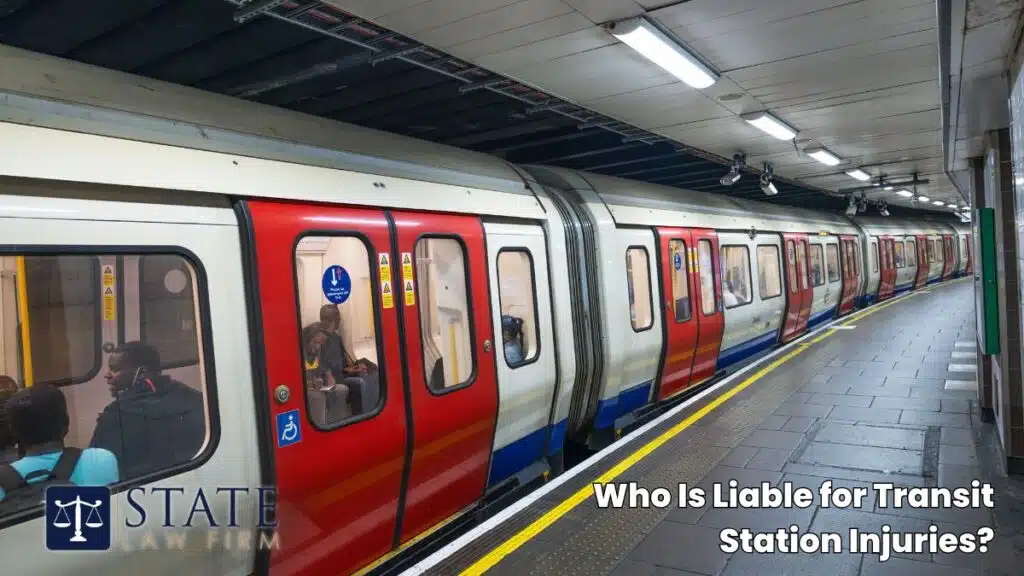
Determining liability in a public transportation station accident can be complex. Multiple parties might bear responsibility depending on how the injury happened. Key potential defendants in a transit platform injury case include:
- The Transit Agency or Station Owner: In California, major transit systems like BART (Bay Area Rapid Transit) and L.A. Metro are public agencies. They own and operate the stations, so they are primarily responsible for maintaining safe conditions. If the agency was negligent – e.g. failure to repair a known hazard, poor training of employees, or not implementing adequate safety policies – it can be held liable. Importantly, because transit agencies carrying passengers are common carriers, they must exercise “the highest level of care” in keeping riders safe . This high duty extends to station areas under their control. If a Metro or BART station’s negligence causes injury, the agency itself will likely be the main party accountable. For example, if a station’s lighting was out in a known high-crime area and someone was attacked, or if a platform warning system failed and a person fell on the tracks, the transit authority could be found negligent. (Even government entities are not immune when they fail in their duty of care – more on government claims in the next section.)
- Station Employees and Contractors: Often a dangerous situation is directly caused by the actions (or inaction) of people working at the station. A janitor might have mopped and left a wet floor with no warning sign, or a train operator might have been distracted and left the station too soon. In such cases, the individual may be at fault, but their employer (the transit agency) is vicariously liable for employees’ negligence on the job. This means you typically sue the agency, not the individual worker, under Responder superior principles (employer accountability for employees’ actions) . Additionally, if the transit authority outsources certain tasks, contractors can share blame. For instance, if an escalator maintenance company did a shoddy repair leading to an accident, both the contractor and the agency (for hiring/supervising them) might be liable. Similarly, security firms hired to patrol stations could be defendants if they acted negligently (e.g. a security guard ignored a violent situation). Identifying every liable party is important to ensure you pursue all available compensation sources – something a skilled attorney will do during investigation.
- Product or Equipment Manufacturers: Sometimes an injury stems from a defective piece of equipment rather than human error. Perhaps the automatic train door sensor failed, the elevator had a design flaw, or a station escalator had a manufacturing defect that caused it to malfunction. In those cases, a responsabilidad del producto claim against the manufacturer or designer of the faulty equipment may be appropriate. For example, if an escalator suddenly reversed direction due to a defect and multiple people fell, the escalator’s manufacturer could be held strictly liable for injuries. The transit agency might still have partial liability for not detecting or addressing the defect, but the product maker would be brought in as well. Successfully handling such claims requires understanding both responsabilidad civil de las instalaciones and product defect law (see our discussion of product liability claims in California aquí). The bottom line is that every entity connected to the unsafe condition – be it maintenance contractors or equipment suppliers – should be evaluated for liability.
- Third Parties (Drivers or Criminal Assailants): In some station accidents, a third party is the immediate cause. For instance, if a reckless driver crashes into a bus stop shelter outside a transit station and hits waiting passengers, that driver is directly liable for the injuries. Likewise, if a person is assaulted by a stranger on a platform, the attacker is obviously at fault for the harm they inflict. These third parties can be sued in addition to (or instead of) the transit agency. However, third-party cases often involve insurance and collection challenges – an intoxicated driver might be uninsured or a criminal assailant may never be caught or have no assets. In practice, victims will often include the transit authority in a claim if some negligence on the agency’s part contributed (for example, lack of station security or barriers allowed the incident to occur or made it worse). California follows a comparative fault rule, so if both a third party and the station owner were negligent, they can share liability percentages. Your attorney will investigate whether the transit agency’s environment or policies enabled the injury (such as inadequate fencing where a car drove onto a platform), even if another person initiated the harm. This ensures all avenues for compensation Se exploran.
- Your Own Responsibility? It’s worth noting that transit agencies (and their insurers) might try to blame the injured person to avoid paying. They could argue you were being careless – maybe looking at your phone when you tripped, or standing beyond the safety line on the platform. While you do have a duty to exercise reasonable caution for your own safety, the law recognizes that riders shouldn’t have to anticipate hidden dangers or extraordinary negligence by the carrier. Even if you were partly at fault, you can typically still recover damages in California, albeit reduced by your percentage of fault (pure comparative negligence rule). Do not automatically accept blame or assume you have no case if the transit company points the finger at you. An experienced lawyer can counter unfair blame-shifting by presenting evidence of the station’s negligence. For example, the transit agency might claim a fall was your fault for not tying your shoelaces, but if there was no warning about a slippery floor, they still hold primary liability . The key question in premises cases is usually: Did the property owner take reasonable steps to prevent harm? If not, they bear liability, regardless of minor mistakes on the victim’s part.
Special Legal Challenges When Suing Government Transit Agencies

Pursuing a claim against a public transportation agency involves unique legal procedures that differ from a typical private injury case. BART, LA Metro, and virtually all city or county transit departments are government entities. This means that the doctrine of inmunidad soberana and the California Government Claims Act come into play. While California has waived immunity for many negligence cases, it imposes strict rules on how and when you can sue a public entity. Here are the key challenges and requirements to know:
- Short Deadlines (Government Claim Notice): In an ordinary personal injury case (say you slipped in a grocery store), you usually have up to two years to file a lawsuit. Not so with government agencies. California law requires that you first file an official “Government Claim” with the agency dentro de 6 meses of the injury date in most cases . This written claim is essentially a detailed notice to the transit agency about your intent to seek damages, and it must contain specific information about when, where, and how you were injured. If you miss this 6-month window and try to sue later, the court will likely dismiss your case for failing to adhere to the Government Claims Act. (There are very limited exceptions, such as if you were a minor or mentally incapacitated, but it’s risky to rely on those.) After you submit the claim, the agency has 45 days to respond. If they deny it or ignore it, you then have 6 months from the denial/expiration to file a lawsuit in court . These timing rules are crítico – even a very strong injury case will be thrown out if you miss the procedural deadlines. This is one major reason to consult a lawyer promptly after a transit station injury; an attorney will ensure your claim is filed correctly and on time.
- Sovereign Immunity Limits: Sovereign immunity means the government can only be sued in certain circumstances. California’s Government Code outlines various immunities and exceptions. The good news is that for routine negligence (like a slip-and-fall caused by a negligent condition at public property), the law does allow lawsuits against public entities . The Government Claims Act basically says public entities are liable for injuries caused by their negligence, as if they were a private person, excepto for specific exceptions. Some of those exceptions include things like discretionary policy decisions or certain types of regulatory activities. In a transit context, an example might be that if the design of a station was a result of an approved plan (a discretionary design decision), the agency might claim “design immunity” for hazards stemming from that design. Another example: if your injury was caused by a really unpredictable third-party crime, the agency might argue immunity for failure to provide police protection. These defenses can be technical, but an experienced attorney can often overcome them by fitting your case into one of the allowed categories (for instance, showing it was ordinary premises negligence, not an immune policy decision). Our post on suing the government in California explains how sovereign immunity works and when you poder hold agencies accountable – check it out aquí. The takeaway: sovereign immunity doesn’t mean you can’t sue BART or Metro, it just means you must follow special rules and sometimes navigate around government-friendly defenses.
- No Punitive Damages Against Government: While rare, some extreme personal injury cases involve punitive damages (extra damages to punish egregious wrongdoing). However, public entities in California are immune from punitive damages by law. So, even if a transit agency’s negligence was gross or willful, you cannot get punitive damages from the agency itself. You are limited to recovering compensatory damages (for your losses). Punitive damages might still be sought against an individual employee (in cases of intentional misconduct) or a third-party defendant if any, but not against the agency’s treasury. This is important to set expectations – the value of a case against a public transit authority will be based on actual losses and pain and suffering, not on punishing the agency. That said, compensatory damages can still be quite significant for serious injuries (covering medical bills, lifelong disability, etc.), as evidenced by large settlements in transit injury cases.
- Damage Caps and Other Considerations: Unlike some states, California generally does not cap compensatory damages for injury victims (with a few exceptions like medical malpractice). So if you’re injured in a station accident, there isn’t a statutory cap on how much you can recover from the transit agency in a normal negligence claim. However, practically speaking, public entities often fiercely contest large claims and may have internal settlement guidelines. Another factor is that public agencies often have robust legal teams and insurance through risk pools. Don’t be surprised if they initially deny liability or make a lowball settlement offer – this is common. They might claim “no negligence” or argue you can’t prove a dangerous condition existed. This is why evidence (like photos of the hazard, incident reports, witness statements) is so crucial. Additionally, when suing a government entity, the lawsuit must be filed in the proper court and name the correct entity (sometimes people mistakenly sue the city when the transit agency is a separate entity – an attorney makes sure such mistakes don’t happen). Overall, while you absolutely can sue public transportation providers for negligence, the process is more complicated than a standard injury case. It’s advisable to have knowledgeable legal counsel guide you through the California Tort Claims Act process and advocate for you against the government’s lawyers.
Important Steps to Take After a Transit Station Injury
The moments and days following an accident at a train or bus station are critical for both your health and your potential legal claim. What you do (and don’t do) can impact your safety and your ability to recover compensation later. Here are essential steps to take after a transit platform injury:
- Busque atención médica inmediata: Your health comes first. If you are seriously hurt – for example, you fell and suspect a fracture or head injury – call 911 or ask someone to get station staff to call for paramedics. Even if injuries seem moderate, get evaluated by a medical professional as soon as possible. Train station injuries can be more serious than they appear at first (adrenaline and shock might mask pain). Prompt treatment not only ensures your well-being but also creates medical records linking the injury to the incident. Don’t “shake it off” or go home without seeing a doctor. Tell medical providers exactly what happened (e.g. “I fell on the platform at X station and landed on my back”). This documentation will be important later. Additionally, early treatment can prevent complications – for instance, a conmoción cerebral or internal injury might worsen if untreated. If you decline or delay medical care, the transit agency’s insurer might argue your injuries weren’t that serious or weren’t caused by the accident. So, put your health and safety first, always.
- Report the Incident to Station Authorities: Before leaving the scene (if you are physically able), report your accident to the appropriate personnel. Most transit stations have employees, station agents, or security on duty. Inform them that you were injured and ensure that an incident report is created. Provide the basics of what happened (e.g. “I tripped over that broken tile and sprained my ankle”) without embellishment or admitting fault. Ask for a copy of the report or at least get the report number. If police or transit police are present (as often is the case in serious incidents or crimes on platforms), give them a factual account for their report as well. Why is reporting important? It creates an official record of the time, place, and circumstances, which helps prevent the agency from later denying the incident occurred. If no one is immediately available or you were rushed to the hospital, you should still report the incident in writing as soon as you can – many agencies have online forms or hotlines. Keep copies of any correspondence. Filing a formal report is also typically a prerequisite for the agency’s internal claim process and will support your accident claim later. (For general guidance on obtaining accident reports in California, see how to obtain an accident report on our site.)
- Recopilar evidencia en la escena: If you are not too badly hurt and it’s safe to do so, collect evidence before the scene changes. Take photographs or video of the exact location and hazard that caused your injury – whether it’s a wet floor with no warning sign, a defective gap, or lack of lighting. Capture the broader scene too (e.g. the platform layout, any surveillance cameras nearby, the train involved, etc.). If there were witnesses, get their names and contact information. Fellow commuters or bystanders who saw you fall or saw the circumstances can provide powerful testimony later to corroborate your story. If someone helped you up or remarked about the hazard (“I almost slipped there too!”), politely ask for their phone number in case your attorney needs a statement. Preserve any physical evidence as well – for instance, the clothes and shoes you were wearing (don’t wash them, in case they contain residues like grease from a slick platform). If your phone fell and broke, keep it as-is (it might show the force of impact). Also, hold on to your transit ticket or pass for that day, which can prove you were at the station. In bus accidents, taking pictures of the vehicle damage or license plate can help; in train cases, noting the train number or time can tie the incident to specific transit records. Remember, evidence can disappear fast – spills get cleaned, faulty equipment gets repaired, and surveillance footage may be overwritten in days. Your prompt action can make the difference in proving the station’s negligence. (Of course, only do what your condition allows – if you’re badly hurt, focus on getting medical help and have a family member or attorney handle evidence gathering soon after.)
- Do Not Admit Fault or Make Premature Statements: In the immediate aftermath, avoid saying anything that sounds like you’re taking blame. It’s human nature to say “Sorry” or “I should have been more careful,” but such remarks can be misconstrued later as admission of fault. When speaking with station staff or insurance adjusters, stick to the facts of what happened, not opinions about who is at fault. Likewise, be cautious with insurance company communications. After a public transportation injury, you may be contacted by the agency’s risk management or insurance representatives. They might ask for a recorded statement or offer you a quick settlement. It is wise not to give any recorded statement or sign any settlement release until you have legal counsel. These early offers are often low and aimed at closing the case cheaply before you understand the full extent of your injuries . Politely decline to discuss details until you’ve consulted a lawyer. Also, avoid posting about the accident on social media – those posts can be used out of context against you. The period right after an injury is when you may feel shaken and unsure; insurance adjusters know this and sometimes try to get you to say things that hurt your claim. Simply put, don’t admit fault, don’t speculate, and don’t settle too fast. Instead, talk to a lawyer who can communicate on your behalf and protect your interests.
- Consult a Qualified Personal Injury Attorney Early: Station injury cases involve complex issues – from determining who is liable (public agency, contractors, etc.) to meeting special legal deadlines and handling government entities. It is highly beneficial to speak with an experienced abogado de lesiones personales soon after your accident. A lawyer who understands transit injury cases can guide you through the process, handle correspondence with the transit agency, and start investigating immediately. Remember that government entities often have teams ready to defend against claims; you deserve someone in your corner, too. An attorney will help ensure your Government Claim is filed correctly within that 6-month window, preserving your right to sue . They can also obtain crucial evidence before it’s lost – for example, securing station surveillance footage or maintenance logs (which a private citizen might struggle to get). Many personal injury firms (including ours) offer a consulta gratuita to review your situation. There’s no downside to getting legal advice early. In fact, a quick consultation can clarify your options and help you avoid missteps. If you’re worried about cost: personal injury lawyers typically work on a contingency fee, meaning they only get paid if they win compensation for you. So don’t hesitate to seek legal help due to finances. The sooner you have a knowledgeable attorney working on your case, the better your chances of a successful outcome. (See our article on the benefits of hiring a personal injury attorney to understand how the right lawyer can make a difference.)
By following these steps – medical care, reporting, evidence preservation, cautious communication, and legal counsel – you significantly strengthen your position. You’ll be well-prepared to file a claim and pursue compensation for your transit station injury.
(For more detailed tips applicable to slip and fall scenarios, you can also read our guide on important steps to take after a slip & fall accident. Many of the same principles apply to transit slip and falls.)
Compensation Available for Public Transit Station Injuries

Accidents at train or bus stations can cause a wide range of injuries – from minor sprains to life-altering trauma. If your injury was caused by negligence, you have the right to demand compensation for the losses you suffer. In California personal injury cases, damages generally fall into two categories: economic (special) damages y non-economic (general) damages . Let’s break down what you may recover in a public transportation station injury claim:
- Gastos médicos: You are entitled to compensation for all medical bills resulting from the accident. This includes emergency room visits, hospital stays, surgeries, doctor appointments, medication, medical devices (braces, crutches), and rehabilitation such as physical therapy. Future medical costs can be claimed too – if your doctor believes you will need ongoing treatment, therapy, or future surgeries due to the injury, those projected costs should be factored in. Keep records of all medical bills and prescriptions . Even travel costs to medical appointments can be included. In serious cases (e.g. a spinal injury from a platform fall), damages might also cover home modifications (like a wheelchair ramp) or long-term nursing care. An attorney can help estimate and document these needs so that your claim fully covers both current and future medical expenses.
- Pérdida de ingresos y capacidad de generar ingresos: If your injuries force you to miss work, you can claim your salarios perdidos for the recovery period. This covers any income, salary, or benefits you did not receive because you were out of work. For instance, if you had to take 2 months off to heal a broken leg, you’d calculate your normal pay for those 2 months. Provide pay stubs or employer statements to verify this. Importantly, if the injury has long-term effects that reduce your ability to earn (known as diminished earning capacity), you can seek compensation for that as well. For example, suppose you suffered a traumatic brain injury that affects your cognitive abilities, and now you cannot return to your high-paying job – the difference between your pre-injury and post-injury earning potential is a compensable loss. Or if you must take a lower-paying position or retire earlier than planned due to disability, those future lost earnings should be included. In the case of permanent disability, an economic expert might be needed to project lifetime earnings loss. The goal is to ensure you are financially put in the position you would have been in had the accident not occurred.
- Dolor y sufrimiento: Not all harm is financial. Dolor y sufrimiento damages compensate you for the physical pain, discomfort, and emotional distress caused by the accident and your injuries. A slip on a station’s wet floor might result in months of severe pain from a back injury, or being hit by a train could cause immense suffering and mental trauma. These intangible losses are often significant. California does not have a fixed formula for pain and suffering; generally, the more severe and long-lasting your pain, the higher the value. Evidence like medical records, doctor’s notes about your pain, and your own testimony (or a pain journal) can help demonstrate this. Emotional trauma is included here too – for example, the anxiety of getting on public transit again, nightmares, depression from being injured, or PTSD after a violent incident on a platform. (Victims of particularly horrifying accidents, such as being dragged by a train or witnessing a loved one’s death at a station, may suffer psychological injuries that require therapy.) While harder to quantify, these daños no económicos are very real. Our firm carefully evaluates how the injury impacted your daily life and well-being. Tools like the “multiplier method” (multiplying economic damages by a factor reflecting severity) are sometimes used to estimate pain and suffering, but ultimately it’s about presenting a compelling picture of your anguish. For more on valuing these losses, see our article on estimating pain and suffering in a California injury case.
- Other Non-Economic Damages: Beyond general pain and suffering, other personal losses might be compensable. If the injury caused scarring or disfigurement (for instance, facial scars from hitting the platform), you can seek damages for the impact on your appearance and any humiliation or embarrassment it brings. If you now suffer a permanent disability or loss of a bodily function (loss of limb, paralysis, vision loss, etc.), that is a profound loss of quality of life, and the compensation should reflect it. California also recognizes pérdida de consorcio claims by spouses of injury victims – if your injuries negatively affect your marriage, intimacy, or the services you provide to your household, your spouse may have a claim for those relational damages (learn more aquí). In the context of a transit injury, imagine you were paralyzed due to a station’s negligence: you not only have medical bills and lost wages, but you’ve lost your ability to walk, to enjoy hobbies, perhaps to have sexual relations – these are enormous losses that deserve full compensation bajo la ley.
- Daños a la propiedad: While not as common in station accidents as in car accidents, you can also recover for any property that was damaged or lost. For example, if your laptop or smartphone was destroyed in a fall, or your expensive bicycle got wrecked because of a station hazard, those items’ value can be reimbursed. Keep receipts or evidence of value for such items.
- Daños por muerte por negligencia: If the worst happens and someone is killed in a public transit station incident (such as being hit by a train), their surviving family members can pursue a demanda por muerte por negligencia. Wrongful death damages in California can include funeral and burial expenses, loss of the deceased’s financial support and benefits, the value of household services they provided, and the loss of love, companionship, and guidance that the family suffers. While no amount of money can fill the void left by a tragedy, holding the transit agency accountable can provide financial security and a sense of justice. (For more on these cases, see our Reclamaciones por muerte por negligencia en California overview or contact our abogados de muerte por negligencia for compassionate guidance.)
Each case is unique – the types and amounts of damages will depend on your specific circumstances. A young professional who can’t return to work has a different claim profile than a retired senior who suffered a similar injury, for instance. A skilled personal injury attorney will thoroughly document all the ways the injury has affected your life. This includes gathering medical reports, employment records, expert evaluations (medical experts, vocational experts, economists), and even statements from friends/family about your suffering. Our aim is to present a comprehensive demand that covers both the tangible losses (bills, wages) y el human losses (pain, trauma, life changes) you have endured. Don’t let a transit agency or insurer minimize your claim – you have the right to be made whole to the extent money can achieve.
(For a broader discussion on the types of damages – special vs. general – in personal injury cases, you can refer to our post explaining the differences.)
How a Public Transportation Station Injury Lawyer Can Help You
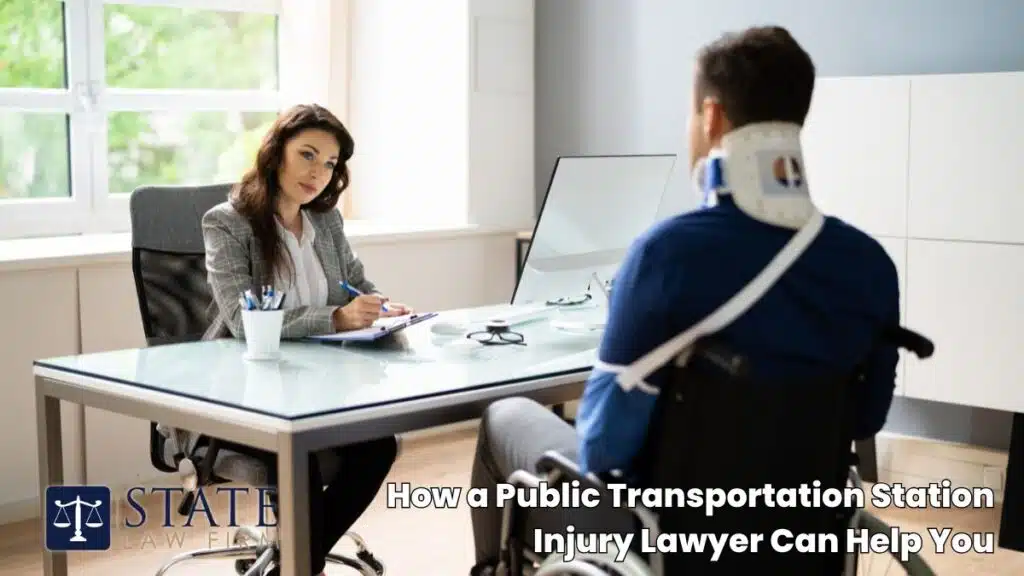
Facing off against a government transit agency and its insurers can be daunting. These organizations deal with accident claims regularly and often have aggressive legal teams. To level the playing field, it’s wise to have an experienced public transportation injury lawyer advocating for you. Here’s how a knowledgeable attorney – especially one familiar with BART, Metro, and other California transit systems – can make a difference in your case:
- Expert Investigation and Evidence Gathering: Proving negligence in a station accident often requires technical evidence and swift action. A seasoned lawyer will immediately investigate the scene and gather crucial evidence before it disappears. This might include obtaining surveillance camera footage from the station (which a private citizen might not easily get), maintenance logs and inspection records for escalators or other equipment, and internal reports on prior accidents or complaints at that station. Lawyers can send preservation letters to the transit agency to prevent evidence from being destroyed (known as spoliation) and can subpoena records if necessary. We also collaborate with experts such as accident reconstructionists, human factors experts (to analyze if warnings were adequate), or engineers to examine any equipment failures. For example, if you were injured by a malfunctioning train door, we might engage a mechanical engineer to identify what went wrong. By building a strong factual case, your attorney makes it harder for the transit agency to deny responsibility.
- Identifying All Liable Parties and Theories: As discussed, station cases can involve multiple parties (agency, contractors, manufacturers, etc.) and multiple legal theories (negligence, premise liability, product defect). An experienced lawyer will identify every potentially liable party and ensure they are all included in your claim . This comprehensive approach is important so that you’re not leaving money on the table. For instance, if you didn’t realize a maintenance contractor was at fault and only sued the agency, you might miss out on another insurance policy that could contribute to your settlement. Similarly, an attorney familiar with transit law will examine whether any special regulations or industry standards were violated (for example, California Public Utilities Commission safety rules for rail stations, or ADA accessibility requirements if a lack of elevators injured a disabled passenger). These violations can strengthen your case by showing negligence per se (negligence as a matter of law). Overall, your lawyer’s job is to craft the strongest possible claim by covering all angles of liability.
- Navigating Government Claims Procedures: As we covered, suing a public entity means lots of procedural hoops – the 6-month claim, specific forms, deadlines, and strict filing requirements. A transit injury attorney will handle all of this for you, making sure that the government claim is filed on time and with all required information . They’ll know where to file it (which office of the agency) and how to correctly serve it. If the claim is denied and a lawsuit is needed, your lawyer will draft a proper complaint that names the right government entities and causes of action, so your case isn’t tossed on a technicality. Essentially, we act as your guide through the bureaucratic maze, so you don’t have to worry about the legal paperwork – you can focus on healing while we focus on the legal strategy.
- Dealing with Insurance Companies and Settlement Negotiations: Transit agencies often have insurers or self-insurance pools that manage claims. These adjusters and attorneys will try to minimize your payout. Having your own lawyer means you don’t have to deal with their tactics alone. We will handle all communications, preventing you from saying something that could hurt your case. When it comes to negotiating a settlement, an experienced attorney knows what your case is truly worth. We rely on past case results, verdict research, and our experience with similar injuries to counter low offers. Our team will prepare a compelling paquete de demanda that includes evidence of liability and documentation of all your damages. We won’t be intimidated by the fact that it’s “the government” on the other side – we negotiate from a position of strength, showing the agency’s clear negligence and your substantial losses. If the transit agency or its insurer still refuses to offer a fair amount, a seasoned lawyer will not hesitate to file a lawsuit and litigate the case. In fact, showing that you’re ready to go to court often pushes the other side to increase their offer. Remember, the transit agency has lawyers looking out for its interests – you should have a lawyer fiercely looking out for yours.
- Courtroom Representation and Trial Experience: While many personal injury cases settle, some transit injury claims may end up in litigation if liability is disputed or the value is high. If your case proceeds to a lawsuit, you want an attorney who has experience in court. Government entities can be formidable defendants, and they may try motions to dismiss or other legal maneuvers. A skilled litigator will counter these by citing the law and facts (for example, beating a “design immunity” defense by showing a lack of reasonable basis for the station design). We will handle all aspects of litigation: drafting pleadings, engaging in discovery (getting internal documents from the agency, deposing station managers or employees), and bringing in expert witnesses to testify on your behalf. If the case goes to trial, we present a compelling story to the jury of how the transit agency’s negligence caused your injury and changed your life. Our firm has the trial experience to hold public entities accountable in court when needed – and importantly, the agency’s lawyers know this, which often motivates them to settle more reasonably to avoid a trial. Simply put, having a reputable attorney signals to the transit agency that you mean business.
- Compassionate Guidance and Peace of Mind: Beyond the technical legal work, a good lawyer provides personal support during a difficult time. Suffering an injury at a train station or bus stop can be traumatic – you might be dealing with pain, medical appointments, and anxiety about using transit again. Our job is also to offer reassurance and keep you informed. We explain your rights, answer your questions (no matter how small), and keep you updated on the case’s progress. Knowing that a professional is handling the claim allows you to focus on recovery. We also can connect you with resources, like medical specialists or therapists, if you need them. At our firm, we pride ourselves on treating clients like family, fighting for their best interests while showing genuine care for their well-being. When you hire an attorney, you’re not just getting a legal representative – you’re getting an advocate and ally on the road to justice.
En resumen, working with a public transportation station injury lawyer greatly increases your chances of a successful outcome. From investigating the cause of the accident, to navigating the claims process, to securing maximum compensation, your attorney handles the heavy lifting. Our legal team, for example, has over 25 years of combined experience in personal injury law and has taken on complex cases involving government entities. We know the playbook transit agencies use, and we know how to counter it effectively. If you choose to work with us, our Equipo del bufete de abogados estatal will pour all that expertise into your case.
We’re Here to Help – Free Consultation for Your Transit Injury Case
Accidents at BART, Metro, and other transit stations can turn a routine commute into a life-altering event. You shouldn’t have to navigate the aftermath alone or wonder if you have any recourse. The law is on your side – public transportation agencies can be held accountable when their negligence causes harm. The key is taking action and getting the right guidance.
En Bufete de abogados estatal, we have extensive experience helping injury victims across California, including those hurt on public property and transit systems. Our premises liability lawyers and trial attorneys have successfully handled claims against government entities and understand the nuances of sovereign immunity laws. We are passionate about standing up for commuters and passengers who trusted a system to be safe, only to be let down. When you work with us, you get a dedicated team that will investigate every detail, fight unfair blame, and pursue every dollar you deserve.
Your consultation with us is free – we’ll listen to your story, evaluate the facts, and explain your legal options in clear terms. You’ll get honest answers to your questions and an outline of what steps to take next. If you decide to hire us, you pay nothing upfront and absolutely no fees at all unless we win compensation for you (that’s our contingency promise). With offices in Southern California, our attorneys are ready to assist clients statewide. Whether your accident happened in Los Angeles, the Bay Area, San Diego or anywhere in between, we can help. (Visit our Sherman Oaks personal injury lawyerpage to learn more about our local services and community commitment.)
No esperes until time runs out or evidence disappears. If you or a loved one suffered an injury at a public transportation station – be it a slip on a platform, an escalator fall, an assault, or any accident – contact Bufete de abogados estatal today. Our experienced team will evaluate your case with no obligation. We’ll help you understand your rights under California law and the California Government Claims Act, and if we represent you, we will tenaciously pursue justice on your behalf.
Reach out to us by phone or through our online form to schedule your free case review. Let our 25+ years of personal injury and responsabilidad civil de las instalaciones expertise go to work for you. When public transit fails to keep you safe, we won’t hesitate to hold them accountable and fight for the compensation you need to move forward.
Recordar: You have rights as a passenger and as a visitor on public property. A moment of negligence by a transit agency can derail your life, but with the right legal help, you can get back on track. We’re here to help you seek the justice and compensation you deserve.